Glyndebourne’s annual semi-staged appearance at the BBC Proms in 2026 brings Richard Strauss’s Ariadne auf Naxos, a work that has not been heard at the Proms for nearly half a century. London audiences are perhaps not entirely familiar with it: the hall is surprisingly not full, while many respond with wholehearted laughter to the opera’s burlesque provocations, as though encountering them—if not for the first time—at least with considerable freshness. The performance itself, though not perfect in every respect, deserves considerable credit for bringing this extraordinary opera back before a London audience, 110 years after Strauss composed the 1916 version most commonly performed today.
Ariadne auf Naxos | Official trailer | Glyndebourne
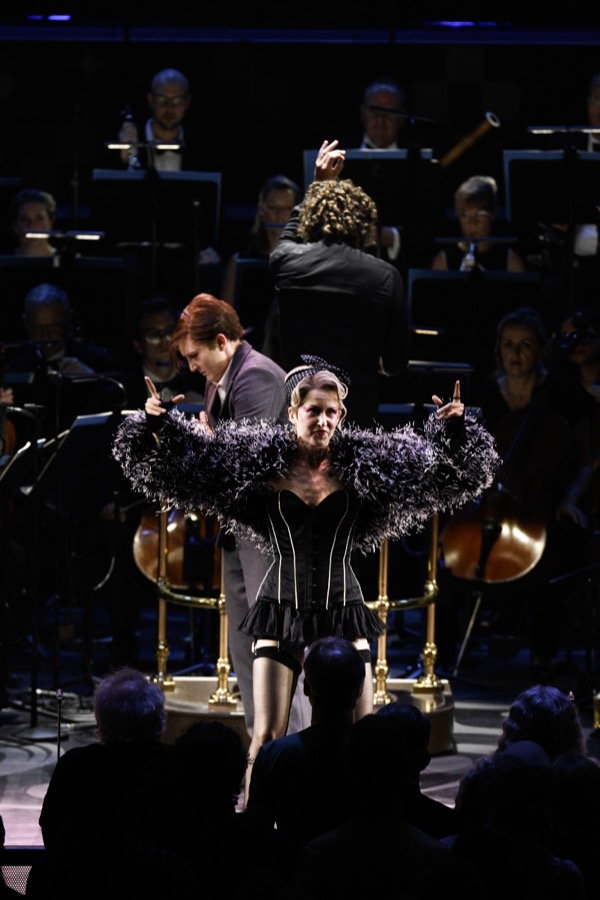
© BBC Chris Christodoulou
At first glance, Ariadne auf Naxos may seem an atypical Strauss opera. Yet it is precisely here that the composer so brilliantly brings together two characteristic sides of his theatrical personality: the tragic, classical grandeur found in works such as Elektra and Die Frau ohne Schatten, and the ironic, domestic humour of Capriccio or Die Liebe der Danae. Like Capriccio, written some three decades later, Ariadne is also a work that reflects on art and art-making, constructed through an elaborate metatheatrical conceit. When the Composer, in “Seien wir wieder gut”, passionately discusses poetry and music, it is difficult not to hear an anticipation of the aesthetic debates that would later occupy Capriccio.
Where Capriccio has its characters read poems, perform plays and debate aesthetics at considerable length, Ariadne presents something more immediately theatrical: an opera within an opera. The Prologue shows us how the evening’s “final opera” comes into existence. At the command of the wealthy patron financing the entertainment, the tragic opera seria Ariadne auf Naxos, prepared by an opera company and the Composer, must suddenly be combined with an improvised song-and-dance burlesque performed by a troupe of comedians led by Zerbinetta. Under financial pressure, encouraged by the Music Master and seduced by Zerbinetta’s charm, the Composer reluctantly accepts the compromise—only to plunge into despair once he realises what he has permitted. In the second part, this unlikely hybrid is duly performed: Ariadne laments the lover who has abandoned her. At the same time, Zerbinetta insists that another can always succeed one lover, until Bacchus arrives to provide Ariadne with precisely such a transformation.
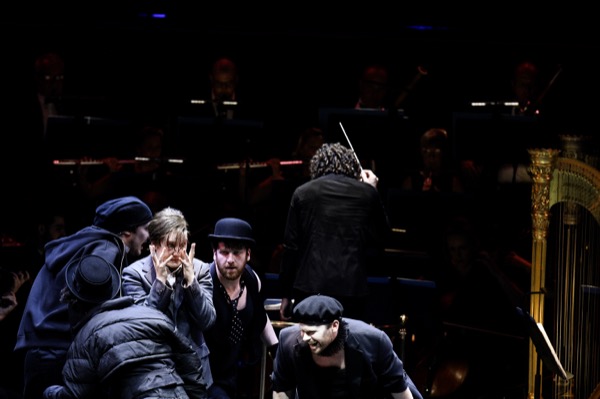
© BBC Chris Christodoulou
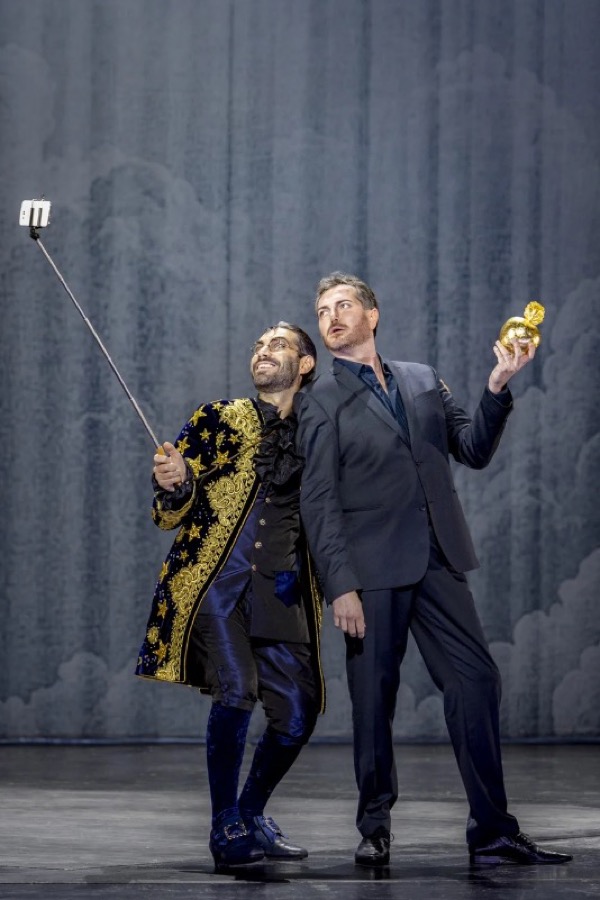
There is an enormous amount to play with in Strauss’s ingenious theatrical construction. A semi-staged performance naturally imposes limitations, and British opera productions are hardly known for alienating their audiences through excessive directorial intervention. Nevertheless, several directions of Laurent Pelly’s production survive on the Proms’ stage. At the opening, servants constantly and mechanically move chairs around the stage, creating nervous activity while suggesting the invisible power of “the richest man in Vienna”. The Composer silently witnesses his own mutilated opera throughout the second part, while the Prima Donna as Ariadne and Bacchus nudge one another in their attempts to reclaim the audience’s attention; alienation is therefore brilliantly achieved. I also find the rather clichéd sunrise projected onto the backdrop during the conclusion unexpectedly amusing, though perhaps not quite in the way intended.
The cast does not disappoint within this semi-staged framework. In the Prologue, Samantha Hankey’s Composer possesses exactly the mezzo richness Strauss requires, while giving the character an engagingly intense, almost neurotic quality. Michael Kraus’s Music Master and William Relton’s Major-Domo are both convincingly caricatured.
Richard Strauss: The Prologue: An Ihre Plätze, meine Damen und Herrn! (Markus Werba, baritone; Krassimira Stoyanova, soprano; Sophie Koch, mezzo-soprano; Fiorentino Maggio Musicale Orchestra; Daniele Gatti, cond.)
Alina Wunderlin is a striking Zerbinetta, vocally and visually, and unquestionably the audience’s darling. Her extended coloratura scena in the second part brings some of the evening’s most enthusiastic applause, her slim, sweet-toned voice negotiating Strauss’s demands with considerable agility, while her acting remains deft, delightful and deliciously alert. Yet it is not without reason that Strauss gives this much-loved character such breadth and depth – the libretto instructs Zerbinetta to speak to the Composer “mit äußerster Koketterie, scheinbar ganz schlicht” (with the utmost coquetry, yet apparently quite sincerely). Wunderlin is not as successful as one expects from this complicated “Süßes, unbegreifliches Mädchen” (sweet, mysterious girl).
Richard Strauss: The Opera: Hübsch gepredigt! Aber tauben Ohren! (Liviu Holender, baritone; Jessica Pratt, soprano; Paul Schweinester, tenor; Luca Bernard, tenor; Jacoub Eisa, bass; Fiorentino Maggio Musicale Orchestra; Daniele Gatti, cond.)
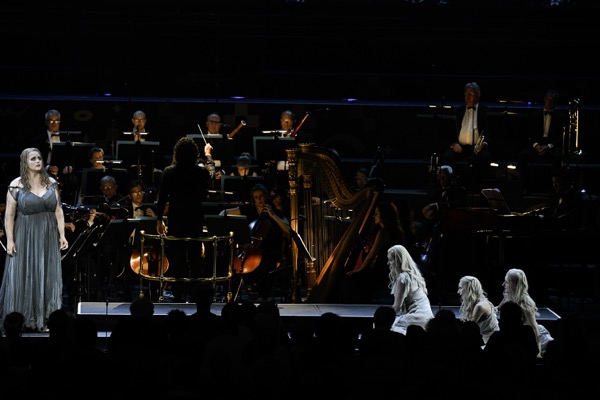
© BBC Chris Christodoulou
The whole comic troupe, in fact, remains entertaining clowns throughout the production. At the same time, the subtleties beneath their ridicule of romantic constancy are not explored to contrast the love of Ariadne and Bacchus, somewhat weakening Strauss’s intriguing provocation. The characters are, for the most part, nevertheless strongly sung.
On the opera seria side, there is much to admire in Rachel Willis-Sørensen’s Prima Donna/Ariadne and David Butt Philip’s Bacchus. Both bring soaring, metallic brilliance to these rather dramatic roles, and both finish with impressive vocal splendour. What is perhaps missing is a more human tenderness beneath – yet finding the right balance between sincerity and parody should be almost impossible in an opera whose emotional worlds are designed constantly to contradict one another.
Richard Strauss: The Opera: Gibt es kein Hinüber? (Krassimira Stoyanova, soprano; AJ Glueckert, tenor; Jessica Pratt, soprano; Fiorentino Maggio Musicale Orchestra; Daniele Gatti, cond.)
Strauss asks for a strangely unconventional orchestra in Ariadne auf Naxos – an exceptionally small string section (only six first violins) set against a comparatively substantial woodwind section. Maintaining balance is difficult, let alone in the notorious acoustics of the Royal Albert Hall. The London Philharmonic Orchestra, under Robin Ticciati, offers exuberant and decent playing, with several finely executed instrumental solos.
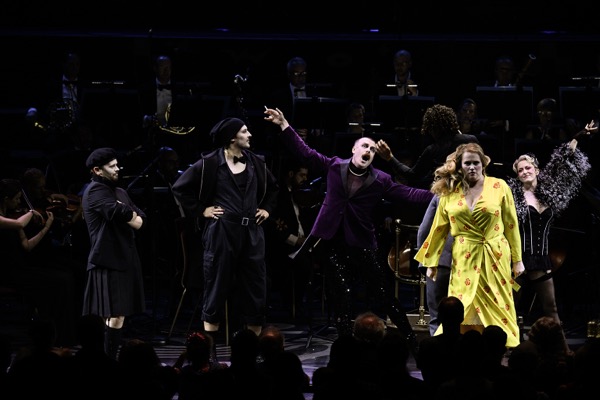
© BBC Chris Christodoulou
For more of the best in classical music, sign up for our E-Newsletter