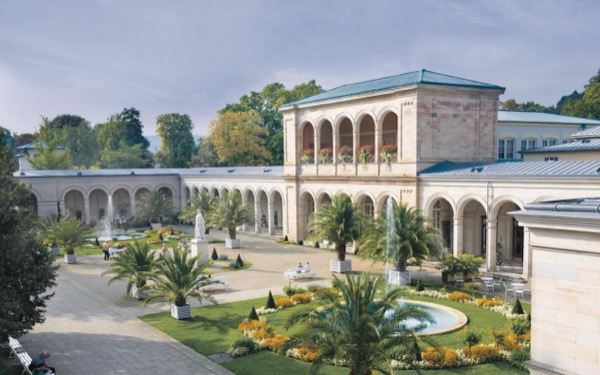
The Ludwigsburg Palace, located just north of Stuttgart, is one of the largest surviving Baroque palace complexes in Germany. With hundreds of rooms, sprawling courtyards, and expansive gardens, it offers a vivid glimpse into the world of eighteenth-century dukes and kings. Yet beyond its grand stone facade lies something even more remarkable: a living cultural tradition anchored by the annual Ludwigsburg Festival (Ludwigsburger Schlossfestspiele) and one of Europe’s oldest operating Baroque theatres.
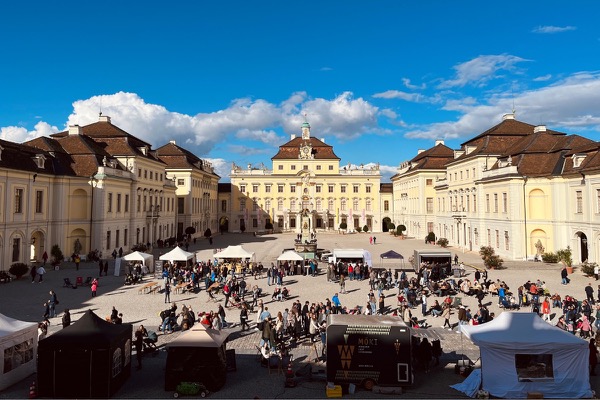
Credit: https://luis-ludwigsburg.de
The Evolution of the Ludwigsburg Festival
The festival traces back to 1932, when Wilhelm Krämer founded the Ludwigsburg Mozart Society with a modest series of palace concerts. Under Wolfgang Gönnenwein’s leadership in the 1970s and 1980s, it expanded dramatically and earned the title Internationale Festspiele Baden-Württemberg in 1980. This recognition marked its growing presence beyond the palace complex, bringing performances to historic churches, castles, and parks across the region.
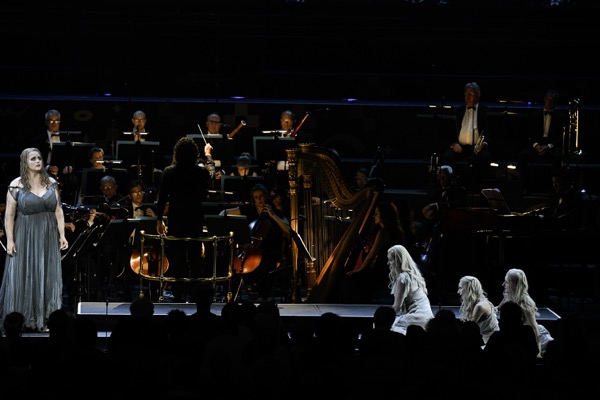
Today, the festival spans the summer months as a major multi-genre celebration, bringing together orchestral concerts, chamber music, dance, and contemporary opera. World-renowned artists regularly gather here to perform. Throughout its growth, the festival has preserved its core identity: transforming Ludwigsburg’s grand architectural heritage into an active, breathing stage for live art.
Inside the Historic Schlosstheater
At the heart of this festival experience sits the Schlosstheater Ludwigsburg (Ludwigsburg Palace Theater). Tucked into the eastern wing of the palace complex, the theatre has a fascinating building history that reflects the changing tastes of Württemberg’s rulers.
Construction began under Duke Eberhard Ludwig in the early eighteenth century as a comedy house. However, it was during the reign of Duke Carl Eugen in the 1750s that the space was fully outfitted into a proper opera house. Designed by court architect Philippe de La Guêpière, the theatre opened its doors in May 1758. Carl Eugen was known for his lavish taste in entertainment, and under his patronage, Ludwigsburg became a major operatic centre in Europe, attracting top Italian composers such as Niccolò Jommelli.
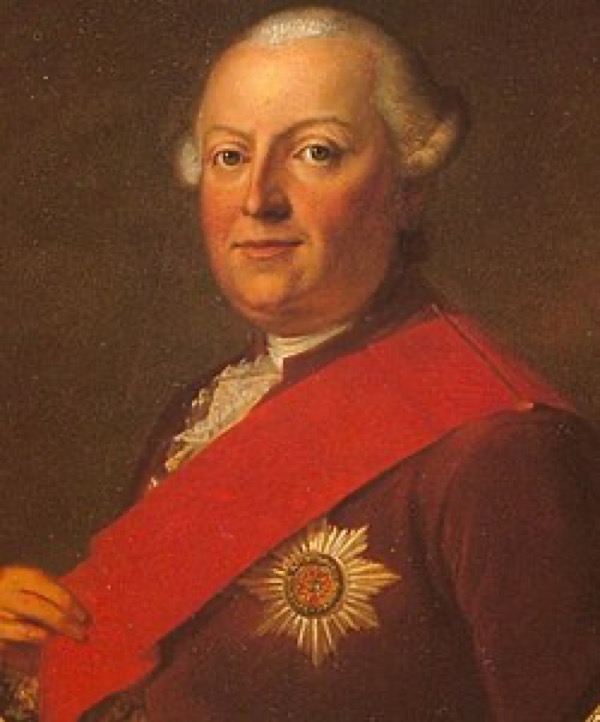
Duke Carl Eugen
In the early nineteenth century, Duke Friedrich II (who later became King Friedrich I of Württemberg) commissioned architect Nikolaus Friedrich von Thouret to redesign the interior. Thouret reworked the auditorium in the Neoclassical, French Empire style popular at the time. He added refined wood panelling, decorative painted motifs, and a prominent royal box spanning two levels opposite the stage.
When the royal court moved its primary residence back to Stuttgart in 1840, the Ludwigsburg Theatre entered a long period of quiet preservation. Because it was largely left untouched throughout the late nineteenth and early twentieth centuries, much of its original structure and interior fittings survived intact. Following a careful restoration in the 1990s—which prioritised structural conservation and deliberately avoided installing modern central heating—the theatre reopened as a summer-only venue that preserves its eighteenth-century state.
A Marvel of Eighteenth-Century Stage Machinery
What makes the Schlosstheater truly extraordinary is its stage machinery. Engineered in the eighteenth century by court machinist Johann Christian Keim, the system is made almost entirely of wood, ropes, and counterweights, without a single electric motor.
The central mechanism lies beneath the stage floor: a massive wooden shaft known as the Wellbaum. When turned, this axle winds up ropes attached to pairs of wooden wing-wagons positioned in tracks on either side of the stage. As one set of painted canvas wings is pulled out of view into the offstage gaps, a new set slides smoothly into place. The entire scene change takes roughly eleven seconds and happens in full view of the audience.
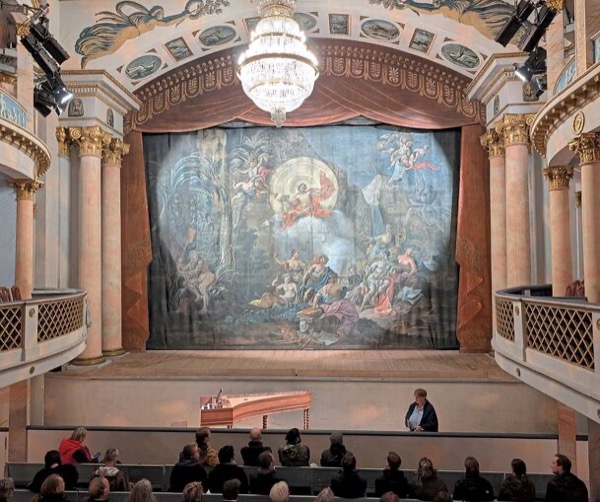
Credit: SSG/P
The stage is also equipped with traditional mechanical sound machines. Metal balls can be rolled down a wooden thunder chute to simulate low rolls of thunder, while fabric drums create the sound of rushing wind. A trapdoor system allows actors to rise from or sink below the floorboards.
Above the auditorium, the ceiling houses a large wooden treadmill wheel. Historically, workers walked into this wheel to raise and lower the heavy central chandelier through an opening in the ceiling before each performance.
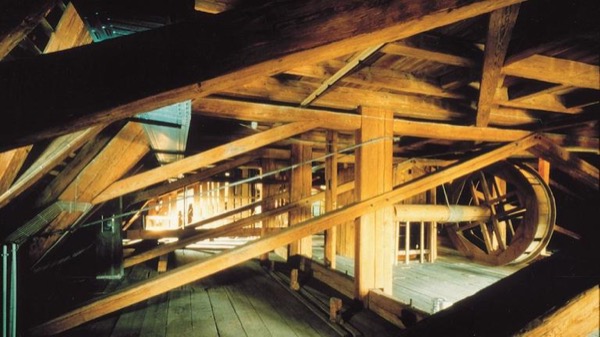
Credit: https://bilder.deutschlandfunk.de
The Spatial Experience: Walking Into a Living Time Machine
Attending an opera or a play at the Schlosstheater is fundamentally different from visiting a modern concert hall. The experience begins long before the music starts.
To reach the auditorium, audience members follow the footsteps of historic courtiers. You walk up wide stone staircases and pass through long, quiet galleries lined with aristocratic portraits. The floorboards beneath your feet creak softly underfoot.
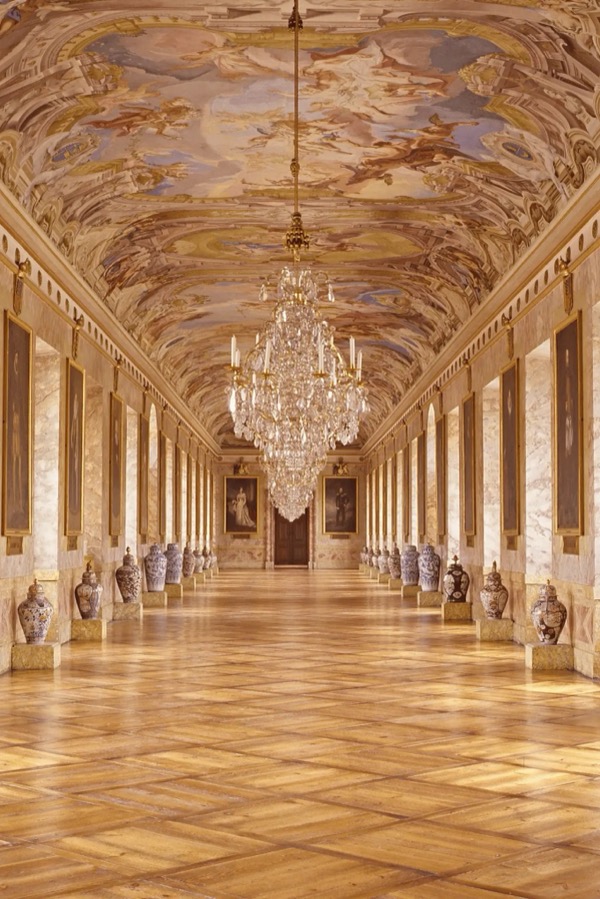
Walkway towards Theatre, Credit: https://luis-ludwigsburg.de
Stepping into the auditorium itself feels like stepping directly into an eighteenth-century painting. The room is intimate, holding around 350 seats arranged in a classic bell-shaped horseshoe layout. Three vertical tiers of wooden boxes surround the floor. Directly overhead hangs the massive chandelier, suspended beneath a ceiling painted with classical figures. Opposite the stage, the two-story royal box stands as a physical reminder of the theatre’s courtly past.
There are no digital projection screens, no electronic surtitle monitors above the stage, and no modern mechanical noise. The atmosphere is quiet, simple, and immediate.
Raw, Direct Sound
The acoustic personality of the Schlosstheater is equally unique. Modern opera houses are engineered with deep orchestral pits, thick sound-absorbing carpets, and carefully angled reflective panels designed to blend and warm up the sound. The Schlosstheater offers none of these synthetic cushions.
Here, the sound is exceptionally direct. Because the room is built almost entirely of aged wood and stretched canvas, notes bounce off the walls instantly. The orchestra sits at nearly the same level as the front rows, allowing you to hear the crisp bite of horsehair against gut strings and the warm, breathy edge of period woodwinds.
When a singer steps toward the front of the wooden stage, their voice hits the ear without artificial echo or long ambient decay. The sound feels raw, dry, and unvarnished, yet remarkably clear. This acoustic clarity forces performers and audiences into a close, shared focus. Without massive orchestral volumes to sing over or complex stage electronics to rely on, singers use stylised physical gestures and clear vocal diction to convey drama. The audience, sitting just meters away, can see every facial expression and hear every emotional nuance.
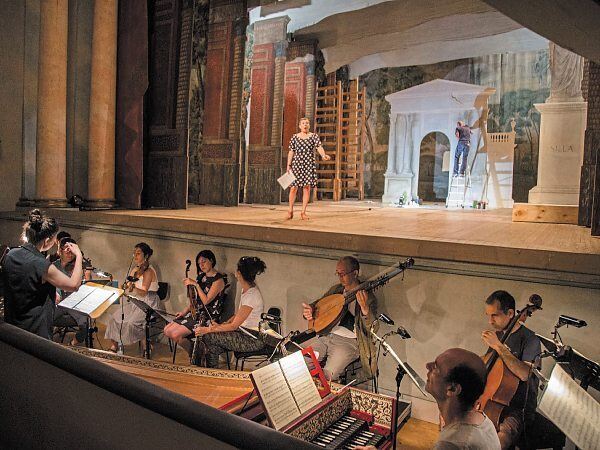
Credit: Holm Wolschendorf
Legacy on the Historic Stage
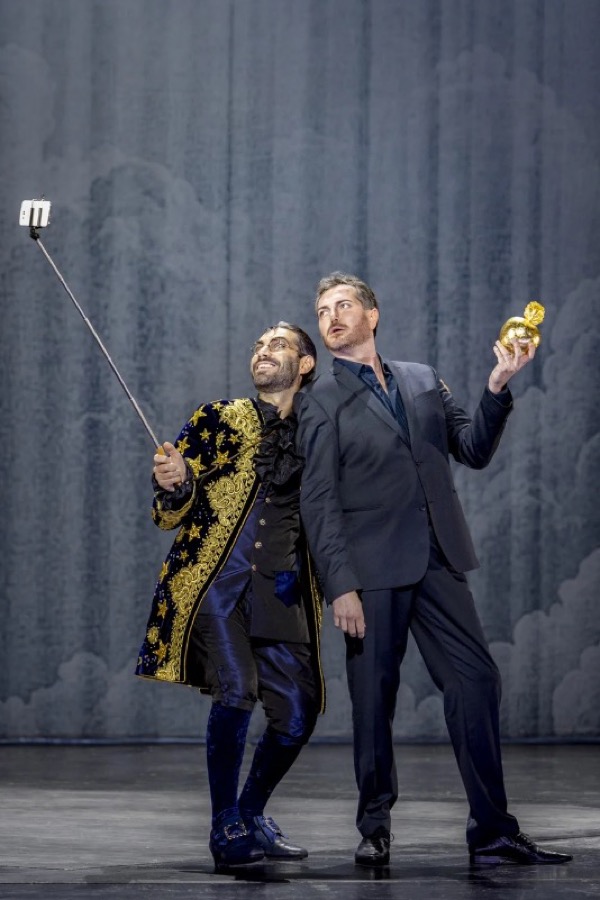
Rather than treating the Schlosstheater as a static museum piece, the festival has long used this intimate space as a living laboratory for early music and dramatic rediscovery. Over the decades, its stage has hosted milestone productions of eighteenth-century masterworks, including the operas of W.A. Mozart, C.W. Gluck, and Niccolò Jommelli—whose revolutionary works once echoed through these very halls under Duke Carl Eugen. Recent seasons have continued this legacy with acclaimed stagings of Jommelli’s Didone abbandonata and Mozart’s rare Singspiel Zaide. When performed here using original wooden machinery, historic sets, and natural acoustics, these baroque operas bridge the gap between past and present. Visitors do not simply watch operatic history from a distance; they sit directly inside its acoustic frame and feel its living rhythm.
https://schlossfestspiele.de/en/home/
For more of the best in classical music, sign up for our E-Newsletter