Pietro Mascagni wrote fifteen operas, an operetta, several orchestral and vocal works, as well as songs and piano music. Yet, he is best remembered for his 1890 masterpiece Cavalleria Rusticana.
Cavalleria Rusticana became the prototype for operatic verismo, and its overwhelming success in European opera houses spawned a wave of verismo works in Italy and beyond.
Pietro Mascagni died in his apartment at the Grand Hotel Plaza in Rome on 2 August 1945, and to commemorate his passing, let us explore the hardships of his final years, spent living in the shadow of his early masterpiece.
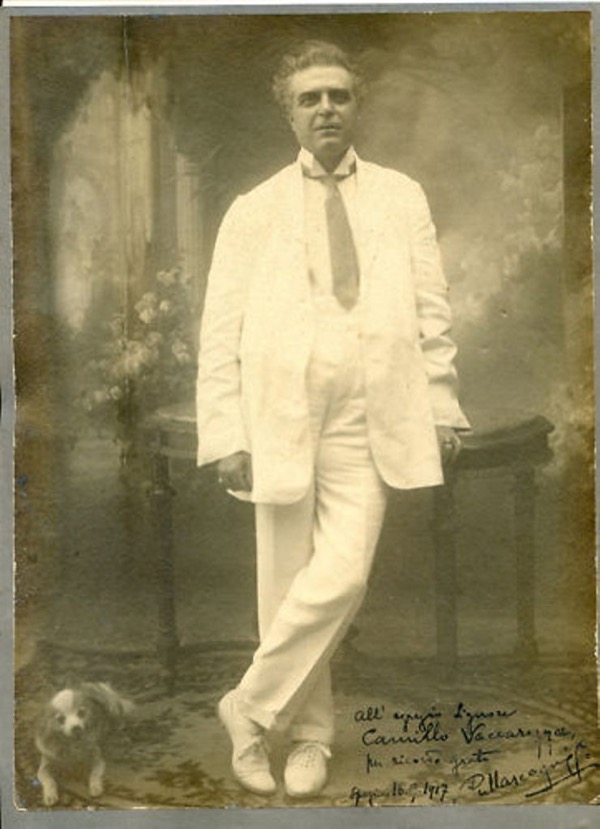
Pietro Mascagni
Pietro Mascagni: Cavalleria rusticana, “Intermezzo” (Zeffirelli)
From Cultural Hero to Political Liability
Celebrating the fiftieth anniversary of Cavalleria, the priest and musician Licinio Refice defined him as “the musical lymph of pure Italianity; flame of the intact Italian tradition of melodrama; a vigilant sword to protect the artistic strength of the Italian race.” (Michele Girardi, GMO, 2001)
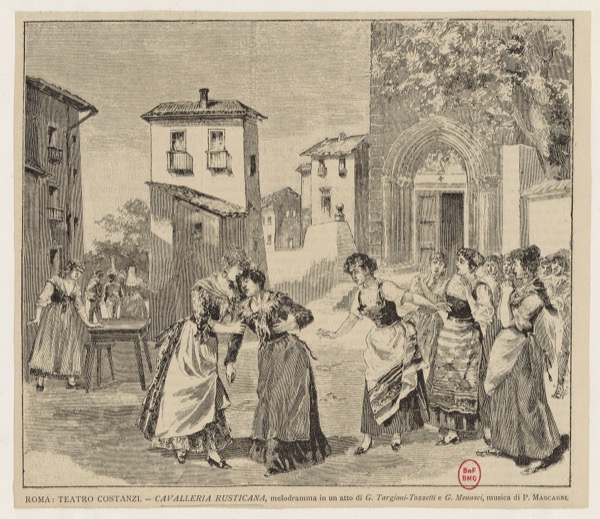
Cavalleria Rusticana, scene from the 1890 premiere, Teatro Costanzi, Rome
In his praise, Refice does not offer a technical musical assessment of the opera. Instead, he praises Mascagni as a cultural guardian defending the artistic prestige and Italian identity in the racialist language common to Fascist Italy.
Mascagni had openly accepted the patronage and honours of the Fascist regime. He had joined the ruling party and enjoyed a period of financial security and public prestige under the regime. His reputation was tied to a government whose fortunes collapsed in 1943, and his association with Fascism left him isolated and vulnerable.
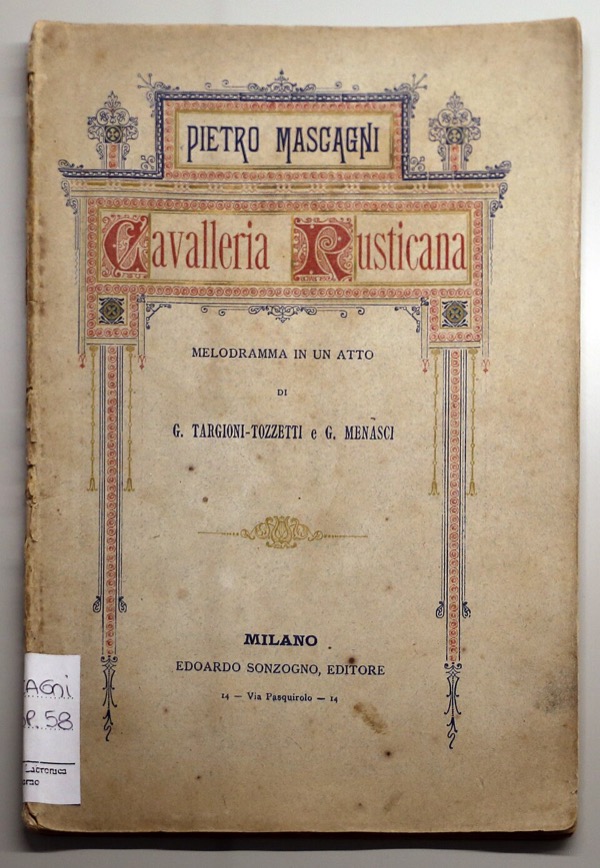
Libretto of Cavalleria Rusticana, Sonzogno, Milan, 1891
Pietro Mascagni: Iris, “Inno del sole”
Twilight of a Verismo Pioneer
As Rome was experiencing occupation and social upheaval between 1943 and 1945, Mascagni suffered increasingly from ill health. In addition, younger audiences and many former admirers distanced themselves, and Mascagni reportedly felt abandoned and embittered.
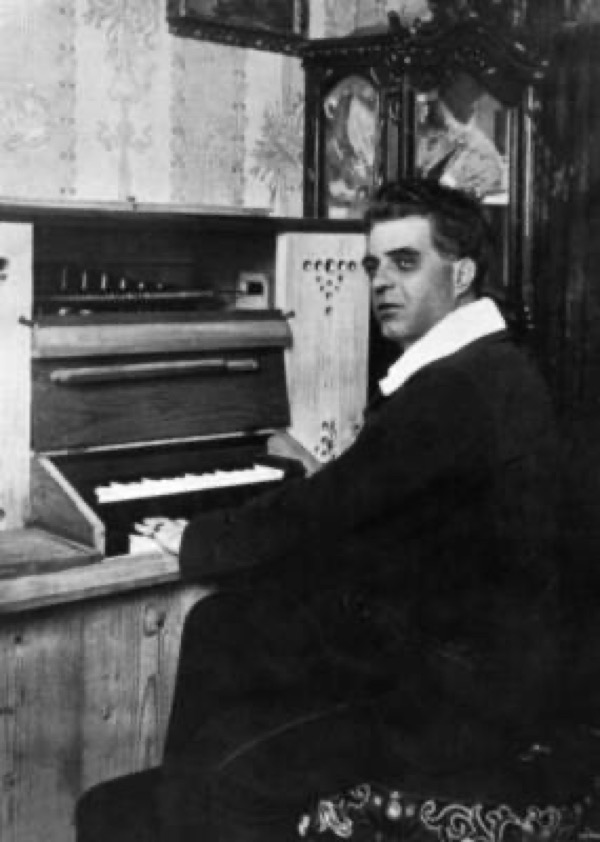
Pietro Mascagni, 1900
Mascagni had composed numerous operas after the sensational success of Cavalleria, including L’amico Fritz, Iris, and Parisina, but none achieved enduring international success. Mascagni became known as the composer of a single immortal masterpiece, a perception that frustrated him deeply.
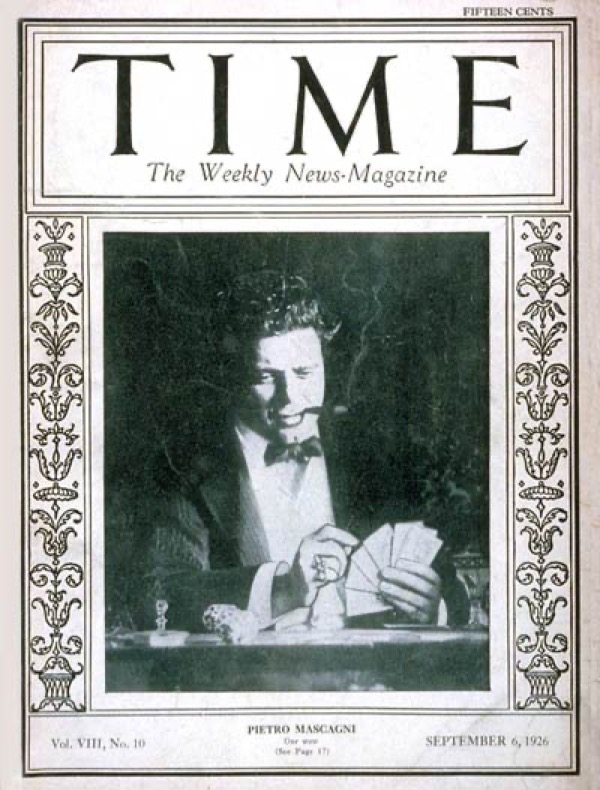
Mascagni was a man known for his many passions. He loved cigars, cycling, and collecting watches, pens, and clothing. Above all, he loved playing cards. Reportedly, he often forced his relatives, friends and assistants to play with him. When he made the cover of Time magazine in 1926, he was featured enjoying a cigar and a card game.
Pietro Mascagni: L’amico Fritz, “Cherry Duet”
The Price of Cavalleria
Playing cards can be an expensive hobby, and Mascagni was notoriously poor at managing his money. Cavalleria had brought him considerable wealth in terms of publishing contracts and royalties. It had also translated into conducting engagements and teaching appointments, yet Mascagni maintained an expensive lifestyle.
Pietro Mascagni
Essentially, he supported two households, one for family members and servants, and one for his lover and companion, the singer and impresario Anna Lolli. As his income from performances and royalties dwindled, he frequently borrowed money and mortgaged future earnings.
In 1927, Mascagni occupied an apartment in Rome’s Grand Hotel Plaza, accommodation that was effectively subsidised by the state. Biographers have noted that Mascagni spent his final years surrounded by mementoes of his greatest triumph.
Pietro Mascagni: Cavalleria Rusticana, “Mamma, quell vino è Generoso”:
https://www.facebook.com/groups/1584966845438655/posts/1816257432309594/
The Final Act
For a number of years, Mascagni had suffered from arteriosclerosis and progressive cardiac weakness. His condition deteriorated during the summer of 1945, and after experiencing a severe heart attack, he died in his hotel apartment on 2 August 1945.
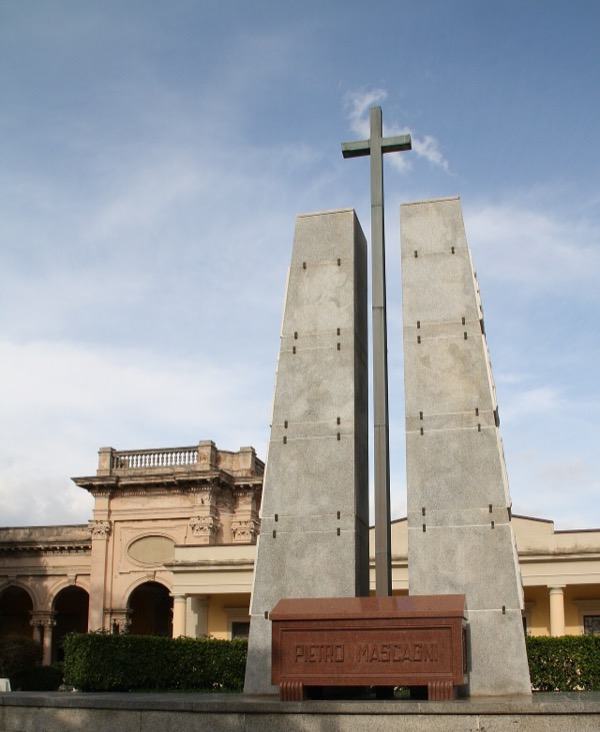
Pietro Mascagni’s gravestone, Livorno
His funeral took place in Rome and was attended by musicians, friends, and admirers. He was still deeply admired by many musicians and cultural institutions, but official commemorations, in the immediate post-war climate, were restrained.
In an effort to restore his public honour, Mascagni’s remains were transferred to his native city of Livorno in 1951. He was buried, amidst considerable ceremony, in the family chapel at the Cemetery of the Misericordia.
For more of the best in classical music, sign up for our E-Newsletter