‘Responding to what is changing around me is what I like the most’
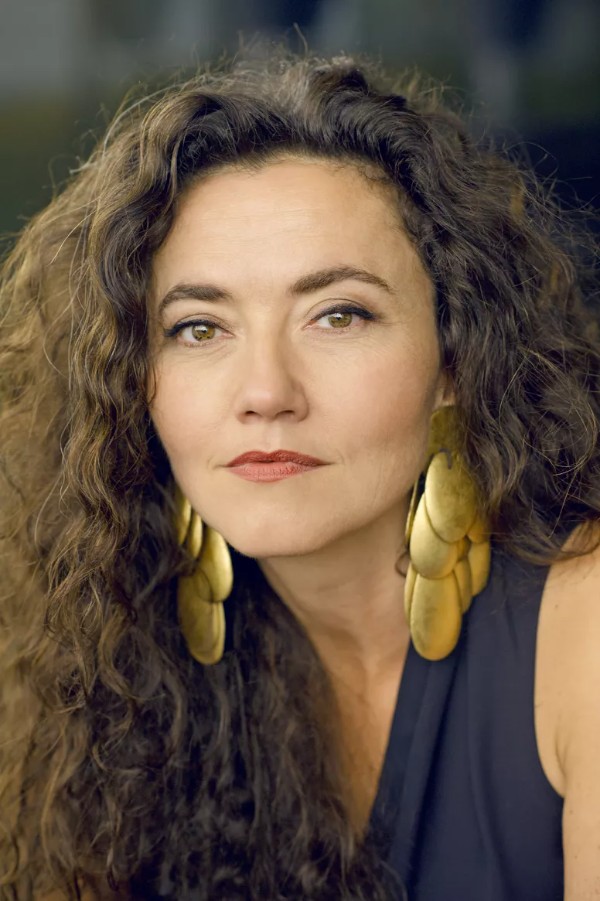
Stéphanie D’Oustrac © Jean-Baptiste Millot
You’d be forgiven for thinking that the great-grand-niece of Francis Poulenc, one of France’s greatest 20th-century composers, was destined to have a life in the arts. However, for mezzo-soprano Stéphanie D’Oustrac, this fact was only revealed to her once she’d already begun her musical studies, the music surrounding her childhood mostly the disco and pop of the day rather than symphonies or great operas.
Nowadays, Stéphanie frequently performs across Europe, the USA and Japan, and has received awards and accolades including a Francophone Radio Competition win in 2000, a 2002 Victoire de la Musique award, and the 2022 International Opera Awards’ ‘New Production’ prize for Poulenc’s La Voix humaine at Glyndebourne that year.
I talk to Stéphanie just after the end of a run of Carmen at La Scala, with the production about to move on to Tokyo. Carmen is one of the most iconic roles for a mezzo-soprano, and what made this recent run even more special for Stéphanie is that the final performance happened to land on her birthday.
How was it to sing such a role in this place on your birthday?
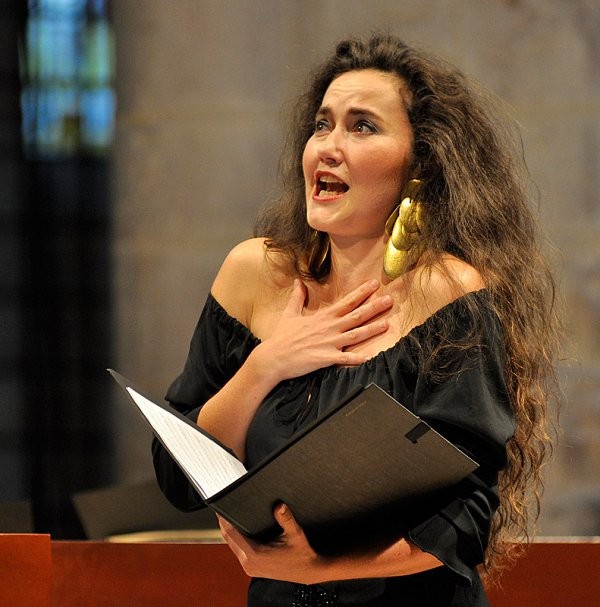
© resmusica.com
My family came for the occasion; it was amazing. We only had one quick rehearsal, but it went very well, and the public was very enthusiastic. It was my third time at La Scala. The first time was Ravel’s L’heure espagnole, and the second was Cesti’s L’Orontea, Italian baroque music, so I felt a bit of pressure to sing in Italian in Milan! And last but not least, Carmen.
How does it feel to sing roles such as Carmen, which are so well-known?
I would say it feels like home. When you sing a role of any size, for me, I never try to just say ‘I know this and I’m doing what I want’. I see my job as working with the conductor and the staging, because they give the colour. They can change the colour of the interpretation a lot. That’s the thing I like the most in my job, because it’s never the same.
It could be the same production, but the fact that we have another director, another conductor, can change a lot. Responding to what is changing around me is what I like the most.
It’s strange when someone asks me if I’m bored singing Carmen. I’m not at all bored, because it can go in many different ways.
Carmen (Aix) – Stéphanie d’Oustrac – La Habanera
How do you respond to changes in, for example, the staging or the direction?
When we began these rehearsals for Carmen with Damiano Michieletto, he wanted something almost depressed. I tried, and in this way you can’t sing the habanera as some shiny song. Little by little it changed. It was interesting to say, ‘Let’s try,’ and to see what kind of colour or expressions or intentions you can put into it.
We are not alone on stage. We are soloists, but we are also interpreters. I like to be respectful towards the stage director, towards the conductor, and I try to do my best with them.
It’s mentioned on your website that opera was the thing that inspired you as a child. What was it about it that grabbed your attention?
It was the acting. I’m sure I would have tried to be an actor, but I had the feeling that it was easier for me to judge if you were a good singer rather than a good actor.
With singers, people can see it and judge it. When you’re an actor, you never really know. I had a feeling that I liked acting very much, and that I liked to give expression through the voice and singing, so I think it’s even more powerful to be a singer.
We like, or we don’t like the voice. Why, we don’t know, but when you put in some expression, it’s the most powerful thing ever.
Atys de Lully – Stéphanie d’Oustrac
Was classical music around you a lot as a child?
Not at all. I would say there was way more pop music! We have Francis Poulenc in my family story – I would say my dad told me this when I was already studying, so it wasn’t really in my childhood that much. We liked singing all together, in the car or whatever, or at the disco – we danced a lot! – But it was more that kind of music that was in my life.
My friends and I were in the disco all summer, with all that 80s music. We always wanted to dance, and now when I’m singing I always want to dance. I need to be in my body; it’s always related to dance. This is from my childhood!
Does the dancing, for you, somehow tie in with the physicality required to sing?
Yes. Sometimes when we sing we make a lot of effort, and I try to hold my body in a good way, because it’s very challenging – it’s like a high-level sport.
I try to always be flexible within that kind of physicality. I think it shows me my limit. If I feel like I can’t move or I’m making too much effort for my body or the voice, it’s not good. I’m always trying to find that limit.
You recently sang the role of Elle in Poulenc’s La Voix humaine at Glyndebourne Opera, which also won the New Production award at the 2022 International Opera Awards. How was it to sing music by your great uncle in this production?
It’s always amazing to sing this – La Voix humaine is an incredible journey. In Glyndebourne I would say it was one of my top five productions. Laurent Pelly, the stage director, let the text and the music through in the purest and simplest way. For me it was totally fantastic.
La Voix humaine – Stéphanie d’Oustrac – “Quelle comédie”
Do you have any other favourite performance memories?
I’m totally fond of Glyndebourne. My family- my daughter came once when I was there in her early childhood. She is now 24, and she is asking, ‘Mum, when are you going back to Glyndebourne? We would love to come with you!’ It’s a very special place.
We have time to rehearse there; we have time to create a team. My regret many times in this industry, in this work, is that I know it costs money, but the time on a production is getting shorter and shorter, and it’s harder to get, in my opinion, the high level as we do in Glyndebourne.
You need your partners to feel confident. You need to try to change and to create all the time. For that, in my opinion, you need to know each other, to have that kind of confidence.
Are there any other roles you get particularly excited about being asked to sing?

© Yvain Genevay
There are so many! The roles I accept are firstly because of the music or the character being special, but then also the musical or staging team creates something special on top of that.
I would love to sing Cassandra in Berlioz’s Les Troyens. One of my favourites to sing is Sesto in La clemenza di Tito. It’s an amazing role, an amazing piece.
I love Offenbach’s La Périchole. I remember I didn’t want to sing Offenbach’s La belle Hélène any more, but the last time I did it in France, the process was so amazing. The rehearsal process was so amazing that it was one of my great memories.
Sometimes you say yes to a job, and you don’t know what to expect, but then it turns out to be amazing. This life is incredible, because you never really know.
Sometimes we say no, and we mustn’t have regrets. I think my mind is like that. I don’t have regrets. When I decide not to do something, that is how it is.
What do you do in your spare time?
I would say I love to teach. I love teaching singers, helping them. Nowadays I live in Paris, but years ago I did some gardening. It’s an amazing therapy. In Paris these days I’m doing pottery. For now it’s my new pleasure. Recently I’ve made egg cups, little things like that, and now I’m asking my friends and family what they’d like me to make!
https://en.stephanie-doustrac.com/
For more of the best in classical music, sign up for our E-Newsletter