In Frankfurt, Grigory Sokolov’s Schubert D960 did not sound like a work looking back. It sounded like a work leaving.
That distinction matters. Many performances of Schubert’s last B-flat major sonata are shaped by memory: they invite the listener into a world of recollection, regret, and tenderness toward what has already been lost. Sokolov offered something harsher and, in a way, more unsettling. The pain in his performance did not come from the past. It came from the future. This was not music mourning what can no longer be recovered. It was music already moving toward a place where the listener would not be taken along.
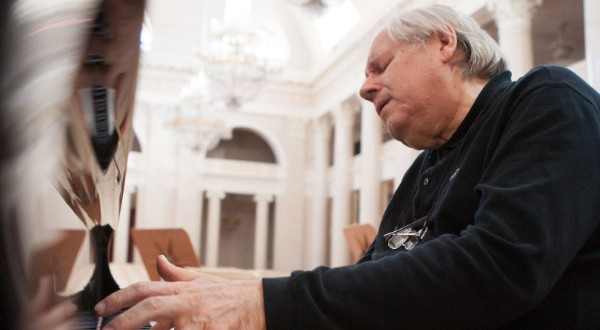
Grigory Sokolov © Mary Slepkova/Deutsche Grammophon
The first movement made this clear from the beginning. What one often hears in D960 is a kind of opening inwardness, as if the music were standing before a long-lived inner landscape and slowly remembering it. Sokolov’s opening suggested something else. It felt less like recollection than like the quiet, orderly clearing of a house one has lived in for a very long time. Drawers are opened, objects handled, decisions made. Nothing is violent. Nothing is theatrical. But the direction is unmistakable. This is not a person pausing over the past. This is a person beginning to remove himself from it.
That is why the performance’s beauty felt so unusual. The sweetness in Sokolov’s Schubert did not belong to memory. It belonged to the destination. The most lyrical moments did not seem illuminated by what had once been, but by what lay ahead: the beauty of the city he was about to enter, the air of another place, the attraction of a future that had already begun to gather force. In many readings of this sonata, sweetness softens loss. Here it intensified it. It suggested not that something beautiful had vanished, but that something beautiful elsewhere was already calling him away.
The emotional logic of this interpretation was therefore entirely different from a more recollective reading, such as Maria João Pires’s. In Pires, one often hears memory itself as the medium of feeling: warmth survives because the past survives in consciousness. The wound lies in having once possessed something that can no longer be held. Sokolov’s wound is different. He does not seem injured by what has passed. He seems marked by what is about to happen. If Pires gives us the sadness of “we had this once,” Sokolov gives us the sadness of “he is still here, but he already belongs elsewhere.”
Grigory Sokolov Plays Schubert’s Piano Sonata No. 21, D. 960 – I. Molto moderato (recorded in 2003)
No recording of the Frankfurt evening discussed here is available. The clip below is included only for reference.
What makes this especially remarkable is that the effect does not come from overall speed. On the contrary, the broad architecture remains spacious. The first two movements do not hurry. The feeling of urgency comes from local decisions: from the way phrases refuse to linger, from the way pauses do not dissolve into reverie, from the way weak dynamics remain shaped and controlled rather than melting into sentiment. Sokolov’s soft playing was one of the evening’s defining qualities. After strong phrases, the piano could turn immediately to something extremely delicate, rounded, and refined; but these softer moments did not collapse into intimacy or confession. They retained contour. They retained direction. They did not ask to be admired as fragility. They quietly continued the work of departure.
This is why the performance felt so firm without ever becoming aggressive. Sokolov was not faster than everyone else; he was less hesitant. The music did not rush, but it did not look back. That difference is crucial. Some performers make Schubertian time glow in suspension. Sokolov made it move forward in stillness. The result was a farewell stripped of consoling nostalgia. Not a breaking apart, but an implementation. Not a scene of emotional damage, but a sequence of inner decisions.
The second movement deepened this impression. Here one might expect the full arrival of grief, and in many performances one gets precisely that: a space of inward pain, memory, and dark singing. Sokolov did not deny the darkness, but he denied it the comforts of self-absorption. This was not a person sitting with sorrow. It was someone continuing through it. The line felt sustained rather than mournful, borne forward rather than turned inward. The route remained unchanged. The night was deep, but it was not allowed to become a dwelling-place.
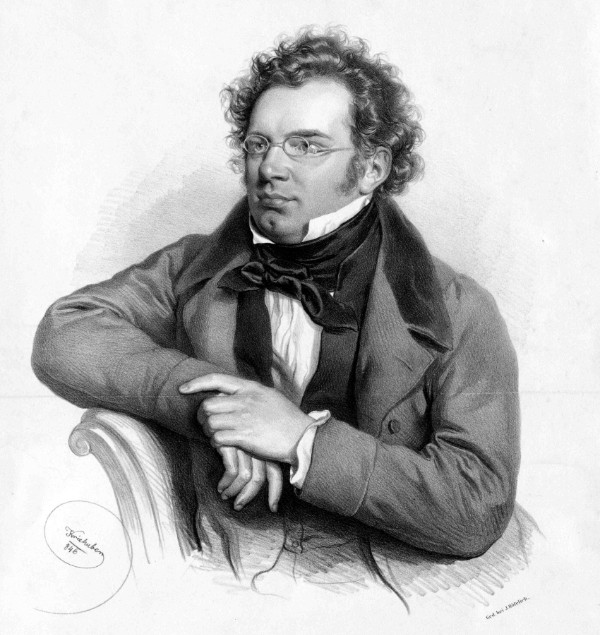
Franz Schubert
The third movement brought a fleeting lightness, but even here the effect was not release in any ordinary sense. It was not carefree. It was delicate in the strictest sense of the word: light, fine, transient, almost like a brief current of air from the world ahead. And the finale confirmed the entire trajectory. It was not triumph, and it was not retrospection. It was the actual act of going out the door. By that point, the listener was no longer being asked to share a memory. The listener was being made to witness a departure.
This, finally, was what made the performance so difficult to shake off. Sokolov did not present D960 as an elegy for what time has destroyed. He presented it as a form of leave-taking in which the hardest fact is not loss but exclusion. The listener stands in the room, watches him pack, hears him calmly speak of the journey ahead, and realizes that in the next moment he will leave, perhaps forever. He does not say anything cruel. He does not need to. The cruelty lies in the clarity.
That is why this was not merely a moving Schubert performance. It was an interpretation that shifted the sonata’s emotional center. D960 became not a backward glance, but a forward wound.
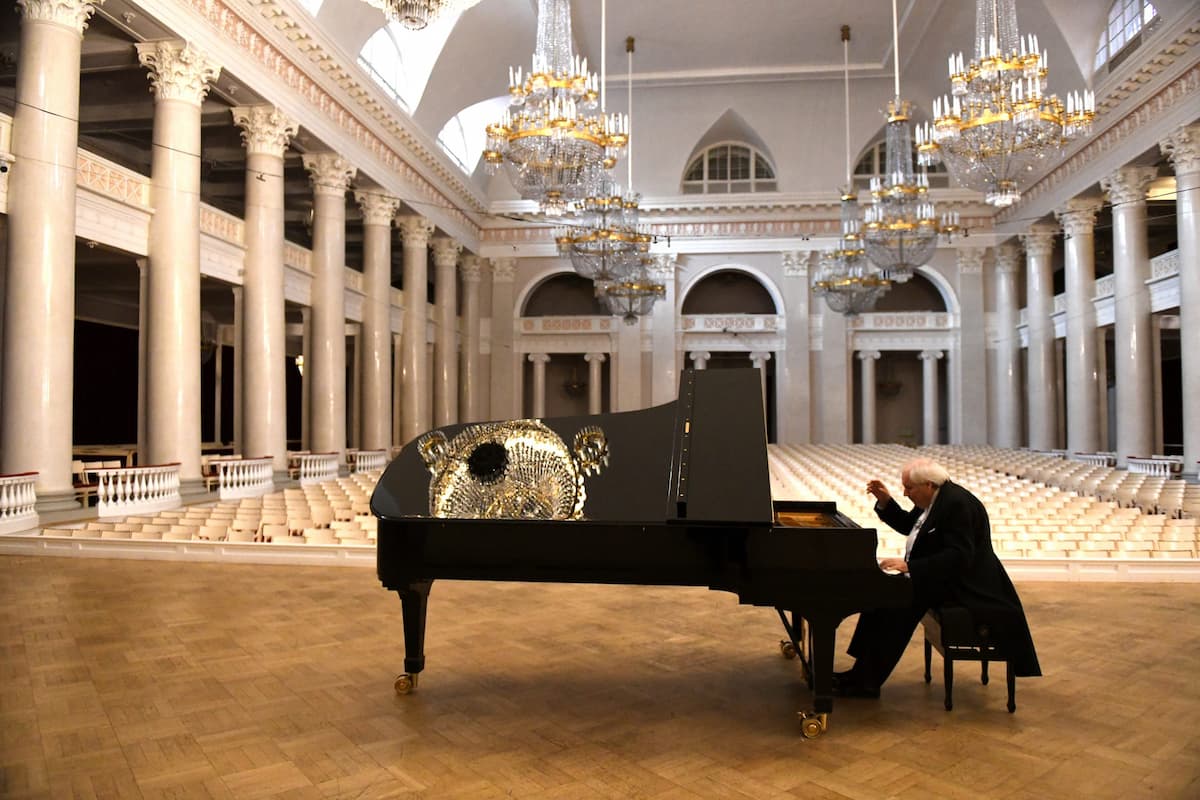
Grigory Sokolov © worldmasterpianists.com
Tonghua Shen is a design-trained cultural practitioner with an MA in Design from Hochschule Luzern, Design Film Kunst. He began studying classical guitar in 2016 and, while completing his MA in Switzerland in 2022, started formal training in Renaissance lute. His musical journey has taken him across Europe, following the paths of Bach, Italian instrumental traditions, and compositional centers such as Milan and Bologna. He has attended numerous guitar and classical music festivals, including the Lucerne Festival, where he has followed masterclasses closely and also worked as a translator in masterclass contexts. Through these experiences, he has developed long-term connections with European conservatory professors, musicians, and instrument makers. His writing is shaped by both design-based observation and sustained listening practice.
For more of the best in classical music, sign up for our E-Newsletter