
Everyone knows that Ludwig van Beethoven’s music is among the most popular and influential in classical music history. However, not everybody knows that we would have had many more works if he hadn’t spent years of his life trying to secure custody of his nephew, Karl van Beethoven.
Today, we’re looking at the tragic life story of Karl van Beethoven and his relationship with his uncle Ludwig.
The Dynamics Between Ludwig and His Brothers
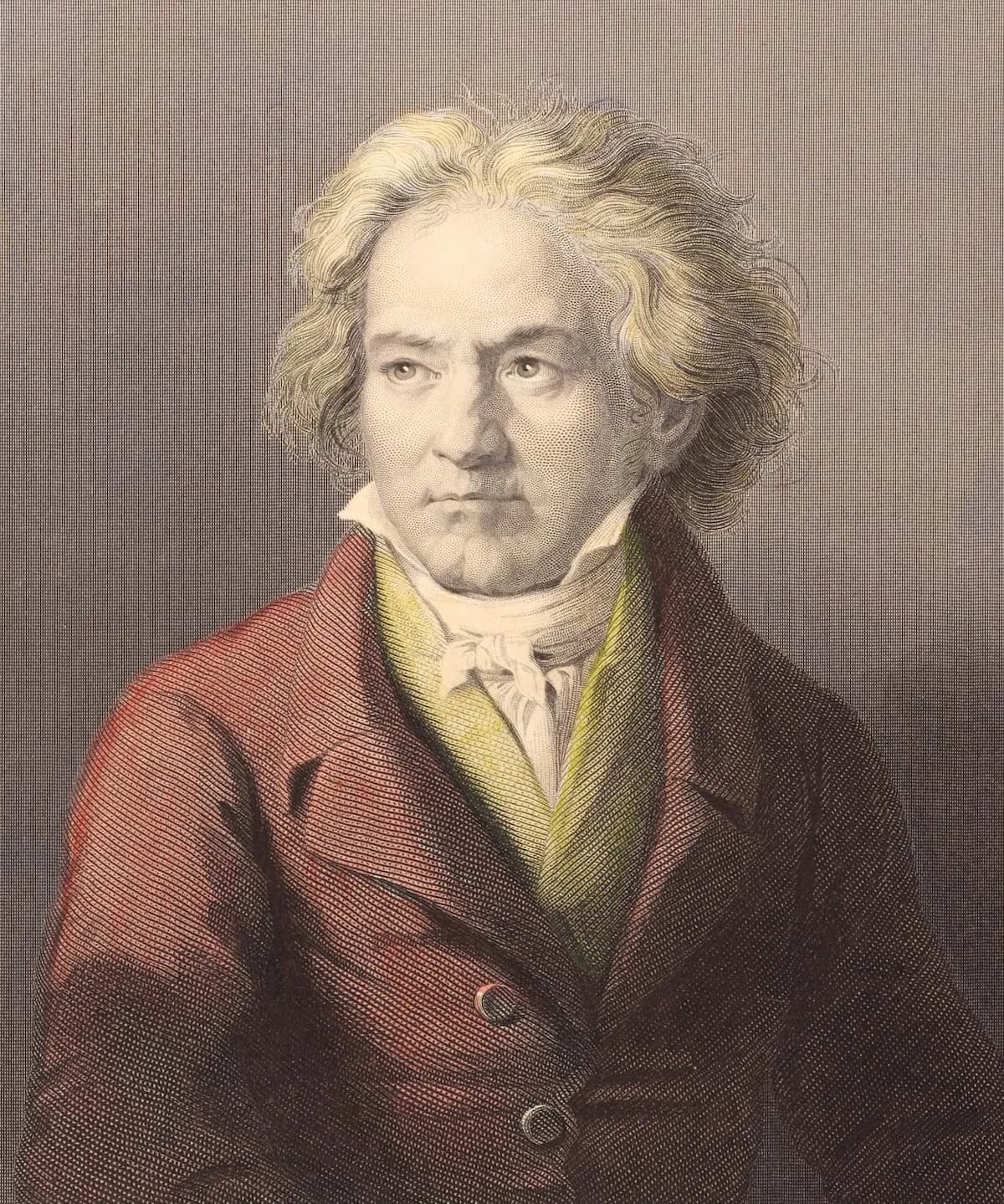
Ludwig van Beeethoven
The Beethoven household consisted of three brothers.
Ludwig was the oldest, born in December 1770. Kaspar Anton Carl van Beethoven was born in 1774, and Nikolaus Johann van Beethoven was born in 1776.
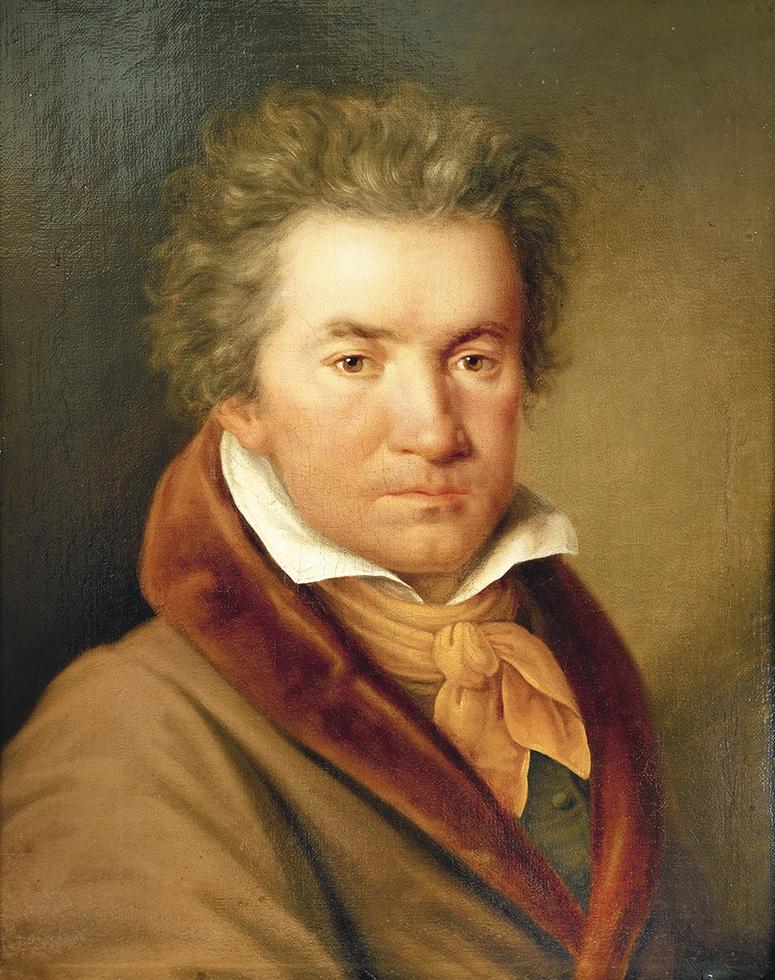
Kaspar Anton Karl van Beethoven
Their mother’s health was poor, and their father was an abusive alcoholic whose addiction worsened throughout their childhoods.
In 1787, their mother died of tuberculosis. Ludwig was sixteen; Kaspar was twelve; and Johann was ten.
As is common in these kinds of households, Ludwig took on a substitute father role to his younger brothers.
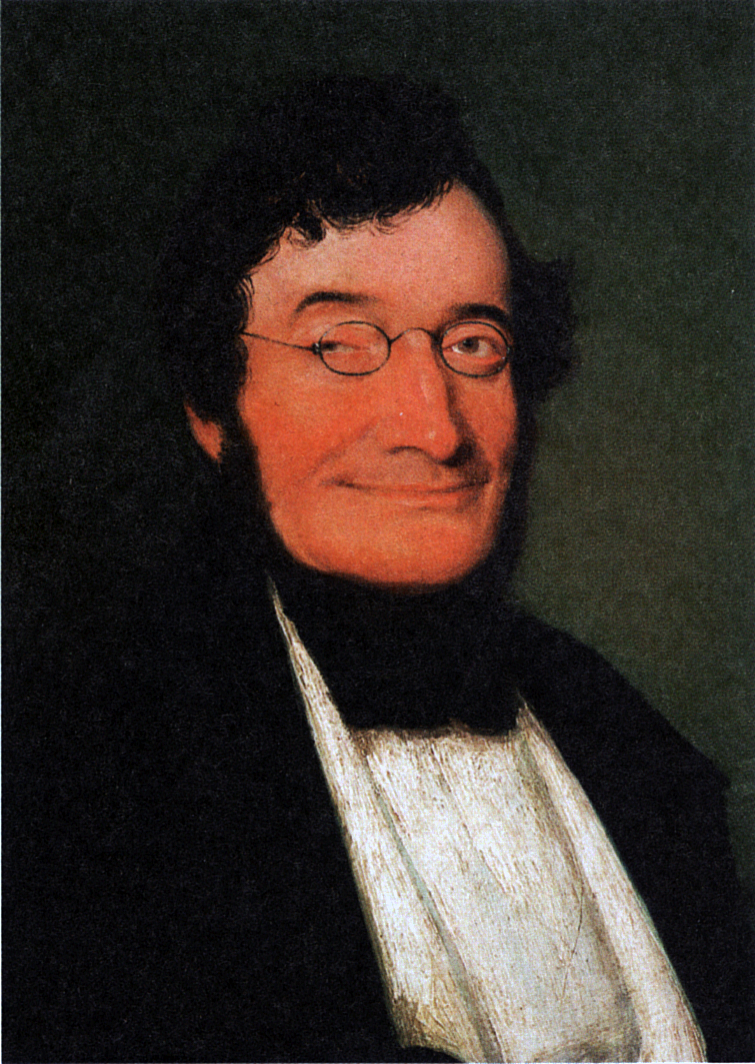
Nikolaus Johann van Beethoven
Read more about the Beethoven brothers’ relationship.
Predictably, upon losing his wife, their father’s drinking spiraled even further out of control.
When Ludwig turned 18, he petitioned the authorities to reroute half of his father’s salary to him, so it could be spent on household essentials and not more alcohol. (The authorities agreed to Ludwig’s request.)
In 1792, when he was 21, Beethoven left his father, brothers, and hometown to pursue a career and make money in Vienna. His father died soon after his departure.
Kaspar Comes to Vienna and a Fight Ensues
In 1794, Kaspar followed his older brother to Vienna.
He worked a government desk job in finance, taught piano part-time, and even served as his brother’s (inept) secretary for a while.
He performed so poorly in the latter job that the two brothers got into a physical altercation over it.
Afterwards, Kaspar took a step back from his brother’s affairs.
Kaspar Marries Johanna, the “Queen of the Night”
In 1805, when he was 31, Kaspar became involved with a 19-year-old Viennese woman named Johanna.
She got pregnant in December 1805. They married the following May, and their son Karl was born on 4 September 1806.
Ludwig was horrified at this turn of events. He was especially antagonistic toward Johanna, nicknaming her the Queen of the Night after the villainess in Mozart’s The Magic Flute.
Mozart’s Queen of the Night aria
Unfortunately, Johanna didn’t do her reputation much good when, in 1811, she became involved in a scheme to steal an extremely expensive pearl necklace…then blamed her former maid for the crime.
It then came out that she was deeply in debt and had even embezzled money. (She claimed that Kaspar didn’t give her much to live on.)
She was initially sentenced to a harsh one-year jail sentence, during which she’d be placed in leg irons and fed no meat, but Kaspar was able to negotiate her sentence down to time served.
It’s tough to imagine the impact that this trial would have had on a five-year-old boy.
The Death of Kaspar
The difficulties kept coming. In 1812, Kaspar was diagnosed with tuberculosis…the same disease that had killed his mother.
His condition deteriorated. After Kaspar became unable to work, Beethoven began financially supporting the entire family.
When writing out his will in 1813, Kaspar chose Ludwig to be his son’s sole guardian.
However, in 1815, just days before his death, he named Ludwig and Johanna as co-guardians, begging them to work together productively to raise his son.
We’ve written about this years-long custody battle in more detail.
Securing Custody of Karl
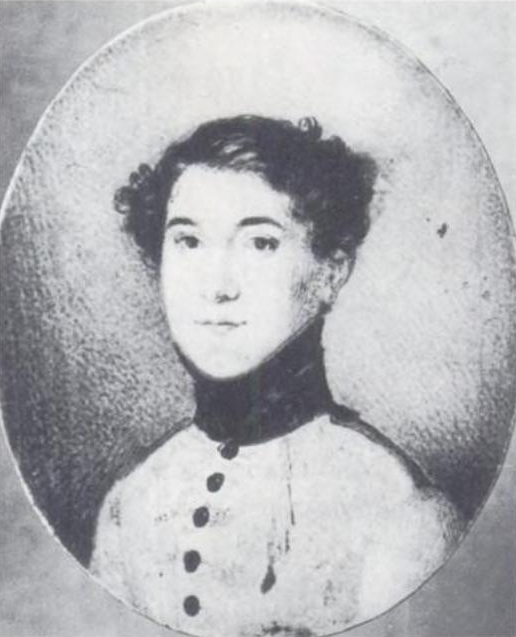
Karl van Beethoven, Beethoven’s nephew
After Karl’s death, Johanna was, understandably, desperate to retain access to her child.
Meanwhile, Ludwig was drawing on old family patterns of wanting to control, take care of, and otherwise rescue his family…even if doing so would deeply impact the quality of his own life.
Beethoven Cello Sonata No. 4, written in 1815
The year 1815 was also when Beethoven turned 45. After being spurned by multiple potential partners, he was struggling with the fact that he was never going to find a wife and wasn’t going to have children of his own. Karl was the closest thing he was ever going to get to a son.
It was the perfect storm for a years-long custody battle.
Karl’s Experience of the Court Battle
Understandably, the events of his late childhood were hugely scarring for Karl.
Shortly after his mother’s court battle, he lost his father when he was just nine. Next, he got thrown into a five-year-long custody battle and was made to testify in it shortly after his father’s death.
Then, in 1816, the year he turned ten, he was forbidden by the authorities from seeing his mother. Nevertheless, he escaped to see her. The police came and hauled him back to Beethoven, against his will. These forced separations were deeply traumatic for him.
In an attempt to bond with his nephew, Beethoven gave Karl some music lessons. He also signed him up for piano lessons with his former student Carl Czerny. Czerny noted, helplessly, that Karl didn’t possess much musical talent. That infuriated Beethoven. How was Karl going to be a surrogate son if he hadn’t inherited his musical ability?
As the custody trial dragged on and he entered his teens, Karl’s grades dropped. Month after month, both uncle and nephew brought out the worst in each other.
Beethoven began labeling Karl as bad, all the while still constantly badmouthing his mother.
Karl Goes to Boarding School
Finally, starting in 1817, the year Karl turned 11, Beethoven enrolled Karl in a boarding school, hoping the discipline would help him.
Even then, he forbade Johanna from visiting Karl without his permission. Johanna responded by filing suit.
Beethoven’s Piano Sonata No. 29, “Hammerklavier”, written in 1817
By 1818, Karl was mistreating Beethoven’s servants and stealing money from him.
However, in December of that year, Karl also told the court that if he had to choose who to live with, he’d choose Beethoven. (It’s unclear if he felt pressured into giving that answer.)
In 1820, now fourteen years old, with the court cases still ongoing, Karl returned to boarding school. He escaped and ran back to his mother. Yet again, he was separated from her against his will.
His remaining teen years were, understandably, deeply unhappy.
In the end, Johanna lost all custody of Karl. Beethoven had won. But at what cost?
Karl’s Suicide Attempt
In 1825, when he was 19, Karl enrolled at the University of Vienna to study languages. It was a chance – maybe – for the young man to finally start creating his own life on his own terms.
Beethoven’s String Quartet No. 15, written in 1825
However, Beethoven was still determined to control every part of Karl’s life that he could.
He hired Karl to help him with his papers (mirroring the way he’d – unsuccessfully – hired Kaspar to be his secretary decades earlier) and even asked his friends to spy on Karl.
The following year, Karl decided to join the military. Beethoven, of course, was horrified.
The situation escalated. Karl, feeling trapped, decided that suicide was his only escape.
He bought two guns, traveled to the Rauhenstein castle ruins outside of Vienna, and pulled the triggers. One missed his head entirely; the other grazed his temple but spared his life.
A wagon driver found him the next day. Karl asked to be brought to his mother’s.
When the police got involved, Karl said, “I became worse because my uncle wanted me to be better.” He also said, “My uncle has tormented me too much.”
He entered the hospital and stayed there for two months in the summer of 1826, recovering.
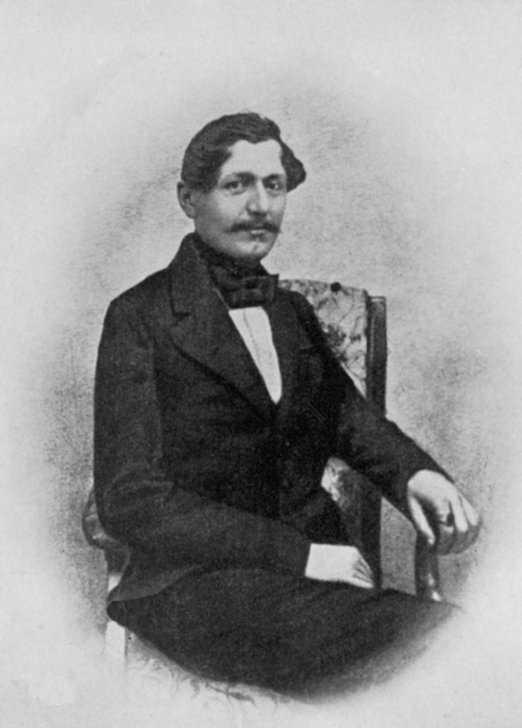
Karl van Beethoven in later life
Beethoven’s Death
The moment was sobering, and Beethoven was deeply shaken. He softened his stance and allowed Karl to enter the military.
But before Karl could depart from Vienna, Beethoven’s health, never good, worsened.
Beethoven’s String Quartet No. 16, written in October 1826
Karl stayed by his bedside throughout December 1826 before leaving to take up his position. During that time, Beethoven wrote out his will, leaving all of his possessions to Karl. Despite everything, Beethoven still viewed him as his de facto son.
While Karl was away, Beethoven’s strength waned. In March 1827, he died.
Karl’s Marriage and Children
A few years later, while Karl was still in the military, he got into a relationship with a woman named Caroline Barbara Naske.
In November 1831, they had a daughter named Karoline Johanna (an apparent nod to his mother).
He retired from the military and married Caroline on 16 July 1832.
After their marriage, the couple had four more children: Marie Anna in 1835, Ludwig Johann in 1839 (this time, a nod to his uncle), Gabriele in 1844, and Hermine in 1852.
The family lived off the income generated from Ludwig van Beethoven’s music.
Like his uncle, Karl developed liver disease in middle age. He died in 1858 at the age of 51.
The biographical record of Karl thins out after Beethoven’s death. But hopefully, he was able to find some measure of peace in his later years after a truly horrific childhood.
The Impact of the Custody Battle Over Karl
In the end, the tortured relationship between Beethoven and Karl ended up being one of the more consequential in music history.
During the five years of the court battle, Beethoven’s compositional output dipped considerably.
However, upon returning from the break, he began writing a series of masterpieces in his fully mature late style.
It seems clear that the emotional chaos of those years, combined with his deafness, deeply impacted the music that he wrote at the very end of his life.
At the same time, it’s tempting to wonder what Beethoven might have written had he survived into Karl’s independent adulthood, when he no longer would have such pressure to fret over him so intensely…or what other works he could have written, had he simply allowed his sister-in-law to raise her son. It’s one of those tantalising music history what-ifs we’ll never know the answer to.
For more of the best in classical music, sign up for our E-Newsletter






I’m a fan of Beethoven. Fell in love with his music at the age of 14. Now I’m 57+. I play on the piano. His Gertrude’s Dream Waltz, Hess 58 are the type of works that I tried out on my piano. But his 5th symphony’s 2nd movement left me in tears. The struggle depicted here is beyond any words. Thank you for letting me write here.