Wind Quintets at 200
Two hundred years ago, on 13 April 1826, Franz Ignaz Danzi (1763-1826) died in Karlsruhe, aged 62. He had known Wolfgang Amadeus Mozart in his youth, had mentored the young Carl Maria von Weber, and had been a contemporary of Ludwig van Beethoven.
Danzi was most famous for his wind quintets, and he composed nine such works between 1820 and 1824. These are genial and gentle works, modest in reach, but beautifully crafted in every detail.
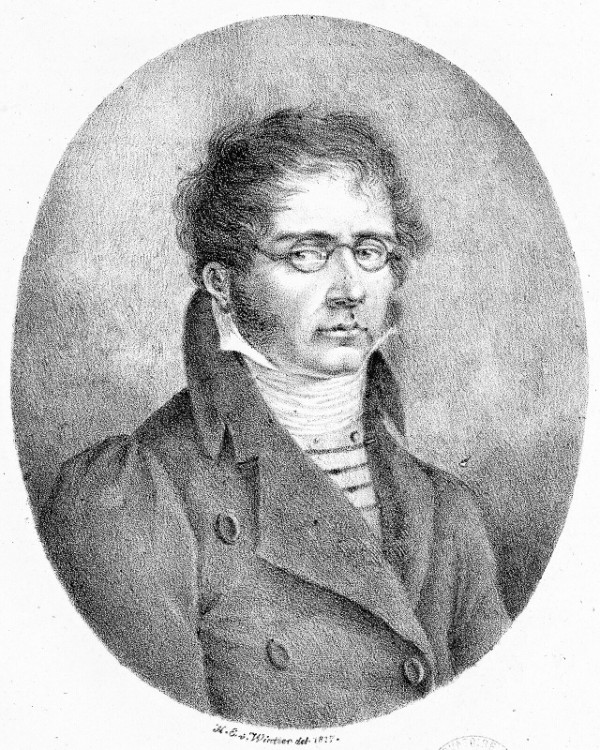
Franz Ignaz Danzi
The wind quintets were written in part to raise the level of musicianship at the court of Karlsruhe. But that’s not the only reason why wind players should know this music. To commemorate the 200th anniversary of Danzi’s death, why don’t we explore the wind quintets in a little more detail?
Franz Danzi: Wind Quintet in B-flat Major, Op. 56, No. 1
Beyond the Jolly Exterior
Franz Danzi was described as a plump little man with a rounded head and clever eyes which always seemed good-humoured. Don’t let this jovial description fool you. Franz Danzi was a highly competent musician and composer.
He joined the cello section of the famous Mannheim Orchestra at the age of 15, and performed with them for many years. Two of his early stage works were performed in Munich, and he then married the celebrated singer and pianist Margarethe Marchand.
The couple embarked on a concert tour that lasted several years, and Danzi eventually enjoyed some success as an opera composer. Success as an opera composer generally translated into employment opportunities, and such was the case for Danzi.
He took up a post in Stuttgart in 1807, but resigned in 1812 citing poor health. However, within the same year he accepted the post of Kapellmeister at the court in Karlsruhe. By that time he had been cultivating a close friendship with Carl Maria von Weber, and he was highly supportive of Weber’s quest to promote serious German-language opera.
Franz Danzi: Wind Quintet in F Major, Op. 68, No. 2 (Soni Ventorum Wind Quintet, Ensemble)
Stamping the Beat
The orchestra at Karlsruhe was not in great shape, and the Allgemeine Musikalische Zeitung reported in 1817 that Danzi had to stamp the beat with his foot to keep the orchestra together, especially at important entries.
One way of improving the orchestra, especially the wind section, was to compose dedicated wind quintets. The combination of flute, oboe, clarinet, French horn and bassoon, however, was not new, as this instrumentation had been established by Anton Reicha.
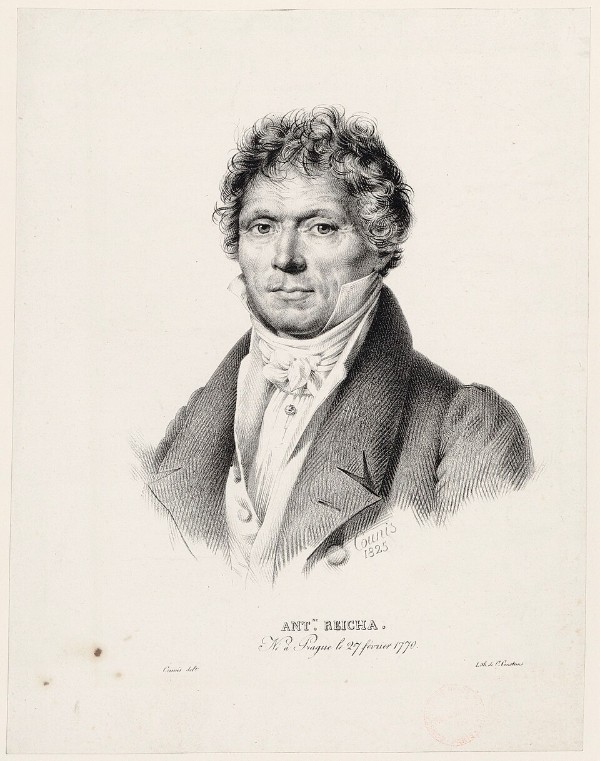
Anton Reicha
Reicha was born in Prague, educated in Bavaria, and later became a French citizen. He was friendly with Ludwig van Beethoven, and counted Franz Liszt, Hector Berlioz, and César Franck among his students. Even Chopin considered studying with him, but ultimately decided otherwise.
He is best known today for his 24 wind quintets, composed in Paris between 1811 and 1820. Most of his later wind quintets were premiered in the foyer of the Théâtre Favart by some of the world’s finest wind soloists. Immediately popular, they were played all over Europe shortly thereafter.
Franz Danzi: Wind Quintet in D minor, Op. 68 No. 3
Reicha’s Mission
In his memoirs, Reicha claimed that his wind quintets filled a void. “At that time, there was a dearth not only of good classical music, but of any good music at all for wind instruments, simply because composers knew little of their technique.”
Since Reicha was a flautist, he systematically explored the possibilities of the wind ensemble and came up with a formal variant that could accommodate a great number of principal themes.
The wind quintets also received commercial interest from music publishers during his lifetime. They appeared with Simrock in Bonn and Cologne, with Boieldieu and Richault in Paris, and with Schott in Mainz.
By some accounts, Franz Danzi started to write wind quintets after the tremendous financial success of Reicha’s first set of works, published in 1817. Since Danzi had a gift for writing flowing melodies and had a connection to publishers, he lavished considerable care on his own wind quintets.
Franz Danzi: Wind Quintet in E Minor, Op. 67, No. 2 (Michael Thompson Wind Ensemble, Ensemble)
Modest Yet Masterful
The nine wind quintets by Danzi are dedicated to Reicha and published in groups of three. They display a remarkable unity of form. All of them follow the popular four-movement pattern. Sonata form first movements are followed by song-form seconds, and a minuet that occasionally approaches a scherzo character. These works all concluded with rondo finales.
The Danzi wind quintets are modest in reach, yet beautifully crafted in every detail. Players must have solid basic technique and good intonation. However, they focus primarily on ensemble balance rather than extreme virtuosity. And that makes them very approachable for amateurs and students.
Danzi beautifully blends the colourful combinations of the five instruments, with clever use of timbral contrasts. Frequently, the oboe or flute presents the leading melodies, the horn provides harmonic support, and the bassoon anchors the bass line.
Melodic lines are frequently passed between upper winds, with the horn and bassoon providing harmonic foundation and occasional soloistic moments. Danzi always chooses an instrumental combination that suits the character of the material.
Franz Danzi: Wind Quintet in A Major, Op. 68, No. 1 (Berlin Philharmonic Wind Quintet, Ensemble)
Affectionate Respect
I was not able to find specific contemporary reviews of the Danzi wind quintets, but his compositions were overall praised for their melodic quality and craftsmanship. Since his wind quintets were published shortly after Reicha’s more ambitious sets, they seemed to have been positioned as practical and accessible works.
Danzi, as an orchestral cellist and conductor, brought plenty of practical knowledge to these compositions. Composed in the 1820s when Beethoven and Schubert were pushing boundaries, the wind quintets are looked upon with affectionate respect rather than profound intellectual scrutiny.
Essentially, the wind quintets represent a polished late-Classical sensibility. When compared with Beethoven’s contemporary late string quartets, it becomes obvious that Danzi composed in a courtlier vein, favouring elegant and conversational music-making.
Because of their modest technical demands and a focus on ensemble cohesion, they make excellent teaching and community ensemble pieces. They are regularly performed and frequently recorded. If you are looking for charm and playability without all that Beethovenian intensity, the Danzi wind quintets are an ideal choice.
For more of the best in classical music, sign up for our E-Newsletter
Franz Danzi: Wind Quintet in G minor, Op. 56 No. 2
For more of the best in classical music, sign up for our E-Newsletter