By the time Gioachino Rossini turned 38 years of age, he had composed 39 operas. He staged his first opera in 1810 in Venice, followed by productions in Bologna and Milan. Tancredi of 1813 established his international reputation, which quickly spread to London and later to New York. L’italiana in Algeri became another box office success.
By 1815, Rossini was in Naples, and during this time, he wrote some of his most famous works, including The Barber of Seville and Otello. The Thieving Magpie and Cinderella were written for La Scala and Rome, and political upheaval saw him in Vienna in 1822, together with his new wife, Isabella Colbran.
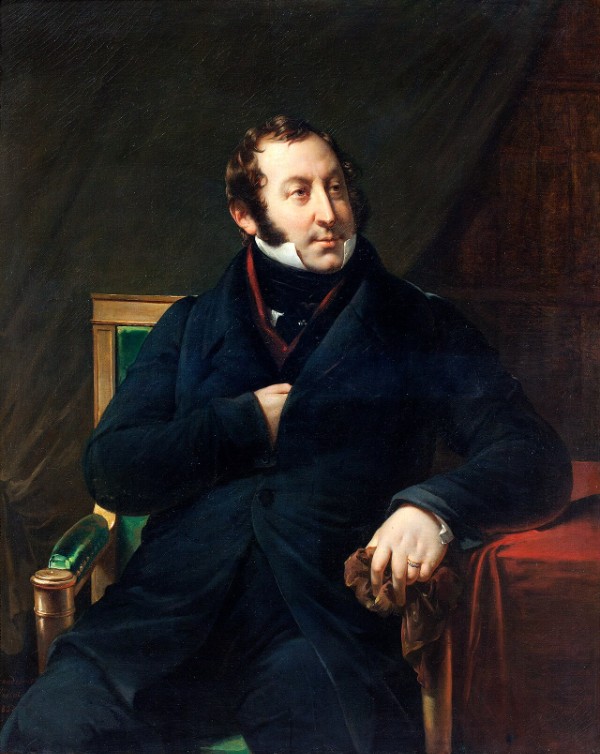
Gioachino Rossini
London was next, and although his stay was lucrative, Rossini returned to Paris. His Parisian seasons between 1823 and 1829 consolidated his achievements with the spectacular operas Le Comte Ory and Guillaume Tell. And then, without fanfare, he retired from operatic composition.
Gioachino Rossini: Guillaume Tell, “Overture-Allegro vivace”
To celebrate Rossini’s birthday on 29 February, we decided to speculate on possible reasons why he stopped composing operas altogether.
Deliberate Silence
The reasons for Rossini’s retirement from opera have been discussed during his lifetime and since. In a 1934 study of the composer, the critic Francis Toye coined the phrase “The Great Renunciation,” and called Rossini’s retirement a phenomenon unique in the history of music and difficult to parallel in the whole history of art.
“Is there any other artist who thus deliberately, in the very prime of life, renounced that form of artistic production which had made him famous throughout the civilised world?” (Toye, Rossini)
The great poet Heinrich Heine compared Rossini’s retirement with Shakespeare’s withdrawal from writing, as two geniuses who recognised that they had accomplished the unsurpassable and chose not to attempt to surpass it.
Gioachino Rossini: Barbiere di Siviglia, “Una voce poco fa”
Creative and General Burnout
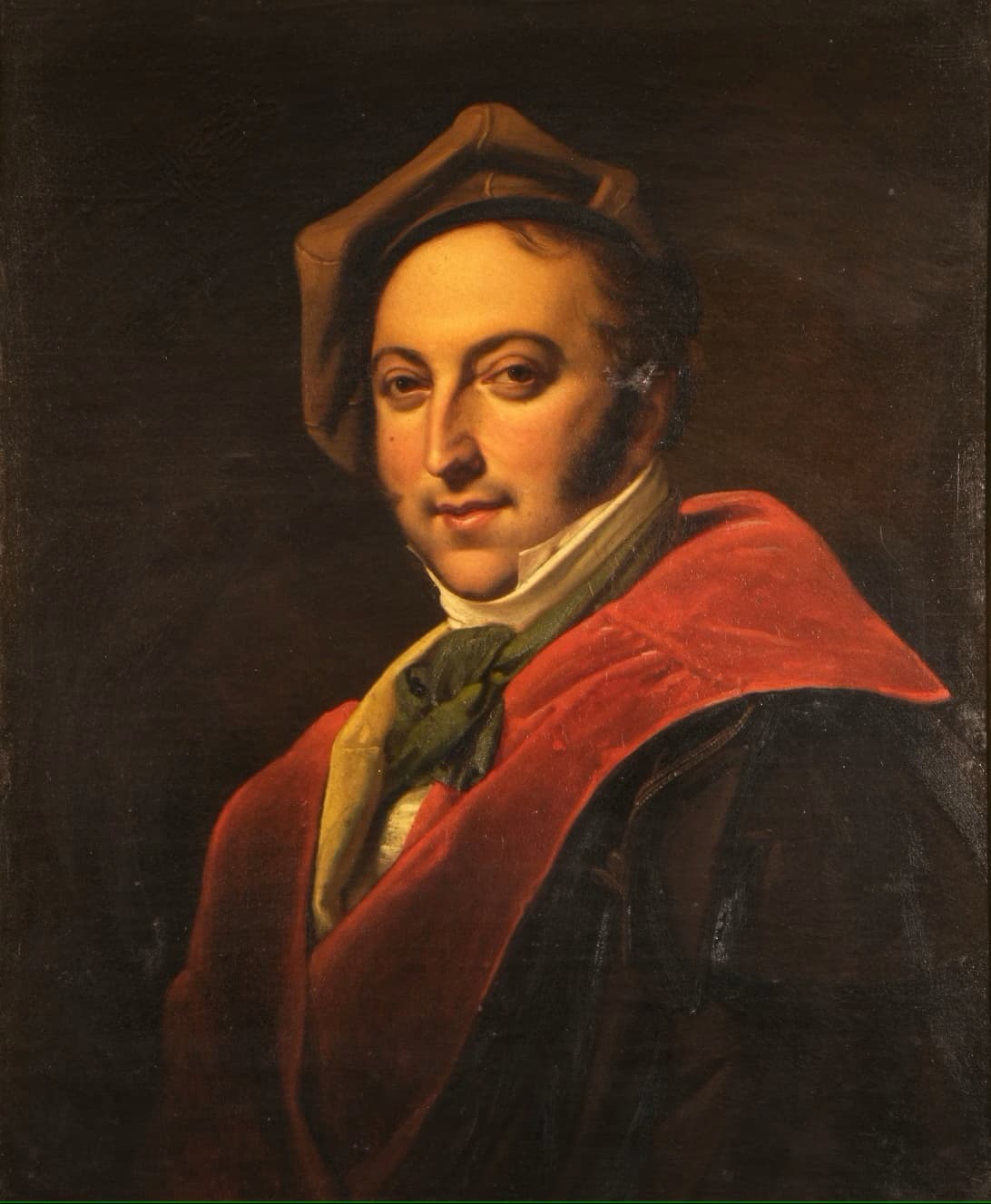
Marie Françoise Constance Mayer: Gioachino Rossini (Pesaro: Casa Rossini)
Rossini composed 39 operas at breakneck speed in only 19 years. Such concentrated intensity may well have led to some form of creative burnout. Mind you, Rossini kept on composing in his retirement, but he stayed clear of opera.
“The Great Renunciation” describes this unusual early withdrawal, but it still doesn’t give us the why. One train of thought suggests that the operatic public in 1820 was almost as exhausted by Rossini’s music as the man who had composed it.
We may read this as overexposure, but it probably points to a broader cultural saturation. After all, Rossini’s operas had dominated European stages with audiences anticipating certain musical gestures and plot conventions. In a word, it had all become too formulaic.
Gioachino Rossini: Tancredi, “O patria… Di tanti palpiti”
Health Problems
We know that Rossini had serious and chronic health problems, and given his industrious scale of creativity, such illnesses would have been the consequence. The source of one chronic condition was urological.
He probably contracted some form of venereal disease in his youth, which led to chronic inflammation, pain, and recurrent complications. Treatment did essentially not exist, and given the intimate nature of the condition, there must have been a good deal of embarrassment and depressive periods.
Nobody claims that these urinary conditions would have forced Rossini to stop writing opera, but we may well claim it as a contributing factor.
Gioachino Rossini: La Cenerentola, “Non più mesta”
Medical Fatigue
Rossini also suffered from occasional rheumatic and arthritic discomfort. He complained of joint pain that made it difficult to walk, and we have reports of weakness, digestive disorder, and recurring malaise.
While it is easy to imagine Rossini enjoying gastronomy and salon culture in Paris during his retirement, medical documentation seems to paint a somewhat different picture. And that’s because biographers have long noted Rossini’s extended periods of depression.
Rossini’s physical ailments might have been limiting, it was probably not defining. But it might well have been a serious reason for situating his retirement at the intersection of medical fragility, and exhaustion. And in this context, I do need to mention morbid obesity as well.
Gioachino Rossini: La Gazza Ladra, “Ouverture”
Emotional Factors
Rossini’s personality was said to combine brilliance with volatility. Apparently, he was a man of complex and often fragile emotional disposition. It’s difficult to really say what was going on, but contemporaries describe withdrawal, lethargy, irritability, and prolonged inactivity.
Digging into the medical history of someone long deceased is sensitive business. Yet there is the possibility that Rossini suffered from some kind of mood disorder, perhaps a form of cyclical depression.
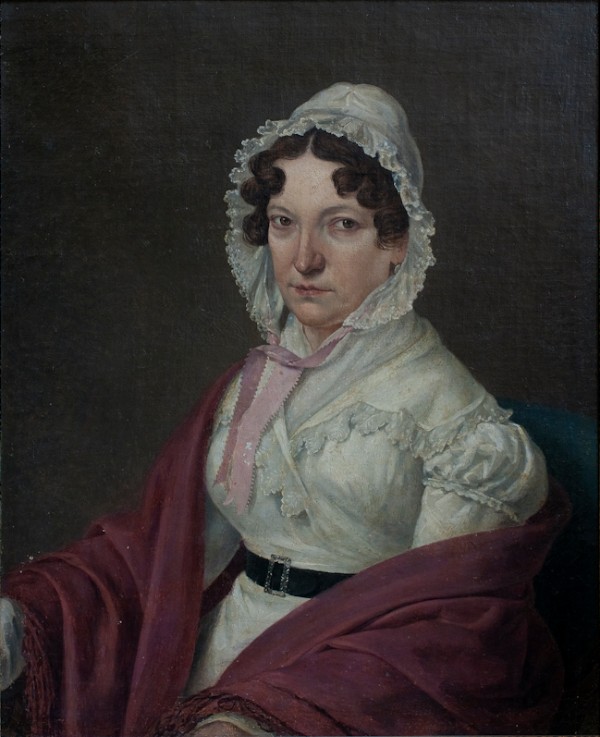
Anna Guidarini, Rossini’s mother
The death of his beloved mother, Anna Guidarini, in 1827 affected Rossini profoundly. In his letters and reports we find genuine emotional devastation. This loss occurred only two years before Guillaume Tell, and his marriage to Isabella Colbran also deteriorated during this period.
Dealing with bereavement, marital tension, and professional exhaustion possibly created an environment where withdrawal from the operatic stage became necessary. His emotional state of vulnerability, mood fluctuations, and emotional fatigue might well have played a role.
Gioachino Rossini: L’italiana in Algeri, “Cruda sorta!”
Politics and Contracts
During the 1820s, the French operatic system was among the most powerful in Europe. Unlike in Italy, opera was highly centralised and state-supported. Rossini received prestigious and lucrative arrangements, including a substantial annuity. In essence, financial security freed him to produce major works for the institution.
By all accounts, Guillaume Tell, his final opera, was a state-sponsored spectacle. It featured monumental choral scenes, a huge orchestration and elaborate ballet staging. Everything was paid for by the state.
However, that stability collapsed with the July Revolution of 1830. With Louis-Philippe I coming to power, contracts were reconsidered and subsidies reevaluated. Rossini, for a time, lost his lifelong annuity, and grand productions became impossible. There is some evidence that Rossini had plans for multiple large-scale works beyond Guillaume Tell, but everything was shelved.
Gioachino Rossini: Le Comte Ory, “Vous que l’on dit sensible”
Changing Times
Rossini did not publicly declare retirement because of politics, but he gradually faded from view. We might speculate that he understood that the Parisian operatic world was changing rapidly. French grand opéra, associated with Giacomo Meyerbeer and Fromental Halévy became all the rage.
Some contemporaries blamed Rossini’s retirement on jealousy of Meyerbeer, but the two composers had cordial relations. Rossini was wealthy and artistically established before Meyerbeer made his breakthrough in Paris.
A subtler explanation might well be that Rossini sensed a turning point. His particular style, rooted in Italian bel canto, gave way to more integrated dramaturgy, grander orchestral texture, and a symphonic conception of structure. Be that as it may, there is no clear statement from Rossini declaring stylistic defeat.
Gioachino Rossini: Otello, “Ah vieni….”
Retirement Born of Complexity
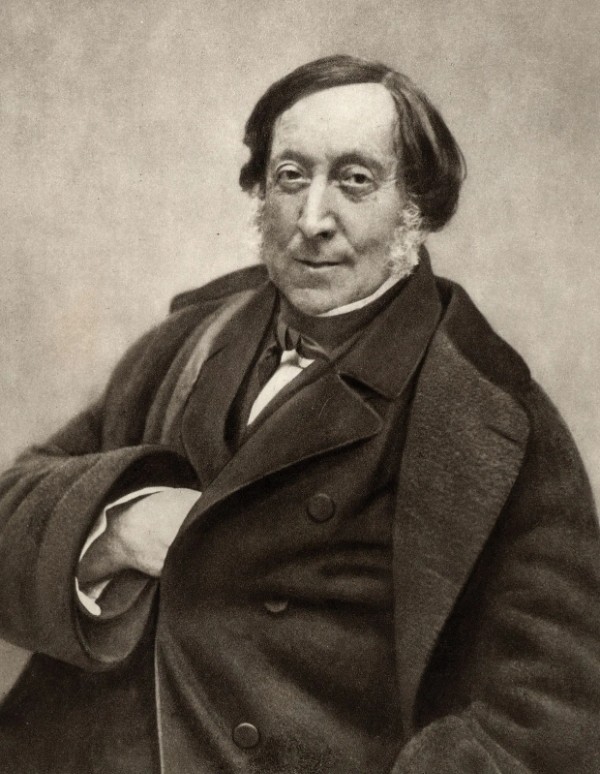
Gioachino Rossini
From listing some of these possibilities, it becomes clear that Rossini did not retire from laziness, emotional outbursts, political convictions, or stylistic reasons. Rather, a number of interlocking pressures made continued operatic production unlikely.
The question I asked at the beginning of this blog as to why Rossini stopped composing opera, and assuming a single dramatic gesture as an answer, is just too simplistic. Retirement was not a singular act of mystery, but a logical culmination of multiple overlapping forces.
For more of the best in classical music, sign up for our E-Newsletter