When choral composer Eric Whitacre first composed his setting of Robert Frost’s poem ‘Stopping by Woods on a Snowy Evening’, he created a work that was a perfect match for the quiet beauty of the poem. Frost had written the poem in 1923, where it was published in his New Hampshire collection. The short poem, written as he looked out his study window, remains one of Frost’s most remembered works. The final lines of the poem remind many people of the duties that lie ahead of them.
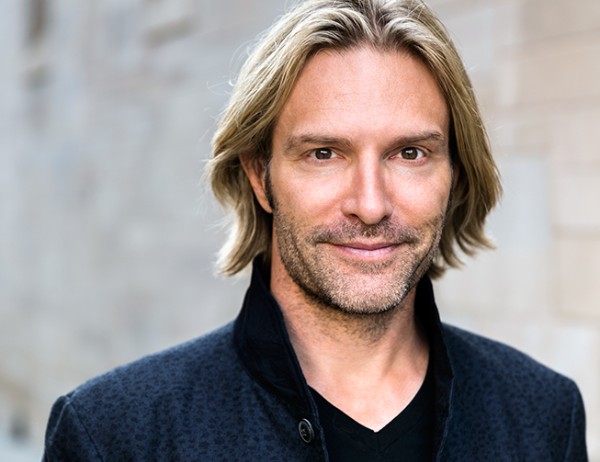
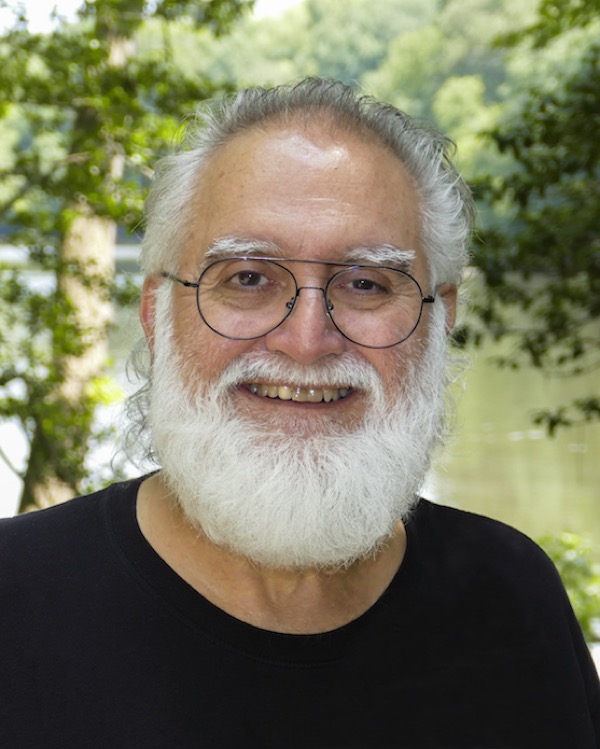
Eric Whitacre
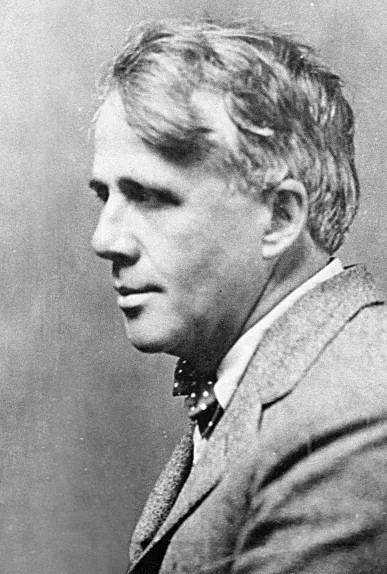
Robert Frost, ca 1924
In Frost’s poem, the narrator and his horse pause at dusk to watch snow falling in the woods. It’s the night of the winter solstice, the longest night of the year, and the beauty of the scene makes him pause. In the end, though, his duties call him back, and he continues on his journey.
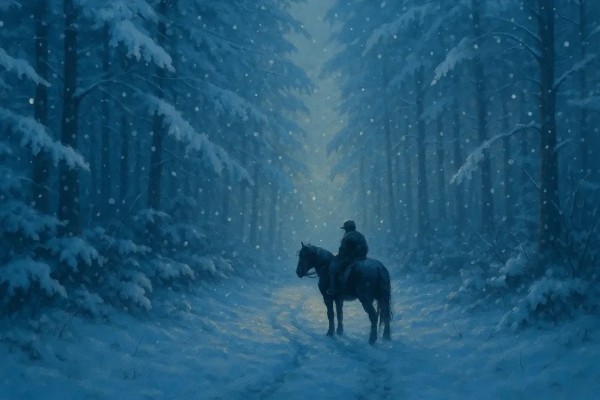
Stopping by the Woods
Stopping by Woods on a Snowy Evening
Whose woods these are I think I know.
His house is in the village though;
He will not see me stopping here
To watch his woods fill up with snow.
My little horse must think it queer
To stop without a farmhouse near
Between the woods and frozen lake
The darkest evening of the year.
He gives his harness bells a shake
To ask if there is some mistake.
The only other sound’s the sweep
Of easy wind and downy flake.
The woods are lovely, dark and deep,
But I have promises to keep,
And miles to go before I sleep,
And miles to go before I sleep.
The poem is written in iambic tetrameter, familiar to poetry lovers from Edward FitzGerald’s translation of Rubaiyat of Omar Khayyam. The end of the third line of every verse provides the rhyme scheme for the next verse, until the end, when all the lines have the same rhyme.
In the year 2000, when Whitacre created his choral song, the Frost lyrics were still under copyright, and the Frost Estate blocked their usage. Accordingly, Whitacre found a poet, Charles Silvestri, to write a new set of lyrics. Using the last word of the last line, ‘sleep’, Silvestri wrote a poem that corresponded to the rhythm of the Frost text and used the same iambic tetrameter and rhyme scheme. Now our narrator is not in the woods but safely tucked up in bed. His mind may be filled with thoughts, there may be sounds to disturb him, but it matters not because….sleep.
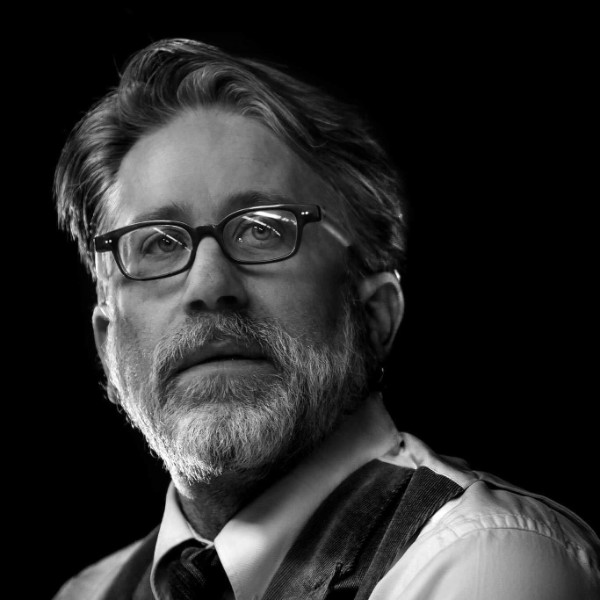
Charles Silvestri
Sleep
The evening hangs beneath the moon,
a silver thread on darkened dune.
With closing eyes and resting head;
I know that sleep is coming soon.
Upon my pillow, safe in bed,
A thousand pictures fill my head,
I cannot sleep, my mind’s aflight;
And yet my limbs seem made of lead.
If there are noises in the night,
A frightening shadow, Flickering light;
Then I surrender unto sleep,
Where clouds of dream give second sight.
What dreams may come,
Both dark and deep–
Of flying wings and soaring leap?
As I surrender unto sleep.
As I surrender unto sleep.
As I surrender unto sleep
Sleep
Sleep
Sleep
Sleep
Sleep
Sleep
Sleep
Sleep
Sleep
Sleep
Sleep
Sleep
Eric Whitacre: Sleep (The Elora Singers; Noel Edison, cond.)
On 1 January 2019, Frost’s poem came out of copyright, and finally Whitacre could publish the song as he had originally conceived it.
Eric Whitacre: Stopping by Woods on a Snowy Evening (VOCES8, Ensemble; Andrea Haines, soprano; Eleonora Poignant, soprano; Katie Jeffries Harris, alto; Barnaby Smith, tenor; Blake Morgan, tenor; Euan Williamson, tenor; Christopher Moore, baritone; Dominic Carver, bass; VOCES8 Foundation Choir)
Whitacre has commented that the two different texts seem to make each piece sound different…and that he loves both versions.
For more of the best in classical music, sign up for our E-Newsletter