
In terms of piano music, Chopin, Liszt, and Schumann dominate Romanticism with grand narratives. These marvellous composers have long shaped both concert life and listening habits.
Yet, there is an entire chorus of quieter figures that worked in the margins. Among them is Zdeněk Fibich (1850–1900), a composer whose piano music whispers rather than proclaims.
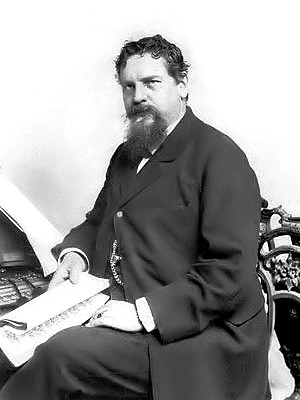
Zdeněk Fibich
Fibich’s relative obscurity is not the result of a lack of originality or depth. Rather, it stems from his refusal to participate in the heroic mythology of the virtuoso composer. His piano music does not conquer the listener but invites them in. In an era increasingly drawn to intimacy, attentiveness, and emotional sincerity, Fibich’s voice feels newly relevant.
To celebrate his birthday on 21 December, let’s explore Fibich’s world of quiet expression in music that sounds less like a historical curiosity and more like a timely companion.
Zdeněk Fibich: Mood, Impressions and Reminiscences, Op. 41, Book 4, No. 14 “Poem”
Beyond Labels
Fibich occupies a fascinating place in musical history. Born in Bohemia on 21 December 1850, he was educated in Vienna, Leipzig, and Paris, and stood at a crossroads between German Romanticism and Czech national identity.
Unlike his contemporaries Bedřich Smetana and Antonín Dvořák, Fibich did not foreground folk elements or patriotic gestures in his piano music. Instead, he pursued a more inward, European Romantic language that unfolded in lyrical waves, was harmonically rich, and deeply personal.
This stylistic position may explain why his piano works never entered the mainstream repertoire. They are not immediately identifiable as national music, nor are they vehicles for dazzling technique. Yet it is precisely this quality, music written without slogans or spectacle, that makes them feel strikingly modern today.
Zdeněk Fibich: Nálady, dojmy a upomínky (Moods, Impressions and Reminiscences), Op. 41, Book 1 (Marián Lapšanský, piano)
Confessional Space
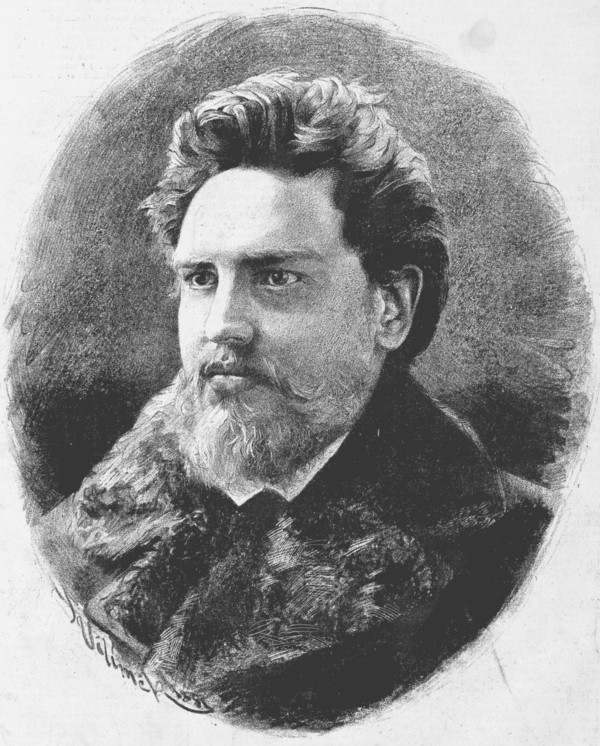
Zdeněk Fibich
Fibich’s piano writing suggests a composer who viewed the instrument as a private space, closer to a diary than a stage. Many of his most compelling works are miniatures, pieces that unfold in just a few pages yet contain remarkable emotional depth.
A perfect entry point is Nálady, dojmy a upomínky (Moods, Impressions, and Reminiscences), Op. 41. This cycle of short piano pieces encapsulates Fibich’s aesthetic. These works do not demand attention, yet they reward patience. Their titles already hint at introspection, memory, and fleeting emotional states.
Pieces such as Andante semplice or Lento e malinconico from this cycle demonstrate Fibich’s gift for melodic line. He wrote long and breathing phrases that seem to speak rather than sing. Harmonically, the music moves with subtle shifts, avoiding dramatic turns in favour of gradual emotional shading. This is Romanticism without excess, poetry without ornament.
Zdeněk Fibich: Moods, Impressions and Reminiscences, Op. 44, Book 4 (Marián Lapšanský, piano)
Love, Intimacy, and Musical Secrecy
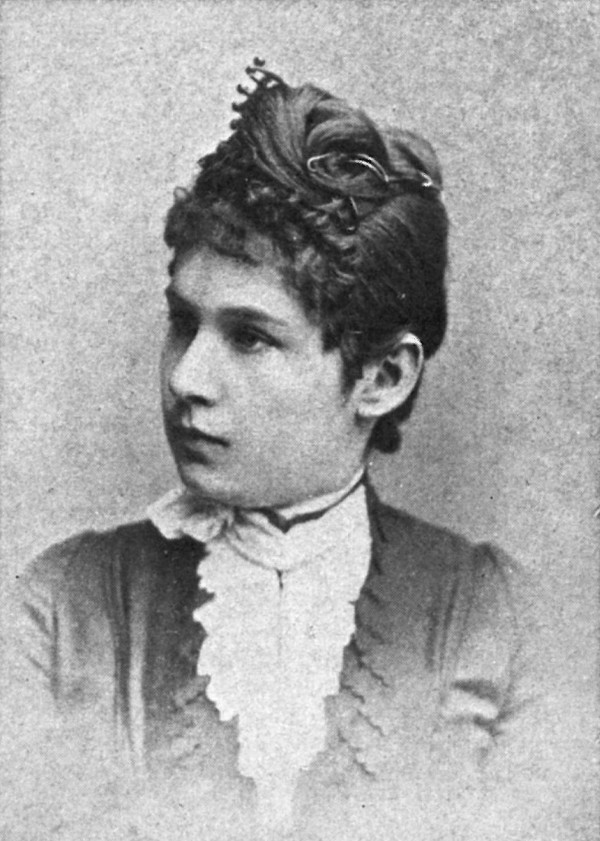
Anežka Schulzová
No discussion of Fibich’s piano music can ignore the profound influence of his relationship with Anežka Schulzová, a writer and intellectual who became his muse and collaborator. Their relationship was intense, unconventional, and socially controversial. And it found its most private expression in Fibich’s piano works.
The most remarkable example is the monumental cycle Moods, Impressions, and Reminiscences, which many scholars interpret as a musical chronicle of their emotional life together. While listeners need not know this background to appreciate the music, it adds a layer of poignancy. These pieces were never meant to impress an audience, but to preserve moments.
This sense of secrecy, of music written for someone rather than everyone, gives Fibich’s piano works an authenticity that resonates strongly today. In an age saturated with performance and projection, his music reminds us of the art of listening, remembering, and quiet feelings.
Zdeněk Fibich: Moods, Impressions and Reminiscences, Op. 41, Book 2 (excerpts) (Hitomi Ito, piano)
Pianists Love Fibich
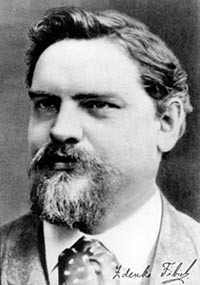
Zdeněk Fibich
Although Fibich is rarely programmed in major concert halls, pianists who encounter his music often become passionate advocates. The reason is simple. His writing lies beautifully under the fingers and rewards attention to tone, voicing, and touch rather than sheer speed.
Take the Op. 44, for example. These works challenge the pianist not through technical difficulty but through demands for balance and nuance. A melody must sing without exaggeration, and accompaniment figures support without drawing attention. It is music that teaches restraint, a quality increasingly valued by musicians seeking depth over display.
Similarly, the collection of Op. 47 offers short, characterful pieces ideal for both performers and listeners. Their intimacy makes them suitable for smaller venues, recordings, or even private listening at home. They feel almost conversational, as if the piano were speaking directly to the listener.
Zdeněk Fibich: Moods, Impressions and Reminiscences, Op. 47, Book 10 (Marián Lapšanský, piano)
Silence Speaks
One reason Fibich’s music struggled to find an audience in his lifetime, and for much of the twentieth century, is that it does not align with the heroic narrative often imposed on Romantic composers. There are no thunderous climaxes, no virtuosic storms, just emotional precision.
Just maybe, our listening culture is changing a little. Audiences increasingly seek experiences that encourage slowness and focus, with playlists for concentration, reflection, and nighttime listening dominating streaming platforms.
And the Impressions Op. 57 is again a lovely example. These pieces unfold with a literary sense of pacing, allowing silence and resonance to play an active role. They reward repeated listening, revealing new details each time. Just listen to the subtle inner voices, the harmonic suspensions, and those delicious expressive hesitations.
Zdeněk Fibich: Moods, Impressions and Reminiscences, Op. 57, Book 2 (Marián Lapšanský, piano)
Sincerity not Spectacle
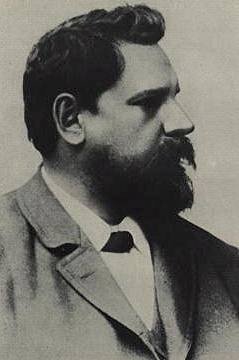
Zdeněk Fibich
Several factors suggest that Fibich’s music is ripe for rediscovery. First, performers are increasingly curious about neglected repertoire, seeking alternatives to the standard canon. Fibich offers pianists something rare, specifically with music that feels fresh without being experimental, and is expressive without being showy.
Second, recording culture has created space for composers whose work thrives in intimate settings. Fibich’s piano music, ideally suited to close microphone placement and attentive listening, benefits enormously from modern recording techniques.
Finally, there is a broader cultural shift toward ethical listening. It means an interest in music that values sincerity, care, and emotional truth over spectacle. Fibich’s restraint, once perceived as a weakness, now reads as integrity.
Zdeněk Fibich: Moods, Impressions and Reminiscences, Op. 57, Book 1 (Marián Lapšanský, piano)
Timeless Music
Zdeněk Fibich may never become a household name, and perhaps that is fitting. His piano music resists grand narratives and easy categorisation. It asks the listener not to admire, but to accompany and to share a moment of thoughtfulness.
In rediscovering Fibich, we rediscover a way of listening that values closeness over conquest. His piano works remind us that greatness in music does not always announce itself. Sometimes it waits patiently, speaking softly, until we are ready to hear it.
Zdeněk Fibich asks nothing of his listeners but that they pay attention. And when we do, we discover a world of quiet beauty, emotional depth, and human intimacy. His piano music proves that greatness does not always demand recognition. Sometimes it simply waits timelessly and patiently, in order to reward those who take the time to listen.
For more of the best in classical music, sign up for our E-Newsletter





How nice to see an article on Fibich! I hope you are right that his music is ripe for rediscovery. Having performed some of it, I would not entirely agree that it is lacking in difficulty. While not written in a bravura style, many of the smaller pieces are not always pianistic and can therefore be rather tricky to pull off. It may be worth noting that Schulzová was his student. Thank you.