In the last decade, violinist Bomsori Kim has achieved global recognition. Her rapid rise, propelled by a series of high-profile competition successes and a sequence of acclaimed recordings, has made her one of the most visible representatives of a new generation of Korean musicians.
For a good many critics and audiences worldwide, Kim brings something distinctly Korean to her artistry without ever resorting to easy symbols or superficial gestures. Her cultural identity is present in her phrasing, her emotional approach, and often in subtle, deeply internalised instincts.
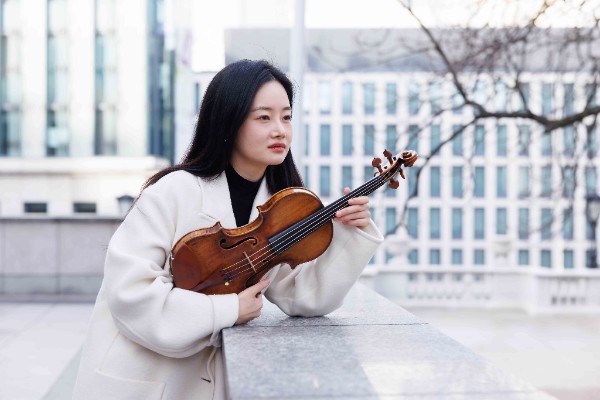
Bomsori Kim
To celebrate her birthday on 13 December, let’s explore how cultural identity can be expressed in classical music today, and how Kim crafted a musical voice that is both unmistakably global and profoundly Korean.
Bomsori Kim plays Wieniawski: Violin Concerto No. 2 in D minor
Navigating Identity
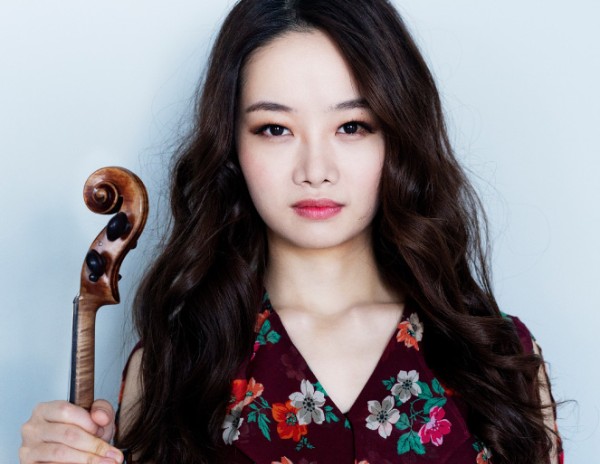
Bomsori Kim
The question of national style in classical performance is always delicate. Historically, discussions of “French clarity,” “Russian intensity,” or “German seriousness” have offered shorthand ways of describing interpretive tendencies, but they can easily become stereotypes.
For Korean musicians, the challenge is sharper still. How to articulate an artistic voice shaped by a rapidly modernising cultural landscape without being confined to an exoticised image of “Asian virtuosity.”
Kim navigates this sensitive terrain with remarkable sophistication. Her playing suggests a musical upbringing steeped in Korean aesthetics, particularly in its emphasis on breath, line, and sincerity. Forgoing intentional “Korean” gestures, these attributes operate at the structural and expressive core of her musicianship.
Bomsori Kim plays Ysaÿe: Sonata for Violin solo in D minor, “Ballade”
When Ornament Becomes Emotion
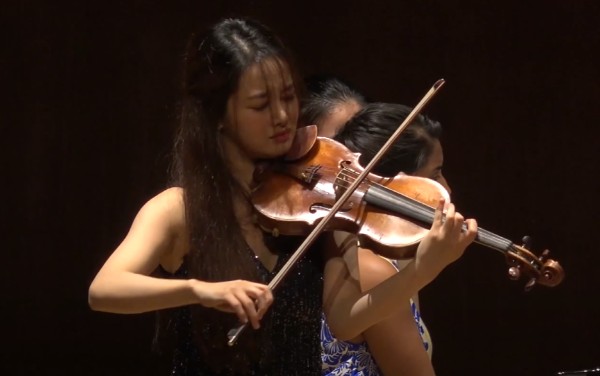
Bomsori Kim
One of the most compelling aspects of Korean traditional music is its profound attention to “sigimsae.” This refers to the expressive ornaments and inflections that animate melodic lines in traditional Korean music.
Unlike Western ornamentation, which can be decorative or virtuosic, sigimsae is integral to the identity of the melody itself and represents emotional breath, tension and release. These subtle slides, bends, vibrato-like pulses, and pitch inflections give Korean music its characteristic sense of lived emotion and organic fluidity.
Ornaments are not added on top of the line, but they are the line. They shape its contour, its expressive weight and its psychological depth. We hear an analogous sensitivity in Bomsori’s phrasing. Her slides often resemble the nuance pull and release of a han-infused vocal line, where emotion is not exploded outward but shaped through movements of tension and easing.
Bomsori Kim plays Szymanowski: Myths, Op. 30
Breath Made Audible
Kim’s slides on the violin are marked by a purposeful elasticity that recalls Korean notions of emotions held in the breath. This connection to breath is another subtle but important dimension of her artistry. Korean court music makes use of long and unbroken lines that demand both immense control and a sense of narrative inevitability.
The line must feel lived through. Bomsori’s approach to cantabile playing seems to inherit this principle. Whether she is spinning the soaring phrases of Tchaikovsky’s Concerto or the introspective lines of Debussy’s Violin Sonata, she shapes them with an almost vocal continuity.
Kim avoids the hyper-segmented phrasing sometimes found in younger players trained for competitions. Instead, she crafts arcs that unfold as though a single exhalation were guiding the musical logic.
Bomsori Kim plays Debussy: Violin Sonata in G minor
Inner Gravity
If phrasing reveals one dimension of Korean sensibility, expressivity reveals another. Korean emotional culture has long used the notion of “han,” a complex idea blending longing, sorrow, resilience, and beauty.
In performance practice, it manifests not as overt melancholy but as a quiet depth, a refusal of superficial brilliance. In Bomsori’s playing, one hears the influence of this emotional vocabulary particularly in her approach to slow movements.
Her sound carries an emotional weight that seems to originate from within, not applied from without. It is the kind of seriousness toward feeling, never inflated, never decorative, that resonates deeply with audiences across cultures.
Gabriel Fauré: Violin Sonata No. 1 in A Major, Op. 13 – II. Andante (Bomsori, violin; Rafał Blechacz, piano)
Authenticity Without Advertisement
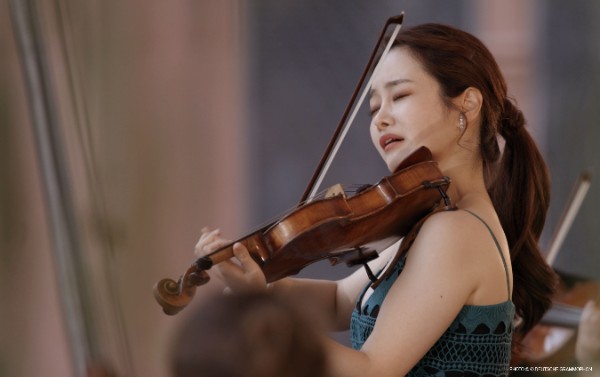
Bomsori Kim
Yet what ultimately distinguishes Bomsori’s integration of Korean sensibility is her refusal to make it a brand. She resists the marketing narratives that sometimes accompany non-Western artists entering the global scene.
Her approach is quiet, internal, almost invisible unless one listens closely. This subtlety is perhaps the surest sign of its authenticity. Cultural identity, after all, is not always expressed through overt gestures, but often functions through the body, the breath, and phrasing choices.
In a world that increasingly prizes cultural visibility and personal branding, Bomsori’s path is refreshingly different. She embodies her heritage not as performance but as presence. Her artistry emerges through deeply internalised sensibilities that shape her sound and give her performances an emotional depth highly appreciated by audiences around the globe.
For more of the best in classical music, sign up for our E-Newsletter