When it comes to symphonies, orchestra lovers certainly have their favourites. Think Beethoven’s Eroica, or Dvořák’s New World, or Tchaikovsky’s Pathétique.
These classics have earned their place in the canon. The downside? They’ve occasionally overshadowed other brilliant works by the same composers.
Today we’re celebrating these comparatively overlooked sibling symphonies. All are worth a listen!
Mozart’s Symphony No. 39
Work(s) it’s overshadowed by: Mozart’s Symphony No. 41
Mozart wrote his final three symphonies – the 39th, 40th, and 41st – during a startlingly productive summer in 1788.
The 39th was completed on 26 June, the 40th on 25 July, and the 41st on 10 August.
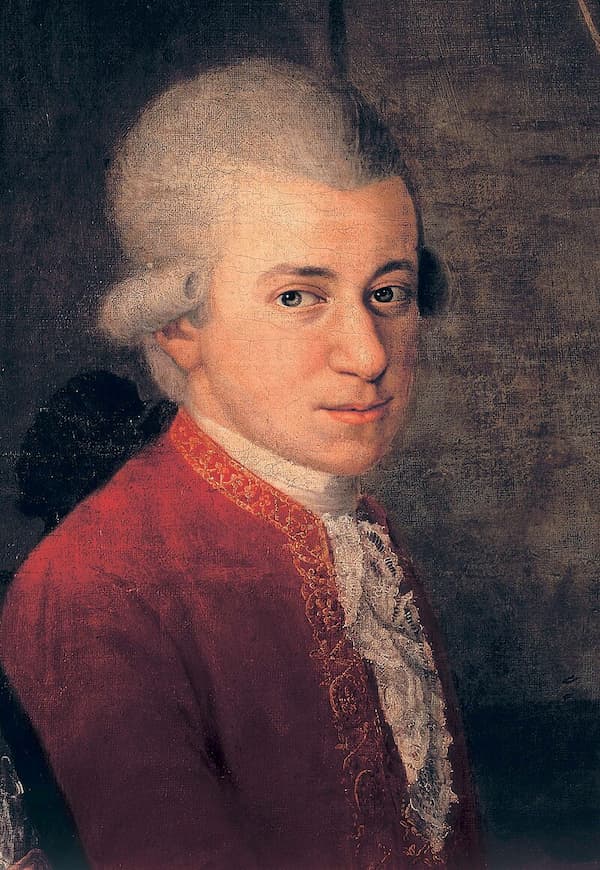
Croce: Mozart Family Portait (detail), 1781
Conductor Nikolaus Harnoncourt once suggested that these three works were conceived as a single work, given that the only introduction appears in the 39th, and the only grand finale appears at the end of the 41st.
Despite the works’ interdependence, today we are more likely to hear the 40th or 41st than the 39th in concert.
There are a couple of reasons why. Both the 40th and the 41st have defining features that make them stand out to audiences and musicians alike. The 40th was Mozart’s only mature symphony written in a minor key, giving it a unique emotional atmosphere that immediately grabs listeners’ attention, while the finale of the 41st features a five-voice quintuple fugato…perhaps the greatest demonstration of Mozart’s compositional technique.
As a result, when competing with the other two symphonies in the set, Mozart’s 39th can be overlooked. That doesn’t mean it should be: it’s a first-rate piece.
The finale is especially smart and cheerful.
Beethoven’s Symphony No. 4
Work(s) it’s overshadowed by: Beethoven’s 3rd, 5th, and 9th symphonies
Beethoven symphonies have a reputation for being overplayed, but a few of them can have trouble getting the attention they deserve!
The dramatic third, nicknamed the Eroica, rewrote the playbook of what a symphony could be and turned into a political statement during the Napoleonic Wars. The fifth introduced a percussive opening motif – bum bum bum BUM – that remains instantly recognisable over two centuries later. And the Ninth Symphony features the Ode to Joy, which ultimately became the anthem for the European Union!
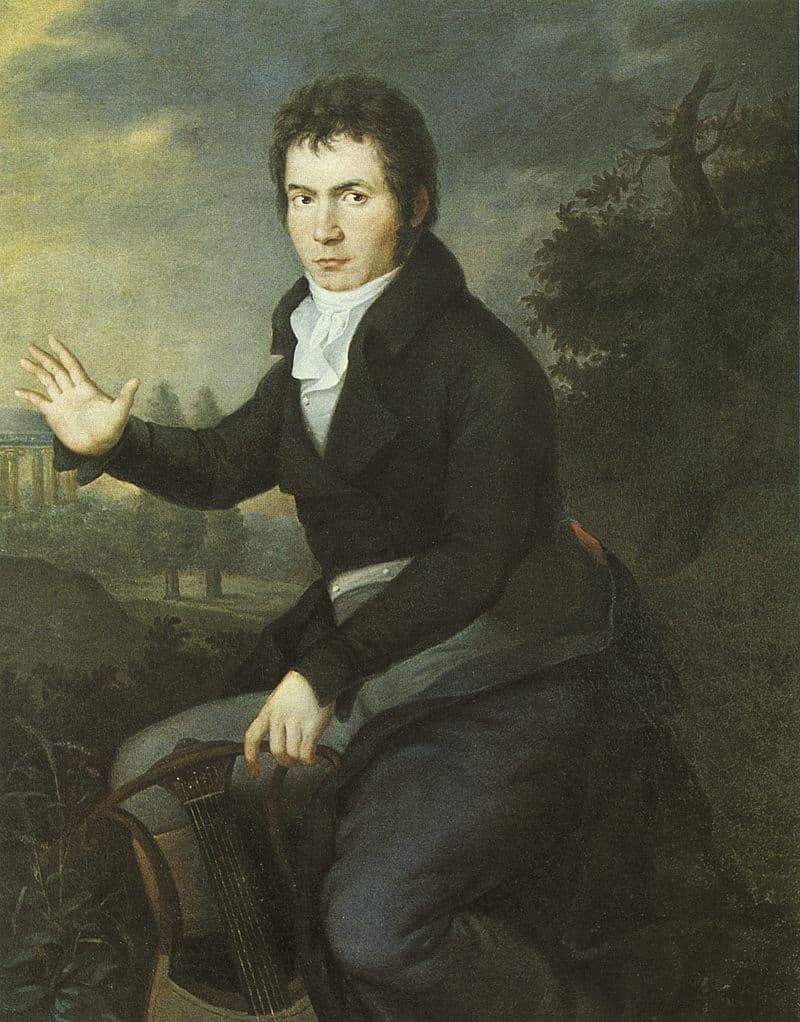
Joseph Willibrord Mähler: Beethoven, 1804–1905 (Gesellschaft der Musikfreunde in Wien)
In the face of competition like that, Beethoven’s Fourth Symphony has a steep hill to climb to grab listeners’ attention. But that doesn’t mean it’s a bad symphony. On the contrary, it’s incredible. It’s dynamic, charming, and beautifully constructed.
Conductor Osmo Vänskä, who recorded a well-received Beethoven cycle with the Minnesota Orchestra for the BIS label, once told Gramophone Magazine:
I have often heard people talk of the ‘big’ Beethoven symphonies – Nos 3, 5, 6, 7 and 9; and the ‘smaller’ ones – Nos 1, 2, 4 and 8. That’s all about form.
If we are speaking just about music, then I believe these so-called smaller symphonies have the same amount of music in their symphonic bodies.
Perhaps they are more like chamber music, but they therefore serve as a reminder of what a great composer of chamber music Beethoven was: less is not less.
Schubert’s Symphony No. 5
Work(s) it’s overshadowed by: Schubert’s 8th and 9th symphonies
Franz Schubert’s best-loved contributions to the symphonic genre are his eighth symphony (the two-movement “Unfinished”) and ninth symphony (nicknamed “the Great”). He wrote them in 1822 and 1824-26, respectively.
The eighth has a mysterious backstory: why did Schubert only write two movements instead of the traditional four?
Meanwhile, the ninth distinguishes itself by its staggering length: it takes nearly an hour to perform, with all repeats.
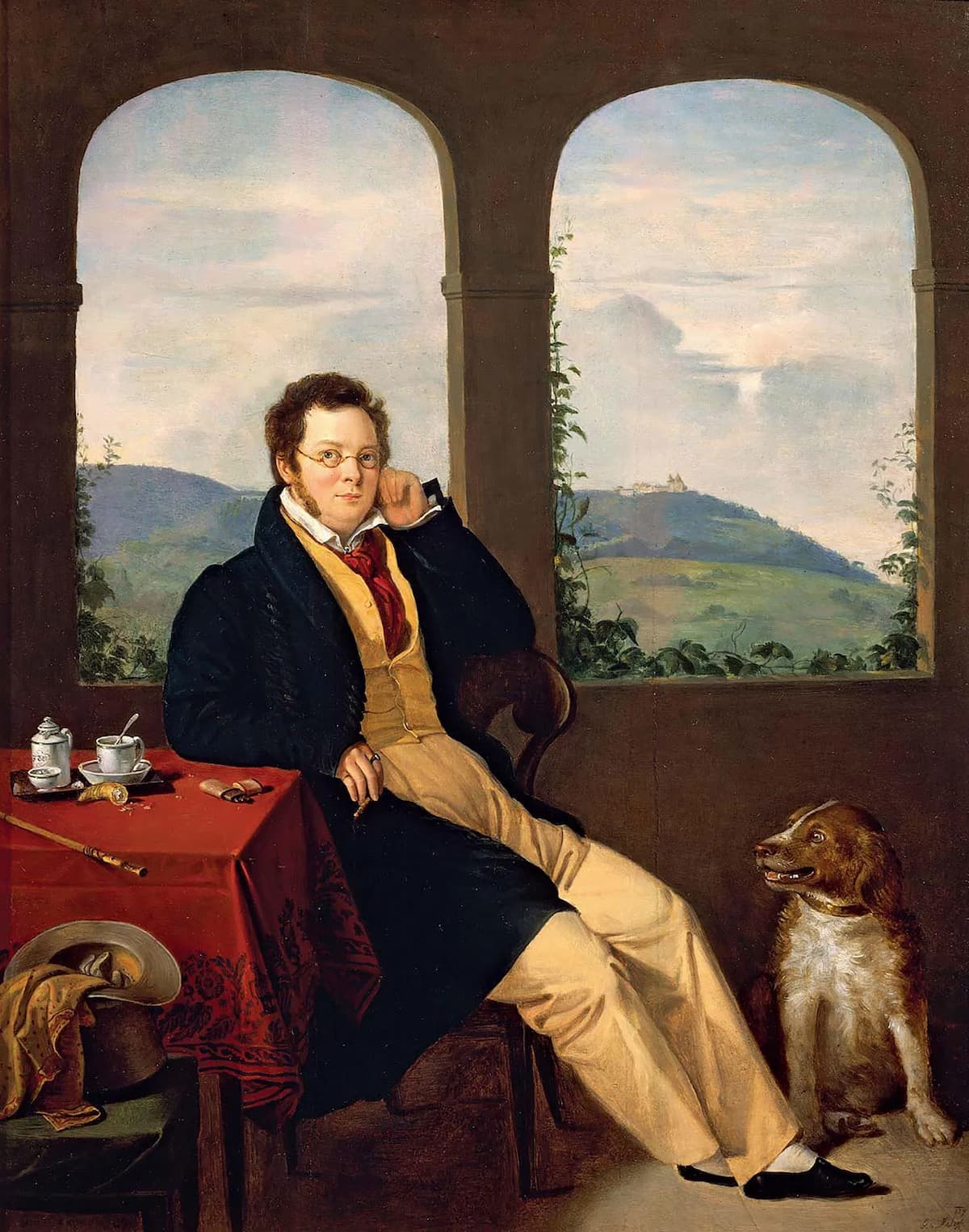
Gábor Melegh: Franz Schubert, 1827 (Hungarian National Gallery, Budapest)
When Schubert’s works were initially revived after his death and the canon was set, these traits worked in the symphonies’ favour.
In the process, Schubert’s Fifth Symphony can get swept under the rug.
The fifth was written over the course of a month in the early autumn of 1816. It was created on a smaller scale: it has no trumpets, clarinets, or even timpani.
It also appears to be Schubert’s love letter to Mozart. He wrote that summer in his diary: “O Mozart! Immortal Mozart! what countless impressions of a brighter, better life hast thou stamped upon our souls!”
Interestingly, Mozart also eschewed clarinets in his first version of the 40th symphony.
Brahms’s Symphony No. 3
Work(s) it’s overshadowed by: Brahms’s 1st symphony
From the time he was twenty, Brahms was heralded as the saviour of German music.
This extraordinary pressure meant that he struggled with the composition of his first symphony for over two decades. He began it in 1855, when he was 22, and only finished it in 1876, when he was 43.
Fortunately, the first symphony proved to be a success. It eventually earned the nickname “Beethoven’s tenth.”
As if exhaling in relief, the following year, Brahms set to work on a pastoral second symphony, which he completed in a matter of months. His fear of the form was finally officially conquered.
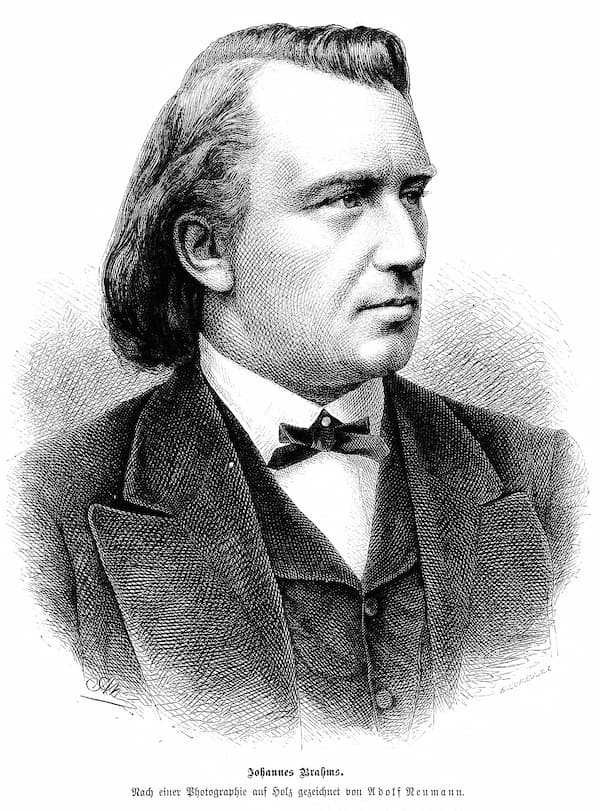
Johannes Brahms, 1880
His third symphony is probably the most overlooked of his four symphonies. He wrote it in the summer of 1883.
The work has a bittersweet core to it, unlike the high drama of the first or the gentle lyricism of the second.
The opening notes – F-Ab-F – are widely believed to represent Brahms’s personal motto, frei aber froh (“free but happy”).
At the time, Brahms was coming to terms with the fact that he was likely not going to marry or have a family, and was always going to devote himself primarily to his art instead.
This kind of restrained, poignant mood can be a tough sell for listeners.
It’s also noteworthy that this symphony has a quiet ending, another trait that perhaps results in it slipping under audiences’ radar. It’s not your standard orchestral showpiece.
Dvořák’s Symphony No. 7
Work(s) it’s overshadowed by: Dvořák’s 9th symphony
Between 1892 and 1895, Antonín Dvořák was the head of the National Conservatory of Music of America.
He was deeply inspired by African-American spirituals while writing. This influence, and the work’s general American accent, helped to make his Ninth Symphony feel especially fresh.
Over the decades, the popularity of the piece snowballed. When astronaut Neil Armstrong landed on the moon, he brought along a tape recording of the Ninth Symphony. It’s hard for any other symphony to compete with that kind of attention!
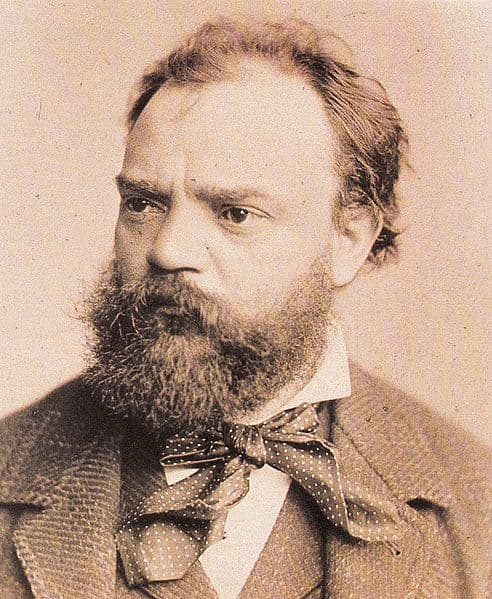
Antonin Dvorák, 1882
But Dvořák also wrote several other incredible symphonies. The best is his seventh, which can get overlooked.
Dvořák began working on it in 1884, after hearing his friend and champion Johannes Brahms’s Third Symphony.
According to Dvořák, the theme for the first movement “flashed into my mind on the arrival of the festive train bringing our countrymen from Pest.”
At a time when the Czech people were pushing back against the Habsburg monarchy, Dvořák wanted to write a work exploring the emotions surrounding his feelings of nationalism…but within the tradition of Austro-Germanic symphonic writing.
He succeeded. According to musicologist Donald Tovey:
“Along with the four Brahms symphonies and Schubert’s Ninth, it is among the greatest and purest examples in this art form since Beethoven.”
Tchaikovsky’s Symphony No. 1
Work(s) it’s overshadowed by: Tchaikovsky’s 4th, 5th, and 6th symphonies
Tchaikovsky’s most popular symphonies are his final three: the fourth, the fifth, and the sixth.
The fourth begins with an unforgettable opening horn call and features a helter-skelter, cymbal-laden finale. The fifth wrestles with themes of fate, and its slow movement includes one of the most haunting French horn solos in the entire repertoire. Meanwhile, the sixth became a cultural shorthand for tragedy after the composer died unexpectedly of cholera days after its premiere.
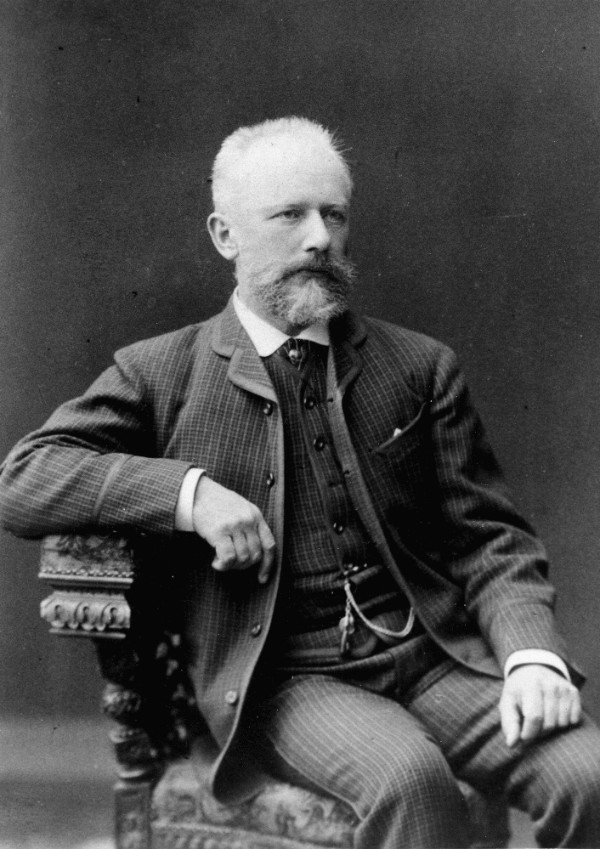
Pyotr Ilyich Tchaikovsky
Tchaikovsky’s first symphony – nicknamed “Winter Dreams” – is not nearly as taut or popular as those three later works.
However, it does offer lush soundscapes, evocative orchestration, and a brisk Russian bite. It may meander much more than the other Tchaikovsky symphonies…but if you like Tchaikovsky’s other works, you may find that the snowy “Winter Dreams” symphony is eminently worthwhile.
Sibelius’s Symphony No. 1
Work(s) it’s overshadowed by: Sibelius’s 2nd and 5th symphonies
Composer Jean Sibelius famously weaved his Finnish identity into the fabric of his music.
His two best-known symphonies are his second, whose finale came to be viewed as a call for Finnish independence, and his innovative three-movement fifth, inspired by the natural world around his home in the countryside outside of Helsinki.
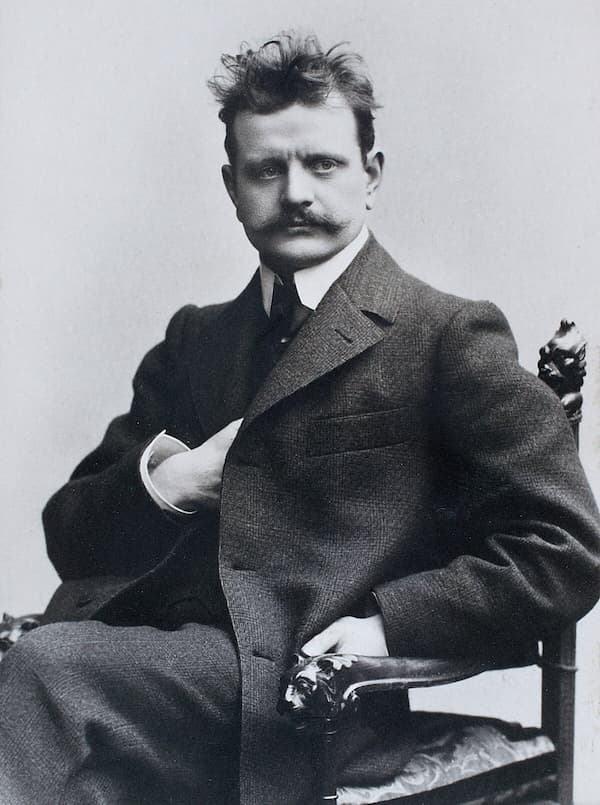
Daniel Nyblin: Jean Sibelius, ca 1898–1900
Sibelius’s unique compositional language isn’t as well-developed in his first symphony as it is in later works. But it is absolutely worth listening to anyway: it is energetic, exciting, and deeply emotional, wearing its heart on its sleeve at all times.
For more of the best in classical music, sign up for our E-Newsletter