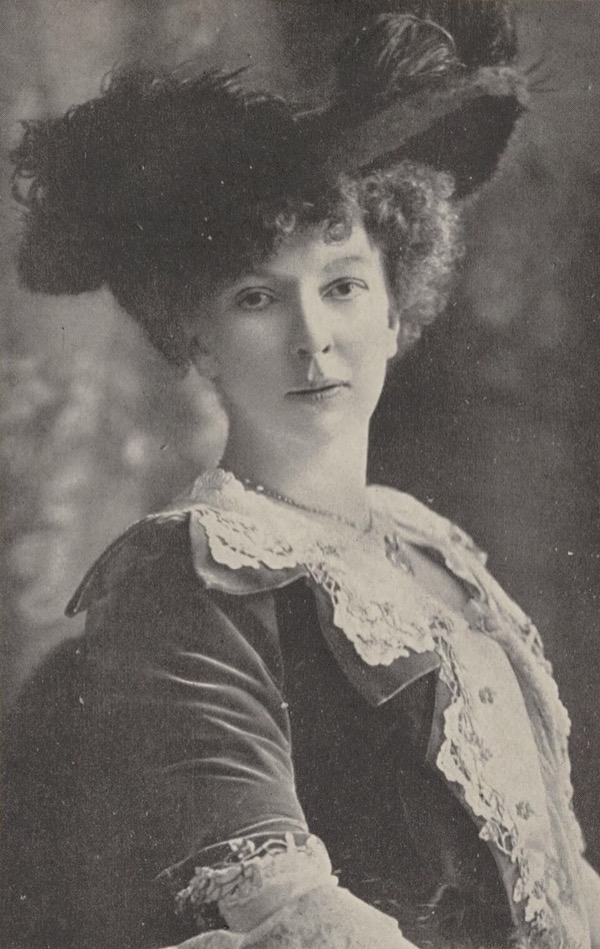
Konstancja Gładkowska, a talented Polish soprano, was a major figure in the life of Frédéric Chopin.
Without even knowing it, Gładkowska became Chopin’s muse when he was in his late teens and early twenties.
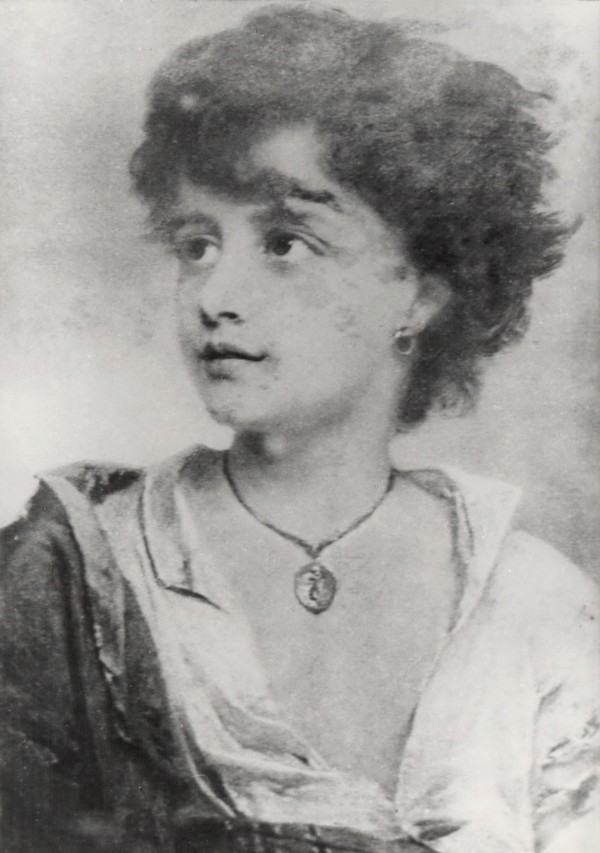
Konstancja Gładkowska
Their relationship may never have been fully realised romantically, but it was of great consequence creatively. Traces of her exist in his music, including in the adagio of his second piano concerto.
Today, we’re looking at her biography, as well as her friendship with Chopin, and how she helped him to reach artistic maturity without even knowing it.
Konstancja Gładkowska’s Early Education
Konstancja Gładkowska was born in June 1810 in Warsaw, a few months after Chopin, to an apartment building manager and his wife.
We don’t know a lot about her early life, but she clearly demonstrated musical talent at a young age.
She began studying voice at the Warsaw Conservatory in 1824, when she was just fourteen.
Carlo Evasio Soliva, director of singing, arranged for his female pupils to live in a hostel next to the conservatory. Some people were scandalised that Soliva allowed Russian officers to sing for and visit the girls. But it seems that Soliva wasn’t particularly concerned about his students’ reputations: in 1825, he actually courted and married one of Konstancja’s classmates.
During her student years, she proved to be both pretty and popular.
Her Early Career
After Gładkowska’s father died and her family could no longer afford to support her musical studies, the government began paying for her education.
This national support led to a career, albeit a brief one. (She sang professionally between 1829 and the late summer of 1831.)
She performed in both operatic and recital settings, as well as at benefit concerts for victims of the November Uprising.
However, her mother was not keen on the idea of her daughter pursuing a career on the stage. Such careers were widely viewed as immoral and inappropriate, especially for middle-class women.
Instead, Salomea was hoping her daughter would use her reputation to attract a wealthy husband, so Konstancja’s economic security – and the family’s – might be assured.
Meeting Chopin, and Chopin’s Unrequited Crush

Portrait of Frédéric Chopin
Historians believe that Gładkowska met Chopin sometime in the spring of 1829.
Their paths for sure crossed on 21 April 1829, when the best Warsaw Conservatory students, including Gładkowska, performed solos.
Nineteen-year-old Chopin developed a huge crush on Konstancja Gładkowska around this time.
One Sunday morning, she glanced at him at church. He was so stunned by that glance that he found himself stumbling out the door. He ran into his family doctor outside, and he explained his clumsiness away by saying a dog ran between his legs. He immediately regretted the lie, bemoaning to a friend, “It is terrible to think what a lunatic I sometimes seem to be.”
In October 1829, he wrote a letter to his best friend (and possible love interest) Tytus Woyciechowski:
It is perhaps my misfortune that I have already found my ideal, whom I have served faithfully for six months, though without saying a word to her about my feelings; whom I dream of, who inspired the Adagio of my Concerto, and also this morning the little waltz that I am sending you. No one but you will know what it means.
The exact meaning of that last cryptic sentence is unknown.
Inspiration for the Piano Concerto No. 2
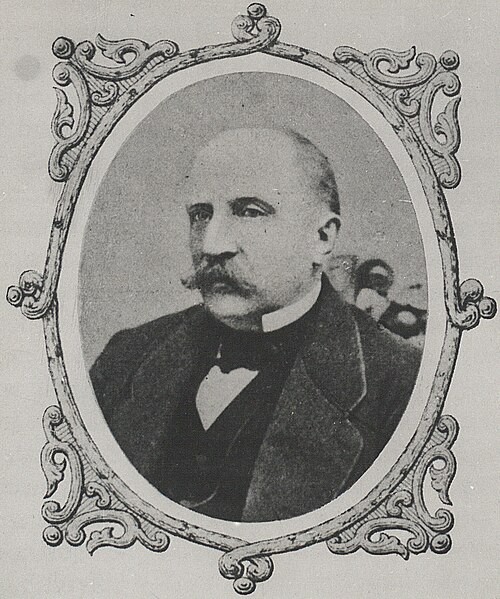
Tytus Woyciechowski
As Chopin alluded, at this time he was writing the piano concerto in F-minor that would become known as his second concerto.
In a letter to Tytus, he described the adagio of the concerto:
It is not meant to create a powerful effect; it is rather a Romance, calm and melancholy, giving the impression of someone looking gently toward a spot which calls to mind a thousand happy memories. It is a kind of reverie in the moonlight on a beautiful spring evening.
Learn more about the connection between Gładkowska and Chopin’s Piano Concerto No. 2.
Chopin’s Piano Concerto No. 2, second movement
Promoting Gładkowska’s Career
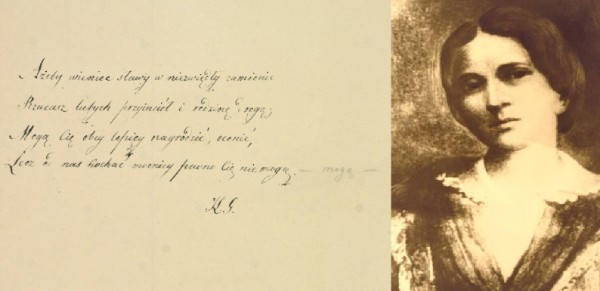
Konstancja Gładkowska
Naturally, Chopin wanted to do whatever he could to support his crush’s life in music.
When famous soprano Henrietta Sontag came to perform in Warsaw (she had performed at the premiere of Beethoven’s Ninth Symphony just a few years earlier), Chopin connected her with Gładkowska so she could take some lessons from her.
“Gładkowska leaves little to be desired,” Chopin wrote to Tytus. “She is better on the stage than in the concert hall.”
Making Her Debut
In July 1830, Gładkowska made her professional operatic debut. Chopin cut short a visit to Tytus and returned to Warsaw to watch it.
He was impressed by her performance of her aria: “It is most effective. I knew that it would be, but I hardly expected the effect to be quite so great.”
However, it’s possible that hero-worship may have tainted his opinion, because the Polish Courier critic wrote a withering review of her performance:
Just because one can produce a sound, even if it be accurate, it may not be worthy to be called singing… Perhaps Mlle Gładkowska once had a voice, but today, alas, she no longer possesses one.
Another described her voice as “devoid of charm, which is the soul of singing.”
Chopin had been friends with the author of the review, but after that particular pan, he began to snub him.
Leaving Warsaw
By the autumn of 1830, everyone in Warsaw understood that Chopin should try his luck in bigger musical ponds than Warsaw. He clearly had the talent to become an international star.
However, leaving Poland was extremely difficult for him to contemplate. He loved his friends and family dearly, and he was a shy introvert. He ended up postponing his departure multiple times.
Finally, however, he booked his ticket out of town, along with a farewell concert, at which Gładkowska was scheduled to sing.
On 11 October 1830, she took to the stage to sing Rossini at this farewell concert.
The Rossini aria that Gładkowska sang at Chopin’s farewell concert
Chopin wistfully raved about her appearance in a letter to Tytus: she wore a white dress and roses in her hair, “her attire divinely arranged to suit her complexion.”
She also wrote a poem in his autograph book about how his Polish friends would miss him, and the two even exchanged rings. (However, there is no evidence that the two agreed on a formal engagement.)
Finally, in November 1830, Chopin left Warsaw.
The couple corresponded during the politically tumultuous year to come (Poland was on the brink of revolution).
In 1831, he wrote, “Her image is before my eyes! – it seems to me that I do not love her, and yet she does not leave my head.”
But eventually they lost touch.
Did Gładkowska Love Chopin?
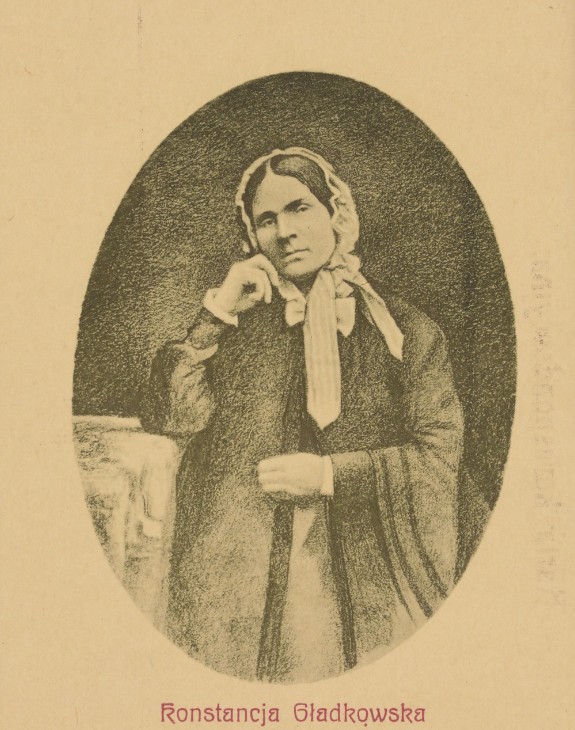
Konstancja Gładkowska
Did Gładkowska ever return Chopin’s feelings? Judging from comments she made decades later, she did not.
Even if she had, it wouldn’t have made sense for them to date. A long-distance relationship in the 1830s was even more difficult to navigate than it is today, and Chopin had no set date for a return to Warsaw. (As it happens, he would never return.)
Absent their quick marriage and Gładkowska agreeing to go on the road with him, or Chopin deciding to settle down in Warsaw and accept a more modest career, the relationship was never going to work out.
Gładkowska’s Wedding
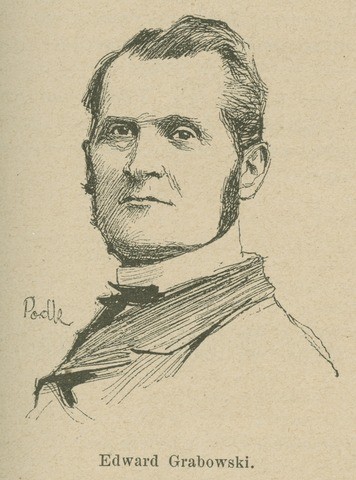
Aleksander Józef Grabowski, Konstancja Gładkowska’s husband
In January 1832, Gładkowska married a widower named Aleksander Józef Grabowski, a Polish government official who worked in St. Petersburg for a time. He was the son of a merchant and judge.
It was a move that guaranteed financial stability for her: a vital consideration for women at the time. He offered a kind of security that Chopin could not.
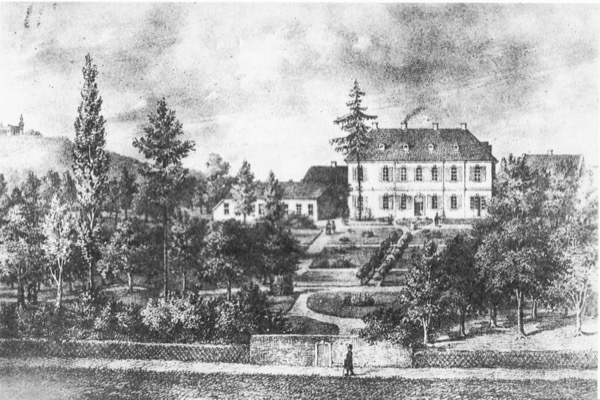
After the wedding, the couple bought an estate near the town of Rawa Mazowiecka in present-day central Poland.
The Chopin family wasn’t thrilled about the development. Chopin’s sister, Izabella, commented about the marriage: “I am as surprised as you that she could have been so insensitive. The palace was clearly more alluring to her.”
Gładkowska’s Family
Gładkowska had five children after her marriage: Aleksander-Mikołaj, born in 1833; Stanisław, born in 1838; Maria-Teodora, born in 1839; and Zofia-Walentyna, born in 1842. The name and birth date of the fifth child are unknown.
In 1845, Gładkowska began to lose her sight. She eventually became completely blind. Nevertheless, she continued managing the household expertly.
Her husband died in 1878. After his death, she moved to the larger Polish town of Skierniewice, resisting the requests of her children to move in with them.
Gładkowska’s Death
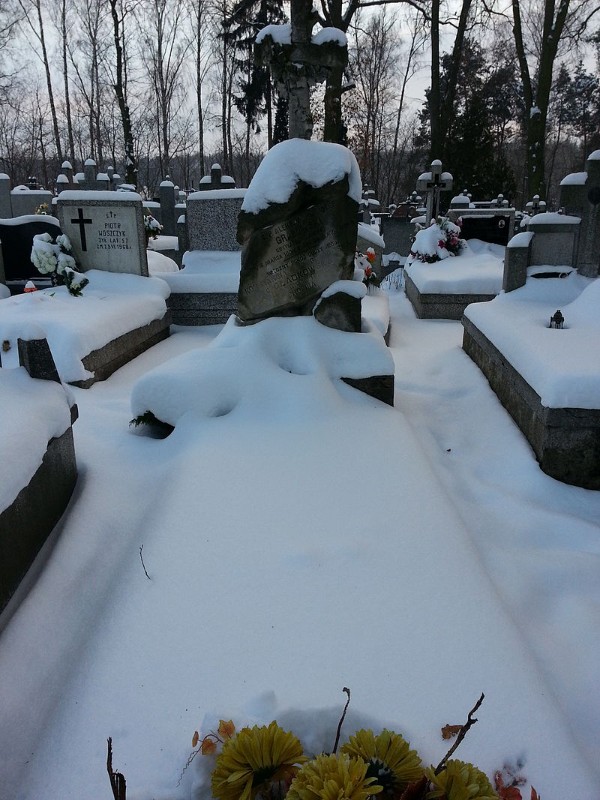
Grave of Konstancja Gładkowska
She died in Skierniewice in December 1889 and was buried next to her husband in the town of Babsk outside Warsaw.
Before she died, she burned her correspondence with Chopin.
When she was an elderly woman, a caretaker read her a biography of Chopin. She claimed that this was the first time she’d heard how much she meant to him.
She commented, “I doubt whether Chopin would have been such a good husband as my honest Józef. He was temperamental, full of fantasies, and unreliable.”
Although the relationship between Chopin and Gładkowska may have been doomed from the start, music lovers are still enjoying the fruits of it nearly two hundred years later.
For more of the best in classical music, sign up for our E-Newsletter