The Classical Era lasted roughly between 1730 and 1820. Most people know the marquee names of the era: Haydn, Mozart, Beethoven, etc. However, their colleagues included dozens of gifted women composers who were also writing symphonies, concertos, and chamber works right alongside them.
Their names may be obscure today, but that’s not because of the quality of their music. Rather, it’s because women were so rarely given the chance to publish or perform on equal footing with men.
Today, we’re looking at twelve unjustly forgotten women composers who were born in the Classical Era.
Marianna Martines (1744–1812)
Martines’s Symphony in C Major
Marianna Martines was born in Vienna in 1744 to the Pope’s representative in Austria and his wife.
Her father’s friend, the great author Metastasio, lived with them in a large apartment. (For a while, the attic of the building was rented out to Joseph Haydn.)
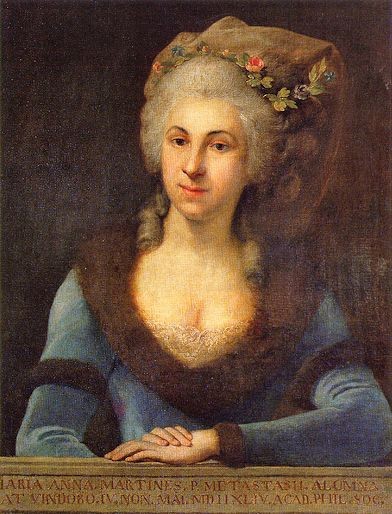
Marianna Martines
Thanks to her connections, she received a first-rate musical education and became a favourite of Empress Maria Theresa.
She was a talented harpsichordist, singer, and composer. She wrote oratorios, masses, cantatas, keyboard sonatas, and more.
Maddalena Laura Lombardini Sirmen (1745–1818)
Sirmen’s Violin Concerto No. 1
Maddalena Laura Lombardini was born in Venice in 1745 to impoverished nobility.
Her parents sent their musically talented daughter to study at the San Lazzaro dei Mendicanti. While there, she traveled to take lessons with Giuseppe Tartini, one of the most renowned violin virtuosos of his generation.
In 1767, she married fellow violinist Ludovico Sirmen. The two toured and even co-wrote concertos together.
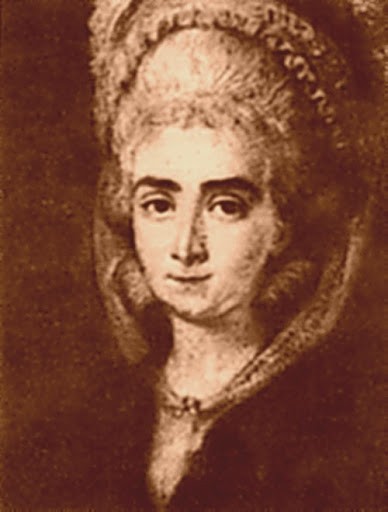
Maddalena Laura Lombardini Sirmen
She wrote six violin concertos around the same time as Mozart was writing his set of five, and she was also one of the first composers, male or female, to write for the string quartet.
Learn thirteen facts about Maddalena Laura Lombardini Sirmen’s life and music.
Juliane Reichardt (1752–1783)
Reichardt’s Piano Sonata in G-major
Juliane Benda was born to a musical family in Potsdam in 1752. Her father was the concertmaster at the court of Frederick the Great, and he was her first music teacher.
Their suburban house was a popular stopping point for traveling musicians. In 1776, after meeting writer and composer Johann Friedrich Reichardt during his visit to the house, Juliane married him.
They had three children together, including a daughter named Louise, who would go on to become a well-known composer herself.
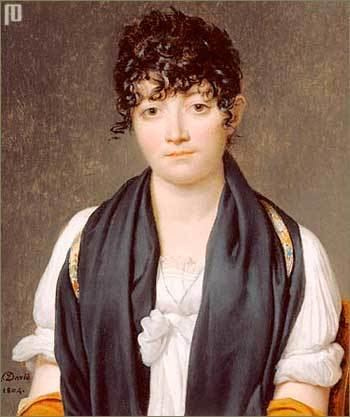
Louise Reichardt © zkm.de
Juliane died tragically young at the age of thirty. She came down with an infection after the birth of her youngest baby.
She’d continued composing through her marriage and pregnancies, and at the time of her death was at the height of her career and creative power.
Francesca Lebrun (1756–1791)
Lebrun’s Violin Sonata, Op. 1, No. 3
Francesca Danzi Lebrun was born in 1756 in Mannheim, the daughter of an Italian cellist and dancer. There were a number of professional musicians in her family.
She made her debut when she was sixteen and was promptly hired by the Mannheim Opera as well as the court opera.
In 1778, when she was twenty-three, she married oboist and composer Ludwig August Lebrun. She began to tour with him, and they lived together in England between 1779 and 1781.
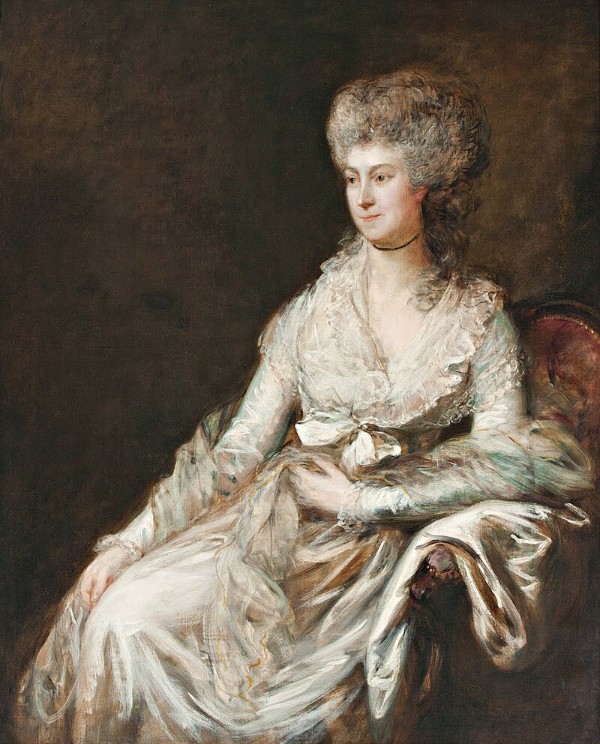
Francesca Lebrun
It was said that when they performed together, it was impossible to tell what sound was coming from the oboe and what sound was coming from her.
She had two daughters. Both became musicians themselves. Tragically, Francesca died at the age of 35.
Marianna Auenbrugger (1759–1782)
Auenbrugger’s Piano Sonata in E-flat-major
Marianna Auenbrugger was born in July 1759 in Vienna, the daughter of renowned physician Leopold Auenbrugger, who invented percussion diagnosis (i.e., the practice of tapping on a patient and listening to assess their condition).
She and her sister studied with both Antonio Salieri and Joseph Haydn. In 1780, Haydn dedicated a set of six sonatas to the Auenbrugger sisters as a token of his admiration.
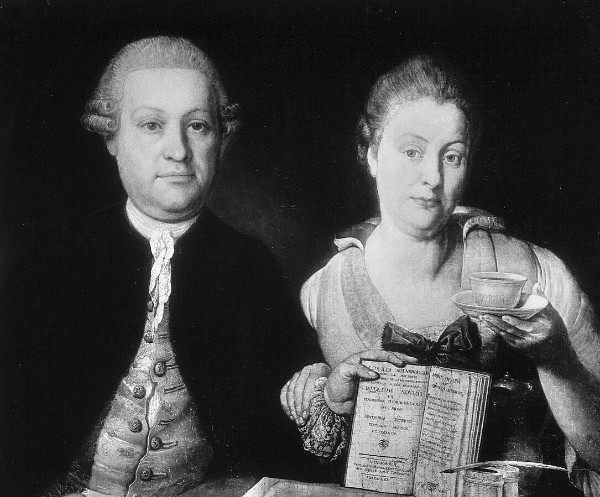
Leopold and Marianna Auenbrugger
Marianna died young at the age of 23. Salieri published her keyboard sonata at his own expense so that it could be preserved and distributed.
María Rosa Coccia (1759–1833)
Coccia’s Ifigenia
Maria Rosa Coccia was born in Rome in 1759. She was a child prodigy who by the age of thirteen had produced an oratorio and multiple keyboard sonatas.
Musicians practising in Rome were required by Papal decree to attend the Accademia di Santa Cecilia and pass an exam to become a Maestro di Capella.
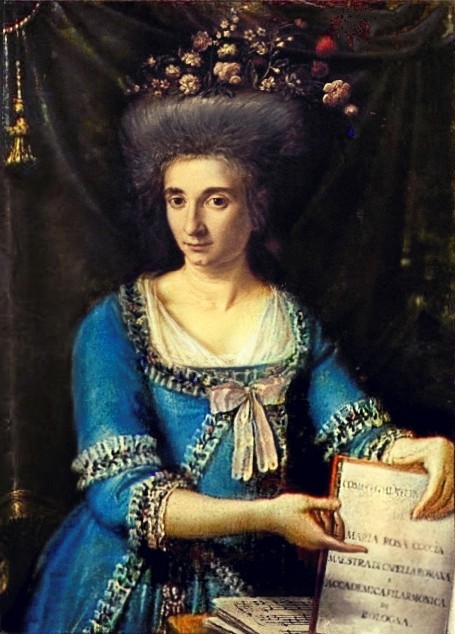
María Rosa Coccia
Coccia did so. She became maestra di cappella at Congregazione di Santa Cecilia when she was just fifteen.
A few years later, she accepted the same post at the Accademia Filarmonica di Bologna.
The fact that she acquired the title of Maestro di Capella set off a firestorm of controversy. Her work during the exam was criticised. Metastasio (Mariana Martines’s family friend and teacher) and composer Giovanni Battista Martini stood up for her.
Hélène de Montgeroult (1764–1836)
de Montgeroult’s Piano Sonata No. 9
Hélène de Nervo was born in 1764 to a recently ennobled family from Nice.
As a child, she lived in Paris, where she took piano lessons from Jan Ladislav Dussek. (She may also have studied with Muzio Clementi.)
When she was 21, she married the Marquis de Montgeroult. The couple believed in a constitutional monarchy, but were in danger during the Revolution.
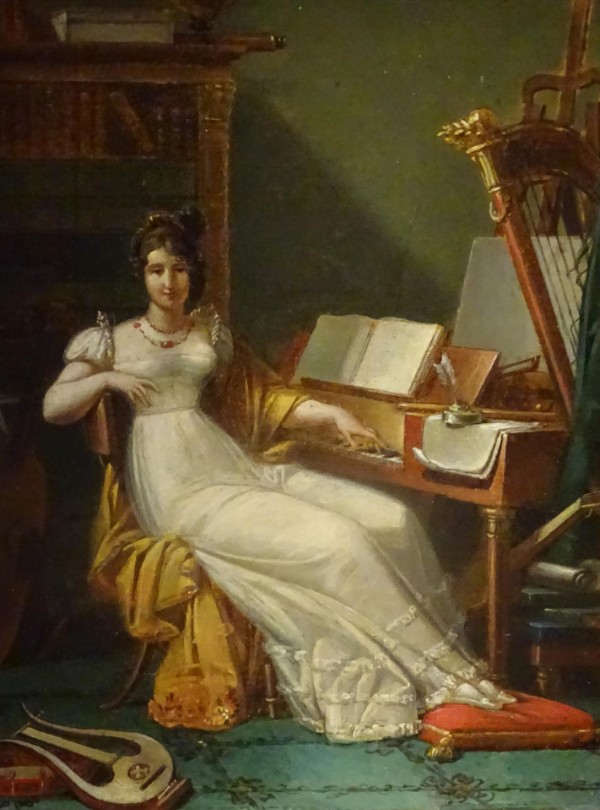
Hélène de Montgeroult
In 1793, while traveling to Italy with a diplomat friend, they were overtaken by Austrian troops, and her husband died in Austrian custody.
She lived a hugely colourful life even after the Revolution, married again (twice), had a son, composed extensively, and opened an influential salon.
It is believed that her etudes may have influenced Chopin and Schumann’s.
Isabella Colbran (1785–1845)
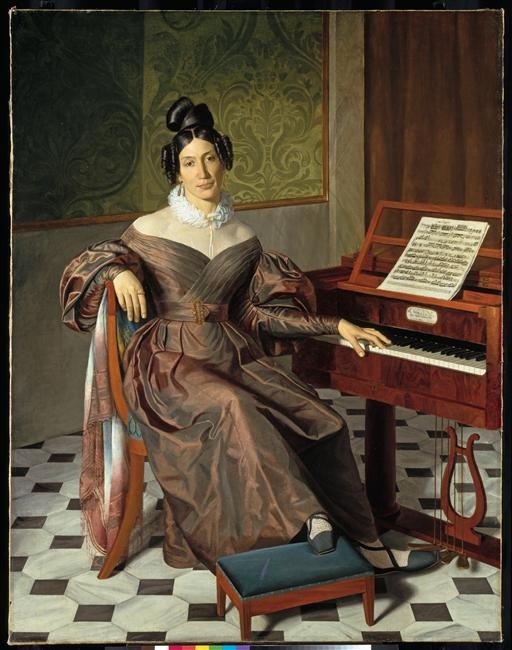
Isabella Colbran
Isabella Colbran: Sei canzoncine ou petits airs italiens (1805) (Maria Chiara Pizzoli, soprano; Marianne Gubri, harp)
Isabella Colbran was born in Madrid in 1785 to the head court musician and his wife. She began studying music as a child, with the best teachers, and made her operatic debut in Paris when she was just sixteen.
She was famous for her three-octave range and affinity for tragic roles.
She became the mistress of famous opera impresario Domenico Barbaia, then fell in love with Gioachino Rossini, who was seven years her junior. Her voice inspired a number of his greatest operas.
Their marriage was a tragic one for a number of reasons, including the fact that he gave her the gonorrhoea that ultimately killed her.
In between her operatic triumphs, she composed a number of songs that she dedicated to her royal patrons.
Marie Bigot (1786–1820)
Bigot’s Etude No. 5
Marie Bigot was born in 1786 in Alsace. We don’t know much about her childhood, but we know that she was clearly musically talented.
She married in 1804, and the couple moved to Vienna. Her husband took a job as the librarian for Count Razumovsky, one of Beethoven’s patrons.
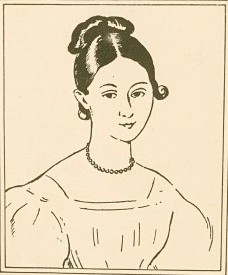
Marie Bigot
While in Vienna, her salon became a popular stop for various great musicians. Haydn once praised her effusively after she played one of his works for him: “My dear child,” he said, “I did not write this music – it is you who has composed it!”
Beethoven was also a fan of Bigot’s playing and her musical judgment. She was the first person he played his Appassionata Sonata for.
In 1816, she gave piano lessons to the young Felix and Fanny Mendelssohn, providing a fascinating direct link between Beethoven and Mendelssohn.
She died a few years later of tuberculosis.
Caroline Boissier-Butini (1786–1836)
Boissier-Butini’s Piano Concerto No. 6
Caroline Boissier was born in Geneva in 1786. Her family was not musical, but her father supported her unconditionally.
We don’t even know who her teacher was, or how self-taught she was, but she played piano and composed.
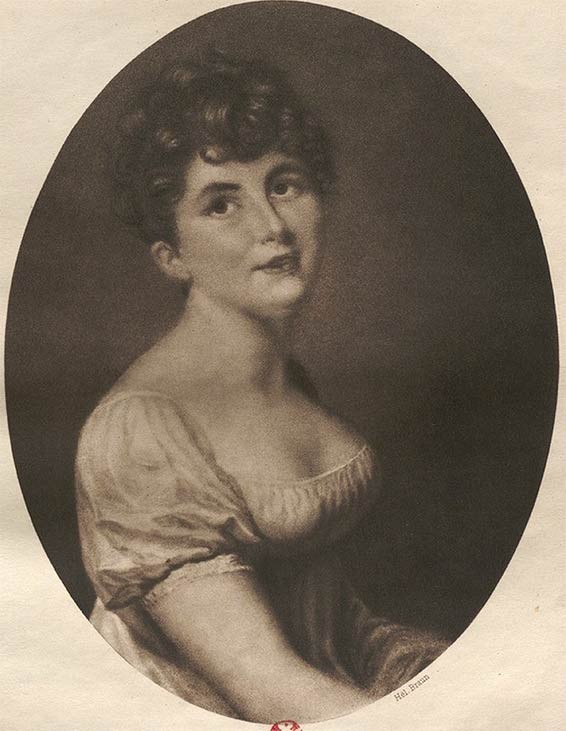
Caroline Boissier-Butini
She married an amateur violinist, Auguste Boissier, when she was 22. She had two children with him.
Over the course of her life, she wrote a large amount of music, including six piano concertos. She continued her piano studies for the rest of her life.
Maria Szymanowska (1789–1831)
Nocturne in B-flat-major
Maria Szymanowska was born in Warsaw in 1789 to a landlord/brewer and his noble-born wife.
We don’t know who taught her when she was a girl, but we believe she studied composition with Józef Elsner, who would go on to teach Chopin.
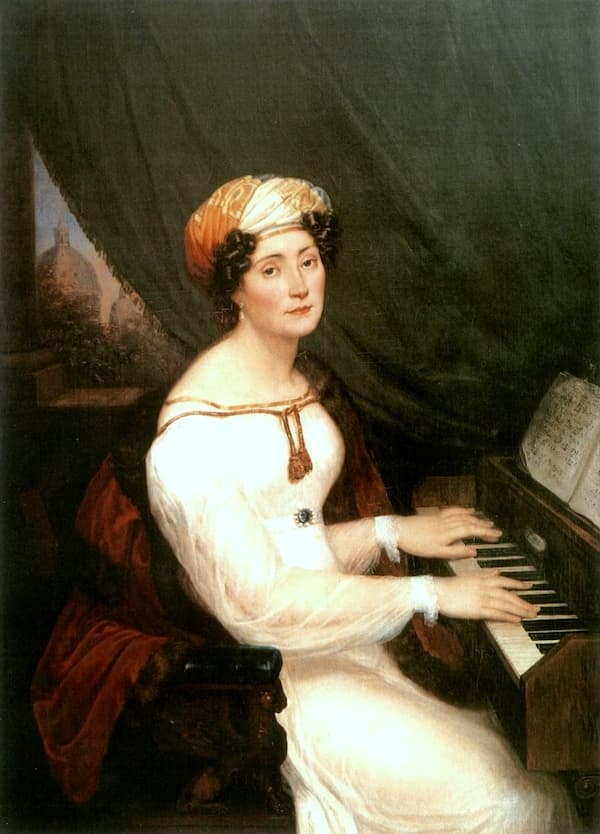
Maria Szymanowska
She made her debut in Warsaw and Paris in 1810, the year she turned 21.
She was married that same year and eventually gave birth to a daughter and a set of twins. Unfortunately, her marriage was unhappy, and she and her husband parted ways in 1820.
Unusually for the time, she spent much of her marriage touring, composing, and devoting herself to her musical career.
In the late 1820s, she moved to St. Petersburg, where she became the court pianist to the Empress of Russia, Alexandra Feodorovna.
Tragically, Szymanowska died during the 1831 cholera epidemic.
Marianna Bottini (1802 –1858)
Bottini’s Concertone for Piano
Marianna Motroni-Andreozzi was born in Lucca, Italy, in 1802 to a noble family.
She studied music as a child; in fact, most of her music that survives dates to her teens. That output includes motets, symphonies, sacred music, a piano concerto, a clarinet concerto, and an opera.
Her fame grew, and in 1820, she was admitted to the Accademia Filarmonica in Bologna as an “honorary master composer.”
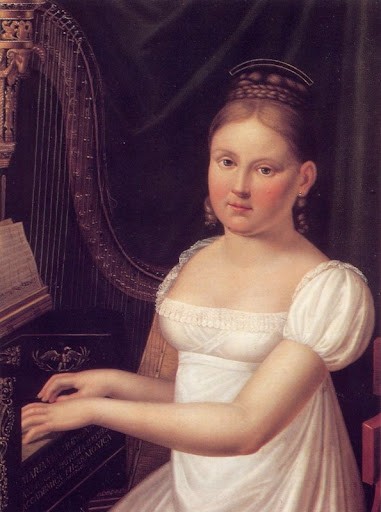
Marianna Bottini
Unfortunately, she stopped composing in 1823, when she married a prominent politician, the Marquis Lorenzo Bottini.
That said, she continued to be passionate about music, working with her harpist mother-in-law to catalogue and preserve their joint music collection.
Conclusion
Taken together, these women’s biographies can help us rethink who the composers in the Classical Era actually were.
As more of their music is recorded and performed, the legacy of these forgotten women composers will hopefully grow clearer.
Listening to their works is a wonderful reminder that classical music has always included extraordinary now-forgotten women whose creativity – happily – still survives to this day.
Who is your favourite woman composer from the Classical Era?
For more of the best in classical music, sign up for our E-Newsletter