Over the past few years, pianist Yunchan Lim’s career has turned into one giant accelerando.
At the age of 18, he became the youngest winner in Van Cliburn Competition history, stunning both the hall and the Internet with his performance of Rachmaninoff’s Third Piano Concerto.
Ever since that win, he has kept busy, performing all around the world and planning his next career moves.
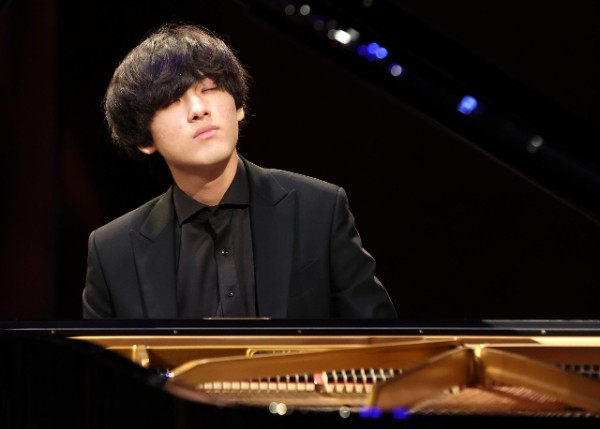
Yunchan Lim
In October 2023, he signed an exclusive recording contract with the Decca label. Since then, he has released three albums with them.
Whether he is tackling the fierce delicacy of Chopin’s Études or the lyrical intimacy of Tchaikovsky’s The Seasons, it seems like everyone wants to talk about these albums.
Today we’re looking at how major outlets – such as the Financial Times, the Guardian, Gramophone, The New Yorker, and others – have received Yunchan Lim’s Decca discography so far…and whether or not they believe Lim is one of the greatest pianists of his generation.
Chopin Études (April 2024)
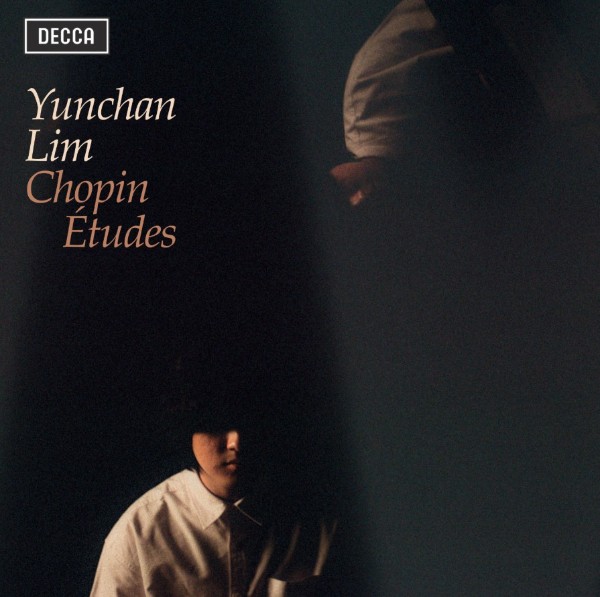
After Lim signed with Decca, his debut album with them was a studio recording of the 24 Études by Chopin.
Interestingly, many reviews of this disc emphasise its connection not to Lim’s contemporaries, but to pianists of the past.
In a long review for MusicWeb International, Marc Brindle placed Lim’s interpretations in the context of historically great Chopin pianists like Friedman, Cortot, Egorov, and Horowitz.
Brindle also praised Lim’s inventiveness, taking note of Lim’s comment in the liner notes: “These imaginings have helped my interpretations, but they change every day. I’m sure that tomorrow I’ll have other ideas!”
Brindle wrote:
Yunchan Lim’s Chopin Études is a disc I will return to – not least because I think I have more to discover in it.
It is a journey through these works, and something of a shared experience; an insight into a pianist’s thinking at the time they were recorded, even if we know it is a mutable one.
If it does not displace the great Ashkenazy set made when he was 22, Lim’s can happily sit beside it.
Chopin’s Etude Op. 25, No. 1
In the Financial Times, critic Richard Fairman also referred to vintage recordings, comparing Yunchan Lim to Maurizio Pollini:
It is fascinating to compare Lim to Maurizio Pollini, the revered Italian pianist who died in March…
Where Pollini is cool-headed perfection, Lim searches out character, emotion, variety. He cannot equal Pollini’s exact matching of tone and balance on every note, but Lim does not stint on feelings…
Why not have Lim and Pollini? They both demand to be heard.
Tal Agam wrote for The Classic Review:
The recording boasts a warm, atmospheric quality, lacking the cutting edge of Pollini or Ashkenazy. This complements Lim’s interpretation well.
While established cycles like Perahia’s, Rana’s Op. 25, Juana Zayas’ 1983 recording, or Cortot’s (perhaps the least technical but most musical) remain valuable references, Lim’s fresh perspective adds a welcome new voice to this now often-visited repertoire.
The takeaway?
By and large, reviewers received this album very positively. They often compared Lim’s effort to the most beloved Chopin recordings ever made…especially the historical ones.
Rachmaninoff Piano Concerto No. 3, Live (May 2025)
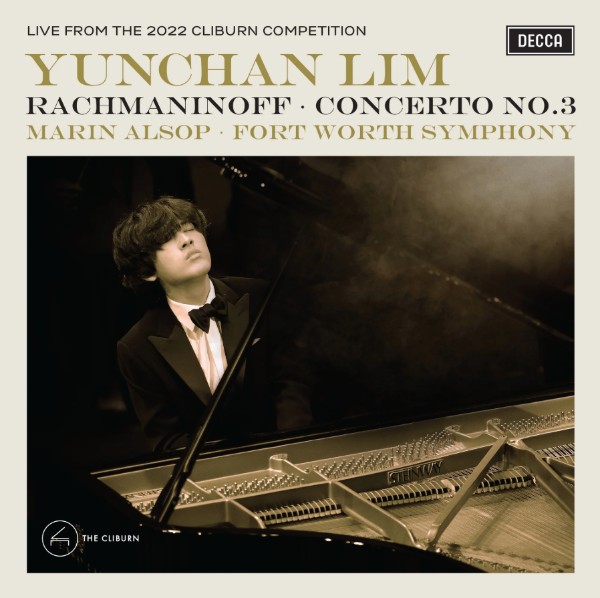
Of course, Yunchan Lim’s performance of Rachmaninoff’s Piano Concerto No. 3 at the Cliburn was the moment that really launched him onto the world stage.
Decca negotiated rights to the audio from 2023, had it cleaned up, and then released this album version in the spring of 2025.
The consensus? Lim’s technical brilliance, wild-eyed drive, and old-soul maturity make this yet another landmark recording…albeit one with occasional imperfections in the orchestra part and minor pacing issues.
Rachmaninoff’s Piano Concerto No. 3
Richard Fairman wrote for the Financial Times:
Lim’s solo part easily holds its own against the competition. In general, orchestral and solo recordings are still made in the studio, unlike opera, so to hear a performance of this concerto that is not just live, but spine-tinglingly on the edge, is a different experience.
There is a drive here that sweeps the concerto along, building up an exciting head of steam at climaxes.
Only in the most heated passages of the finale does Lim press too hard, though his technique never loses its scintillating dexterity…
There are various other recordings that offer higher orchestral and technical quality, but Marin Alsop and the adequate Fort Worth Symphony do well to keep up with their soloist. An outburst of applause has been kept at the end. How could it not be?
Meanwhile, Andrew Clements wrote for The Guardian:
Needless to say, every technical challenge in the keyboard writing seems to be effortlessly negotiated, yet the brilliance is never an end in itself; it is always part of a bigger picture, without ever diminishing the thrill of such astonishing command, so that the way the unadorned melodic lines of the slow movement are phrased becomes just as telling as the way in which the densest flurries of notes are negotiated.
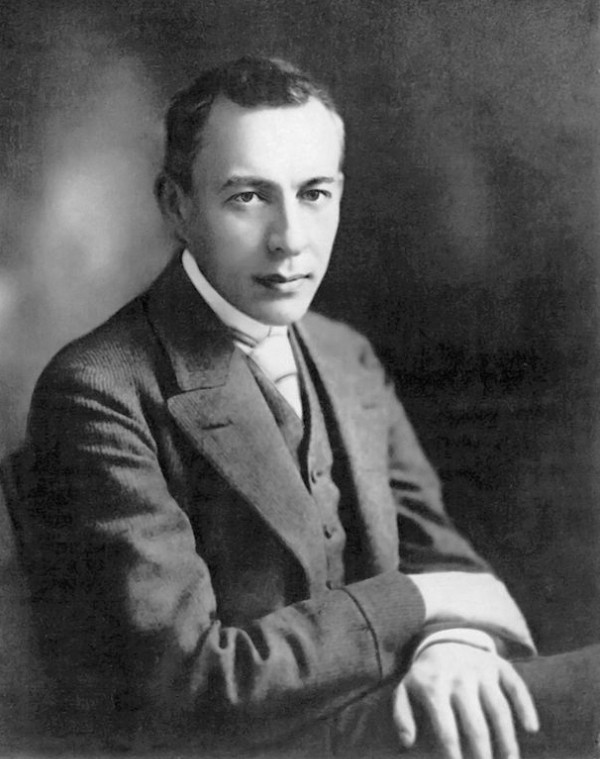
Just perhaps in the finale, when Lim can seem too headstrong for his own good, does his performance betray his age; otherwise, it deserves a place alongside the finest versions of this concerto on disc, from those by Rachmaninoff himself and Vladimir Horowitz to Martha Argerich and Vladimir Ashkenazy.
Ralph Moore wrote for Music Web International:
This slim cardboard package enshrines a performance of real stature by an extraordinary talent…
Lim has such a rounded, bell-like tone compared with Horowitz’s darker, more bass-heavy timbre, and the headlong velocity of his playing matches that of Janis.
Nonetheless, the roar which breaks out after the final notes of Lim’s performance tells you how much the audience appreciated his mastery of the crashing chords and rapid octaves.
Like Fairman, Moore is lukewarm about the orchestra’s performance compared to other famous recordings. The critique makes sense, given the extremely limited rehearsal time and the fact that nobody onstage at the Cliburn knew they were about to create a historic recording!
The takeaway?
The orchestra may not have been prepared to have this particular reading immortalised as a major recording, but Lim’s performance is so satisfying, the minor hiccups don’t matter…and the live atmosphere is electric.
Tchaikovsky The Seasons (August 2025)
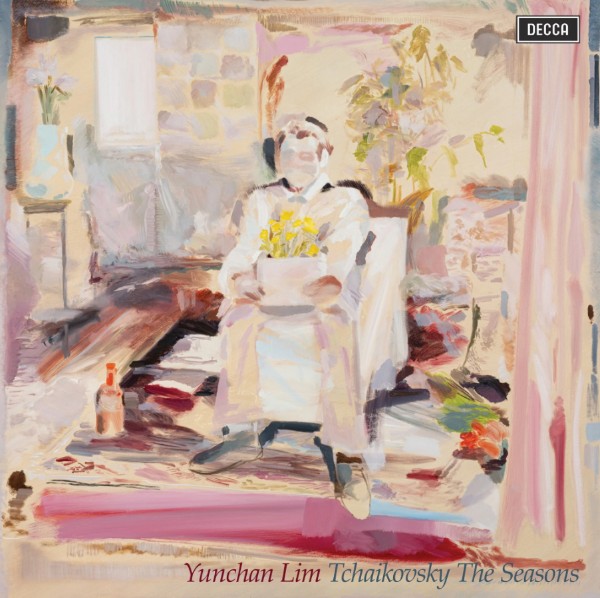
After the dazzling virtuosity of Chopin, and Rachmaninoff, for his next recording, Yunchan Lim decided to turn his attention to a cycle of parlour pieces for solo piano by Tchaikovsky.
Critics have agreed that Lim’s playing turns these works meant for amateur pianists into showcases fit for a master virtuoso…even if those critics might differ in their level of enthusiasm.
Tchaikovsky’s “November” from The Seasons
Andrew Clements wrote for The Guardian:
Yunchan Lim’s first two discs for Decca…were understandably chosen to showcase the technical brilliance and musical intelligence that had made the Korean pianist such an exceptional winner of the 2022 Van Cliburn competition in Fort Worth, Texas.
But now, it seems, Lim feels it is time to reveal a more expressive, intimate side to his playing, and indeed it’s hard to imagine anything more different from the Chopin and Rachmaninoff than Tchaikovsky’s suite The Seasons…
In his sleeve notes, Lim claims that The Seasons depicts the final year in a person’s life… Loading these often innocent miniatures with such a subtext seems wilfully obtuse. But perhaps Lim’s gloomy view explains why his tempi for some of the pieces seem on the slow side…
Everything else about Lim’s playing is exemplary, but several other pianists…present them in a less knowing, more guileless way.
Michael Quinn wrote for Limelight:
Treated as an exercise in creating atmosphere and mood, his Seasons are beautifully delineated and showcase his remarkable technique and eloquence beyond his years to conjure the most ineffable and exquisite of emotions.
Richard Fairman, writing for the Financial Times, had the firmest words of praise for the recording:
Lim lifts the musicianship to a high level, but without negating the sincere simplicity of these little pieces…
Compared to rival recordings, Lim is lighter of touch than Yefim Bronfman and more playful than Bruce Liu…
This new recording edges into the number one spot.
The takeaway?
It was a notable turn for Lim to move from overtly virtuosic repertoire like Chopin and Rachmaninoff to these simpler parlour pieces by Tchaikovsky. There may be other pianists who have noteworthy recordings of these particular works, but Lim’s interpretation is definitely worth seeking out.
Latest Release: Bach Goldberg Variations (February 2026)
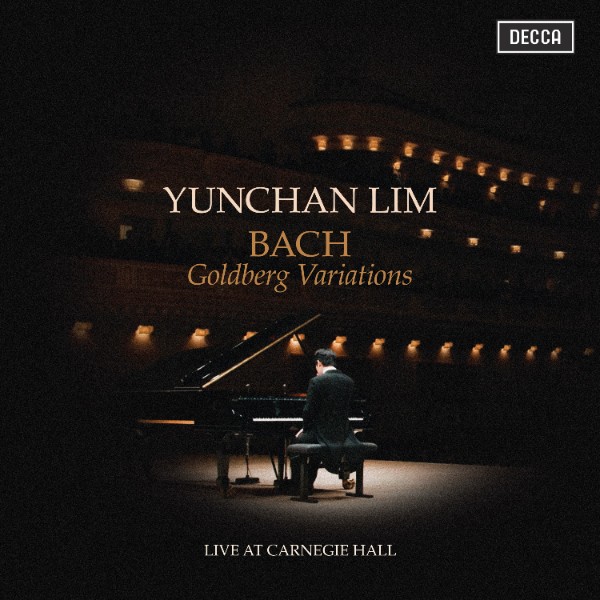
Here’s Yunchan Lim’s latest release, Bach’s Goldberg Variations and our review.
Conclusion
At this point, it seems clear that Yunchan Lim is not merely a pianist to watch. According to critics, he’s someone with the potential to become one of the greatest pianists of all time.
So whether you’re a new fan or someone who watched his Rachmaninoff live on the competition livestream, be sure to familiarise yourself with Yunchan Lim’s name, musicianship, and recordings. You’re going to be seeing a lot more of him in the years to come!
For more of the best in classical music, sign up for our E-Newsletter