Composers tend to have famously tumultuous personal lives. Some struggled mightily in their marriages, and more than a few got divorced…sometimes more than once!
Today, we’re looking at seven divorces experienced by five famous composers, as well as the stories behind what triggered the breakdown of each marriage.
Sergei Prokofiev and Lina Llubera (1947)
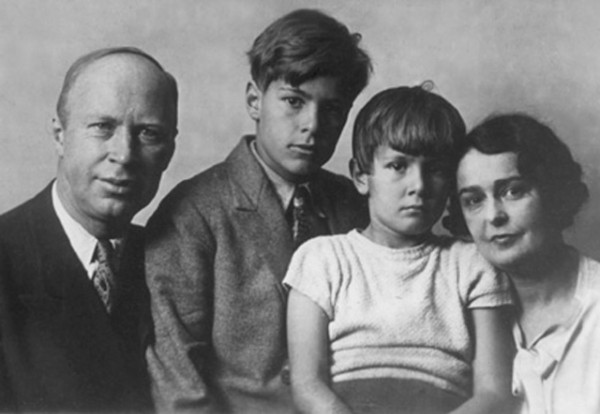
The Prokofievs and their children
Lina was born Carolina Codina in Madrid in 1897. She became a singer and took the stage name Lina Llubera.
She married composer Sergei Prokofiev in 1923 and had two children. The couple spent some time in France and the United States before moving to the Soviet Union in 1936.
However, after finding out how Stalin had denounced Shostakovich’s opera Lady Macbeth of Mtsensk, Lina became nervous about the move. Sergei dismissed her concerns.
Two years later, in 1938, while the family was on vacation, Sergei met a poet and translator named Mira Mendelson. Sergei was 47, Lina was 41, and Mira was 23.
Lina gave Sergei her permission to pursue a romantic relationship with Mira, as long as they didn’t move in together. But the relationship continued to unravel, and in 1942, Sergei announced the marriage was over.
After World War II ended, Sergei sent their son Oleg to serve Lina with divorce papers, but she refused to do so.
Finally, Sergei filed for divorce in court in November 1947, and the divorce was finalised in January 1948. Sergei and Mira married on 15 January.
The following month, Soviet authorities arrested Lina, and she was sentenced to twenty years in a gulag, possibly because of her multiple attempts to secure an exit visa. In 1953, she found out her ex-husband had died from the radio.
Read more about Sergei Prokofiev and Lina Codina.
An aria from Prokofiev’s War and Peace, with libretto by Mira Mendelson
Dmitri Shostakovich and Nina Varzar (1935) and Margarita Kainova (1959)
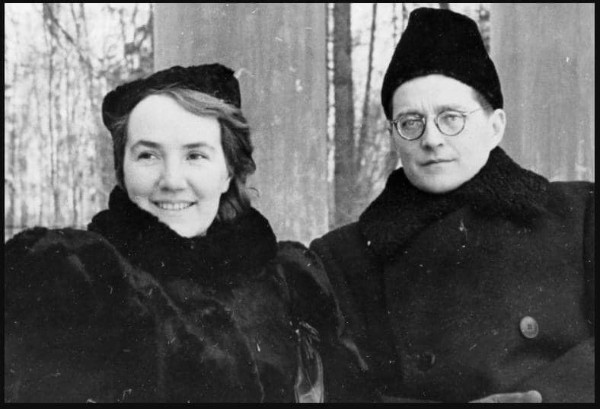
Nina and Dmitri Shostakovich
In 1932, Shostakovich married a physicist named Nina Varzar…without telling either of their families. Everyone was shocked, thinking they were incredibly ill-suited for one another.
Two years later, Dmitri had a brief affair with a translator named Elena Konstantinovskaya, and Nina asked him for a divorce.
However, things got messy once Nina realised she was pregnant. The couple decided to remarry and raise the baby together.
While she was pregnant, Dmitri’s opera Lady Macbeth of Mtsensk was denounced by Pravda, which put a target on Dmitri’s back. Fortunately, the couple – and their marriage – survived.
By 1936, Shostakovich wrote to a friend, “There can be no question of a divorce from Nina. I have only now realised and fathomed what a remarkable woman she is, and how precious to me.”
They remained together until 1954, when Nina died unexpectedly while on a work trip to Armenia.
Dmitri was devastated by Nina’s death and struggled with becoming the single father of two.
In 1956, he met a woman at the World Festival of Youth named Margarita Kainova. She bore a striking physical resemblance to Nina. He invited Margarita to his house and proposed to her. She accepted.
Unfortunately, their marriage was a disaster. She didn’t share his dark sense of humour or appreciate his music. The two began divorce proceedings in 1959.
The following year, Dmitri dedicated his seventh string quartet to Nina.
Shostakovich’s Seventh String Quartet
Kurt Weill and Lotte Lenya (1933)
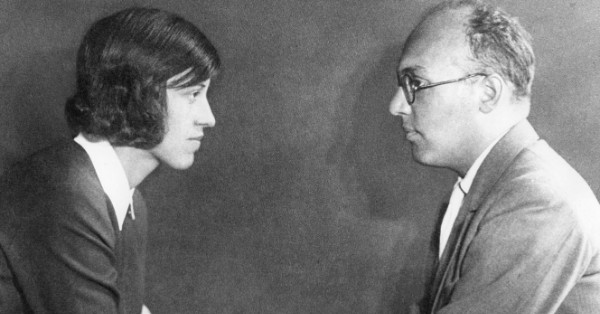
Kurt Weill and Lotte Lenya
Kurt Weill first saw his future wife, Lotte Lenya, when she auditioned for his stage work Zaubernacht in 1922. In 1924, a mutual friend had Lotte pick Kurt up from the train station. They started dating soon after.
They married in 1926, to the alarm of Weill’s family. “She’s a terrible housewife. But a very good actress,” he assured them.
Lotte joined the first cast of The Threepenny Opera in 1928 and became Weill’s primary creative sounding board and interpreter. Over the course of his career, he would write five roles for her.
Neither Kurt nor Lotte took marital fidelity particularly seriously. Lotte had a number of affairs, and Kurt had a couple of his own. Lotte later remembered one of his partners: “She was a little sex kitten, one of those coarsely funny blondes. I can well imagine why he fell for someone like that.”
They divorced in 1932, but couldn’t stay away from each other, and remarried in 1935. They would remain together until Kurt’s death in 1950.
She later remarked, “Nobody really knew him very well. I have often wondered if I knew him. I was married to him for 24 years, and before we were married, we lived together for two years, so 26 years in total. But when I had to watch him die, I doubted whether I ever knew him.”
However, if anyone did know Kurt Weill, surely it was Lotte.
Lotte Lenya singing Pirate Jenny
Germaine Tailleferre and Ralph Barton (1927) and Jean Lageat (1955)
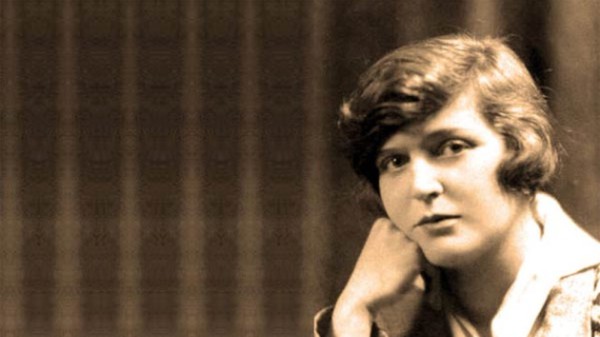
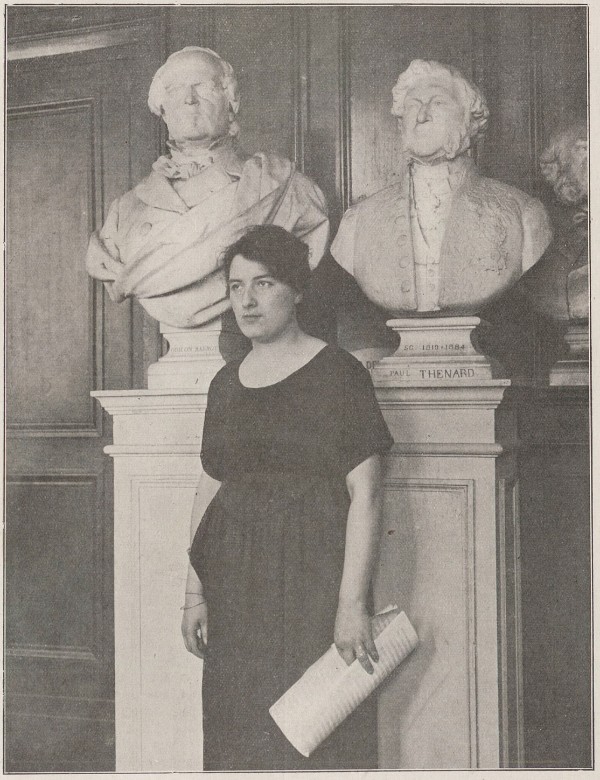
Germaine Tailleferre
Composer Germaine Tailleferre was born in 1892 in a Parisian suburb. As a young woman, she became a star student at the Paris Conservatoire, winning many prizes.
In 1926, she married a famous American caricaturist named Ralph Barton. She was his fourth wife. He thought she’d be a good French cook.
He also hated that she was a composer. “I had forgotten that a young woman who was married, even to an American, was never free,” she later wrote.
When she revealed to him that she was pregnant, he suggested triggering an abortion by shooting her in the stomach. She miscarried a few days later.
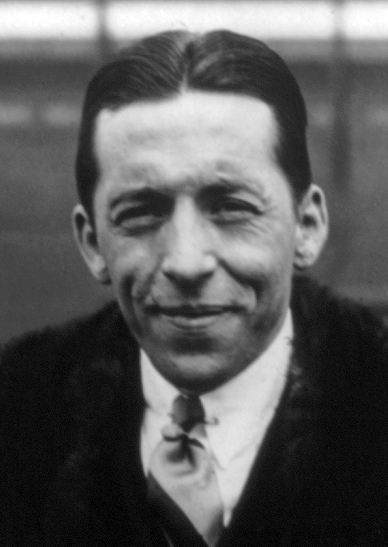
Ralph Barton, 1926
The couple’s divorce was finalised in April 1931, and Barton died by suicide a few weeks later. He wrote in his suicide note, “I have had few difficulties, many friends, great successes; I have gone from wife to wife and house to house, visited great countries of the world—but I am fed up with inventing devices to fill up twenty-four hours of the day.”
Germaine would go on to marry one more time, in 1932, to a lawyer, Jean Lageat. She got pregnant while they were dating and had a daughter with him, but the marriage was never happy, and Lageat was abusive to both mother and daughter. They divorced in 1955.
Germaine Tailleferre’s piano concerto from 1924
Claude Debussy and Lilly Texier (1904)
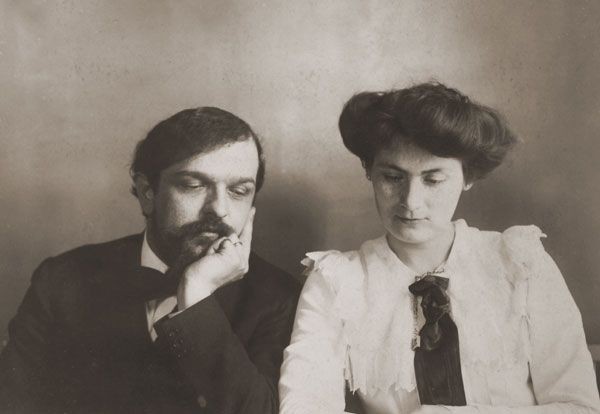
Claude Debussy and Lily Texier
The Debussy divorce is arguably the most infamous divorce in classical music history.
When they met in Paris, Lilly was 25 and Claude was 37. She was working as a seamstress and had worked as a model, and Claude was working on his Nocturnes for orchestra.
Despite a stormy courtship, they married in October 1899.
In 1904, Debussy began visiting with Emma Bardac, a banker’s wife and the mother of one of his piano students. Emma was a charming soprano, and she and Debussy fell in love.
That summer Lilly went to visit her family southeast of Paris. Claude, meanwhile, went on vacation with Emma and wrote to Lilly:
I have a very clear conviction after these days spent away from you, when I was able for the first time to reflect coldly on our life, that, while having loved you very much, I had never made you as happy as I should…
I remembered those annoying moments when you asked me to give you back your freedom…
We are no longer children, so let’s try to get out of this story quietly and without getting people involved.
Distraught at her husband’s betrayal, Lilly shot herself on 13 October. Claude visited her doctor to make sure she would live, but made no other move to support her.
All of Paris was scandalised by Claude’s callousness. In his absence, a group of musicians felt obligated to raise money for Lilly’s medical treatment and living expenses.
Claude and Lilly’s divorce was finalised in 1905. Claude and Emma had a daughter in October 1905 and married in 1908. Read more about Debussy and his wives.
For more of the best in classical music, sign up for our E-Newsletter