Released in 2025, Nicola Benedetti‘s Violin Café is one of her most personal and unusual projects to date. In a shift away from the large-scale concerto repertoire that has dominated much of her discography, Benedetti curated a programme that abandons the traditional violin-and-piano recital format.
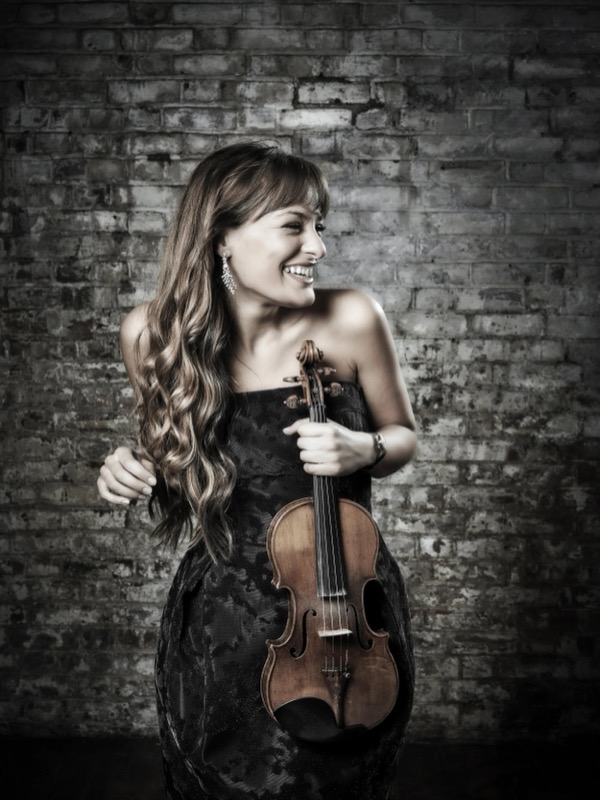
Nicola Benedetti
To celebrate her birthday on 20 July, let us highlight a recording that is less a showcase for Benedetti’s virtuosity than a reflection of her growth as a musical curator and collaborator.
Henryk Wieniawski: Polonaise No. 1 in D Major, Op. 4 (Nicola Benedetti, violin)
An Imagined Coffeehouse
Benedetti shot to fame at the age of 16 by winning the BBC Young Musician of the Year in 2004, and twenty years later, Violin Café presents salon music, folk melodies, and virtuoso violin pieces in a conversational setting.
The idea behind this album was inspired by the nineteenth-century café tradition of Central Europe, a place where music of all genres mingled naturally. Violin Café thus becomes a gathering place where traditions freely intersect across genres.
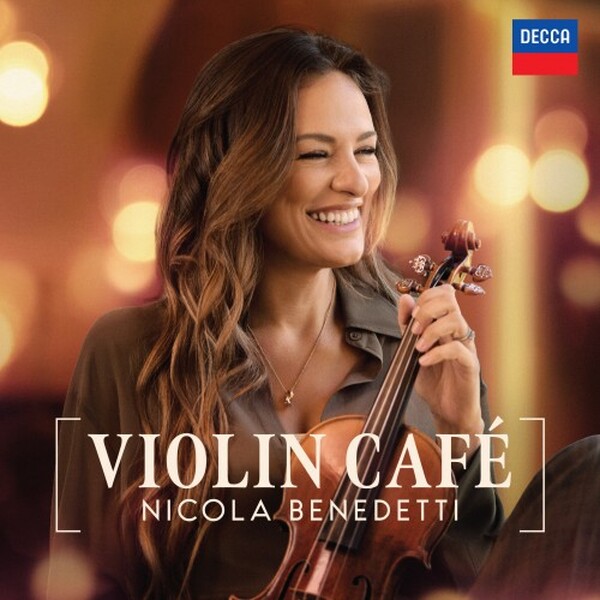
Voilin Café (Decca Records)
Traditionally, violin recitals rely on the customary violin and piano partnership. For Violin Café, however, Benedetti assembled a distinctive ensemble consisting of violin, accordion, guitar, cello, and Scottish smallpipes.
Manuel Ponce: Estrellita (Nicola Benedetti, violin)
Beyond the Piano Partnership
Fundamentally, Benedetti wanted to get away from the formality of playing with a pianist and work with instruments that could be found around the world in a café atmosphere. The accordion successfully establishes this atmosphere, blending well with all idioms, while the guitar adds warmth and intimacy.
The promotional material suggested that this line-up of instruments creates a communal, conversational atmosphere and a sound that fits naturally in a café. During the first rehearsals, when the group started working through the brand-new arrangements, expectations were high.
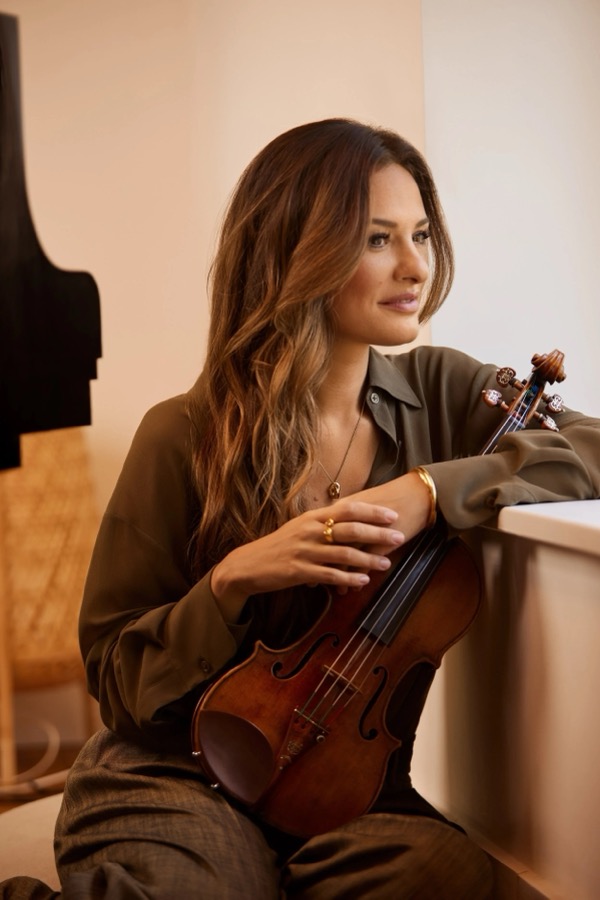
Nicola Benedetti © Franz Galo
Benedetti has spoken about how the group became increasingly connected. They discovered the humour, texture, and virtuosity of Stephen Goss’s Carmen Fantasy. And they all enjoyed the polyphony and sweet sonority of Juliette Pochin and James Morgan’s Sicilienne.
Maria Theresia von Paradis: Sicilienne (Nicola Benedetti, violin)
Tapestry of Musical Traditions
The album contains thirteen tracks, with several works newly arranged for the instrument line-up. It features an eclectic mix ranging from Wieniawski’s brilliant salon virtuosity to Bloch’s deeply introspective Prayer.
We also find an arrangement of von Paradis’ “Sicilienne,” “Farewell to Stromness” by Sir Peter Maxwell Davies, and traditional melodies from Scotland and Mexico. Nor should we forget an arrangement of Sarasate’s “Carmen Fantasy.”
Looking over the programme, we find an arc of deliberate sentimentality and nostalgia, told through oral musical traditions. It essentially recreates a lost world in a coffeehouse.
Ernest Bloch: From Jewish Life: I. Prayer (Nicola Benedetti, violin)
A Space for Music and Memory
This project also expresses Benedetti’s gratitude to audiences who have followed her career for more than two decades. She expresses her gratitude to audiences of all ages in the UK and internationally who share a deep affection for classical music and the violin, noting her engagement with young students she has met through post-concert teaching and her broader commitment to fostering curiosity about the arts.
Critical reaction has been overwhelmingly enthusiastic, with Joanne Talbot declaring that Benedetti’s playing is “utterly beautiful,” yet the defining characteristics of this album are the highly imaginative arrangements for this piquant ensemble.
Ecki Ramón Weber goes even further and describes the album as a “ray of light,” concluding with a “café one gladly visits.” Benedetti, in her roles as curator and collaborator, offers a space where stories, memories, and melodies meet. Violin Café wistfully recreates a tradition that has largely vanished.
For more of the best in classical music, sign up for our E-Newsletter
Pablo de Sarasate: Carmen Fantasy, Op. 25 (Nicola Benedetti, violin)