Classical music lovers don’t always like acknowledging it, but every idolised canonical composer has been deeply inspired by the people who surrounded him.
And in many cases, one of the most inspirational people in any artist’s life is their spouse.
In fact, some of the most cherished works in the classical canon were inspired by composers’ wives.
These were women who loved their husbands deeply – who often suffered and sacrificed for them – and who shaped their partners’ legacies in profound ways. These women weren’t incidental to the creation of these works: they were essential.
Today, we’re looking at some of the classics they inspired and had dedicated to them.
Piano Sonata No. 8 by Sergei Prokofiev (1944)
Sergei Prokofiev’s Piano Sonata No. 8, completed in 1944, is the last and longest of his three “War Sonatas.”
Monumental in scale, the sonata alternates between introspection and explosive outward intensity. The moods of wartime life in the Soviet Union were clearly one inspiration, but another was the tumultuous personal changes manifesting in Prokofiev’s life at the time.
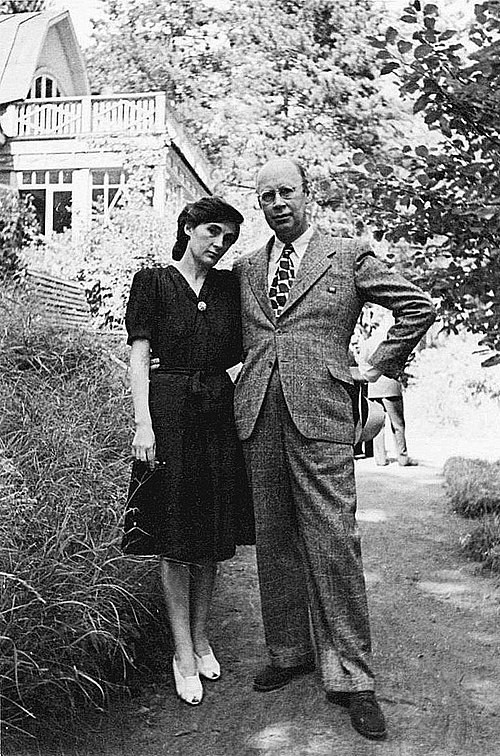
Prokofiev and Mira Mendelson
In 1938, the 47-year-old composer was on vacation with his wife and children when he met a bookish 23-year-old poet named Mira Mendelson.
He fell in love with her, and they began making public appearances as a couple in 1939. In 1941, he moved out of his home to be with her. During the war, the couple worked on his opera War and Peace together.
They weren’t able to legally marry until 1948, but this piano sonata served as an extraordinary public love letter in the meantime.
Piano Concerto No. 3 by Béla Bartók (1945)
Ditta Pásztory Bartók
Béla Bartók’s Piano Concerto No. 3 is a farewell to music, to life, and his wife.
Composed in 1945 while Bartók was dying of leukaemia in New York, the concerto was intended as a birthday gift for his second wife, pianist Ditta Pásztory Bartók.
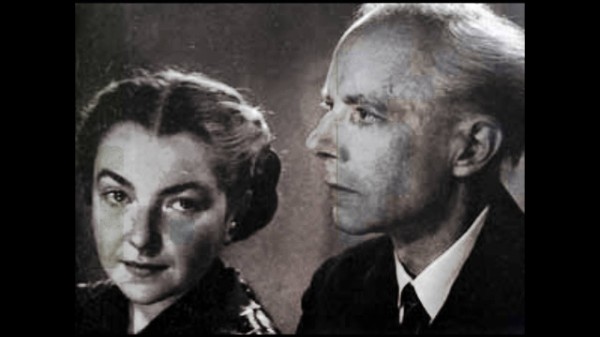
Béla Bartók and Ditta Pásztory Bartók
He hoped that after his death, concert agents would hire Ditta to perform it, helping her to make a living even after his death.
This concerto is very accessible for a Bartók work. The slow movement evokes the chorale from Beethoven’s String Quartet No. 15, a piece that Beethoven composed after recovering from what he thought would be a fatal illness…a haunting reference for a terminally ill composer to make.
He also includes references to Wagner’s famous “Tristan chord”, a Romantic Era shorthand for intense romantic longing.
Upon Bartók’s death, he had finished the entire concerto except for the orchestration of the last seventeen bars. A friend stepped in to complete it. The concerto received its posthumous premiere in 1946.
Catalogue d’oiseaux by Olivier Messiaen (1956-1958)
Yvonne Loriod Messiaen
Olivier Messiaen’s Catalogue d’oiseaux (“Catalog of Birds”) is a cycle of thirteen solo piano pieces, in which he transcribes the songs of various French birds into music. All thirteen pieces consist of two and a half hours of music! (The video above is of an excerpt.)
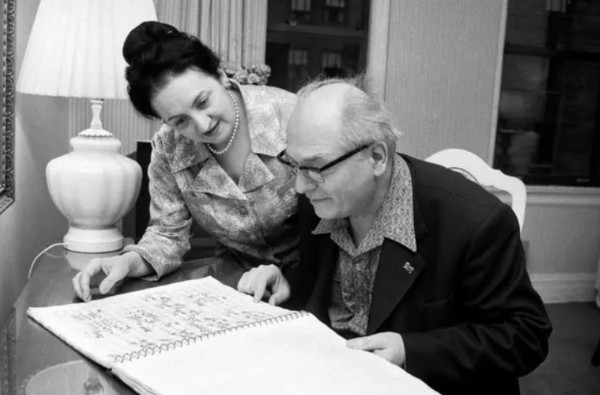
Yvonne Loriod and Olivier Messiaen
Written between 1956 and 1958, the Catalogue was dedicated to Yvonne Loriod, the brilliant pianist who would become one of his greatest interpreters…and, eventually, his wife.
Messiaen’s first wife, Claire Delbos, had suffered a horrific fate. In 1949, after undergoing a hysterectomy, she developed a cerebral infection, which resulted in severe amnesia. She survived for ten more years.
While Delbos was still alive, Messiaen fell in love with Loriod, who had been his student at the Paris Conservatoire. He was awed by her abilities, later saying in an interview:
It’s obvious that while writing “Vingt Regards” or “Catalogue d’Oiseaux” I knew they would be played by Yvonne Loriod. I was therefore able to allow myself the greatest eccentricities because to her, anything is possible. I knew I could invent very difficult, very extraordinary, and very new things: They would be played, and played well.
Two years after Claire died in 1959, Messiaen and Yvonne were married. Yvonne Loriod would devote the rest of her life to promoting her husband’s work.
String Quartet No. 7 by Dmitri Shostakovich (1960)
Nina Varzar Shostakovich
Dmitri Shostakovich’s String Quartet No. 7, composed in 1960, is the shortest of his fifteen quartets, but it’s one of the most emotional.
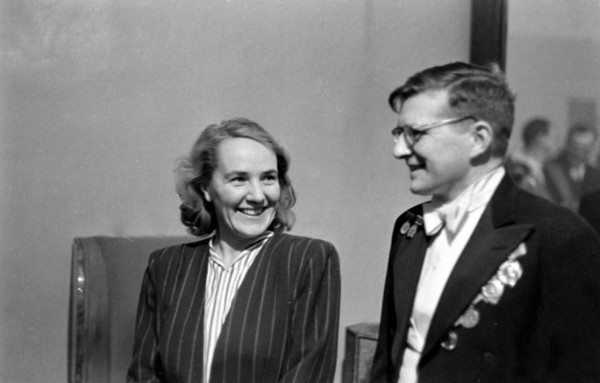
Nina Varzar Shostakovich and Dmitri Shostakovich
Nina Varzar Shostakovich was a pillar in Shostakovich’s life. They married in 1932 and divorced after he had an affair in 1935…then remarried after Nina discovered she was pregnant.
She was by his side during the unfathomable stresses of the Stalinist purges, serving as his barrier against the world while raising their two children. Simultaneously, she pursued her own career as a physicist.
When she died suddenly after an operation in December 1954, at the age of just 46, Shostakovich was shattered. He remarried soon after her death to a Nina lookalike, but they were divorced by 1959.
In 1960, he wrote this string quartet and dedicated it to his late wife. Its intense emotions suggest his lingering struggles with his loss and love for Nina.
Program note writer John Henken writes here: https://www.laphil.com/musicdb/pieces/3731/string-quartet-no-7
The first [movement] is a nervous Allegretto, a sort of musical state of denial, superficially casual but growing darker as it edges through metrical transformation toward the following Lento. That is eerie, lonely music – all four instruments hardly ever play at the same time… The Quartet ends with an odd little waltz, like the ghost of Nina dancing in Shostakovich’s memory.
For more of the best in classical music, sign up for our E-Newsletter