When pianist Louise Japha was in her late teens, a precocious eleven-year-old boy played a piano sonata for her. She was impressed by the child’s talent, and the two went on to become friends.
That little boy was none other than Johannes Brahms!
The lives of Louise Japha and Johannes Brahms would intertwine for decades. But it turns out that Japha’s life and career are fascinating, even apart from her connection with Brahms. Today we’re taking a closer look.
Louise Japha’s Musical Childhood
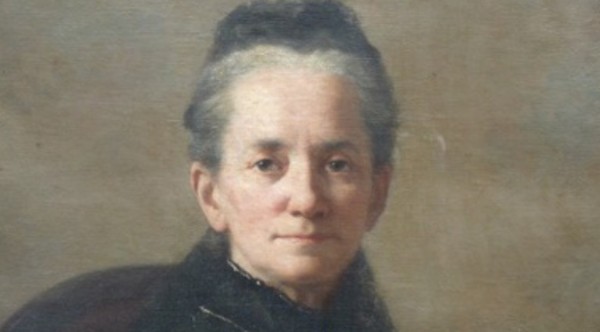
Louise Japha
Louise Japha was born on 2 February 1826 to a Jewish-Protestant family in Hamburg, Germany.
She demonstrated musical talent from an early age, studying both piano and composition. She toured internationally as a child and even appeared before the Danish court and Swedish king when she was just ten years old.
She made her debut a few days after her twelfth birthday, in 1838, at the Hamburg Apollo Hall.
Meeting and Befriending a Teenaged Johannes Brahms
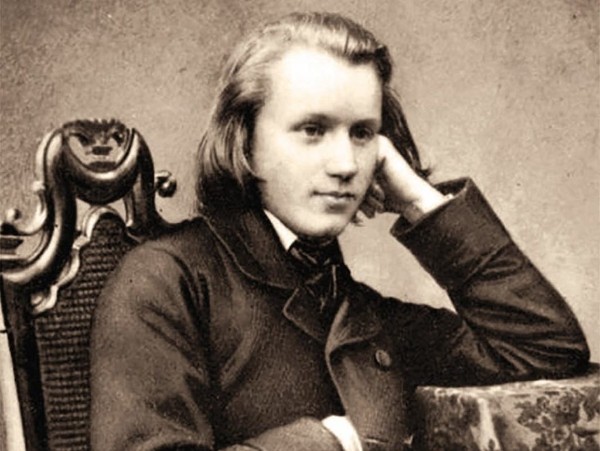
Johannes Brahms
When she was eighteen, she met Brahms for the first time.
Their paths crossed again a few years later at the showroom of the Baumgarten und Heins piano factory in Hamburg. Johannes was in his late teens, and Louise was in her mid-twenties.
They quickly befriended each other, playing four-hand piano duets and sharing their compositions with one another for feedback.
Louise later remembered their relationship as being complicated. She respected him artistically, but had trouble engaging with his prickly personality.
She described him as “sehr herbe im Wesen” (very harsh in nature). His sense of humour was sarcastic, and he had a striking anti-social streak.
A friend of Louise’s once walked him home, but Johannes said nothing the whole way. Japha later asked him about it. He explained himself: “One is not always inclined to talk…and then it is best to be silent. You understand that, don’t you?”
In the words of Brahms biographer Jan Swafford, “She did not.”
Introducing Brahms to Robert Schumann
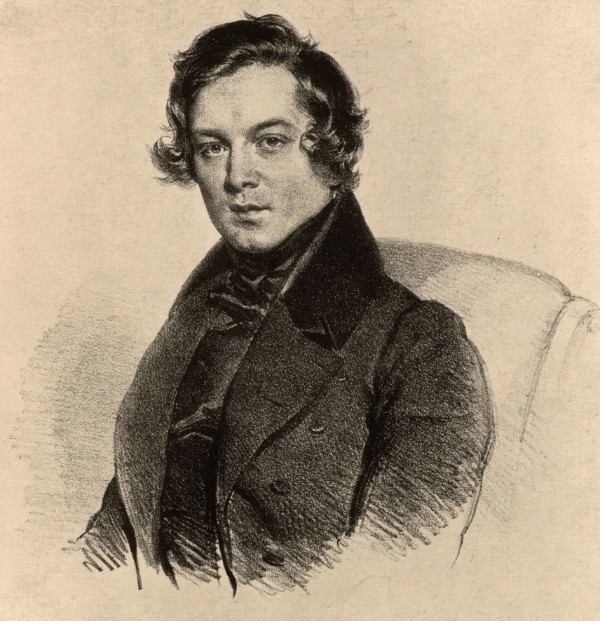
Robert Schumann
Louise introduced Johannes to the work of composer Robert Schumann, showing him the score to the aria “Wie glücklich sie wandeln, die seligen Geister” from Schumann’s 1843 oratorio Das Paradies und die Peri.
Johannes was immediately suspicious of it because it began with a seventh chord: an incorrect application of musical theory, in his teenage opinion.
In March 1850, when Louise was twenty-four and Johannes sixteen, Robert Schumann came to Hamburg.
It was thrilling to have the composer in town, but the star attraction was his wife, thirty-year-old piano virtuoso Clara, who performed her husband’s piano concerto.
Schumann Piano Concerto, in A minor, OP. 54 Martha Argerich & Riccardo Chailly
We don’t know if Johannes went to this performance, but we do know that Louise convinced him to send over an envelope of his compositions to the Schumanns’ hotel.
Of course, the couple was preoccupied by the demands of touring, and Brahms’s compositions were returned to him unopened…to Johannes’s disappointment.
Moving to Düsseldorf
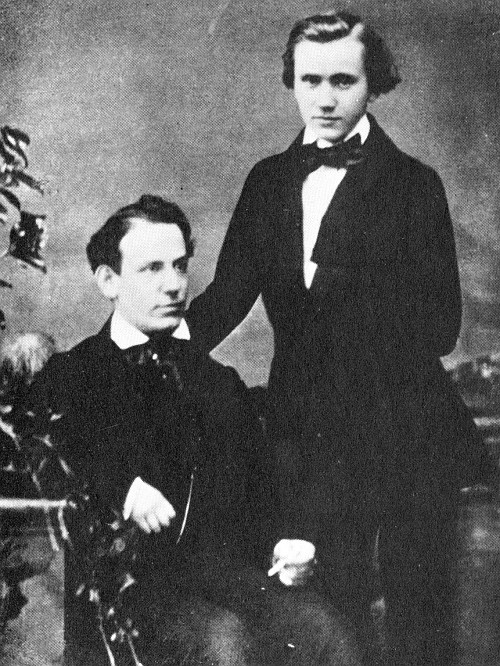
Ede Reményi and Johannes Brahms
Johannes may not have been impressed by Robert Schumann, but Louise was.
In the autumn of 1852, she announced that she would be moving to Düsseldorf to take composition lessons from Robert and piano lessons from Clara.
Johannes was upset, writing to her, “Don’t go! You’re the only one here who takes any interest in me!”
However, Japha wasn’t about to let her prickly friend get in the way of a major professional opportunity. She moved to Düsseldorf with her artist sister, Minna, that November.
Turns out Johannes didn’t stick around, either. In 1853, the year he turned twenty, he embarked on a tour as accompanist for violinist Ede Reményi.
Louise and Johannes’s paths crossed again within the year, on 30 September 1853. The tour had taken Johannes to Düsseldorf, where he called on the Japha sisters.
“I was happy as a child to find my countrywoman Louise Japha here,” he reported in a letter to violinist Joseph Joachim.
Johannes would present the Japha sisters with the dedication to his Six Songs, op. 6.
6 Songs/Gesänge Op.6 By Johannes Brahms (with Score)
The Schumanns Connect With Brahms
The Schumanns were also happy to find Johannes Brahms, whom they met the day after his reunion with the Japha sisters, on 1 October.
That fall, both Schumanns finally had a chance to look over his music and speak to him, and they were beyond impressed. In fact, they went so far as to label him the saviour of music.
Weeks later, in November, Robert Schumann wrote in a cover story for the music journal Neue Zeitschrift für Musik:
I have thought…someone must and would suddenly appear, destined to give an ideal presentation to the highest expression of the time, who would bring us his mastership not in the process of development, but springing forth like Minerva fully armed from the head of Jove. And he has come, a young blood by whose cradle graces and heroes kept watch. He is called Johannes Brahms…
Louise Japha’s Studies Unravel
Unfortunately, Louise discovered that she wasn’t getting many lessons with Robert (she would have just six over the course of one quarter).
His mental and physical health were poor, and Clara was becoming increasingly protective of the demands on her husband’s time and energy.
Around the same time, Johannes – awkwardly – began to develop romantic feelings for Clara, who was pregnant with her eighth child.
Crisis struck in February 1854, when Robert Schumann attempted suicide by jumping into the Rhine. He was rescued, but asked to be brought to a mental hospital. Immediately, the entire Schumann household was plunged into a family and financial crisis.
Johannes, given his feelings of indebtedness to the Schumanns and his developing infatuation with Clara, decided to temporarily relocate to Düsseldorf to help out.
The Japha sisters, however, did not share these feelings of emotional obligation. After nearly a year had passed and Robert Schumann failed to return home, they left Düsseldorf in November 1854.
Robert Schumann would die in the mental hospital in the summer of 1856.
Her Marriage to Wilhelm Langhans
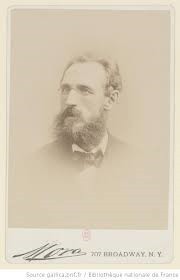
Wilhelm Langhans
Her stay may have ended in tragedy, but Louise had left the Schumann household with multiple important contacts, including violinist and composer Wilhelm Langhans.
Langhans was six years her junior. He’d been active in the Düsseldorf music scene and a visitor to the Schumann household.
Louise and Wilhelm fell in love and married in 1858.
Most women of this era retired after their marriages, but Louise didn’t. She decided that, like Clara Schumann, she wanted to balance music and motherhood.
In 1859, she gave birth to her first son, but tragically, he died the following year.
The grieving couple returned to Louise’s hometown of Hamburg, where they had two more sons: Friedrich Wilhelm in 1860 and Johann Gottlieb Julius in 1862.
At the same time, Louise busied herself presenting performances by chamber musicians and even orchestras. She also appeared in concert with her violinist husband.
Moving to Paris
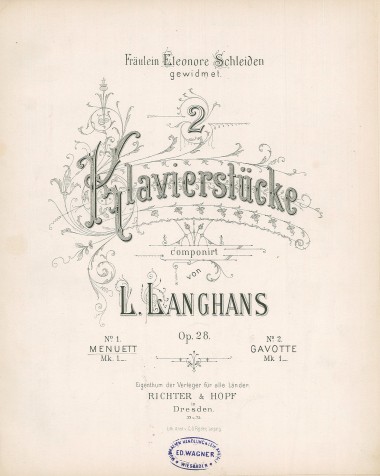
Louise Japha’s sheet music cover
The Langhans moved to Paris in 1864 and made a major mark on the musical life of the city.
They presented works by German composers like Beethoven, Mendelssohn, and Schumann, and entertained Paris-based composers like Berlioz, Liszt, Franck, Rossini, and others.
In 1868, they organised the Parisian premiere of Brahms’s Piano Quintet in F minor, op. 34, which had been published just three years before.
Brahms: Piano Quintet in F minor
Unfortunately, it was received with distinct coolness; Paris would need more time to adjust to Brahms’s musical language.
At the same concert, Louise and Camille Saint-Saëns played a two-piano work by Liszt together.
In 1870, as a sign of his respect for her, Saint-Saëns dedicated his Improvisation sur la Beethoven-Cantate to Louise.
Camille Saint-Saëns – Improvisation on Liszt’s ‘Beethoven Cantata’
Returning to Germany – and Divorce
In 1869, ahead of the Franco-Prussian War, the couple relocated to Germany. They first moved to Heidelberg, then Berlin. Wilhelm pursued his PhD and also became a correspondent for the Neue Zeitschrift für Musik.
Their son Wilhelm suffered from poor health, and Louise moved to the French Riviera for a year in an attempt to restore it.
Never able to give up music entirely, while there, she gave and organised a variety of concerts.
After she returned to Germany in 1874, she and her husband were divorced. We don’t know what exactly led to the breakdown in their marriage.
Moving to Wiesbaden
Their son Julius stayed in Hamburg and Berlin, presumably to pursue his education, while their son Wilhelm stayed with his mother.
Mother and son moved to Wiesbaden, a charming city on the Rhine, famous for its rejuvenating spas and bustling tourism industry.
Johannes Brahms would spend a number of summers in Wiesbaden, even writing his third symphony there in 1883. (It is believed that Brahms and Japha renewed their old friendship while in Wiesbaden.)
Brahms: 3. Sinfonie ∙ hr-Sinfonieorchester ∙ Andrés Orozco-Estrada
The newly single Louise, 48, gained a housemate when a student, 29-year-old Eleonore Schleiden, daughter of botanist Matthias Jacob Schleiden, one of the discoverers of cell theory, moved in. The two women’s lives would remain intertwined for years to come.
The couple enjoyed a thriving social life in the local music community of Wiesbaden, where Louise was deeply beloved.
Louise Japha’s Compositions
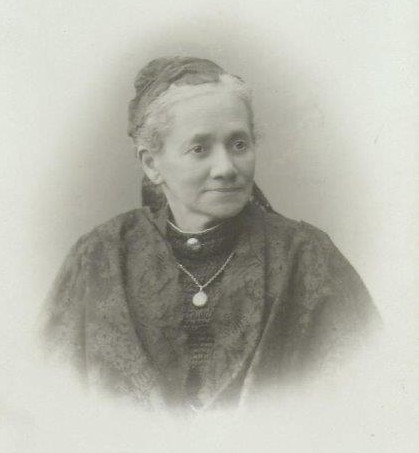
Louise Japha
Over the course of her career, Louise published forty opus numbers: no small feat for any composer, but especially impressive for a woman composer, given that women were often discouraged from publishing in the mid-nineteenth century.
She began her output focusing on piano pieces, but after she moved to Wiesbaden, she focused on writing songs.
She also wrote an opera and string quartets.
Not all of her works were published, and more may still be discovered.
Louise Japha’s Final Years
Sadly, tragedy dogged Louise in intervals for the rest of her life.
In 1884, her son Wilhelm died; her ex-husband Wilhelm died in 1892; and her son Julius died by suicide in 1905 in Australia.
She also began suffering from hearing loss: an intensely difficult diagnosis for any musician to navigate.
Fortunately for Louise, Eleonore Schleiden remained at her side. And happily, we have records of celebrations that local musicians mounted for her, where her music was played, shared, and appreciated.
Louise died in 1910 in Wiesbaden at the age of 84.
Schleiden preserved her papers, and new discoveries are still being made in them to this day.
Wiesbaden-based music teacher and critic Otto Dorn wrote of her:
She is a philosopher; she has experienced life’s fate, much of it hard: her courage has not bowed, her humour has not been broken. The eyes and ears fail at times, but what does it matter: her soul is “full of beautiful sights and sounds.”
For more on Louise Japha-Langhans, check out this article: https://americanbrahmssociety.org/wp-content/uploads/newsletters/40-2.pdf
A webinar on Louise Japha from Conservatory Canada
For more of the best in classical music, sign up for our E-Newsletter