György Kurtág, born on 19 February 1926 in Lugoj, in the Banat region of present-day Romania, developed a highly personal musical language. Shaped by a multicultural environment and profound musical curiosity, Kurtág followed a singular path that placed miniature forms at its heart.
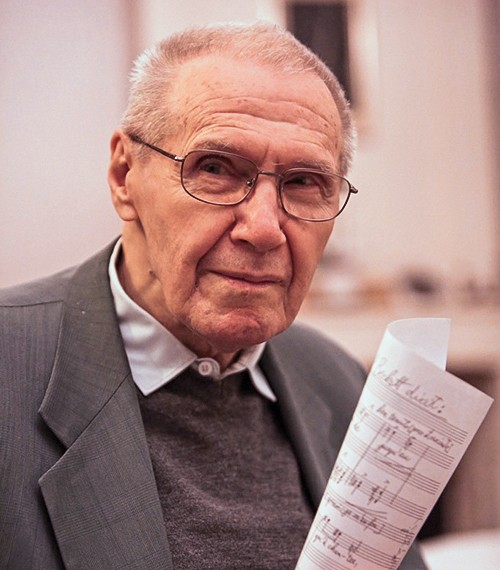
György Kurtág
Though probably less widely known to general audiences, Kurtág occupies a central place in contemporary music. In fact, he is one of the few composers to have lived through Hungary’s communist regime and still to have achieved international recognition. (Beckles Willson, 2001)
Over his remarkably long life, we will celebrate his 100th birthday in 2026. Kurtág drew on the influence of Bartók, Webern and, to a lesser extent, Stravinsky to craft works of intense expressivity, compressed gesture, and deep psychological insight.
György Kurtág: Games, “Book 1” (excerpts)
Origins and Education
Kurtág’s upbringing in a Hungarian-speaking Jewish family in Romania laid the foundation for a life immersed in music. From a young age, he was exposed to piano and theory, and by adolescence, he was taking studies in composition and piano performance.
In 1946, Kurtág moved to Budapest to study at the Franz Liszt Academy of Music. This brought him into contact with many of Hungary’s leading pedagogues, including Pál Kadosa (piano), Sándor Veress and Ferenc Farkas (composition), and Leó Weiner (chamber music).
At the Academy, he also met his future wife, Márta Kinsker, a pianist who would remain his closest collaborator throughout his life.
Musically, Kurtág was deeply influenced by Béla Bartók and Zoltán Kodály, Hungarian masters who blended folk traditions with modernist impulses. However, he also looked outward and studied with Darius Milhaud and Olivier Messiaen in Paris.
György Kurtág: Játékok (Games), Book 3 (excerpts) (György Kurtág, piano; Márta Kurtág, piano)
Aesthetic of Concentration
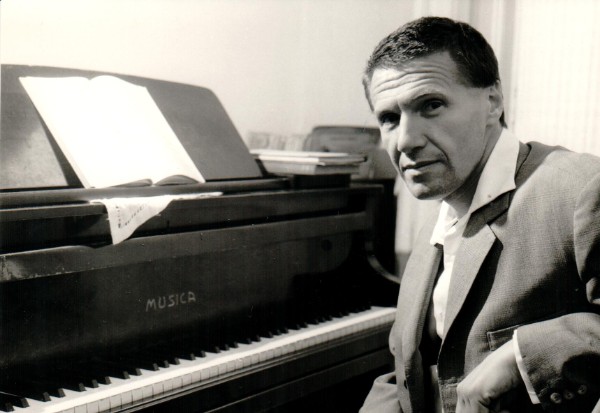
György Kurtág
Unlike many of his contemporaries who sought ever larger canvases and dramatic gestures, Kurtág chose a path rooted in compactness and condensation. His music often eschews grand narratives for moments of concentrated expression.
His musical miniatures operate like intense emotional snapshots. This characteristic is not an accident but a deliberate aesthetic philosophy. Kurtág’s miniatures prioritise clarity of expression, where every note and gesture is essential.
There is no musical “small talk,” as silence is as significant as sound, and every sound carries expressive weight.
Kurtág explained on a number of occasions that he kept coming back to the realisation that one note is almost enough. (Swed, 2007)
György Kurtág: Játékok (Games), Book 5 (excerpts) (Maria Grazia Bellocchio, piano)
The Játékok Cycle
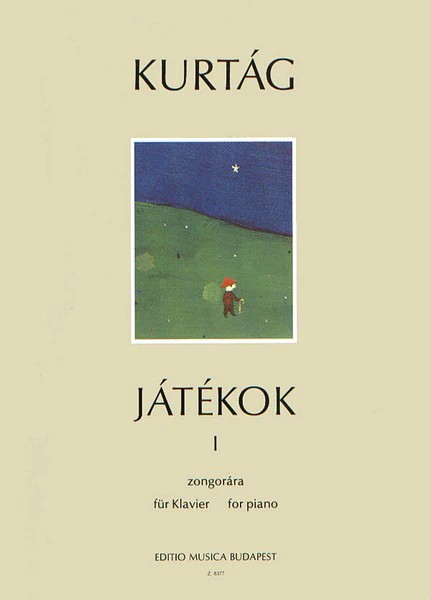
György Kurtág’s Játékok
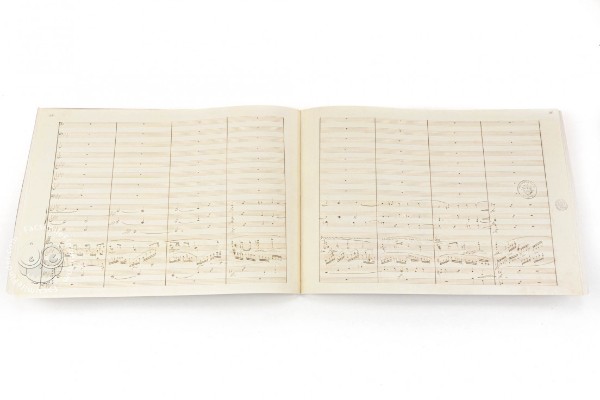
Perhaps Kurtág’s most famous miniatures are called Játékok (Games). It is a vast, ever-expanding collection of short piano pieces that he began composing in 1973 and continued throughout his life.
Critics call this collection of over 400 pieces of miniatures, “among the past half century’s great achievements.” (Clements, 2025)
Originally conceived as pedagogical “performance pieces,” and studies in musical technique and imagination, Játékok evolved into something far more profound. As of 2021, it encompassed ten published volumes, ranging from very simple pieces to works of subtle complexity and poetic intimacy.
The title itself reflects Kurtág’s dual focus on technical exploration and the spirit of play. These pieces often function as studies or experiments, probing the expressive capabilities of the piano, performance technique, and the listener’s attention. Yet alongside their pedagogical role, they are deeply expressive, conveying emotional states that belie their brevity.
György Kurtág: Games, (excerpts)
Beyond Pedagogy
Individual pieces vary widely in mood and character. Some are playful and whimsical, while others are haunting, exploratory, or elegiac. Though many last only seconds or a couple of minutes, each mini-piece carries an unmistakable personality.
We might look at “Games” as a continuation of Bartók’s Mikrokosmos, due to its genre and the paternal influence exerted. Yet the focus of Kurtág’s own piano series is distinct as it is neither an introductory nor progressive course for acquiring piano technique.
As Federico Monjeau explains, “It rather teaches players to trust what Schoenberg called the infallibility of one’s own fantasy…it teaches children to imitate them in the construction of a parallel world through a notation which, although perfectly logical, steps outside conventions.” (Monjeau, Wergo)
The piano miniatures were often performed by Kurtág himself and his wife Márta, who played selected pieces for two and four hands in concert. Their collaborative performances further highlight the music’s human dimension as each fragment becomes a shared moment between musicians and audience.
György Kurtág: Games, “Book IV” (Furious Chorale)
Miniature as Method
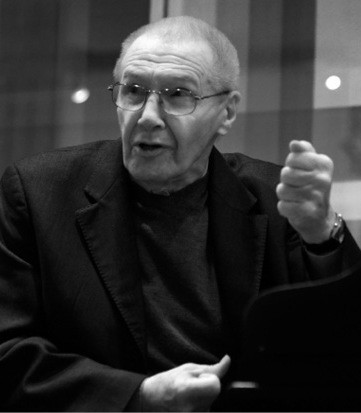
György Kurtág
Beyond the piano, Kurtág’s miniature aesthetic permeates his entire output. Many of his chamber works and solo pieces are comprised of miniatures that function as part of a larger cycle but can also be experienced individually.
Examples include short string quartet pieces like the 12 Microludes, where each movement is under a minute yet complete in its expressive design.
Similarly, his Messages of the Late Miss R.V. Troussova, a work for soprano and chamber ensemble, and various vocal cycles consist of short, powerful units that render texts and moods in brief sonic fragments.
Kurtág’s vocal miniatures often reveal a keen sensitivity to language and poetry, forging a partnership between words and music that is expressive without being verbose. The composer’s setting of poetry by Gottfried von Hölderlin and others frequently results in works that are concise yet emotionally charged.
György Kurtág: 12 Microludes
Expressive Density
A defining feature of Kurtág’s miniatures is their intensity of expression. While many twentieth-century composers embraced abstraction, Kurtág’s music continually engages with human experience. Memory, loss, love, and existential reflection are often presented in highly concentrated form.
Kurtág believes that music should communicate something essential about existence. Whether through the playful simplicity of a Játékok piece or the concentrated fervour of a vocal fragment, his music invites deep contemplation. Each short piece functions almost like a musical haiku, where silence and sound work together to form a complete expressive statement.
His own career, marked by periods of intense creative focus rather than prolific output, underscores this philosophy. He did not produce large symphonies or operatic epics, with the exception of his Fin de partie later in life, but instead dedicated his energies to works that achieve maximum expressive content with minimal material.
György Kurtág: Játékok (Games), Book 2 (excerpts) (György Kurtág, piano; Márta Kurtág, piano)
Lasting Influence

György Kurtág
Kurtág’s creative life has been marked by an unusually slow and meticulous compositional process. Yet his influence extended far beyond his limited output. Though he never taught composition, he became a revered mentor through his coaching of instrumentalists, shaping musicians such as Zoltán Kocsis, András Schiff, and the original Takács String Quartet.
Kurtág’s reputation was confirmed by numerous international awards, culminating in the Ernst von Siemens Music Prize in 1998. Following his official retirement from the Liszt Academy in 1986 and his departure from Hungary in 1993, Kurtág led a nomadic life across Europe, holding residences and affiliations in Berlin, Vienna, Amsterdam, and Paris.
In an age often drawn to excess, Kurtág stands as a composer of radical restraint. His music demonstrates that scale is not a measure of depth, and that a single sound can carry the weight of memory, emotion, and thought. His miniatures confirm that intensity, not abundance, is the true measure of artistic power.
For more of the best in classical music, sign up for our E-Newsletter