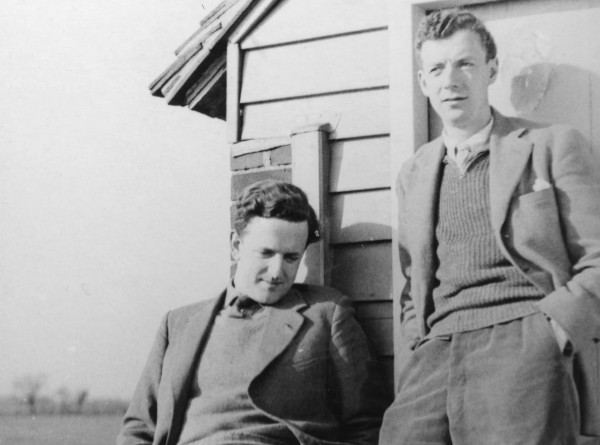
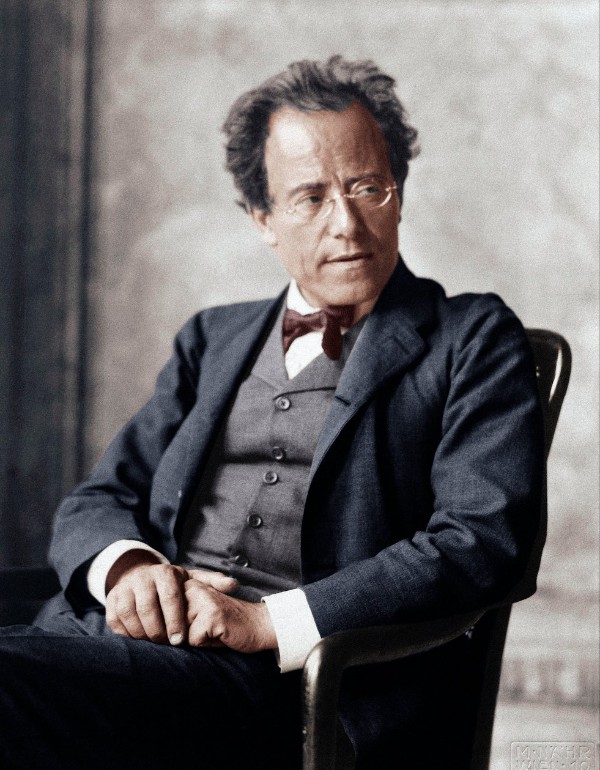
Frédéric Chopin had one of the most famous love lives of the great composers due to his unconventional partnership with the great writer George Sand.
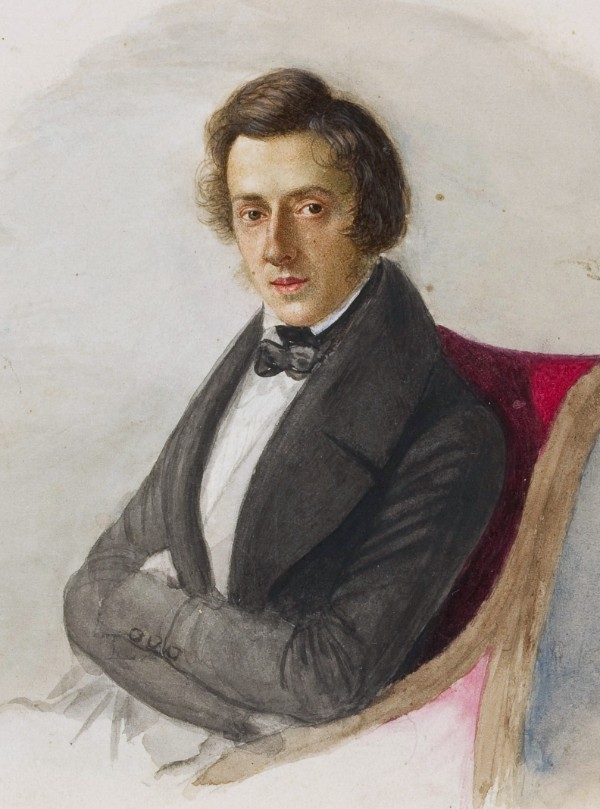
Maria Wodzińska: Frédéric Chopin, 1836 (Wasaw: National Museum)
From his teenage infatuation with soprano Konstancja Gładkowska to the turbulent affair with Sand, he had quite the run of bad luck in his romantic relationships.
Today, we’re looking at some of the remarkable women (and one man) who inspired romantic feelings in one of the Romantic Era’s most romantic composers.
Konstancja Gładkowska (1829-1830)
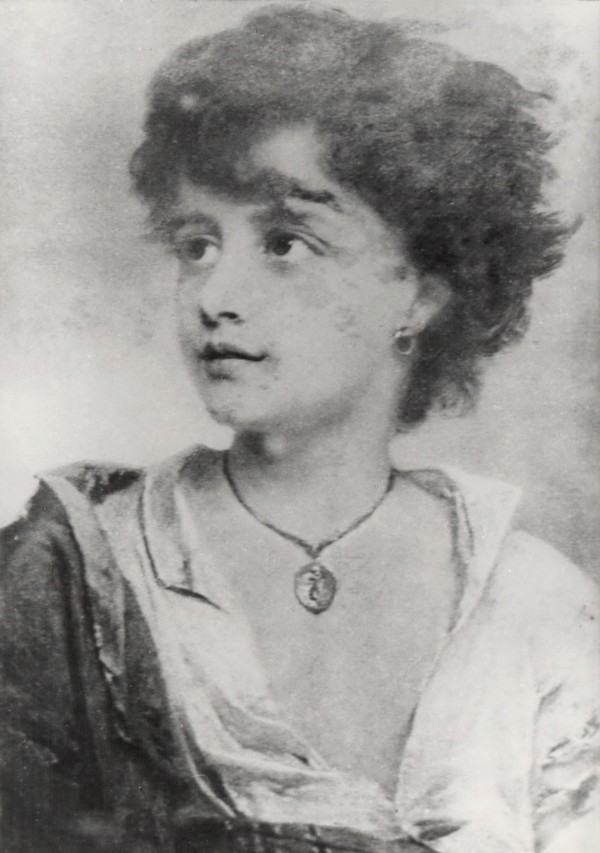
Konstancja Gładkowska
Konstancja Gładkowska was born to an apartment manager and his wife in Warsaw in 1810, a few months after Chopin.
She began studying voice at the Warsaw Conservatory in 1824. In her late teens, her father died, leading the Polish government to step in and pay for her musical education.
Historians believe that she met Chopin in the spring of 1829, when he developed an intense crush on her.
One Sunday morning, she glanced at him at church. He was so stunned by that glance that he found himself stumbling out the door. He ran into his family doctor outside, and he explained his clumsiness away by saying a dog ran between his legs. He immediately regretted the lie, bemoaning to a friend, “It is terrible to think what a lunatic I sometimes seem to be.”
In October 1829, he wrote a letter to his best friend (and possible crush) Tytus Woyciechowski:
“It is perhaps my misfortune that I have already found my ideal, whom I have served faithfully for six months, though without saying a word to her about my feelings; whom I dream of, who inspired the Adagio of my Concerto, and also this morning the little waltz that I am sending you. No one but you will know what it means.”
In the summer of 1830, Chopin visited Tytus Woyciechowski’s family estate in the countryside, but he cut that visit short to return to Warsaw to see Gładkowska’s operatic debut, which he was impressed by.
The following autumn, after putting his departure off, Chopin decided to leave Warsaw to pursue an international career. He gave a goodbye concert, and Gładkowska sang a Rossini aria at it.
The Rossini aria that Gładkowska sang at Chopin’s farewell concert
She also wrote a poem in his autograph book about how his Polish friends would miss him, and the two even exchanged rings. (However, there is no evidence that they were ever formally engaged.)
For a while, they corresponded, but they eventually lost touch.
In 1831, he wrote, “Her image is before my eyes! – it seems to me that I do not love her, and yet she does not leave my head.”
Gładkowska’s mother wasn’t thrilled about the idea of her daughter making a living on the stage, and eventually she gave up her singing career. In 1832, she married a well-off widower named Aleksander Józef Grabowski.
Chopin’s sister Izabella commented acidly about Gładkowska’s marriage: “I am as surprised as you that she could have been so insensitive. The palace was clearly more alluring to her.”
Before she died, she burned her correspondence with Chopin. She only found out about his intense crush on her when she was an elderly woman, and a caretaker read a Chopin biography to her.
Tytus Woyciechowski (ca. 1827–1830)
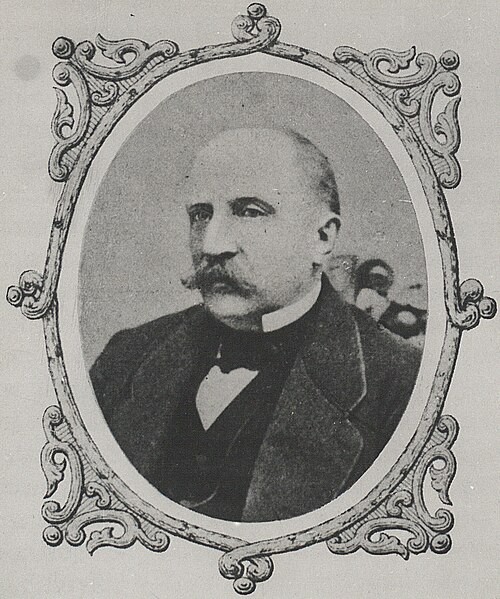
Tytus Woyciechowski
Tytus Woyciechowski was born two years before Chopin in present-day Lviv, Ukraine. At fourteen, he moved to Warsaw.
The following year, when Chopin was thirteen, Woyciechowski moved into the Chopin household as a boarding student.
He and Chopin became inseparable, studying with the same piano teacher and playing four hand piano together.
After Woyciechowski graduated, he left for his family’s estate in the Polish countryside.
But Chopin missed him and hero-worshipped him. In 1827, when he was seventeen, Chopin composed his Variations on “Là ci darem la mano”, a fantasy for piano and orchestra based on a theme from Mozart’s opera Don Giovanni. He asked Woyciechowski if he could dedicate it to him, and he said yes. (Chopin would later rearrange it for solo piano.)
Yunchan Lim – CHOPIN – Variations on “Là ci darem la mano,” op. 2
The variations ended up becoming the work that jump-started his career, inspiring Robert Schumann to write, “Hats off, gentlemen! A genius!”
Chopin went to visit Woyciechowski in the summer of 1830. That March, while planning the trip, Chopin wrote him:
“As always, even now, I carry your letters with me. How blissful it will be for me, having gone beyond the city walls in May, thinking about my approaching journey, to pull out a letter of yours and assure myself sincerely that you love me, or at least to gaze at the hand and the writing of him, whom only I am able to love!”
A couple of weeks later, he wrote an even more homoerotic passage:
“I will go and wash. Don’t kiss me now, because I haven’t yet washed. You? Even if I were to rub myself with Byzantine oils, you still wouldn’t kiss me, unless I compelled you to do so with magnetism. There is some sort of force in nature. Today you will dream that you’re kissing me. I have to pay you back for the nasty dream you brought me last night.”
They spent an idyllic time together, riding horses and partaking in archery together. Chopin later wrote:
“I tell you sincerely that it is pleasant to recall all of this. Your fields left in me some sort of longing; that birch under the windows just will not leave my memory. That crossbow! How romantic it all was! I remember that crossbow, with which you really wore me out – for all my sins.”
When Chopin decided to leave Warsaw to try his luck at an international career, he invited Woyciechowski to travel with him, and he accepted.
The two made it as far as Vienna before the November Uprising, which consisted of Poles fighting back against their Russian oppressors, began in Warsaw. Woyciechowski left Chopin to fight. The uprising eventually failed.
Chopin wrote to him:
“My dearest life! I have never missed you as I do now; I have no one to pour things out to, I have not you. One look from you after each concert would be more to me than all the praises of the journalists.”
They never saw each other again. Chopin lived his life in exile, while Woyciechowski went on to marry in 1838. He and his wife named their second child Fryderyk after Chopin.
Toward the end of his life, when he was dying of tuberculosis, Chopin wrote to Woyciechowski again, expressing a desire to see him. Unfortunately, a reunion never took place.
This may not have been a traditional love relationship, and we’ve lost Woyciechowski’s side of the correspondence, making it impossible to know what they truly felt for one another. But if Chopin had written what he wrote to Woyciechowski to a woman, even if they never formally dated, we’d likely classify her as a love interest, so we’re including him today.
Maria Wodzińska (1835–1837)
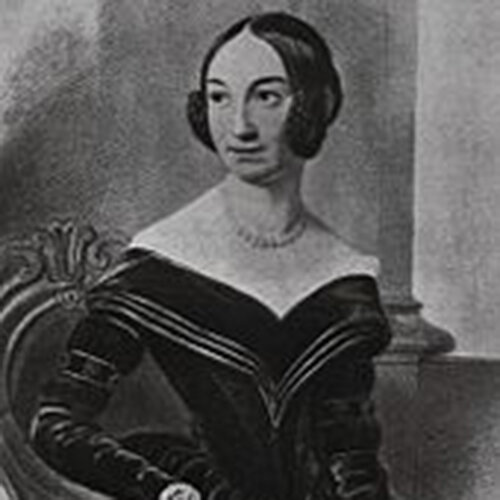
Maria Wodzińska, year 1840
Maria Wodzińska was born to a prominent Polish family in Warsaw in January 1819.
She entered Chopin’s circle when her two younger brothers began boarding with Chopin’s family while attending school (like Woyciechowski had).
The two families became good friends, and Chopin met her when she was a young girl. Even though he was nine years older, Chopin would run around and play alongside her.
However, he lost touch with them after the November Uprising of 1830. The family fled to Berlin, Dresden, and then Geneva, waiting for political tensions to cool.
While in Geneva, Wodzińska studied piano with John Field (the same composer who pioneered the piano nocturne, a genre that Chopin would later perfect), and also began studying art. She also composed.
In 1835, when she was sixteen, and Chopin was 25, he met her while traveling in Dresden. When he had to leave, he gifted her with the waltz that eventually was published posthumously as his Op. 69, No 1 in A-flat major.
Chopin Valse op 69 No 1 in A flat major. Valentina Lisitsa
The Wodzińska family kept in touch via letter and reconnected the following summer in the spa town of Marienbad, spending two months together at the same hotel.
During that summer, Wodzińska made a famous pencil and watercolour sketch of Chopin.
On September 9, 1836, he secretly proposed to her, and she accepted. However, due to her father’s disapproval, they kept their engagement secret.
They resumed their relationship by letter, but it was difficult for them to connect emotionally while dating long-distance. In the end, the relationship fizzled out within a year.
Wodzińska married a count in 1841 (interestingly, the son of Chopin’s godfather). However, the marriage was unhappy, and they divorced.
She remarried in 1848 to Władysław Orpiszewski, a leaseholder of her first husband’s estates. They had one child together, but he died at the age of three.
As for Chopin, he took the rejection hard, tying up letters from the family in a bow and labeling the stack “My sorrows.”
In 1837, he wrote his famous Funeral March, which eventually became the third movement of his second piano sonata. Some people connect the march to the failed love affair.
Chopin’s Piano Sonata No. 2, Movement 3
George Sand (1838–1847)
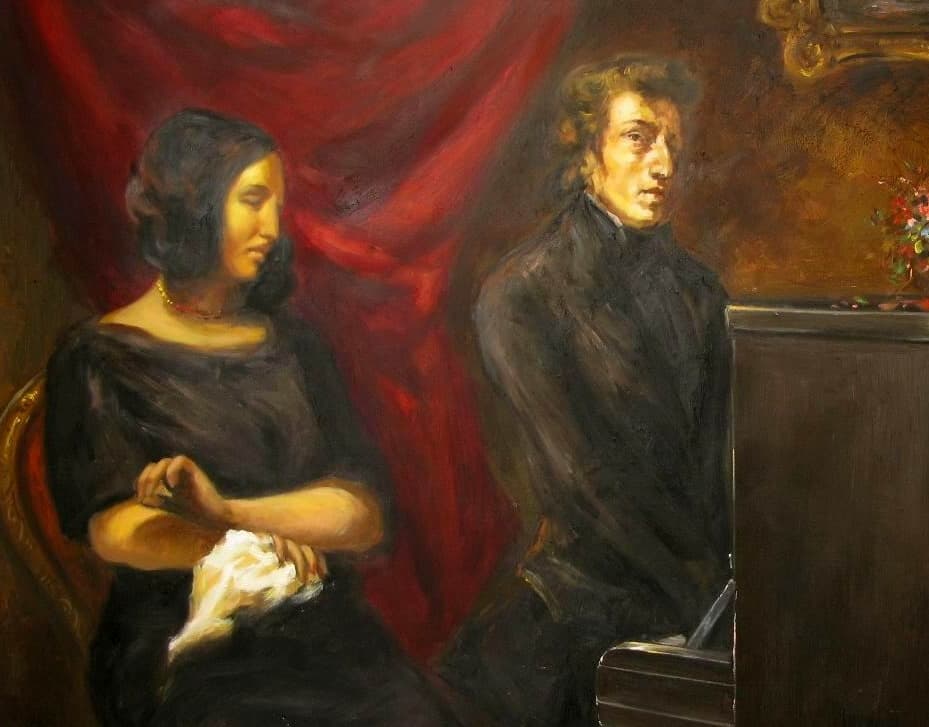
Portrait of Frédéric Chopin and George Sand by Eugène Delacroix
While Chopin was having his heart broken, George Sand was busy breaking hearts.
Born Amantine Lucile Aurore Dupin de Francueil in the summer of 1804, she married at the age of eighteen and had two children. However, she left her marriage in 1831.
She then had affairs with a number of talented men and began an overwhelmingly successful writing career. She thumbed her nose at traditional gender roles and became famous for her masculine wardrobe.
In the autumn of 1836, she reportedly asked Franz Liszt for an introduction to Chopin. Chopin is said to have asked Liszt afterwards, “Is she really a woman?”
It wasn’t the most promising of starts, but she couldn’t stop thinking about him.
In May 1838, she discreetly made inquiries about whether Chopin’s engagement to Wodzińska was well and truly over. When she found out it was, she approached him again.
Historians aren’t entirely sure how, but they became friends and then lovers. That winter, they took an untraditional honeymoon-like vacation to Majorca.
It wasn’t a particularly pleasant stay (the weather was bad and the townspeople were suspicious of them), but it was a creatively productive time, resulting in many of the 24 Preludes.
Chopin’s “Raindrop Prelude”
Chopin began spending the summers at Sand’s country house in Nohant, France. During the other months of the year, they each rented their own apartments in Paris, but still stayed near to one another.
Eventually, the two began drifting apart. Chopin’s health was deteriorating; Sand eventually became more of a caretaker mother figure than a lover.
She wrote a semi-autobiographical novel called Lucrezia Floriani about a strong woman caring for a self-absorbed neurotic invalid prince. It didn’t help their relationship. Then Chopin began siding with Sand’s daughter, Solange, in mother-daughter arguments, and Solange even developed a crush on him.
The situation simply grew too messy and complicated to continue. On July 28, 1847, Sand wrote to him:
“Goodbye, my friend. May you soon be cured of all your ills, as I hope that now you may be… If you are, I will offer thanks to God for this fantastic ending of a friendship which has, for nine years, absorbed both of us. Send me your news from time to time. It is useless to think that things can ever again be the same between us.”
They met for one last time in March 1848. Solange ended up becoming estranged from her mother, and it was Chopin who delivered the news that Solange had had a baby.
Chopin’s health deteriorated quickly, and there wasn’t time for him to pursue another relationship. He died a year later of tuberculosis at the age of 39. George Sand didn’t attend the funeral.
Conclusion
All four of these romantic relationships ended in a sad and quiet kind of way.
Maybe they were all doomed to, given Chopin’s introverted and prickly personality, as well as the constant chronic health struggles that made it difficult for him to sustain long-term relationships.
In the end, the most consequential love affair he’d ever have was with music.
For more of the best in classical music, sign up for our E-Newsletter