
It is certainly telling that the earliest surviving music by Franz Schubert is the extended Fantasie D. 48 for piano duet. Composed at the age of thirteen, Schubert composed prolifically for the medium until his untimely death at the age
In essence
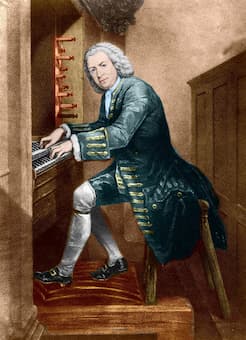
Johann Georg Schübler (1720-1755?) was an engraver and organist, and a private student of J.S. Bach. “He learned the music in Leipzig with the famous Bach,” but Schübler’s name is more notably connected with the publication of a set of
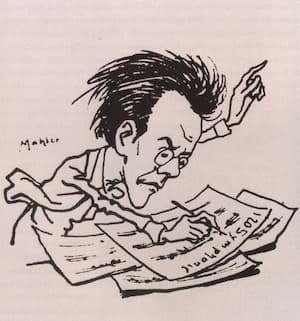
In his settings of songs from the von Armin and Bretano collection Das Knaben Wunderhorn, Mahler set the martial Der Schildwache Nachtlied (The Sentinel’s Night Song), which is the musing of a night guard. As everyone slumbers around him, he
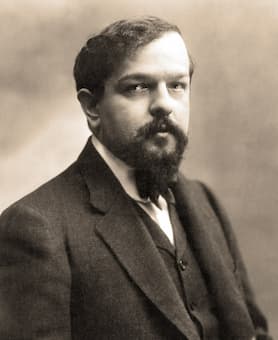
In 1920, Henry Prunières, editor of the French music journal Revue Musicale, commissioned 10 of the leading composers of the day to contribute to a work in memory of Claude Debussy, who had died from cancer 2 years earlier. The
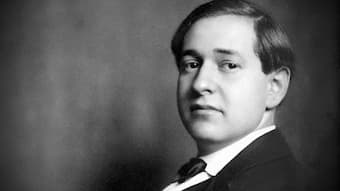
When up-and-coming pianist Paul Wittgenstein (1887-1961) returned from WWI, it was without his right arm, amputated by necessity in a Russian prison camp. He did return to a family with money and so was able to commission works that he
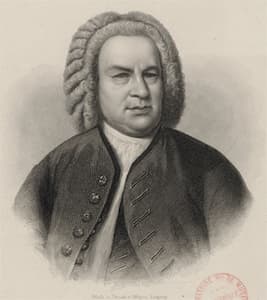
Carl Philipp Emanuel (1714-1788) described his father’s household in Leipzig as a “pigeon coop.” People were constantly swarming in and out all the time, and he told the Bach biographer Forkel, “with his many activities Bach hardly had time for
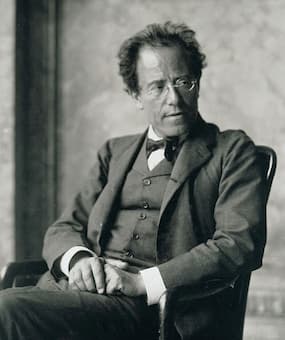
If Mahler could write a scary movie soundtrack, his symphonic poem Totenfeier (Funeral Rites) would be one of his contributions. This 1888 work, which one writer described as a ‘huge symphonic funeral march,’ comes between his first two symphonies. If
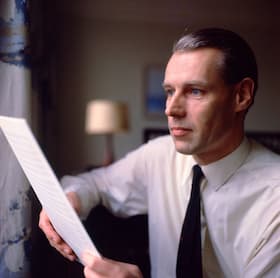
The English rock band The Beatles, formed in Liverpool in 1960, is widely considered the most influential band of all time. Led by songwriters Lennon and McCartney, the band was part of 1960s counterculture and inspired an international fan frenzy