Saxophonist Daniele Berdini and pianist Luca Romagnoli have released an album called Nuances, featuring music by Jules Demersseman, Paul Hindemith, Erwin Schulhoff, George Gershwin, and Ida Gotkovsky. The album includes both original pieces for saxophone and piano and arrangements, spanning from 19th-century concert music to 20th-century works with jazz and dance influences.
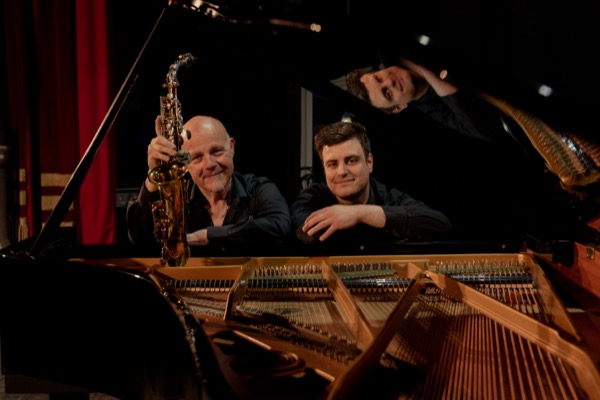
Luca Romagnoli and Daniele Berdini © Il Click di Elisa di Elisa Battilà
The musicians chose the repertoire because of their shared interest in the saxophone and piano duo. They wanted to include pieces from different eras and introduce listeners to music that shows what the saxophone can express. “Our sheer enjoyment of exploring original works for saxophone and piano was the main reason for the repertoire,” they say. The arrangements also let them explore music by composers who did not originally write for this combination.
The album’s title, Nuances, highlights the contrasts between the pieces. The program goes from the classical style of Demersseman to the serious music of Hindemith and the unique spirit of Schulhoff. Instead of focusing on one style, the musicians wanted to show different expressions and the range of sounds the saxophone and piano can make.
The album starts with Jules Demersseman’s Fantaisie sur un thème original, one of the first pieces written for saxophone. Demersseman, a French flutist and composer, was one of the first to explore Adolphe Sax’s new instrument. The piece uses a theme and variations, mixing lyrical moments with impressive technical skill. The piano sets a dramatic tone right from the start.
Hindemith’s Sonata offers a very different style. It was first written for E-flat Althorn (or mellophone) and piano, but the Schott edition allows it to be played on alto saxophone too. The four movements mix different moods and require the performers to work closely together. Romagnoli finds the piece challenging because of its precise structure and complex layers. Berdini appreciates Hindemith’s skill, unique harmonies, and the emotion in the music.
Ida Gotkovsky’s Brillance shows how the saxophone can move between expressive melodies and challenging passages in four different movements. Erwin Schulhoff’s Hot-Sonate (1930) brings in jazz and dance styles with syncopated rhythms, blues touches, and lively energy. The album ends with George Gershwin’s Three Preludes, first written for solo piano and arranged here for saxophone and piano. The preludes go from a lively, syncopated start to a lyrical middle and an energetic finish.
The Marche region in central Italy plays a key role in the story of Nuances. Berdini and Romagnoli both live there now and grew up in the same small town, Servigliano. Being close has made it easier for them to work together often. For Berdini, this is especially helpful since he has worked with pianists who lived up to 300 kilometres away. Having Romagnoli nearby lets them meet more, share ideas, and develop their music together.
Their connection to the region also shows in the recording. They made Nuances in a traditional Italian theatre in Montegiorgio, not far from their hometown. The recording and post-production engineers were also from the Marche, making it a true local project. The area has many historic theatres, each with its own sound, and the musicians quickly noticed how much the venue shaped their music.
They say that as soon as they entered the theatre and played the first note, they realised how important the space was. They had to adjust their balance, dynamics, and tone to fit the room instead of sticking to a sound they had planned. Listening and reacting to the acoustics became a key part of recording.
Working together has changed how Romagnoli thinks about chamber music. He explains that in the Italian conservatory system, solo performance was often more important than ensemble playing. Collaborating with Berdini has shown him a new way to make music, especially the importance of breathing and phrasing with a wind instrument. He has learned to listen more closely to Berdini and adjust his own playing, so the two instruments blend more naturally.
This exchange of ideas shapes their partnership. Romagnoli now sees ensemble playing differently, and Berdini’s musical growth comes from his deep interest in the saxophone and its music. He first fell in love with the French repertoire, especially Alfred Desenclos. “It was through the French repertoire that I realised this was the instrument for me,” he says. Since then, he has explored much more than just classical music. He has played many contemporary pieces and helped premiere works by Italian composer Salvatore Sciarrino. He keeps searching for new music and works by today’s composers.
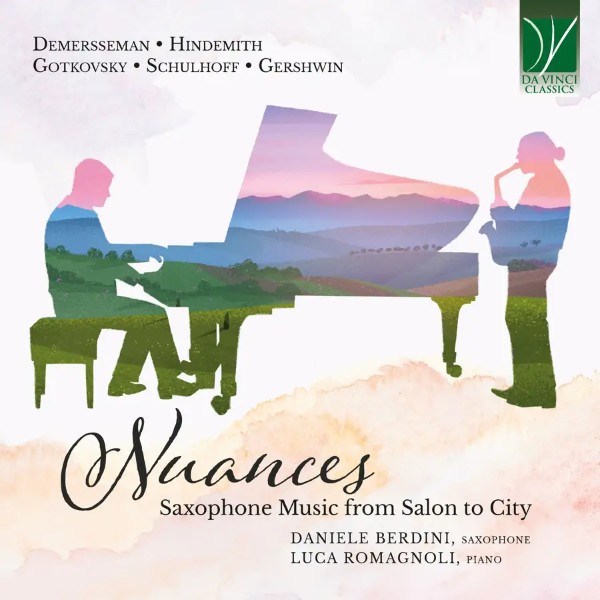
Nuances shows the musicians’ curiosity and their love of exploring different music. While the album includes well-known saxophone pieces, it brings together many musical styles and ideas, showing how expressive the instrument can be. For Berdini and Romagnoli, this recording is more than just a set of pieces; it’s a chance to share music they enjoy playing and learning together. Their work together has given both musicians new ideas, and they look forward to discovering more new music.
For more of the best in classical music, sign up for our E-Newsletter