Landscape and nature images have often featured prominently in the reception of Vaughan Williams’ work. However, as Daniel M. Grimley writes, “Vaughan Williams’ preoccupation with landscape emerges as a highly productive creative tension throughout his compositional output.”
A new 2026 two-CD collection titled Landscapes explores the captivating soundscapes of Ralph Vaughan Williams, featuring tenor Cyrille Dubois and pianist Anne Le Bozec, joined by a group of dedicated chamber musicians.
Following previous excursions for the NoMadMusic label, Dubois and Le Bozec continue their musical journey between introspection and nature as they explore the poetic world of Vaughan Williams.
Andrew Achenbach writes, “Set down within an ideally intimate space, these are scrupulously prepared and urgently communicative performances, evincing a most pleasing sense of teamwork and freshness of discovery.” (Achenbach, Gramophone, 2026)
To mark Ralph Vaughan Williams’ birthday on 12 October, let’s explore this intimate release, which interweaves iconic cycles with lesser-known gems to reveal the richness of English folklore and lyricism.
Ralph Vaughan Williams: Songs of Travel (Cyrille Dubois, tenor; Anne Le Bozec, piano)
A New Musical Journey
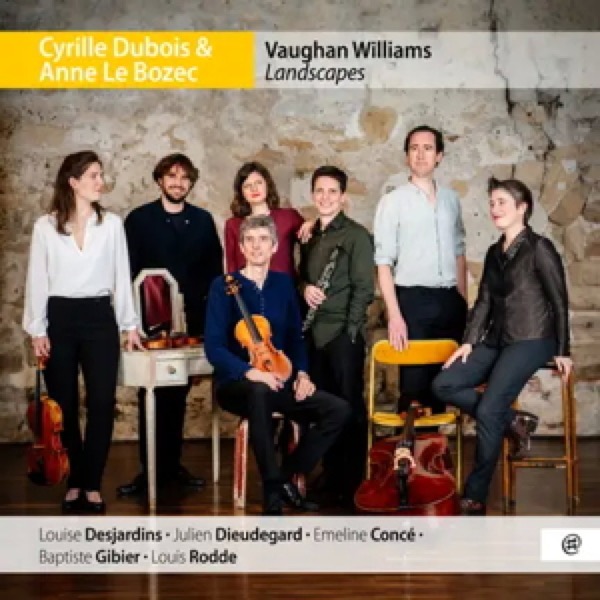
Vaughan Williams: Landscapes
Cyrille Dubois writes in the liner notes, “This new musical odyssey was conceived in the heart of the Aubrac, in birdsong at harvest time, in the French countryside, which is strangely evocative of the rolling green hills of England which Vaughan Williams so loved.”
“In choosing this Vaughan Williams programme, we have deliberately set his better-known works alongside compositions which are less frequently performed and almost unknown on the continent. In this way we can hear all the elements which have shaped this music which is so characteristically British.” (Dubois, Landscapes, 2026)
As such, we find the well-known cycles On Wenlock Edge, Songs of Travel and Ten Blake Songs, accompanied by A Little Piano Book, Four Hymns and Four Poems by Fredegond Shove. Essentially, this release bridges English tradition and the spirit of European song.
Ralph Vaughan Williams: 4 Poems by Fredegond Shove: No. 1. Motion and Stillness (Cyrille Dubois, tenor; Anne Le Bozec, piano)
Fredegond Shove
Among Vaughan Williams’s lesser-known settings are poems by Fredegond Shove. Born Fredegond Cecily Maitland in Cambridge in 1889, she was the daughter of the legal historian Frederic William Maitland and Florence Henrietta Fisher. She married the economist Gerald Shove in 1915.
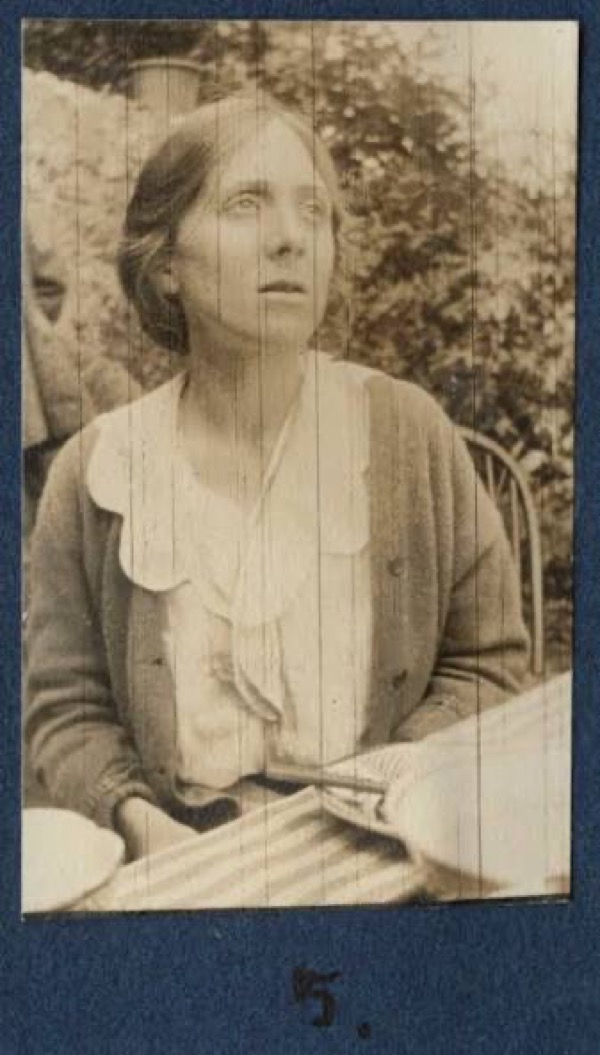
Fredegond Shove
Vaughan Williams was related to Shove. Her mother, Florence Fisher, was the sister of his first wife, Adeline Fisher, making the composer her uncle by marriage. Florence Fisher was also Virginia Woolf’s first cousin. She published her first poetry collection Dreams and Journeys in 1918, and several of her poems were soon anthologised.
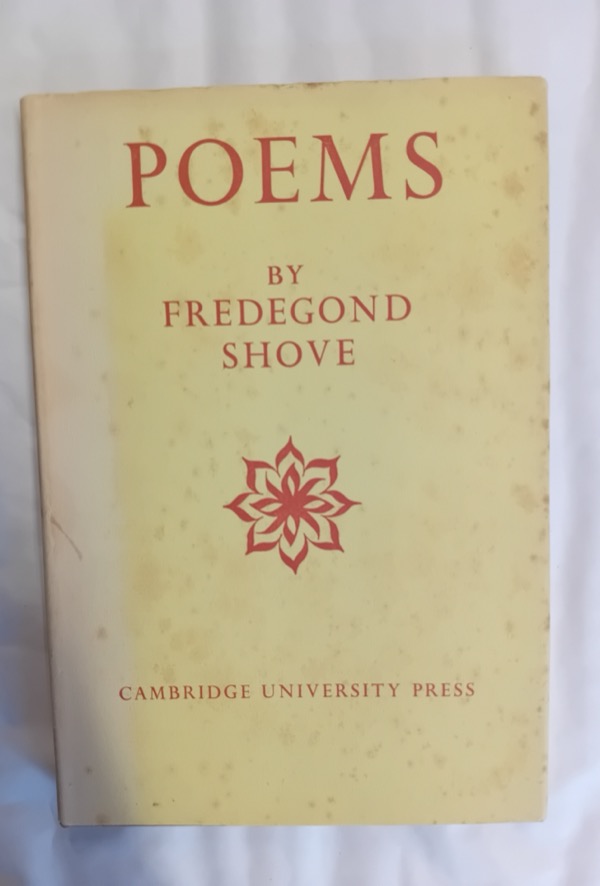
Fredegond Shove: Poems
Her poem “The New Ghost” attracted particular attention, and it later became one of her best-known works through Vaughan Williams’ musical setting. While some contemporary critics regarded her as a significant religious poet, her reputation has not endured.
Ralph Vaughan Williams: 4 Poems by Fredegond Shove: No. 2. Four Nights (Cyrille Dubois, tenor; Anne Le Bozec, piano)
A Ghost Beneath the Spring Sky
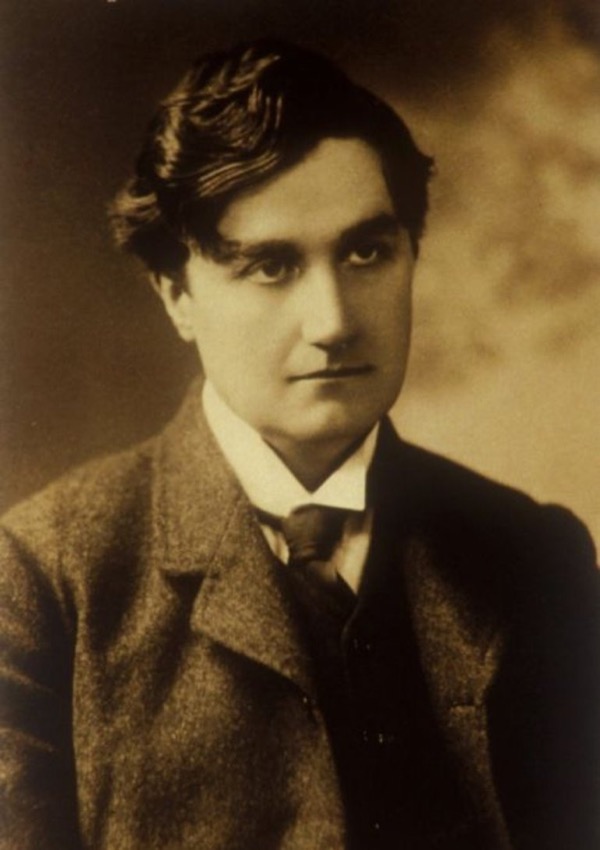
Ralph Vaughan Williams (ca. 1900)
The four poems Vaughan Williams sets progress from observing a landscape to exploring the seasons and the mind’s inner life. The third poem confronts death and the possibility of spiritual release, while the fourth returns to family and a rural routine.
The cycle’s most striking and spiritually ambitious poem is the aforementioned “The New Ghost.” A dead man, released from his mortal body, encounters the Lord in a springtime landscape. The meeting is not fearful, but an embrace of recognition, love, and liberation.
We experience the first signs of spring, and death becomes part of a larger natural renewal. The depiction of divine love is startlingly tender, and the music underscores the poem’s unusual expressive power.
Ralph Vaughan Williams: 4 Poems by Fredegond Shove: No. 3. The New Ghost (Cyrille Dubois, tenor; Anne Le Bozec, piano)
The New Ghost
And he cast it down, down, on the green grass,
Over the young crocuses, where the dew was.
He cast the garment of his flesh that was full of death,
And like a sword his spirit showed out of the cold sheath.He went a pace or two, he went to meet his Lord
And, as I said, his spirit looked like a clean sword,
And seeing him the naked trees began shivering
And all the birds cried out aloud as it were late spring.And the Lord came on, He came down and saw
That a soul was waiting there for Him, one without flaw,
And they embraced in the churchyard where the robins play,
And the daffodils hang down their heads, as they burn away.The Lord held his head fast, and you could see
That He kissed the unsheathed ghost that was gone free
As a hot sun, on a March day, kisses the cold ground;
And the spirit answered, for he knew well that his peace was found.The spirit trembled, and sprang up at the Lord’s word,
As on a wild April day, springs a small bird,
So, the ghost’s feet lifting him, he kissed the Lord’s cheek,
And for the greatness of their love neither of them could speak.But the Lord went then, to show him the way,
Over the young crocuses, under the green may
That was not quite in flower yet, to a far distant land
And the ghost followed like a naked cloud holding the sun’s hand.
Four Emotional Worlds
Vaughan Williams does not treat these songs as variations on a pastoral theme, as they respond to contrasting emotional worlds. “Motion and Stillness” is restrained and contemplative, while “Four Nights” suggests the changing atmospheres across the seasons.
The subject of “The New Ghost” might suggest a sombre elegy. Still, Vaughan Williams balances these musical thoughts with a more complex expressive world through the imagery of freedom and divine love. The concluding “The Water Mill” unfolds with a gentle, animated character, connecting it with Vaughan Williams’ interest in vernacular musical expression.
This cycle was originally conceived for baritone. However, the NoMadMusic recording presents the songs in a higher voice. As Dubois writes, “Those who know the cycle may be surprised at our choices of key. We decided to “transpose up” into a range suited for the tenor voice, giving the listener a new colour scheme for this musical journey.” (Dubois, Landscapes, 2026)
As Achenbach concludes, “RVW connoisseurs should investigate this distinctive, uncommonly stimulating release for themselves.” (Achenbach, Gramophone, 2026)
For more of the best in classical music, sign up for our E-Newsletter
Ralph Vaughan Williams: 4 Poems by Fredegond Shove: No. 4. The Water Mill (Cyrille Dubois, tenor; Anne Le Bozec, piano)