Since 2022, the incredibly creative artist Alisa Weilerstein has travelled with her six-part Fragments cycle, featuring unique stage designs and 27 newly commissioned works. I use the title “artist” deliberately because, beyond her role as a cellist, Alisa acts as a curator, weaving Bach together with the most diverse contemporary composers.
During her 2026 Asian tour, I requested an interview with Alisa, as if going through nearly all of her available materials weren’t enough to satisfy my curiosity. Our conversation ranged from the broad intellectual education that shaped her music to the origins of the Fragments project. She also reflected on what it means to live so intimately with the Bach cello suites.
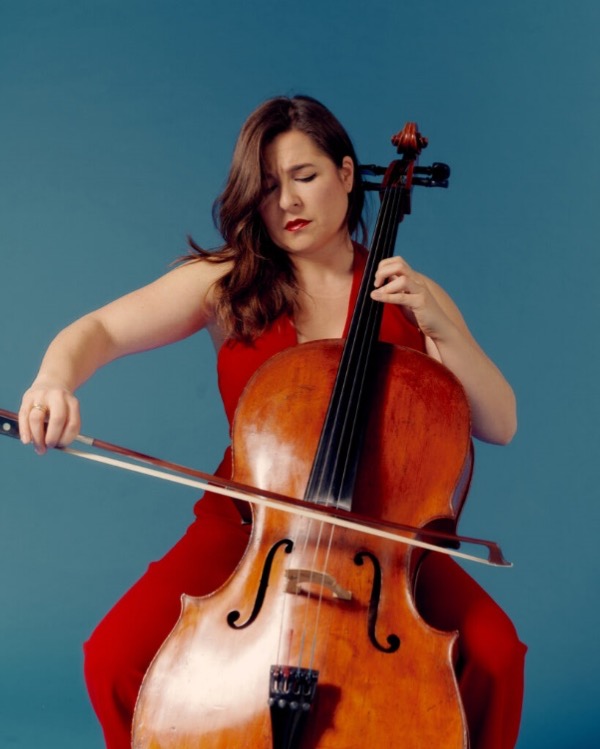
Alisa Weilerstein (Photo by Evelyn Freja)
You fell in love with the cello when you were four. Why did you choose to study Russian history at Columbia University?
My parents were wonderful musicians, so I grew up surrounded by classical music. At school, I studied things like theory, music history, Dalcroze Eurhythmics, all of that. But I didn’t want to be limited by this little classical music bubble, so I chose Columbia, while also studying cello with Joel Krosnick of the Juilliard String Quartet.
The liberal arts education at Columbia was intellectually enriching. The reading for just one class could pile up to be half of a person’s height! With professors guiding us, I learned how to question assumptions, debate, and express myself clearly. These are skills that have long-lasting value.
Why did the MacArthur Foundation honour you as one of their Genius Fellows?
Honestly, that’s a question for them. The most humbling and touching part was that they recognise people from every field—doctors, scientists, people in the humanities—and I was lucky enough to be among the artists. They told me they value creativity. For me, this is perhaps what being an artist is ultimately about: connecting with other people through creativity.
Cellist Alisa Weilerstein: 2011 MacArthur Fellow
How did you build your technique?
I would say the years between ages nine and sixteen were the most important for building my foundation. When I started playing at four, I practised at most an hour a day. When I was nine, a teacher encouraged me to practice two hours a day. By the time I was twelve, that became four hours, and maybe five when I had performances coming up.
I would divide the time between scales, etudes, and repertoire. I took breaks, practised six days a week, and then, on one day, I didn’t touch the instrument or think about music. That was important because the body and mind need rest.
Playing in orchestra and chamber music was equally important. A musician can’t just lock themselves in a practice room. Learning how to work with others is not only part of your musical education; it’s also a social experience. When I went to the Aspen Music Festival at thirteen, I played quartets with violinist Karen Gomyo. And now we are best friends.
What is it like to play all of the Bach cello suites in one go?
Performing all of the Bach cello suites is a marathon. You have to train for it like you’re preparing for a long-distance race. You play this complex music all from memory, and you are the only person making the sound on stage. While you have to internalise the music completely, you also have to keep every performance fresh.
Alisa Weilerstein Deconstructs Bach’s Most Famous Prelude
The first time I prepared the complete set, in addition to practising constantly, I would deliberately put myself in “Stress Tests”, especially by playing for people who knew me well. Sometimes it’s actually more stressful to play for people who really know you than for strangers, because they can see when you’re uncomfortable. You can’t really hide anything.
Once I pushed myself outside my comfort zone and finally got on stage, I felt much freer. I could focus on what mattered—where the music was leading, how I was phrasing, and how I connected with the audience. This summer, when I performed the complete suites at the Edinburgh Festival in a 2,000-seat hall, I was lucky enough to get into a meditative state. I felt in the zone.
Alisa Weilerstein Plays Bach Cello Suite No. 3: VI. Gigue
Can you give us a little preview of your Fragment 1 Wonder and Fragment 2 Tumult?
For me, the cello is the most soulful and expressive instrument. It’s a chameleon. I think my series Wonder and Tumult allows that quality of the cello to come through.
For the first recital, Wonder, I’ll be wearing a fairly simple gown, and my hair will be natural. The whole set looks like Stonehenge. It has this very protected feeling. Take the work by Loggins-Hull, for example. The different movements reappear throughout the program. If you’re paying close attention, you’ll notice that the lighting changes with the music too. For this composer, it’s orange and green.
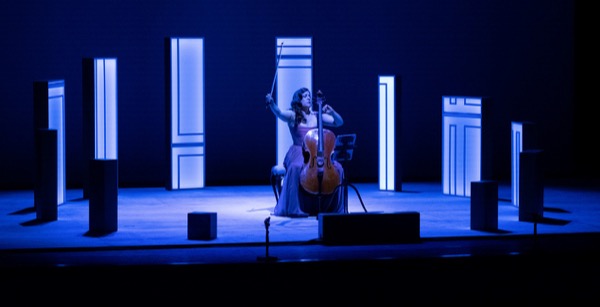
Fragment 1 Wonder
The second recital, Tumult, is completely different. I’ll be in a punk look from a 1990s rock singer, Courtney Love: fishnet stockings, an exaggerated dress, and hair that appears as if I have stuck my finger in an electric socket. The Stonehenge-like set has been pushed down around me.
The two programs also tell a miniature story of growing up like the Bach suites. The first cello suite is like the wonder of a young person discovering the world for the first time, while the second suite shows the turmoil we all go through.
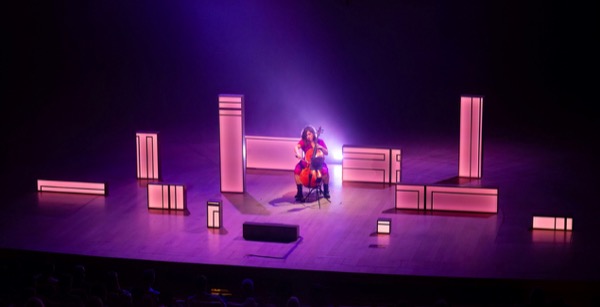
Fragment 2 Tumult
Do identity labels help or not?
When are we going to stop emphasising “female,” “Black,” “Asian,” and call them composers? Things are changing, but I think there’s still a long way to go before we have real equality. As “female” cellists, we’re a little bit further along than composers are, but we’re still a minority. The good thing is that the younger generation is already starting to change the rules of the game.
How should we approach contemporary music?
I’m certainly not the first musician to pair Bach with contemporary music. But what is different about my Fragments is how deeply interwoven they are. The idea came to me at the end of 2020, which was, of course, a very difficult time. The world was shut down. I was stuck in my room playing scales, and I started thinking: Why am I an artist? What does it mean to be an artist if we can’t perform? And why are we still so hesitant about contemporary music, while we can walk into a contemporary art museum without that same fear?
So I commissioned a diverse group of composers and asked each of them to write a solo cello piece of up to ten minutes, with movements that could stand on their own. Then I took those new works and interwove them with the Bach cello suites.
I also made one rule: I wouldn’t reveal the program order until after the performance. I didn’t want the audience to walk in with preconceived ideas. It’s a little like going to a rock or jazz concert, or going to see contemporary art. I want people to experience it directly first, and then they can learn as much as they want afterwards.
Alisa Weilerstein and Creative Team Talk about Fragments
Is there anything special about the stage design?
Hanako Yamaguchi, a longtime curator at Lincoln Center and my artistic advisor, listened to the commissioned works and told me, “No matter where you go in the world, you should travel with your own fragmented room.” Through her, I met the creative team—Elkhanah Pulitzer, Seth Reiser, Will Knapp, and Molly Irelan—and together we created six completely different costumes, hair, makeup, and lighting. So Fragments is deeply connected to the world of theatre.
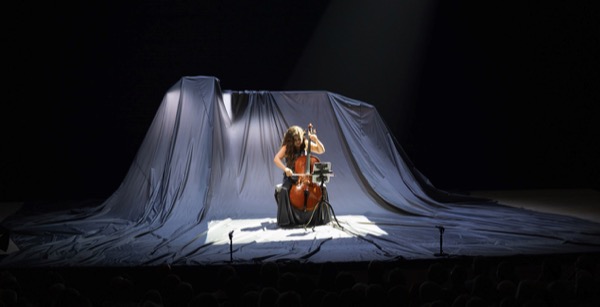
Fragment 5 Lament
Many listeners are familiar with your brother Joshua’s music podcast Sticky Notes.
Like me, he grew up surrounded by music. But when he was ten or twelve, he didn’t like practising and wanted to play baseball. Then he went to Venezuela and saw what was happening with El Sistema. He also joined the Boston Youth Philharmonic Orchestra and worked with the conductor Benjamin Zander. Those touring experiences completely changed him. It was a 180-degree turn.
He started studying conducting when he was around nineteen. And I remember hearing him conduct Beethoven’s Seventh Symphony for the first time at the New England Conservatory. I turned to my parents and said, “Oh my God, what is happening?” He was completely in his element. Extremely disciplined, he remains incredibly curious about history and the humanities. I often notice him writing and researching for the podcast. He does his homework and conducts amazing interviews.
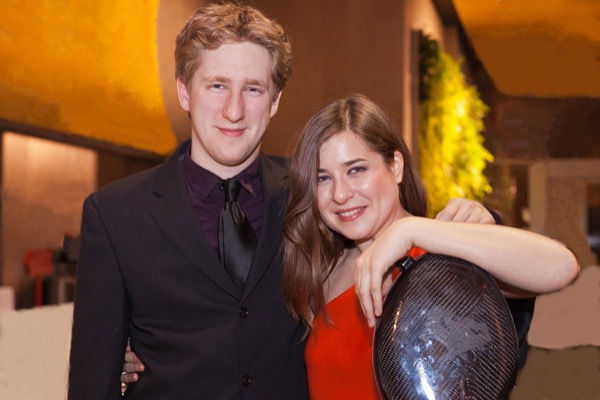
Joshua and Alisa Weilerstein (Photo from Chicago Symphony Orchestra)
How has parenthood affected your music, if it does?
Becoming a mother is the most irreplaceable and important experience of my life, without question. How it affects my music directly is difficult to say. But in a more general sense, I think it changes your perspective on life. Biological research shows that when you’re carrying and raising a new life, the brain chemistry changes.
When I compare myself with how I played more than ten years ago, I can actually feel that growth in the way I play Bach because Bach forces you to face the most honest version of yourself. It’s almost like a mirror, reflecting where you are in your life in a way other music maybe doesn’t show quite as clearly. There is no hiding in Bach. It’s impossible.
See upcoming concerts at: https://alisaweilerstein.com/fragments/
For more of the best in classical music, sign up for our E-Newsletter