Worlds of Colour and Sound, and Deep Honesty
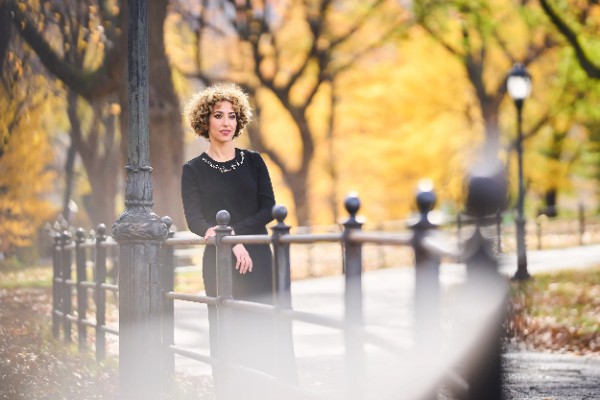
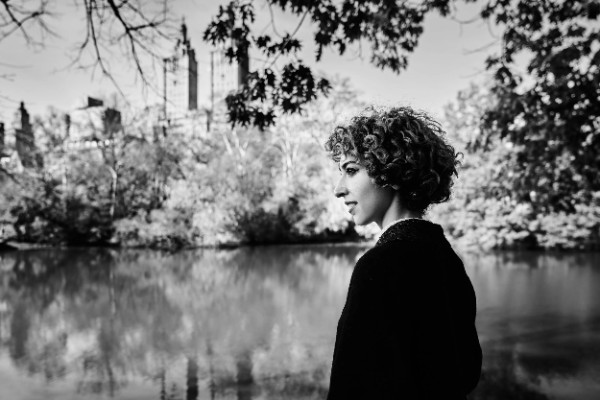
Sara Daneshpour © felsnerartists.com
Iranian-American pianist Sara Daneshpour has earned a reputation for “blazing technique, power, expressivity, imagination and stage presence” (The New York Concert Review), able to create “transfixing poetry” (Washington Post). Born in Washington, DC, Sara is now based in Dallas, Texas, where she is on the piano faculty of Southern Methodist University.
The topic of pedagogy comes up in our conversation, not least because Sara herself studied with piano giants including Leon Fleisher, Yoheved Kaplinsky, Oleg Volkov, and Sergei Babayan. I chat to her about her experiences of studying, and what she hopes to pass on to her own students.
Away from the teaching studio, Sara is of course a formidable performer in her own right – among her many competition accolades are third prize at the 2017 Arthur Rubinstein International Piano Competition, and first prize at both the XII Concours International de Musique du Maroc and the 2007 International Russian Music Piano Competition.
I was captivated while researching this interview by a recital Sara gave featuring the Études of Chopin and Ligeti, intensely expressive and technically demanding works in their own radically different ways. We talk about balancing the needs of technique and expression, as well as the honesty required for all music-making.
Chopin and Ligeti Études Recital
How did you find your way to the piano?
Fortunately, my parents really valued the arts, in particular music, so luckily, there was an upright piano at home. My older brother started piano lessons, and naturally, as a younger sibling, you want to just follow in their footsteps. It was a very natural process, but I could tell from what my parents say, that I really gravitated towards the instrument quickly, and immediately there was this kind of affinity for the instrument, even as a toddler.
When did you decide to pursue the piano professionally?
I pretty much knew, even at a young age, even before age 10, let’s say, that it was going to be my path. It was a very natural process. It was never forced on me. It is a serious path; it requires a lot of dedication and patience, so even at a young age, it developed those attributes in me.
I truly was blessed with the teachers that were put along my path. My first major teacher, Oleg Volkov, is a great pianist, and subsequently I had a chance to study with the legendary Leon Fleisher, and continue my studies in New York with Professor Yoheved Kaplinsky, and finally with Sergei Babayan, which was life-changing.
How did these teachers influence your musical journey?
Sara Daneshpour © felsnerartists.com
Studying with Leon Fleisher was a very great honour. He’s such a legendary musician. However, he was also a philosopher, but most importantly, he was the greatest human being with such a deep empathy for others. That was very crucial for me to see that.
At Juilliard, Professor Kaplinsky was a phenomenal person and an equally phenomenal teacher. What I learned was to be very intentional and conscious of the decisions I made as a musician. It’s very important to know exactly what you’re after, both technically and musically.
To study with Sergei Babayan, a genius pianist, was life-changing, very eye-opening. Also, there was this intense emphasis on intonation, different to intonation in a tuning sense: more the meaning behind the sound. He opened up worlds of colour, worlds of the meaning of sound, and he also developed this fearlessness and creativity when it came to interpretation. I was really blessed to be immersed in this Russian school of pianism.
Presumably the Études of Chopin and Ligeti offer plenty of opportunities to explore these worlds of colour and sound?
I was fascinated by the ability of Ligeti to push the boundaries of what a pianist and the piano could do. When you study these works, you have to push and challenge yourself in regard to interpretation, dynamics, rhythm, colour, memorisation… All of these aspects are pushed to the limit, to the extreme.
I was also very much interested in the fact that Ligeti was heavily influenced by baroque counterpoint and polyphony. He developed this kind of micropolyphony, which is just the evolution of baroque contrapuntal writing. He just took it to the extreme.
For me, these extremes are very interesting and inspiring.
Chopin was the first composer who expanded the genre of Étude writing, who took it to the next level in terms of art form, rather than for it simply to be an exercise.
How do you keep space for your own expressions and interpretations in music like the Ligeti Études, music that already pushes you to the extreme?
You interpret it just like any other composer. He gives you quite a bit of freedom, in the end. Also, that is part of the challenge: you have to find within these parameters your self-expression.
Did you always want to pair those composers together in that way?
At the time I was working on the Chopin Études, and I just thought it would be interesting to juxtapose these two composers who were so heavily revolutionary in terms of this art form, in terms of how they interpreted this genre.
You have your own teaching practice now in Dallas. How is it to teach and mentor the next generation of younger musicians?
It’s a delicate balance, guiding them but also helping them find their own voice. As a teacher, the last thing you want is to impose your ideas onto them and stifle their self-expression. I try to give as much knowledge as I can to them, and then encourage them to experiment as much as possible, so they can try and find themselves.
It’s a very symbiotic relationship, teaching and performing. They inform each other, and the fact that you have to verbalise has been quite eye-opening. You have to be articulate, and when you verbalise something, you have to also be conscious of what you believe in. You have to understand exactly what you believe in when you teach. It’s not some intangible idea.
It’s very fulfilling to see them grow and become thoughtful individuals.
Sara Daneshpour – Fugue No 4 in C sharp minor J S Bach
Which other composers are you enjoying exploring at the moment?
I recorded the first book of Bach’s Preludes and Fugues [from The Well-Tempered Clavier] and hopefully in the future I can finish the second book. Currently I’m working on the Liszt Transcendental Études. I wanted to delve deeper into this genius composer – this deep fascination has developed in me regarding his vocal, chamber and symphonic works. His vocal works in particular have been a source of great inspiration recently.
Bach definitely challenges you as a musician, in terms of your interpretative ideas, your decisions about pedalling and fingerings. It forces you to use the piano in more innovative ways. It also requires a lot of detailed listening; however, you also have to have a deep honesty about it, because this type of music can easily expose you if it’s not done honestly.
It’s exposing in terms of you cannot hide behind any superficialities. It’s really you, the music, the audience – there’s nothing to hide behind, and that’s why I think it’s challenging because it’s a very direct expression of yourself through this music. If it’s not done honestly, you can hear it.
What do you do in your spare time?
I find teaching very fulfilling. It’s a special feeling to share all this knowledge and experience that I’ve gained from these great teachers I mentioned, and just to guide a young musician along this path is very fruitful as a person. Hopefully I can encourage them on the correct path!
For more of the best in classical music, sign up for our E-Newsletter