In August 2019, pianist Alice Sara Ott shared the news on Instagram that she’d been diagnosed with Multiple Sclerosis. In that report, she was optimistic that with the advances in medical treatment, people with this central nervous system disease could ‘live full and fulfilling lives’.
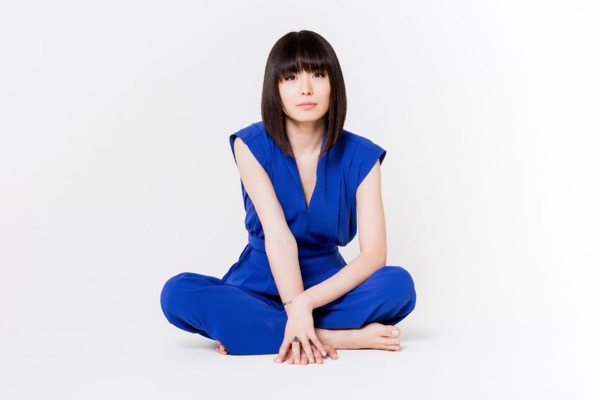
Alice Sara Ott (photo by Jonas Becker)
In talking about her illness with the New York Times in 2024 before her New York Philharmonic debut, Ott reflected on what she’d learned in the 5 years since her diagnosis.
In 2018, she was experiencing extreme fatigue, dizziness, double vision, and a numb spot on her lip, all of which caused her to seek medical advice. Since starting treatment, she reports no new symptoms. For her, the keys are proper medical treatment and rest.
In 2021, she recorded Echoes of Life (Deutsche Grammophon), where she revisited the music of Frédéric Chopin. She started with his 24 Préludes, Op. 28, interspersed with 7 works by 20th– and 21st-century composers. She said that exploring his Préludes and placing them in the context of contemporary works confirms Chopin’s works as being ‘modern, provocative and timeless’.
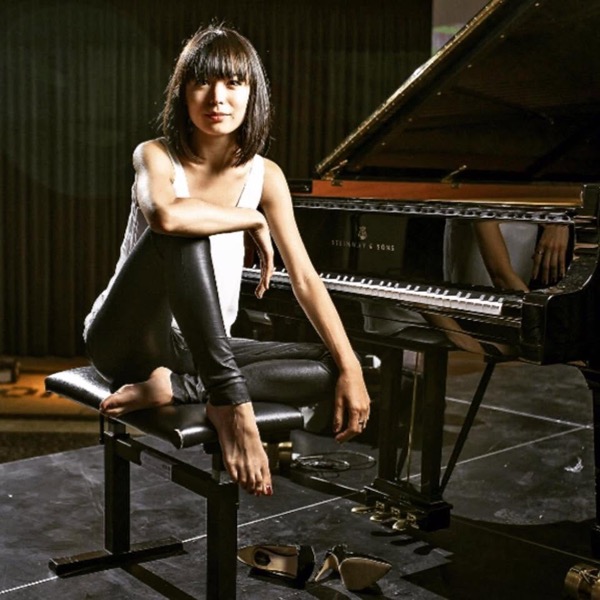
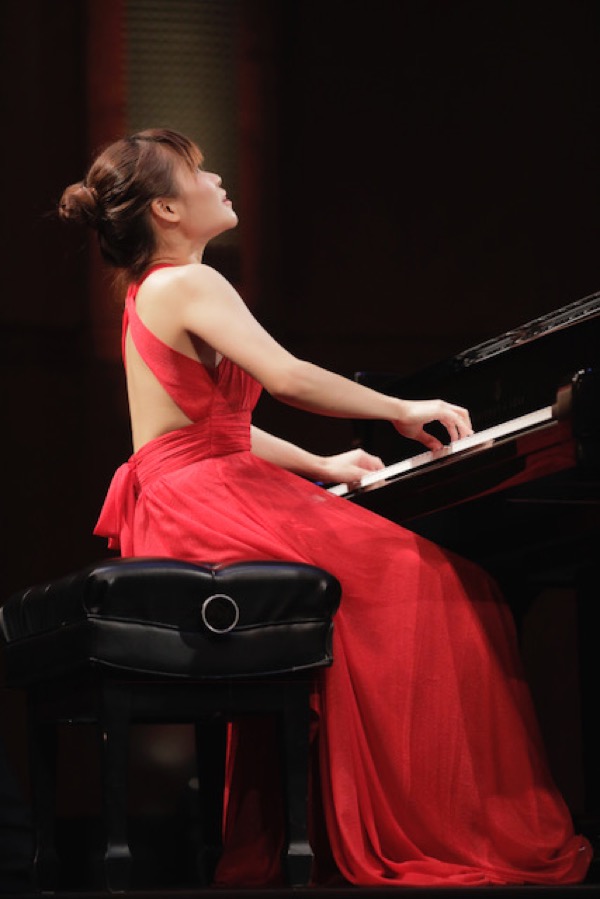
Alice Sara Ott, 2016
She says the collection is highly individual and ‘it reflects on the thoughts and personal moments that continue to influence my life’. She sees the music as presenting her unique journey to becoming the person and artist that she has become.
In looking back on her musical education, she finds it gave ‘the highest priority…to the studying of the vast heritage of classical music and the upholding of traditional performance practices’ but that it provided ‘little space or encouragement for exploring classical music in the context of our time’. She fights the feeling of exclusivity that leaves some practitioners of classical music separated from the world.
As an artist, she reads the score, and as a person, she interprets and contextualises that music in today’s world. The musicians and music we admire today pushed the boundaries of music itself, and she says that we, as performers, should be part of that innovation. She asks, ‘Why not carry their music and their spirit forward instead of insisting upon, or reproducing, bygone traditions and limitations?’
In taking Chopin as the core of her Echoes of Life project, she’s starting with someone who took the Bachian prelude, which functioned solely as an introduction to a larger work, and changed it to a collection of ‘individual character pieces’. Each is different from the others, and, for Ott, this represents life itself, which ‘feels built on a series of preludes: a collection of moments, all connected in some way’.
She opens the album with Francesco Tristano’s In the Beginning Was. Commissioned by Ott, it functions as the bridge between old and new and opens with a reference to the most famous Prelude in the genre, J.S. Bach’s Prelude in C major. Ott loved Bach when she was starting out, and his work seemed like a puzzle: ‘For me, the structures of his music echoed how a puzzle was put together – beginning with one line, one melody, that is then joined by others to build different shapes, patterns, and tonalities’. Tristano is a classical pianist and takes his background in music and places it in a perspective similar to the one that Ott was taking in the Echoes of Life project. The work begins, ‘heard as if from afar, mistily pedalled; the dream-like state gradually cedes to something more certain, the Bach motif becoming the focus of a minimalist treatment, growing in confidence (and loudness); yet it remains playfully elusive right up to the close’.
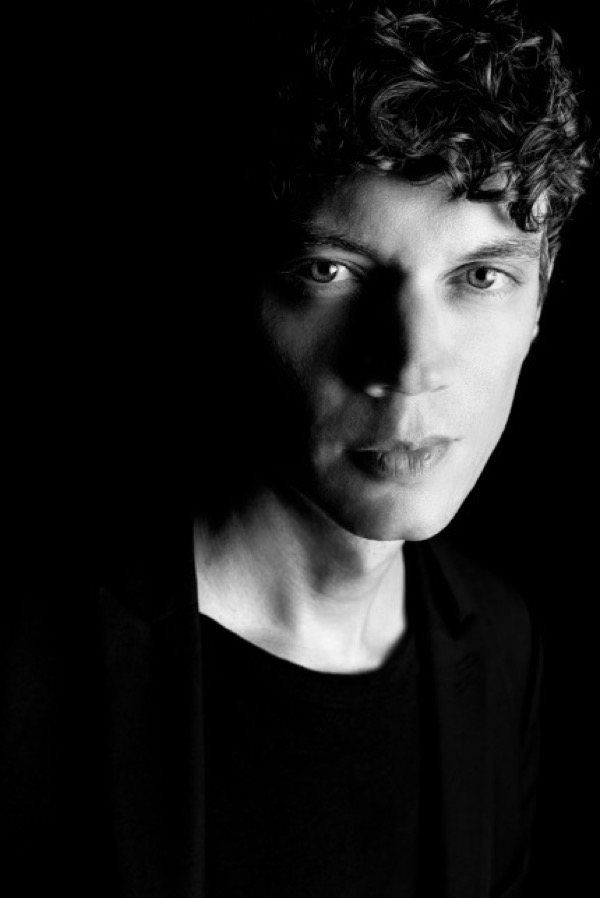
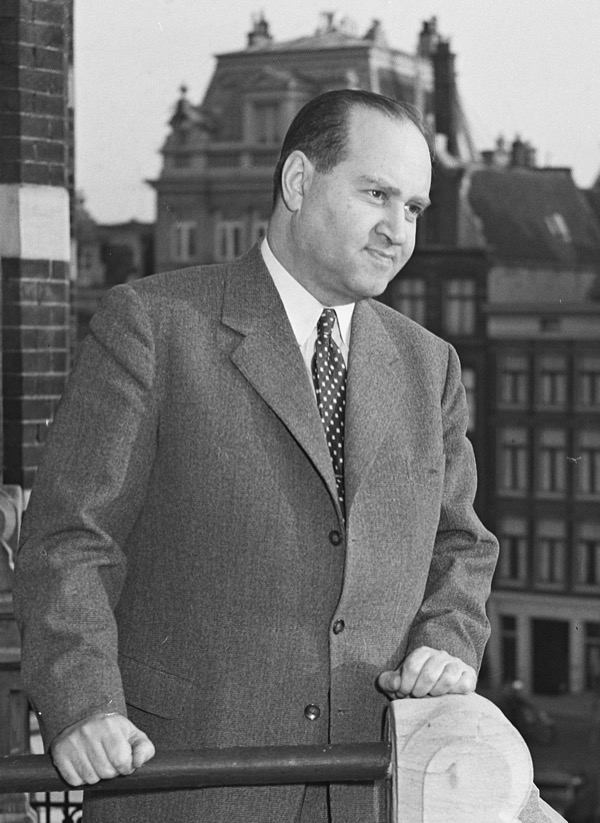
Francesco Tristano
Francesco Tristano: In the Beginning Was (Alice Sara Ott, piano)
Important to the album was its time of creation: with the world stuck at home in COVID lockdown, artists were faced with a different problem: in addition to the medical emergency, ‘many artists had to fight for survival as well as for the recognition and relevance of their art’.
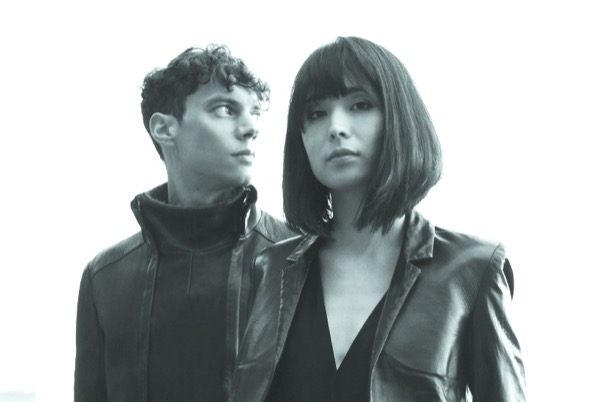
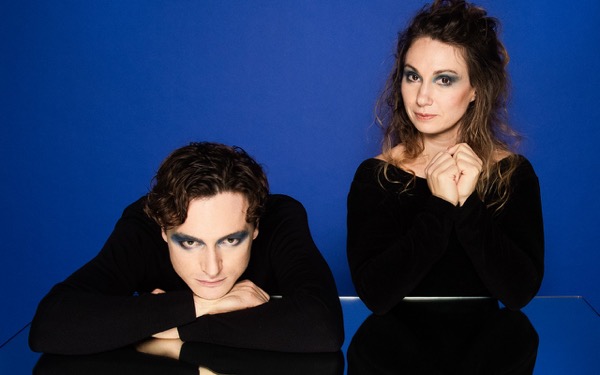
Alice Sara Ott and Francesco Tristano
In addition to the musical side of things, Ott wanted a way to enhance the work in live performance. She worked with Turkish architect Hakan Demiral to create and combine the world of architecture and the world of music. Architecture is a world of permanence, while music is a world that lives in the moment. Demiral’s team created a digital world to accompany the music as a video; it contained architectural spaces and landscapes that would reflect the music, evoke subtle references and emotions, and take the audience on a personal journey through the worlds of music and architecture.
Echoes Of Life in concert – official trailer
As Ott started to tour with the music and the video, she found that it resonated with her audiences and they shared their own journeys with her, based on what they had seen and heard in her concert. And so, she revisited the driving force behind the first Echoes of Life.
The album was reissued in 2023 in a Deluxe edition that included 11 new tracks. Now she has included more kinds of preludes, coming from both before and after Chopin. Bach’s Prelude No. 1 in C major is included twice: first recorded on a grand piano, and then to close the deluxe album on an upright.
Johann Sebastian Bach: The Well-Tempered Clavier, Book 1, BWV 846-869: Prelude No. 1 in C Major, BWV 846 (performed on grand piano) (Alice Sara Ott, piano)
Johann Sebastian Bach: The Well-Tempered Clavier, Book 1, BWV 846-869: Prelude No. 1 in C Major, BWV 846 (performed on upright piano) (Alice Sara Ott, piano)
Where, in the original album, Bach was present but not played, his inclusion on the deluxe album says what couldn’t be said before. In the first performance of the Prelude No. 1, it’s done in the full glory of a grand piano, ‘with a sound that embraces the entire room and space’. The work is played again as the closing work, but now played on a ‘prepared upright piano’, recorded ‘in a much closer and intimate setting so one can hear the hammers hit the felt on the strings’.
One of the characteristics of multiple sclerosis is the loss of fine motor skills, and it was this that concerned her the most. On the day of her diagnosis, she was playing a concert in Munich of music from her album Nightfall. As she tells it, ‘In the middle of the concert, while playing the Nocturne in C minor, op. 48/1, by Frédéric Chopin, I started to feel numbness and cramping which ultimately led to a loss of control in my left arm. I had to stop playing for the first time in my life’. As part of The Chopin Project, a recording she did in 2015 (before her diagnosis) with violinist Ólafur Arnalds, they recorded his work Eyes Shut, based on this same Chopin Nocturne.
Ólafur Arnalds, Alice Sara Ott – Eyes Shut
Alice Sara Ott has chosen to take us on her journey through music with her. First, we travel via her explorations of her education and life as a virtuoso pianist and then, more intimately, through her life confronting an illness with no cure. It’s a highly personal trip and, accompanying her, we learn a great deal about our own life and confrontations with music.
For more Alice Sara Ott on Interlude, see:
https://interlude.hk/alice-sara-ott/
https://interlude.hk/alice-sara-ott-transforming-tradition/
https://interlude.hk/on-this-day-1-august-alice-sara-ott-was-born/
https://interlude.hk/the-creators-sound-alice-sara-ott-and-fields-nocturnes/
For more of the best in classical music, sign up for our E-Newsletter