Have you ever heard of Sigurd Jorsalfar, one of the most renowned kings in Norwegian history? He was the first European king to lead a crusade, and he was part of the last relatively peaceful reign in Norway in the Middle Ages.
Sigurd Jorsalfar became the subject of a historical drama written by Bjørnstjerne Bjørnson in 1872, and Edvard Grieg provided incidental music for the play. The world premiere took place on 10 April 1872 in Oslo, and it was immediately successful.
As we celebrate Edvard Grieg’s birthday on 15 June, let us turn to Sigurd Jorsalfar and revisit this remarkable artistic collaboration.
Edvard Grieg: Sigurd Jorsalfar, Op. 22
Backstory
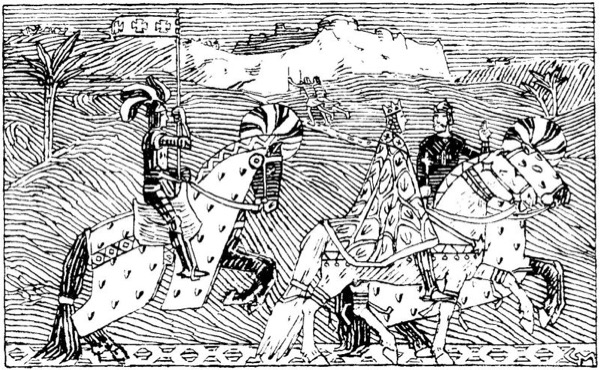
Illustration from Magnussønnenes saga by Gerhard Munthe
When King Magnus II Berrføtt died at the beginning of the 12th century, he left behind three sons. Øystein, around 15 years old, ruled the northern part of the country, and Sigurd, maybe a year younger, ruled the southern part. Since their brother Olav was only a toddler, the two older brothers ruled together over the middle part of Norway.
In the best Viking tradition, it was decided that King Sigurd should sail on a raid while Øystein would stay home and rule the country, which he did wisely. King Sigurd took 60 ships and sailed along the coast of Southern France, Spain, and Portugal, winning many battles and taking many treasures.
Edvard Grieg: Sigurd Jorsalfar, Op. 22, “Fanfares” (Gothenburg Symphony Orchestra; Neeme Järvi, cond.)
King Sigurd went on to Jerusalem and helped King Baldwin conquer a fortress in Syria. He made friends with Emperor Alexios I and started to prepare for his return to Norway. He travelled over land through parts of Hungary and Germany, and Sigurd the Crusader returned home in all his glory. And this is where the drama written by Bjørnstjerne Bjørnson opens.
Bjørnstjerne Bjørnson
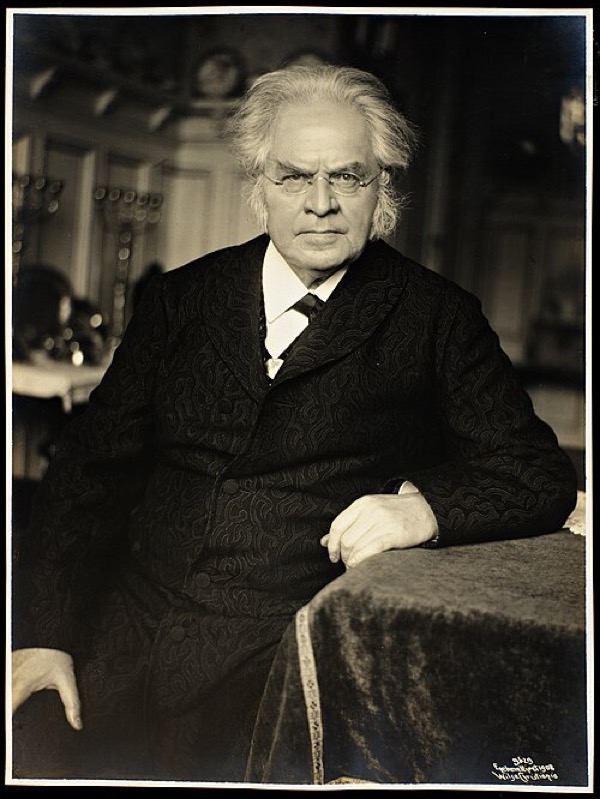
Bjørnstjerne Bjørnson (1832–1910)
Bjørnstjerne Bjørnson (1832–1910) is one of “the four greats” of Norwegian literature, alongside Henrik Ibsen, Alexander Kielland, and Jonas Lie. Bjørnson is probably best known for having written Norway’s national anthem “Yes, We Love This Country,” and for receiving the Nobel Prize in Literature in 1903.
Bjørnson is described as an uncompromising and charismatic public voice, as he engaged with countless social issues, ranging from the dire situation of farmers, national independence, and international questions of justice.
He wrote peasant tales, poetry, drama, speeches, and newspaper articles, leaving behind a rich legacy of stories and plays that are still being read and staged. He had originally dreamt of becoming a clergyman, but eventually chose literature and journalism.
Edvard Grieg: Sigurd Jorsalfar, Op. 22, “I. Innledning til Akt I” (Gothenburg Symphony Orchestra; Neeme Järvi, cond.)
Sigurd Jorsalfar

Sigurd the Crusader
Once Sigurd had returned after his celebrated crusade to Jerusalem, he was covered in fame and national admiration. Meanwhile, his more practical and peace-minded brother had governed the country through a period of peace and prosperity.
It soon becomes a clash between outward heroism and responsible statecraft, as it was customary to have their respective accomplishments measured. The winner was determined by the judgement of a fair maiden.
And that fair maiden is Borghild, who loves Øystein, but who believes that he has forgotten her. Øystein asks Borghild to judge between the two, and she casts her lot for Sigurd. The stage is set for a clash between brothers, but Sigurd ultimately comes to realise that the glory of his crusading past cannot sustain him as a ruler.
The play closes with a sense of reconciliation as the tensions between Sigurd and Øystein ease, and the emphasis shifts toward the stability of the kingdom. Bjørnson writes the following conclusion at the end of the final Act.
Hail to you heirs of Harald’s tribe,
Hail to you brave brother-kings,
One in the beautiful wrapping of peace,
One with the battle’s crown of victory.
Norway’s past, Norway’s future
In their handshake meet.
Hail to you brave brother-kings!
Hail! Hail! Hail!
Edvard Grieg: Sigurd Jorsalfar, Op. 22, “II. Borghild’s Dream” (Gothenburg Symphony Orchestra; Neeme Järvi, cond.)
Edvard Grieg
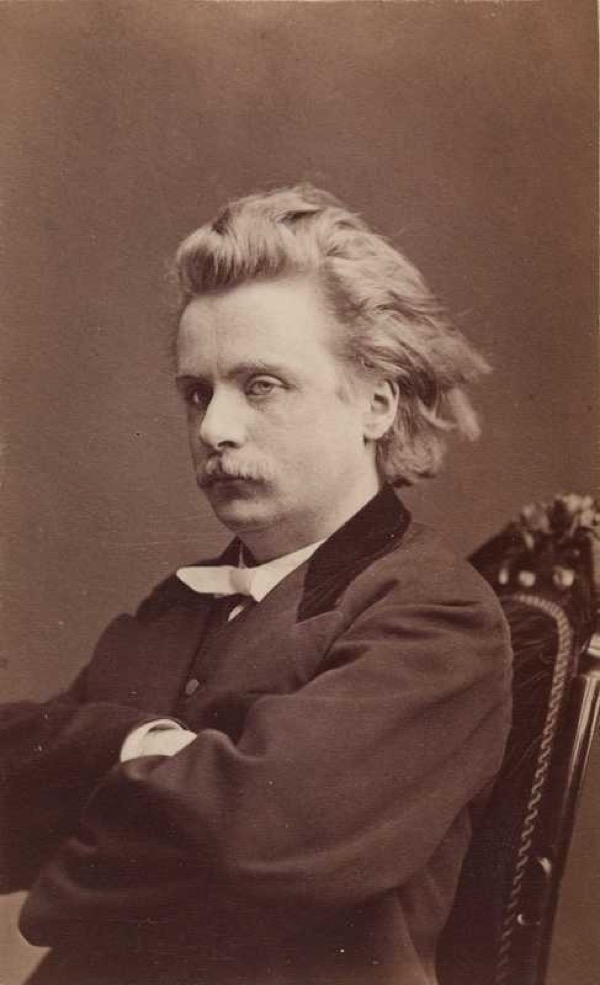
Edvard Grieg
After Edvard Grieg had finished his studies in Leipzig, he went to Copenhagen in 1863 to find inspiration and employment. He met the Danish composers J. P. E. Hartmann and Nils Gade, and also the young Norwegian nationalist composer Rikard Nordraak. You may recall that Bjørnson wrote the text for the Norwegian national anthem, and Nordraak composed the melody.
Grieg was still trying to find his personal voice as a composer, and after a visit to Norway, he returned to Denmark to compose, amongst others, his famous Piano Concerto in A minor. In October 1866, Grieg moved to Christiania, now Oslo, and made the city his home for over a decade.
Edvard Grieg: Sigurd Jorsalfar, Op. 22, “III. At the Matching Game” (Gothenburg Symphony Orchestra; Neeme Järvi, cond.)
Yet, living was difficult as he primarily made money by giving piano lessons. He supplemented his income by accepting various conducting engagements, but times were generally unhappy. The one exception was his marriage to his first cousin, Nina Hagerup, and the birth of their daughter, Alexandra.
Sadly, Alexandra died the following year, and the couple never had another child. During his Christiania years, Grieg also made the acquaintance of Bjørnstjerne Bjørnson and Henrik Ibsen.
Edvard Grieg: Sigurd Jorsalfar, Op. 22, “IV. The Northland Folk” (Gothenburg Symphony Orchestra; Neeme Järvi, cond.)
Ancient Heroes and New Music
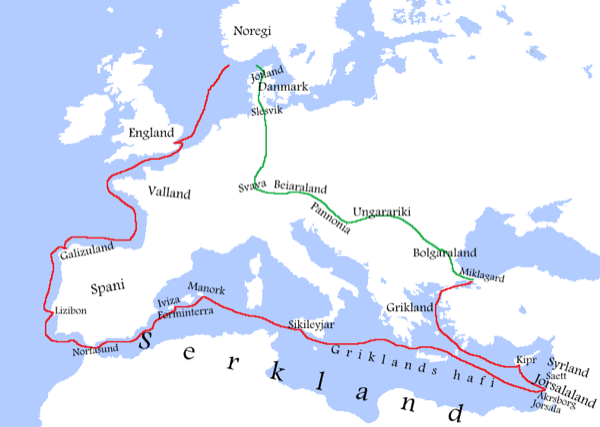
Route of the Norwegian Crusade, 1107–1111 (Old Norse place names)
As Grieg writes in a letter to Aimar Grønvold in 1881, “I must still mention one man who, with his great personality, had a decisive influence upon me in the musically empty years in Kristiania from 1868 until 1872—Bjørnson.
At that time, he was a true friend to me. It is above all him whom I have to thank for surviving this period. Although he is no connoisseur of music, he believes in my ideas and that has given me great courage.” Their collaboration started in 1870, and its thematic basis was ancient Norwegian heroic poetry. Here we find the origins of Bergliot, Land Sighting, and Sigurd Jorsalfar.
Grieg started work on Sigurd Jorsalfar in early 1872, and he was told that he had just a short time to write the incidental music for the play. Originally, Grieg composed nine sections, all starting with the sounding of royal fanfares.
Edvard Grieg: Sigurd Jorsalfar, Op. 22, “V. Homage March” (Gothenburg Symphony Orchestra; Neeme Järvi, cond.)
A Kingdom in Sound
The musical introduction to Act I establishes the world of royal ceremony and historical grandeur, indicating Sigurd’s return home. Grieg does introduce the conquering hero, but the ceremonial brass and orchestral sweeps are rather restrained.
For the emotional centre of the score, Grieg immerses us in “Borghild’s Dream,” a world of uncertainty and vulnerability. The music continues to become more agitated and grows darker, as foreboding visions interrupt the fragile calm.
“At the Matching Game” introduces us to the public contest in which the two kings symbolically measure their achievements. Here, Grieg writes much lighter music, music he had previously composed for violin and piano.
One lovely aspect of incidental music is the fact that it often features choruses and solo voices. “The Northland Folk” is such a number, as it celebrates the heroic spirit of the land. Grieg summons a folk-inspired style that feels like a communal celebration of national pride.
Edvard Grieg: Sigurd Jorsalfar, Op. 22, “VI. Interlude I” (Gothenburg Symphony Orchestra; Neeme Järvi, cond.)
From Warrior to King
“The Homage March” is probably the best-known piece in the score, as the magnificent march accompanies the scene of reconciliation. There is plenty of pomp and circumstance, but the central portion becomes much more lyrical and human.
Two interludes serve as dramatic connective tissues, with the first opening up spaces for emotional reflection, and the second restoring a sense of forward movement. It anticipates the final statement about kingship and destiny.
And thus “The King’s Song” is a vocal movement that presents a hymn-like validation, transforming Sigurd from a warrior into a symbol of national duty and responsibility. It all concludes with some brief ceremonial horn calls, the kind we had heard in the beginning.
Edvard Grieg: Sigurd Jorsalfar, Op. 22, “VII. Interlude II” (Gothenburg Symphony Orchestra; Neeme Järvi, cond.)
From Stage to Symphony
The premiere of Bjørnson’s play with Grieg’s music was immensely successful, resulting in ten additional performances during that season. It was a triumph for both playwright and composer, with the music praised for its seamless integration with the drama’s nationalistic themes.
Grieg himself reflected on the rapid composition process, as he had completed and orchestrated the score in just eight days. And while the original music depended on the stage play, some of the music could be presented independently in the concert hall.
In 1892, Grieg arranged three movements into his orchestral suite Sigurd Jorsalfar, Op. 56. Naturally, he transferred the most substantial movements, “In the King’s Hall,” “Borghild’s Dream,” and the “Homage March” to create a structurally satisfying order for symphonic programming.
Edvard Grieg: Sigurd Jorsalfar, Op. 22, “VIII. The King’s Song” (Gothenburg Symphony Orchestra; Neeme Järvi, cond.)
Music Outlives the Drama
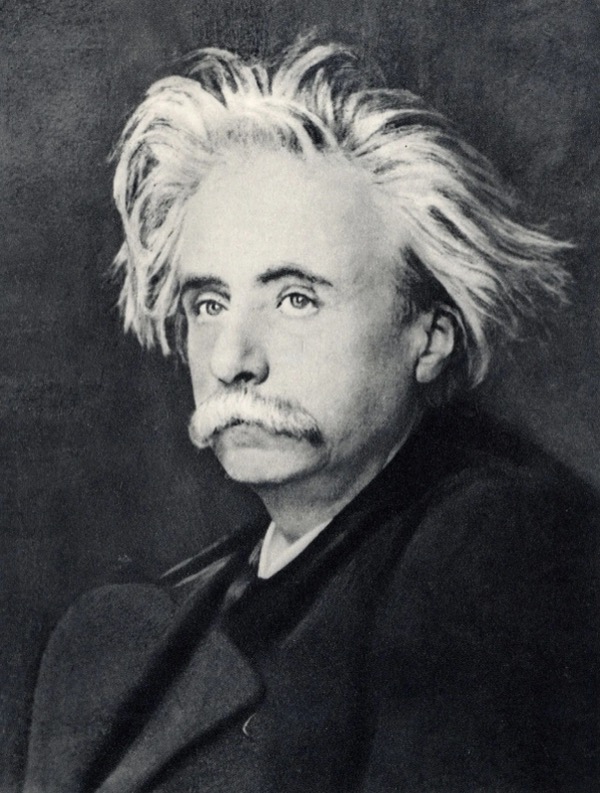
Edvard Grieg
However, Grieg did not simply reproduce the theatrical score, but revised and polished the orchestration. He incorporated richer woodwind harmonies and broader dynamic contrasts to suit the acoustics of the symphony hall. “Borghild’s Dream” now becomes the emotional core, framed by public pageantry on either side.
Bjørnson’s drama has long faded from regular performance, but Grieg’s music lives on independently. It now provides a miniature symphonic narrative that becomes great fun to follow once you know the entire story. Grieg frequently conducted his orchestral version abroad, and it was, and still is, greeted with great enthusiasm by the public.
For more of the best in classical music, sign up for our E-Newsletter