Since April, a special exhibition on Frédéric Chopin—traveling all the way from the Fryderyk Chopin Institute in Warsaw—has been on view at the Suzhou Museum. Through 57 exhibits, it offers a glimpse into the life and legacy of this legendary composer. Among the most precious items are manuscripts, letters, and personal belongings shown in China for the first time, presented alongside portraits and archival materials that trace Chopin’s life. Two additional galleries are devoted to the International Chopin Piano Competition and to visual art inspired by Chopin’s music—both indispensable components of contemporary “Chopin culture.”
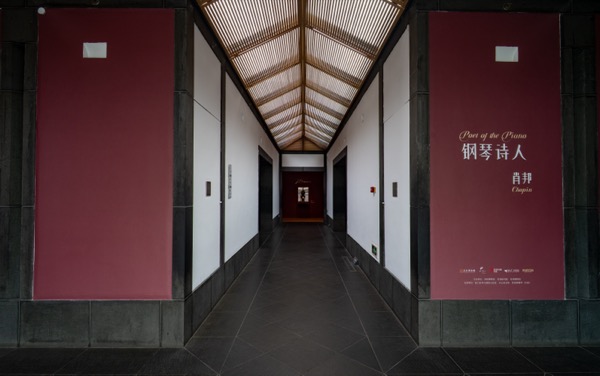
The Chopin exhibition at Suzhou Museum © Suzhou Museum
Yet Chopin’s story is not only to be seen; it must ultimately be heard in music. On April 30, as part of the exhibition programming, the museum collaborated with the Suzhou Symphony Orchestra, conducted by Chen Xieyang, to invite Zitong Wang—third prize winner of the 2025 Chopin Competition—to present an all-Chopin concert.
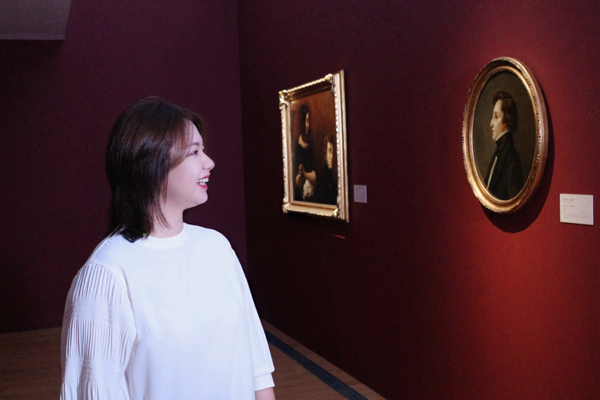
Zitong Wang at the Chopin Exhibition © Igor Zheng
Apart from a handful of works for piano and orchestra, including the two piano concertos, Chopin left no orchestral compositions, and indeed had little aptitude for orchestral writing. Nevertheless, many musicians have orchestrated his popular piano works. Chen and the orchestra performed orchestral arrangements of three popular piano miniatures, all composed after Chopin’s arrival in Paris in the 1830s, revealing different facets of the young composer’s creative personality. Though these pieces may sound simple, they are in fact not so easy to play—small pieces, great challenges—and even more so for orchestra than for solo piano in achieving their flexibility.
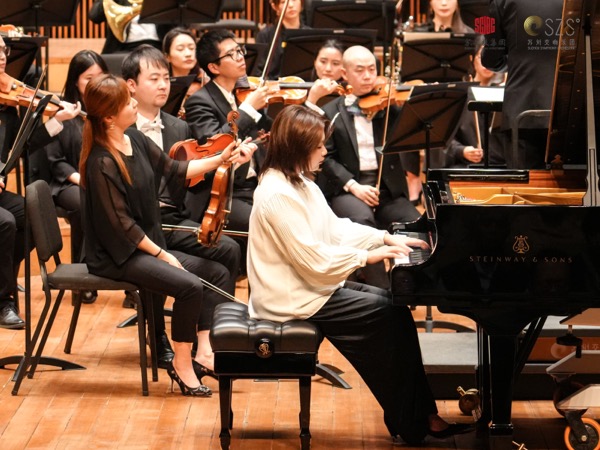
Zitong Wang performing with the Suzhou Symphony Orchestra
The polonaise, Poland’s most characteristic national dance, had already been taken up by composers such as George Frideric Handel and Johann Sebastian Bach, though Chopin’s remain the most famous. Alexander Glazunov orchestrated the Polonaise in A major (“Military”), using it as the opening number of the ballet suite Chopiniana. Snare drum and weighty wind parts evoke an outdoor band, reminding one that Chopin himself imitates wind-like repeated staccato notes on the piano. At 86, Chen Xieyang remained remarkably vigorous, shaping the work with clarity, dignity, and elegance.
The Nocturne in E-flat major, one of Chopin’s most beloved works, is a simple and sincere lyrical poem of his youth. Mouton’s orchestration removes many ornaments unique to the piano, somewhat reducing its effect but lending a certain plainness. Chen adopted an almost adagio tempo, extending the phrasing to evoke a gently melancholic atmosphere. The Grande Valse Brillante in E-flat major—Chopin’s first published waltz—was transposed to C major (with the middle section in B-flat major) in Roger Branga’s arrangement, giving the orchestral timbre greater transparency. Compared to the piano version, the orchestral rendition sacrifices some agility and elasticity but gains composure and fluidity; Chen also allows space to breathe at phrase transitions.
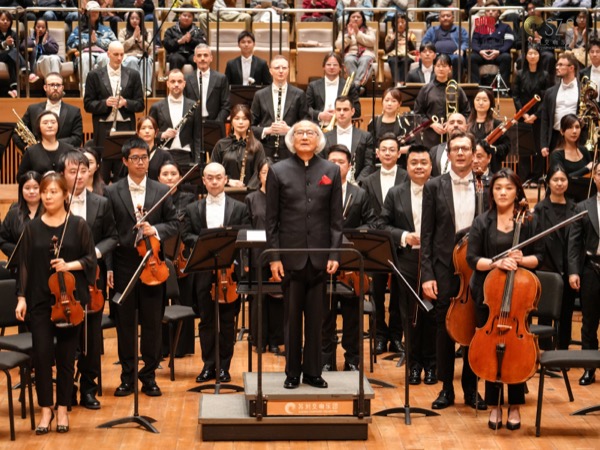
Chen Xieyang conducting the Suzhou Symphony Orchestra
After the arrangements, Zitong Wang took the stage to perform Andante spianato and Grande Polonaise brillante and the Piano Concerto No. 1 in E minor with the orchestra, bringing the audience back to Chopin’s Polish years. The latter was one of the works performed at Chopin’s farewell concert before leaving Poland, while the Grande Polonaise brillante occupied him during his final months there, eventually completed in Vienna during his travels.
These youthful works suit a young performer well. Wang, born in 1999, demonstrated a keen sensitivity to these familiar pieces. At a time when Chopin interpretations can sometimes become rigid or mannered, she remains a pianist worth hearing. Her playing, with a delicately warm tone, was well thought-out and carefully shaped, supported by a rich palette of touch. In the concerto’s first movement, unexpected shifts of colour—such as the sudden C major passage at the start of the development, or the variation of the second theme in G major during the recapitulation—were rendered with gentle lyricism and natural poetry, capturing the bold directness of Chopin’s youthful voice. The surging chromatic runs toward the end of the development section provided moments of dramatic brilliance.
ZITONG WANG – final round (19th Chopin Competition, Warsaw)
Imperfections, however, were perhaps inevitable. At times—such as in the lyrical (second or third, depending on analysis) theme of the exposition—the slower tempo did not yield sufficient expressive depth, slightly weakening the tension of the musical line. Elsewhere, in the Grande Polonaise brillante and the concerto’s finale, not all tremolos and rapid passages achieved the desired penetrating excitement.
Nevertheless, Wang’s overall performance was undeniably accomplished. Chen and the Suzhou Symphony Orchestra also ensured structural clarity and cohesion. While Chopin’s orchestral writing is not technically demanding, it is far from easy to perform well; Chen subtly maintained the flow of breath through key transitions. Interestingly, in the Grande Polonaise brillante, even during orchestral rests, the conductor’s beat never ceased. Despite a slightly underwhelming horn section, the orchestra—fresh from high-intensity performances of Die Walküre—displayed solid form, with a particularly memorable bassoon solo in the concerto’s slow movement. The applause that broke out before the piano’s final notes had faded, echoed a tradition of the Chopin Competition and signaled recognition of a performance approaching its standards.
For her encore, Wang Zitong played two more youthful Chopin works—the Waltz in E major and the Nocturne in F minor—maintaining her high level throughout. One slight regret remains: while the exhibition also touches on Chopin’s relationship with George Sand and his illness-ridden later years, the concert program did not venture into his post-1840 life. Perhaps, to introduce such suffering into the beautiful poetic world of the young Chopin would have felt, in its own way, somewhat cruel.
For more of the best in classical music, sign up for our E-Newsletter