Jean-Philippe Rameau’s Castor et Pollux, generally regarded as one of his finest works, is staged with some frequency. For a fully staged opera production in 2026, however, you would have to visit two mid-scale European opera houses, the Grand Théâtre de Genève in Switzerland or the Oper Graz in Austria.
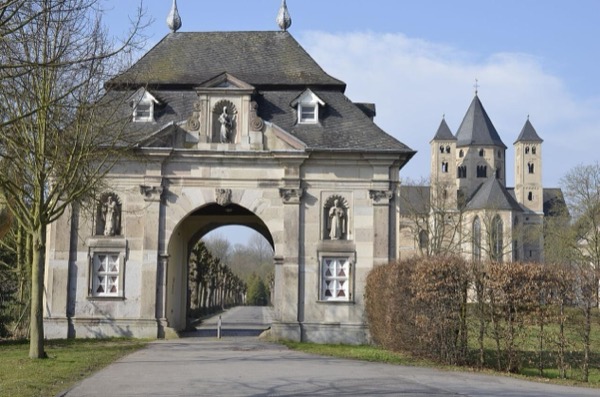
As luck would have it, I found myself in Graz during April 2026 and decided to visit the Graz Opera House. This striking neo-Baroque theatre on the Opernring was built in 1899 by the Viennese architects Fellner & Helmer. It is one of Austria’s foremost opera venues, second in size only to the Vienna State Opera.
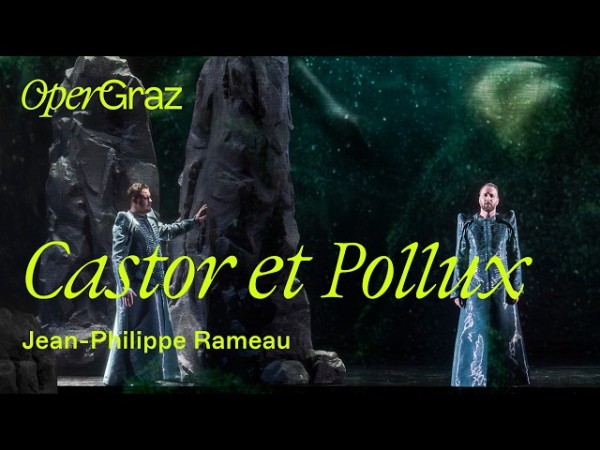
This new production of Castor et Pollux featured Sébastian Monti and Nikita Ivasechko as Castor and Pollux, Sieglinde Feldhofer and Sofia Vinnik as Télaïre and Phébé, and Daeho Kim as Jupiter. Bernhard Forck led the Grazer Philharmoniker and Chorus, and Nanine Linning created a hybrid of Baroque opera and contemporary visual theatre.
Rameau: Castor et Pollux, “Ouverture”
Revolution and Rivalry in French Opera
At the end of the 17th century, French opera was artistically dominated by Jean-Baptiste Lully. However, he was soon challenged by Jean-Philippe Rameau, who not only revolutionised the use of the orchestra, but also composed on the basis of a theory of harmony he had developed.
His Traité de l’harmonie, first published in 1722, is a fundamental work in the development of Western music, and much of our modern tonal system is based on it. Rameau’s novel sounds and exuberant compositional ideas sparked enthusiasm, yet caused outrage and conflict with Lully’s followers.
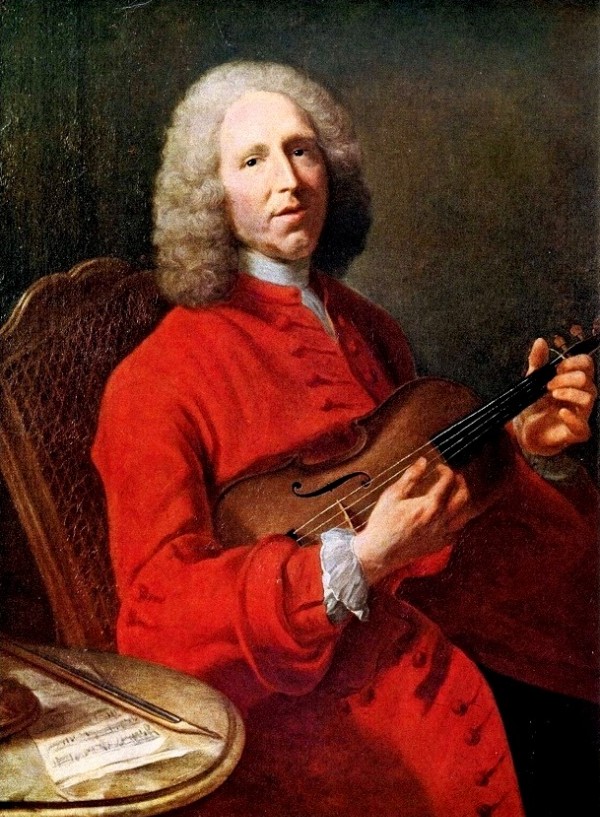
Jean-Philippe Rameau
At its first appearance in 1737, Rameau’s third opera Castor et Pollux was only moderately successful. Attacked by “Lullistes” for being distastefully Italianate, the opera had only a short first run, with 21 performances in total.
Rameau would rework Castor et Pollux for a 1754 revival. Presented at the height of the “Querelle des Bouffons,” the opera was ecstatically received. And by the time it was revived again in 1764, it was seen as Rameau’s crowning achievement.
Jean-Philippe Rameau: Castor et Pollux (1754 version) – Act I Scene 3: Ah! Je mourrai content (Castor, Telaire) (Colin Ainsworth, tenor; Emmanuelle De Negri, soprano; Pygmalion; Raphaël Pichon, cond.)
Bound by Love, Divided by Fate
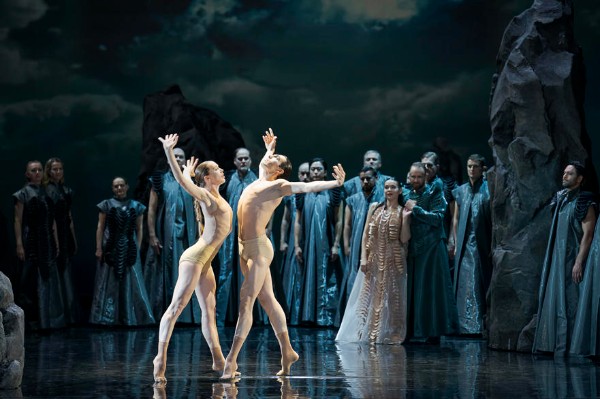
Rameau’s Castor et Pollux, Oper Graz © Werner Kmetitisch
The story of Castor et Pollux, as was customary for a Tragédie en musique, comes from ancient mythology. It centres on a deeply bonded yet dissimilar pair of twins. Castor is mortal, and Pollux is immortal.
Castor loves Télaïre, and she loves him. However, her sister Phébé also loves Castor. Télaïre is betrothed to Pollux, but because of brotherly love, Pollux renounces the upcoming wedding.
Instigated by Phébé, Castor falls in battle, and Pollux resolves to take his brother’s place in the underworld so that Castor can live with Télaïre. Pollux journeys to the underworld, but Castor refuses to accept this sacrifice. However, he returns to life once more to bid farewell to Télaïre.
Seeing the lovers reunited, Phébé expresses impotent rage, and when Télaïre realises that Castor’s return is temporary, she is incredulous. Castor sticks to his promise, and it is left to Jupiter to announce that destiny has been satisfied.
Castor is granted immortality, and the twins take their places in the Zodiac, with Télaïre granted a place in the firmament. Phébé, meanwhile, is sent to Hades.
Jean-Philippe Rameau: Castor et Pollux Suite – Act II: Air pour Hebe et ses suivantes – Sarabande (L’ Orfeo Baroque Orchestra; Michi Gaigg, cond.)
Revision and Refinement
For the 1754 revival, which forms the basis of the Graz production, substantial changes were made to the libretto. These included the omission of a prologue, the combining of various acts, and a general compression achieved by cutting recitative.
Rameau, in turn, took some of his original prologue music and transferred it to different places in the opera. He also substituted many of the ballet movements and orchestrated the score in a more varied style.
Much of the music is characterised by an ethereal, nostalgic beauty, while a lean and athletic style is adopted in the more energetic episodes.
Jean-Philippe Rameau: Castor et Pollux (1754 version) – Act IV Scene 3: Brisons tous nos fers (Chorus of Demons) (Pygmalion; Raphaël Pichon, cond.)
Critical Acclaim and Conceptual Ambition
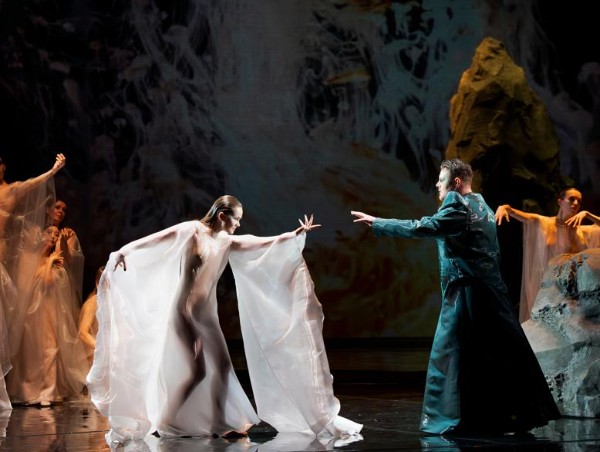
Rameau’s Castor et Pollux, Oper Graz
Critical reaction to the 2026 Graz production was consistently positive, with particular praise reserved for a relatively young and stylistically flexible cast of singers. The choice of cast was clearly informed by Rameau’s demands for agility and clarity of declamation rather than sheer volume.
Much praise was lavished on the production concept of the “Gesamtkunstwerk,” as Nanine Linning sought to create a timeless world by weaving together individual art forms. Her integration of choreographed dancers alongside singers as part of the dramaturgy was particularly effective as it re-engaged with the centrality of movement in French Baroque opera.
I found the immersive aspects and visual environments somewhat less convincing. Three-dimensional spaghetti and floating, transforming amoebas, while avant-garde in their AI-generated aesthetic, ultimately felt distracting.
Orchestral Restraint and Choral Excellence
On the musical side, Bernhard Forck brought with him a distinguished pedigree in historically informed performance and a deep specialisation in early music. Yet on this particular evening, things did not quite come together. The orchestra could not match the agility and transparency demanded by Rameau’s score, nor was it sufficiently nimble to respond to the interpretive vision of the conductor.
In my opinion, the chorus deserves special praise, as they sang with precision and acted with cohesion. Their expressive theatricality provided the strong foundation for the musical and dramatic flow of the performance.
All in all, it was an enjoyable performance of an important opera on the modern stage, and I am entirely grateful that mid-sized opera houses continue to keep such works in the repertoire.
For more of the best in classical music, sign up for our E-Newsletter