First created in 1853 as work for piano and cello, Gounod combined an improvisation with Bach’s Prelude No. 1 in C major, BWV 846, from Book 1 of the Well-Tempered Clavier. By superimposing his melody over the 1722 work, Gounod created a piece that still lives today.
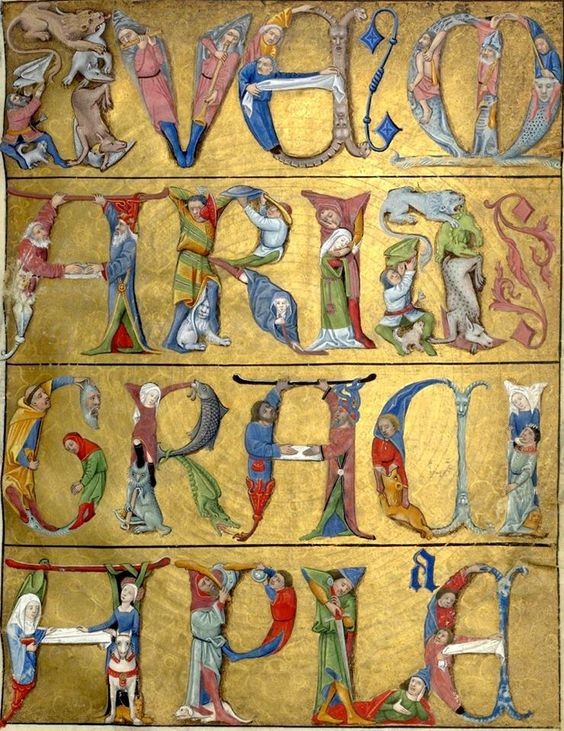
The Ave Maria verse as done in historiated initials, ca 1480–1496 (From the Heures de Charles d’Angoulême, folio 52r)
(Gallica, btv1b52502694t/f. 133)
Originally, Gounod had just improvised over Bach’s Prelude. His future father-in-law, the composer and pianist Pierre Zimmerman, transcribed the work and wrote it out as a work for a string instrument (violin or cello) over keyboard (piano and harmonium). It was published under the title of Méditation sur le 1er prélude de piano de S. Bach.
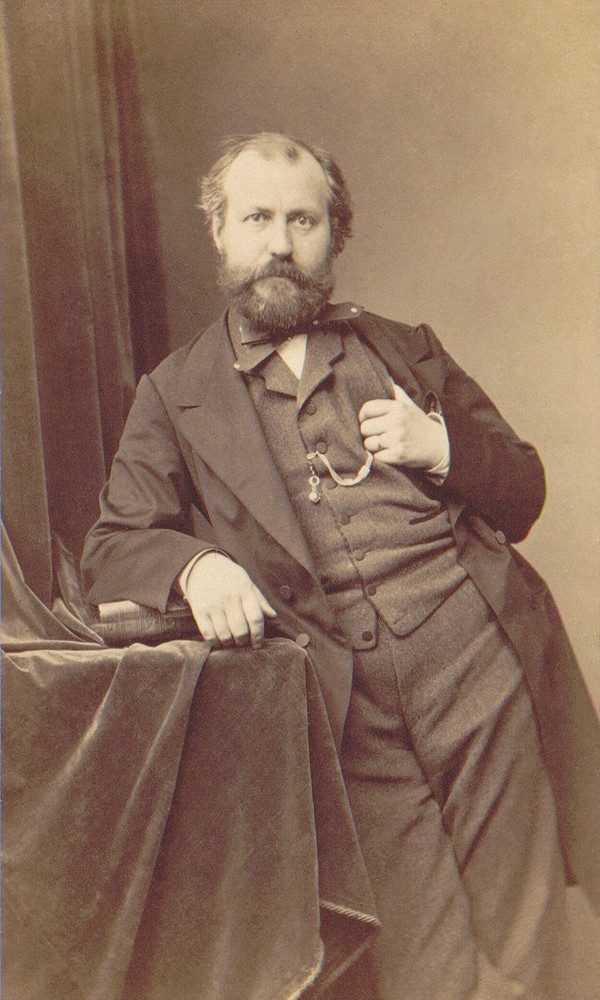
Bayard & Bertall: Charles Gounod, 1860 (Gallica, btv1b84542916)
The same year, the words to Alphonse de Lamartine’s poem, ‘Le livre de la vie’ (The Book of Life), were set to Gounod’s improvised melody.
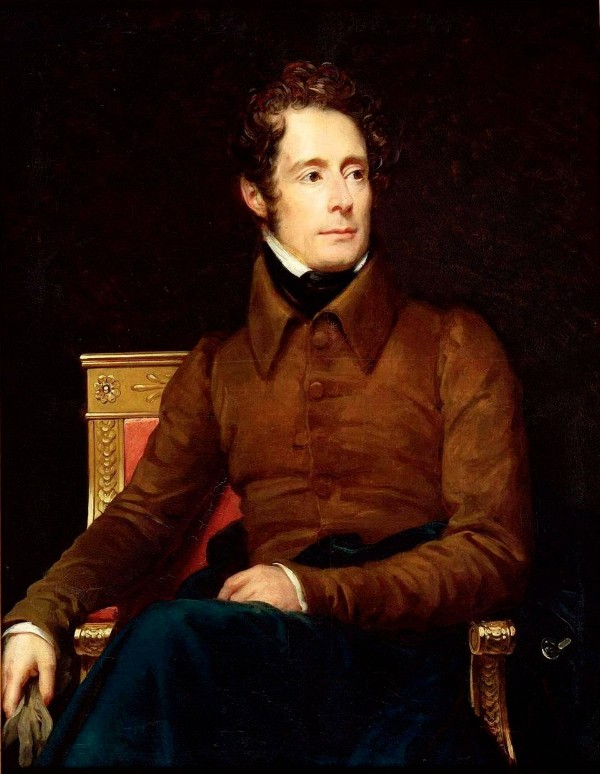
François Gérard: Alphonse de Lamartine, 1830
Le livre de la vie est le livre suprême
Qu’on ne peut ni fermer, ni rouvrir à son choix ;
Le passage attachant ne s’y lit pas deux fois,
Mais le feuillet fatal se tourne de lui-même :
On voudrait revenir à la page où l’on aime,
Et la page où l’on meurt est déjà sous nos doigts
Alphonse de Lamartine
The book of life is the supreme book,
That one can neither close nor reopen at will;
The cherished passage cannot be read twice,
But the fatal page turns of its own accord:
One would like to return to the page where one loves,
And the page where one dies is already beneath our fingers
Alphonse de Lamartine
By 1857, the French publisher Heugel had already added the work to his collection of modern classics for the piano (Classiques Modernes du Piano) and published it as a solo piano work. In his preface, Heugel argues that modern French pianists shouldn’t have to beg for a place at the table where Mozart, Haydn, Beethoven, and Weber already held court. Along with Gounod / Bach piece, Heugel included works by Thalberg, Alkan, Czerny, Herz, and others.
In 1859, Heugel added the Latin text of the Ave Maria prayer, and with that addition, created the perfect combination of words and music that, more than 160 years later, still has a place in the repertoire.
Ave Maria, gratia plena,
Dominus tecum.
Benedicta tu in mulieribus,
et benedictus fructus ventris tui, Iesus.
Sancta Maria, Mater Dei,
ora pro nobis peccatoribus,
nunc et in hora mortis nostrae. Amen.
Hail Mary, full of grace,
The Lord is with thee.
Blessed art thou amongst women,
And blessed is the fruit of thy womb, Jesus.
Holy Mary, Mother of God,
Pray for us, sinners,
Now and at the hour of our death. Amen.
Johann Sebastian Bach: Ave Maria (version for voice and organ) (Asako Tamura, soprano; Mari Fukumoto, organ)
Now, in a new combination of Bach and the Ave Maria prayer, French composer Christophe Loiseleur des Longchamps has created his own new Ave Maria. Combining the Prelude from the First Suite for Solo Cello, BWV 1007, with a new melody, Loiseleur des Longchamps has updated a once-familiar work, perhaps too familiar, and makes us hear the perfect combination of music, improvisation, and text.

Christophe Loiseleur des Longchamps
AVE MARIA / BACH / Suite pour violoncelle n°1
Christophe Loiseleur des Longchamps attended the Conservatoire de La Celle Saint-Cloud, studying harp, before moving to the Conservatoire National Supérieur de Toulouse. From the harp, he expanded into the world of choral music and was founder and director of the Notre-Dame de Brive Choir School from 2000 to 2012, while also serving as the director of sacred music for the diocese of Cahors. He’s currently in Limousin at the Collège Jean-Baptiste de La Salle. As a composer, he’s written operas, oratorios, and musicals, and his works are being performed around the world, from Korea to the UK and France.
In addition to this version for voice and cello, the composer has also prepared a version for soprano, cello and chamber orchestra, and we look forward to hearing that!
Website: christopheloiseleurdeslongchamps.com
For more of the best in classical music, sign up for our E-Newsletter