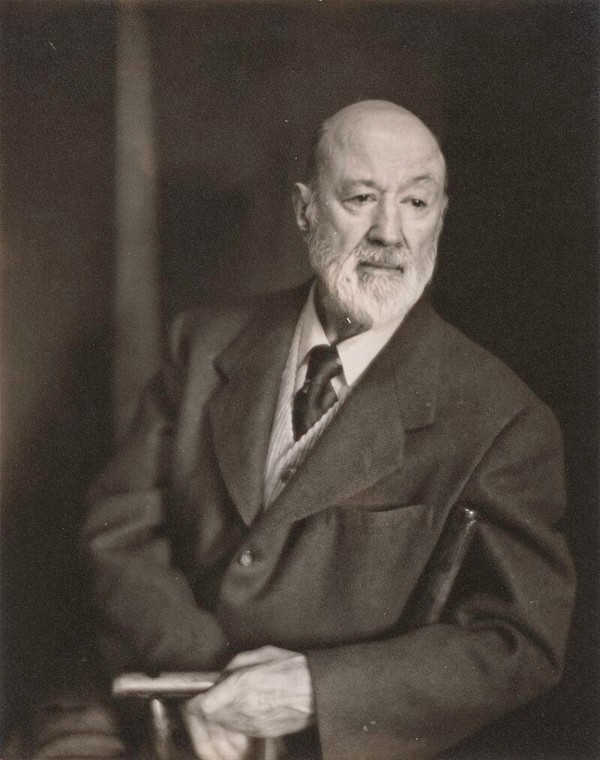
Carl Loewe (1796-1869) and Franz Schubert are generally not mentioned in the same breath when it comes to discussions of the Lied. However, in his time, he maintained close friendships with Robert Schumann, Carl Maria von Weber, and Felix Mendelssohn.
While Schubert’s songs frequently concentrate on emotional intensity within compact lyrical forms, Loewe developed a parallel and highly original tradition of the narrative ballad. These miniature musical dramas unfold over extended spans, vividly depicting characters, scenes, and action.
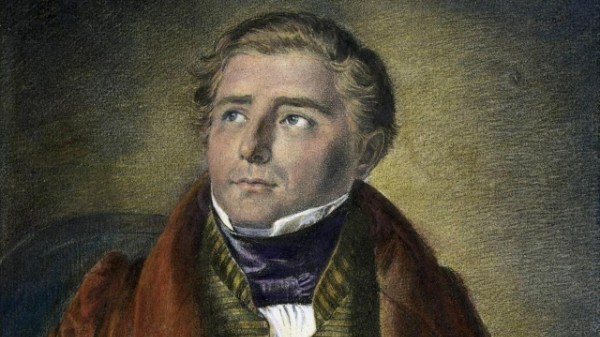
Carl Loewe
Loewe died on 20 April 1869. To mark the anniversary of his death, let us explore how the narrative ballad transformed the Lied into a miniature opera for voice and piano.
Carl Loewe: “Prinz Eugen der edle Ritter”
Roots of a Storyteller
Carl Loewe was born in a small mining town in Saxony on 30 November 1796. An accomplished singer, Loewe studied music and later theology and philology. Loewe was an integral part of German music life, and he accepted the position of music director at the town of Stettin in Prussia.
Although he had some regrets at not being appointed in Paris or Vienna, he dutifully remained in Stettin for 46 years. In all, Loewe composed roughly 400 ballads and songs based on a narrative genre rooted in oral storytelling traditions.
The literary ballad form was revived by Romantic writers like Johann Wolfgang von Goethe and Gottfried August Bürger. Favourite topics for these ballads were tales of horror, romance, heroism, and the supernatural.
Carl Loewe: “Du schönes Fischermädchen”
The Ballad in Performance
Loewe established a solid reputation across Europe as a composer and a singer. He was best known for solo performances of his ballads, in which he frequently both sang and played piano.
A contemporary dictionary of music writes, “Loewe led a life devoted to the secular ballad. At a time when lieder-singing could still be experienced in our culture, there was hardly a bass-baritone of heroic stature who did not give his all in presenting the dramatic experience of a Loewe ballad on the concert stage.”
Carl Loewe: “Die Lotusblume”
Music as Storytelling
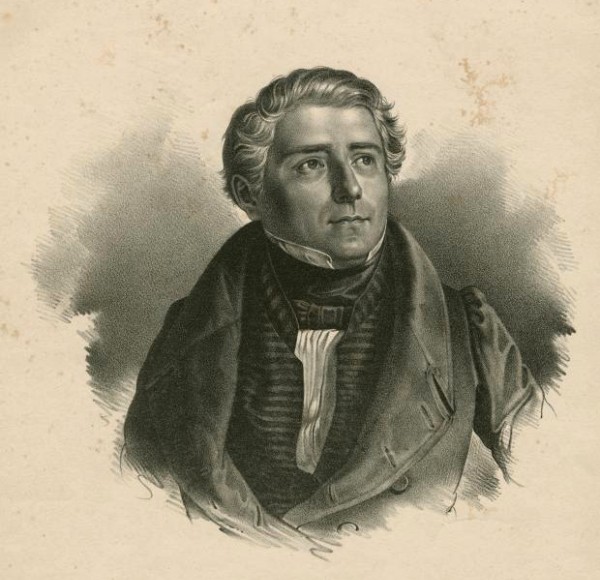
Carl Loewe
Loewe’s narrative style was highly popular as he closely followed the rhythms of the spoken text. His vocal parts frequently alternate between recitative-like passages and melodic outbursts, creating the impression of a storyteller.
The piano becomes an important partner in telling the story. Essentially, it becomes a powerful narrator, with repeated rhythmic figures representing physical motion and harmonic shifts signalling emotional or narrative turns.
In his earliest settings, Loewe selected poems on supernatural themes but gradually turned to ballads on patriotic and historical subjects. His choice of poets was highly eclectic, setting the verses of classical masters such as Goethe, Schiller and Herder, as well as some lesser and more modern poets.
Carl Loewe: 3 Balladen, Op. 125: No. 2. Das Vaterland (Kurt Moll, bass; Cord Garben, piano)
Two Visions of Erlkönig
Both Schubert and Loewe set Goethe’s supernatural ballad “Erlkönig,” and interestingly, Goethe and, subsequently, Richard Wagner found Loewe’s setting superior to the one crafted by Schubert.
The poem is an adaptation of a Danish folk ballad. You know the story, as a father rides through the night with his terrified and feverish child. The child claims to see the deadly Erlking, but the father dismisses the child’s vision as mist. The child eventually dies in his arms, symbolising the triumph of supernatural death over rationalism.
Schubert immediately establishes an atmosphere of panic with feverishly pounding hooves, while Loewe initially depicts eerily rustling leaves and a dark, misty atmosphere. Loewe’s father and son emerge from the musical fog before our very eyes as the metre and the key are gradually clarified.
Franz Schubert: “Der Erlkönig” Op. 1
Harmonic Design and Dramatic Structure
The metre is not fully established until the narrator identifies the characters, and the harmony moves away from the tonic as the tremolos evaporate, allowing the father and son to ride into a musical clearing.
Once we focus on the human characters, the horse fades into the musical background. And then there is the Erlking himself. In Schubert, the supernatural character sounds charming and inviting, but in Loewe’s setting, the musical character is profoundly disturbing. The major mode is not comforting, but alarming.
As listeners, we sense that something will happen, but we cannot predict what it will be. Loewe’s harmonic portrayal of the father and son is comparatively subtle, and the final entrance of the Erlking contains the dramatic turning point.
He finally reveals that he will use force to capture the boy, and the hoofbeat rhythm suddenly gains prominence as the harmony takes us on a wild ride. And Loewe’s ending is more melodramatic, with pregnant silences and a shocking diminished seventh chord on “tot.”
Loewe’s setting is less violently interventionist than Schubert’s and more faithful to the narrative’s externals. This is undoubtedly the reason why Goethe preferred the Loewe setting.
Carl Loewe, “Erlkönig,” Op.1 No. 3
Psychological Drama
Let’s have one more look at a supernatural ballad, specifically “Edward,” a traditional Scottish ballad. The poem is by Gottfried Herder, and it tells the story of a son who murders his father and is gradually forced to confess his crime during a tense dialogue with his mother.
Edward offers no explanation, but he will be on the run and never return, leaving behind the castle, his wife, and his kids. Edward is one of the first desperadoes in 19th-century literature and song, and Loewe’s setting is psychologically penetrating.
Each recurring cry of “Oh” becomes a revealing new twist. Loewe reinforces the two most dramatic moments, at Edward’s confession of murder, and at the hysterical final curse, with chilling harmonic surprises.
Carl Loewe: “Edward”
Historical Ballad
Loewe also excelled in composing historical and epic narrative ballads. Archibald Douglas, based on a Scottish story and versified by Theodor Fontane, finds Douglas after seven years of exile by King James. He was cast out not because of his own acts but because of his Kingsmen’s fraud.
The fundamental theme shifts to political exile, memory, and reconciliation. Douglas wants to return to his fatherland, which he must beg King James for forgiveness to do. By recalling the joyful times they spent together in Linlithgow Castle, Douglas tries to move the King, who, in the end, is touched by Douglas’ love for his country and forgives him.
The ballad may well come from the very heart of Loewe’s ballad oeuvre, as it dates from 1857 and his later years. Loewe’s daughter Julie von Bothwell wrote about the musical interpretation. “Douglas hurls himself at the horses’ bridle and holds it back with the strength of despondency, with his body in heavy armour.”
“The King, in proud excitement, spurs the horse on at every quarter note and tries to subdue the horse and surmount the obstacle. This all goes on in the glowing sun up a steep hill. Firm, strong, forward-driving fourths with a noticeable lead weight; frightened triplets for the horse because with such a contrary influence, the animal does not have all four legs under its control.”
Carl Loewe: “Archibald Douglas”
Dual Narrative
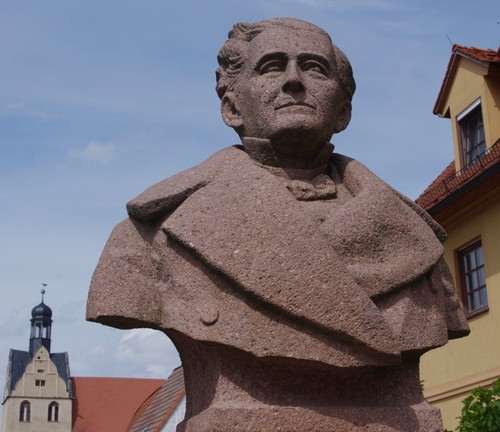
Statue of Carl Loewe
We find reflective passages alongside dramatic confrontation, and contrasting tempi and harmonic warmth underline moments of introspection. This ballad unfolds like a historical scene, almost operatic in scale.
In this ballad and throughout his compositions, the piano serves several symbolic and structural functions. For one, Loewe uses it for atmospheric painting, depicting night scenes, rivers, and forests.
Repeated figures provide motivic identity, such as the galloping horses, footsteps, or even fate. And psychological aspects are conveyed through harmonic shifts that reflect fear, guilt, or revelation. As a commentator wrote, “Unlike purely supportive accompaniment, the piano often anticipates events or comments on them, creating a dual narrative layer.”
Carl Loewe: 3 Balladen, Op. 44: No. 3. Der Totentanz (Roman Trekel, baritone; Daniel Heide, piano)
Loewe’s Legacy
In terms of singing, the performer must take on different functions, appearing as narrator, actor, and sometimes multiple characters within a single work. This requires a different set of skills from traditional Lied interpretation.
Loewe never achieved the enduring international fame of Schubert, but his influence on German narrative song is important. By establishing the ballad as a serious musical genre capable of sustained dramatic development, Loewe is recognised for his unique contributions to Romantic musical storytelling.
For more of the best in classical music, sign up for our E-Newsletter