Have you ever wondered what the most popular string quartets are?
There’s no easy objective way to answer that question, but one way to try is by looking at which YouTube videos of string quartet performances have garnered the most views over the past twenty years of YouTube’s existence.
We searched for string quartets, sorted by most viewed, and here’s what we found.
But first, a few caveats…
- If a video only consisted of audio with a static image or a score, we didn’t count it. We wanted to focus on video performances today, not audio.
- We didn’t count electric violin repertoire; we stuck with acoustic instruments.
- We also didn’t count pop music rearranged for string quartet. The arrangements of pop songs that are played on Bridgerton are great fun, but today we wanted to focus on traditional repertoire.
So with all that said, here in reverse countdown order are seven of the most popular string quartet videos on YouTube, as of early 2026.
We promise you, there are some surprises.
7. Ravel String Quartet
870k views
Ravel was just 28 years old when he wrote his impeccably crafted string quartet.
The second movement is a fiery scherzo featuring bursts of pizzicato fireworks. (That’s the movement featured in this particular video.)
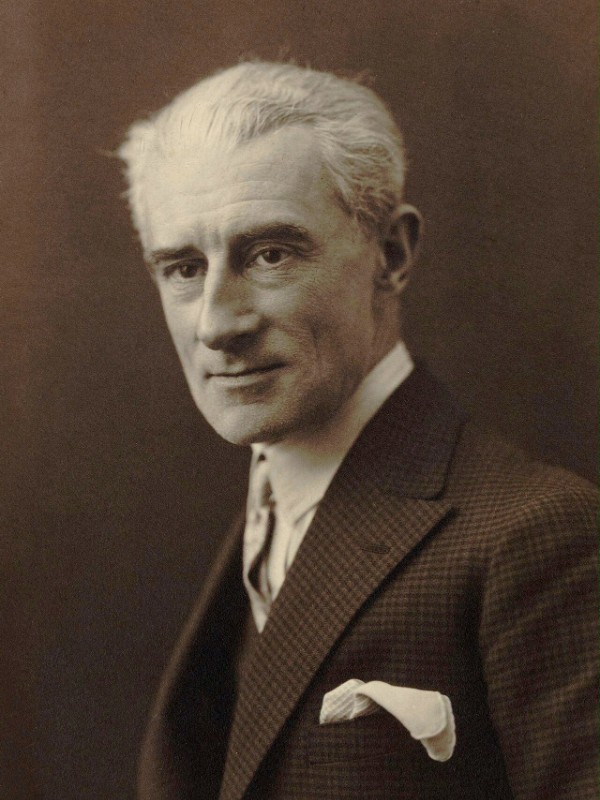
Maurice Ravel in 1925
Its fascinating colour and texture also foreshadow how Ravel’s genius for orchestration would develop over the course of his career.
The quartet was not an immediate success at its premiere. Critics were lukewarm, noting the debt it owed to Claude Debussy’s string quartet from ten years earlier, and fretting about its “vagueness of significance, incoherence, and weird harmonic eccentricities.”
However, it kept being programmed and played, and today it is widely considered one of the great string quartets of the twentieth century.
According to the YouTube heat map, the most popular part of this video is the first few seconds. That’s understandable, since the opening contains that unforgettable plucky theme.
6. Schubert String Quartet No. 14
1.2 million views
In 1824, Franz Schubert was 27 years old and staring down the barrel of his own mortality. Two years earlier, he had contracted syphilis, and the illness was haunting his thoughts and music.
One of the pieces born out of his anxiety was “Death and the Maiden” quartet, one of the most searing works in the entire chamber repertoire.
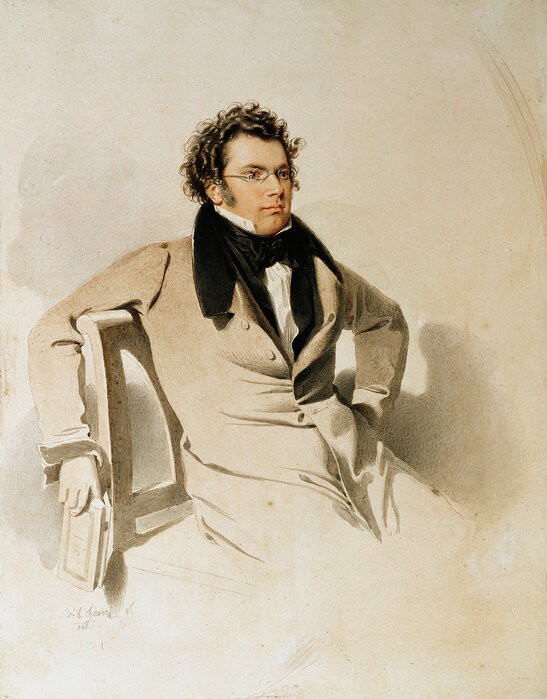
Franz Schubert
The quartet’s dramatic nickname comes from the second movement, where Schubert transforms the melody of his earlier song “Der Tod und das Mädchen” (Death and the Maiden) into a set of variations.
The outer movements rage with a stormy intensity, while the slow movement contains one of the most moving meditations on death in all of classical music.
The quartet was put away for two years after it was written. Its premiere was at a private home in 1826. It wasn’t published until after Schubert died. It wasn’t composed for money or fame; it was composed simply because Schubert had to express himself.
Today, it resonates with listeners for its blend of despair and defiance.
5. Stockhausen “Helicopter String Quartet”
1.3 million views
Yes, this is exactly what it sounds like: a piece written for string quartet being played in four helicopters.
Karlheinz Stockhausen was one of the most polarising composers of the twentieth century, and works like his Helicopter String Quartet are why.
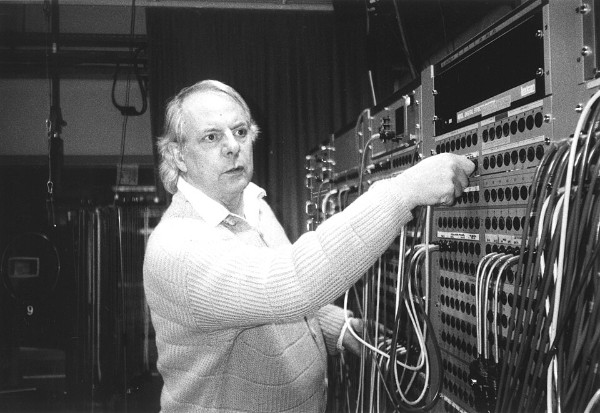
Karlheinz Stockhausen
Conceived in 1993 as part of his epic seven-opera cycle Licht, the piece consists of four string quartet members performing in four separate helicopters. They listen to each other via headphones, and the piece is mixed for the audience, who watch live from an auditorium.
Stockhausen dreamed of making the tremolo sounds resemble the whirring of the blades.
As you can imagine, the piece is incredibly expensive to mount. It is also objectively unhinged.
However, that quality clearly makes it perfect for a YouTube video. It really is one of those things that you have to see to believe.
4. Glass String Quartet No. 3, “Mishima”
1.5 million views
Philip Glass is one of the most famous living composers. His calling card is his propulsive minimalist style.
His third string quartet began life as music for Paul Schrader’s 1985 film Mishima: A Life in Four Chapters, a biopic of the Japanese author Yukio Mishima.
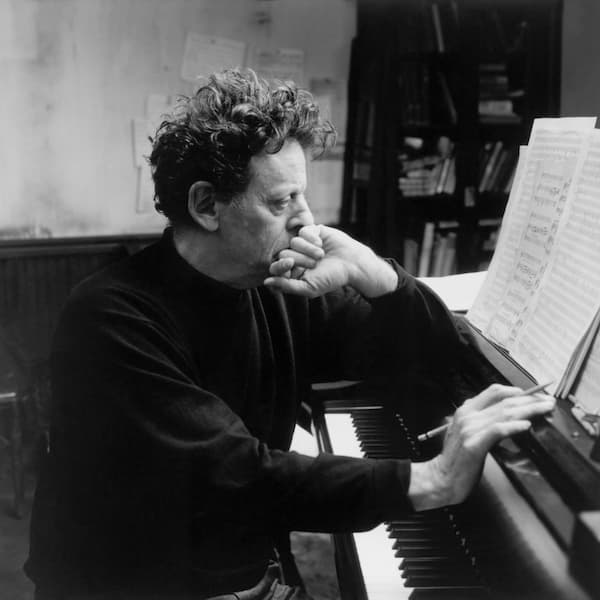
Philip Glass
Glass arranged six movements from the film score into a quartet, each movement brief and tightly structured.
The music alternates between shimmering stillness and driving pulse.
Although the music is (by design) repetitive, it’s also deeply, strangely touching.
Interestingly, according to the YouTube heat map of where people have rewound to, there is no spike anywhere. Listeners take the movement in as a whole.
3. Beethoven String Quartet Op. 59, No.1, “Razumovsky”
1.6 million views
When Count Andrey Razumovsky, the Russian ambassador to Vienna, commissioned Beethoven to write a set of string quartets in 1806, he couldn’t have begun to imagine the impact the works would have on the history of chamber music.
Beethoven’s three Razumovsky quartets pushed the boundaries of the genteel attitude toward quartets set by Haydn and Mozart, paving the way for the Romantic Era by creating music that was symphonic in both scale and emotional impact.
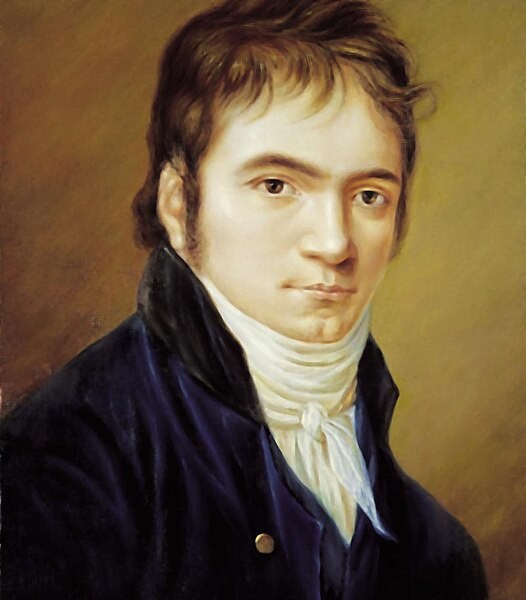
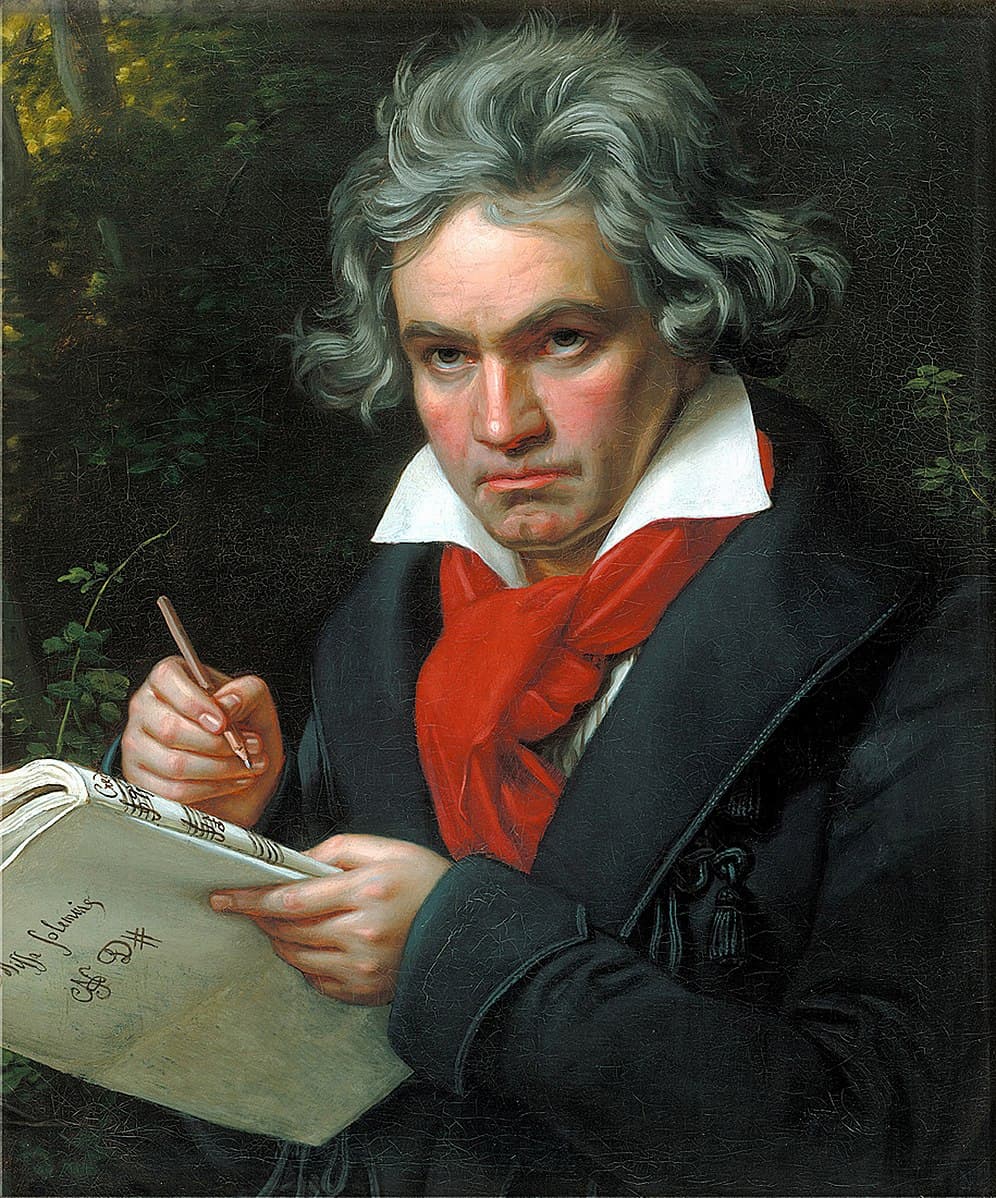
Christian Honeman: Ludwig van Beethoven, 1803 (Beethovenhaus Bonn)
The first of the set, Op. 59 No. 1, is a massive emotional journey. Like the others in the set, it is so large and so complicated that it takes professional musicians to play (or very talented, devoted amateurs with lots and lots of rehearsal time).
Early audiences were baffled by what they heard. Violinist Ignaz Schuppanzigh’s quartet, who premiered the quartets, reportedly struggled to get the works under their fingers.
According to legend, when he heard about Schuppanzigh’s complaints, Beethoven reportedly said, “Does he really believe that I think about his silly fiddle when the muse strikes me to compose?”
That defiant spirit clearly still speaks to modern audiences.
2. Haydn String Quartet No. 62; Op. 76, No. 3, “Emperor”
2.1 million views
Joseph Haydn is called the “father of the string quartet” for a reason: he wrote some of the first string quartets, and over the course of his career, composed nearly seventy of them.
The Op. 76, No. 3 in C major, nicknamed the “Emperor”, is number 62. It contains one of the most famous examples of theme and variations in classical music history.
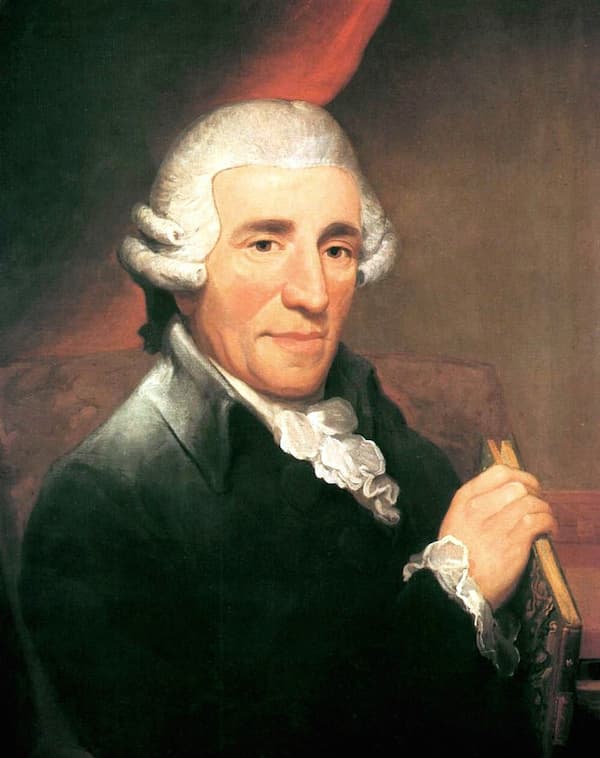
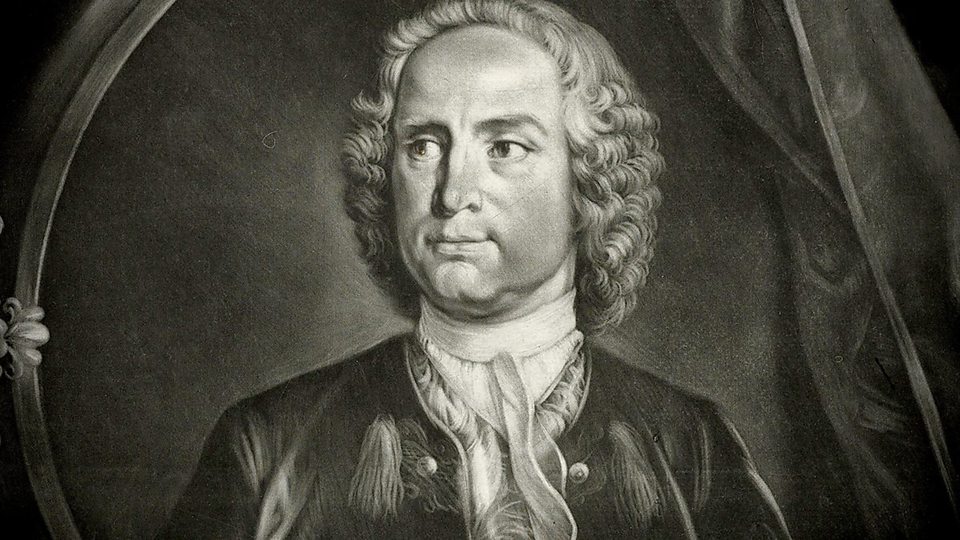
Thomas Hardy: Franz Joseph Haydn, ca. 1791 (London: Royal College of Music Museum of Instruments)
The second movement presents a noble hymnlike melody, with each instrument taking turns “singing” the theme.
Haydn originally wrote it as an anthem in tribute to the Austrian Emperor Francis II. It later became the German national anthem, Deutschlandlied.
The music’s cultural impact, as well as its sheer beauty and importance in the history of the development of the genre, helps explain why it’s at number two on this list.
However, only one work can top the list, and if you’re a classical musician, you knew in your bones this was coming…
1. Pachelbel Canon
11 million views
The runaway champion of “the most popular string quartet” on YouTube is Johann Pachelbel’s Canon in D.
That said, we acknowledge we’re stretching the definition of string quartet here a bit, since the Pachelbel was written for three violins and basso continuo instead of the modern instrumentation of two violins, viola, and cello.
So if you’re one of the classical musicians who break out in hives when listening to Pachelbel’s Canon, feel free to pretend that Haydn won the countdown!
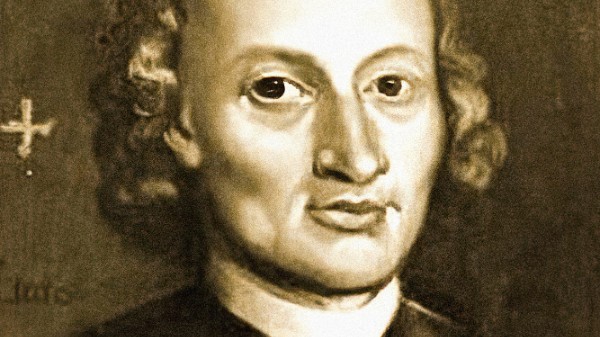
Johann Pachelbel
The story of this work is wild. It was written in the late seventeenth century, then languished in obscurity for over two hundred years.
It was rediscovered in the early twentieth century and published in 1919, but it only became a staple of the repertoire after a couple of recordings went viral in the late 1960s. People heard it on the radio and lined up outside record shops to buy copies.
The Canon quickly became a staple at weddings and on soundtracks, and although many classical musicians feel it’s overplayed, its popularity simply cannot be denied.
Conclusion
From Pachelbel’s Baroque ground bass to Stockhausen’s midair experiments, the string quartet has proven itself to be endlessly adaptable over centuries.
Taken together, these pieces, written over the course of three hundred years, have attracted millions and millions of YouTube views.
Despite all the handwringing about the future of classical music, the popularity of these performances proves that there will always be something special about what happens when a string quartet sits down to play.
For more of the best in classical music, sign up for our E-Newsletter