British composer Andrew Downes (1950–2023) came from a musical family. After completing his music studies at St John’s College, Cambridge, he studied at the Royal College of Music with Herbert Howells. He combined composition with teaching when he founded the School of Composition and Creative Studies at the Birmingham School of Music (now the Royal Birmingham Conservatoire), serving as its head for 30 years. At his retirement, he focused entirely on composition, with an opera, 6 symphonies, many concertos, and chamber works to his credit. He has also written song cycles, piano music, and many choral and sacred works.

Andrew Downes
All of that is the basic story, but what it doesn’t say is what amazing musical works Andrew Downes created for his listeners. As the first release of a projected three-CD project of Downes’ music, Andrew Downes: A St Luke Passion and Sacred Choral Works is a wonderful introduction to music by someone we might not have ever heard of.
We spoke with musicologist David Trippett, 19th-century scholar, chair of the Faculty of Music at Cambridge, and Fellow of Christ’s College, Cambridge, who directed the Philharmonia Voices and Orchestra on this new recording. He has long-standing knowledge of Downes’ music, not least because he was Downes’ son-in-law. He also conducted a performance of Downes’ opera Far From the Madding Crowd, and has performed many of Downes’ works for solo piano, the song cycles, and chamber works, so he’s familiar with a great deal of Downes’ output.
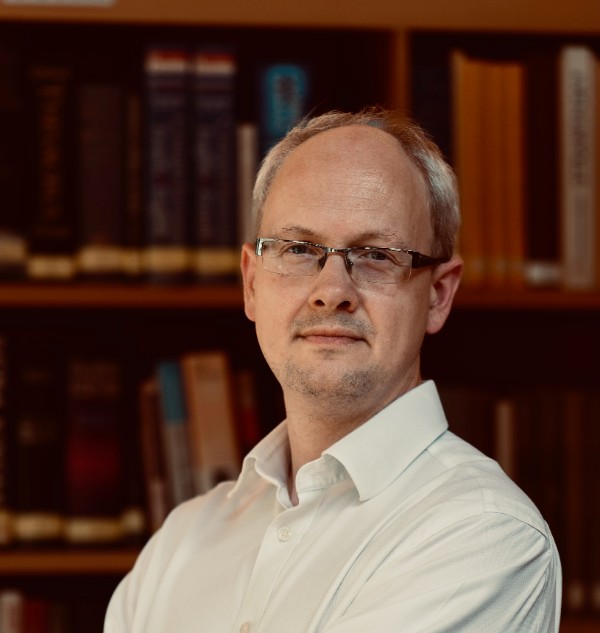
David Trippett
We talked about the role of choral music in Downes’ repertoire and how central it was to his musical identity. He was an accomplished countertenor, very much experienced in the English choral tradition, and early in his career, he worked as a Handelian countertenor with Dietrich Fischer-Dieskau. This vocal career only lasted a brief time before his health led him to put performance behind him and return to the world of composition.
Downes’ center of gravity was the voice, and he wrote some of the most interesting modern choral music around. However, as a tonal composer in the 1970s when everyone was experimenting with Boulezian modernism, he found it difficult to break through, and stylistically, this placed him on a kind of musical periphery. That said, commissions from the Three Choirs Festival, the Czech Philharmonic, ensembles in Vienna and Prague, and numerous festivals in America offered other routes to success, albeit largely outside the UK.
What’s interesting about his career was his involvement not only in English music but also in the music of the world. He connected his school of music with the Calcutta School of Music and found interesting parallels between Western and Indian music. The medieval Lydian mode, which includes a raised fourth (C-D-E-F#-G-A-B-C), had its parallel in the north Indian Raga Yaman. It also appears in jazz (such as in John Coltrane’s Giant Steps). All of this was grist to Downes’ mill: his music includes medieval modes, polyrhythms (as in African music), jazz progressions, organum, open octaves, in short, he used all the music tools he could from ancient, eastern, western, and non-western music.
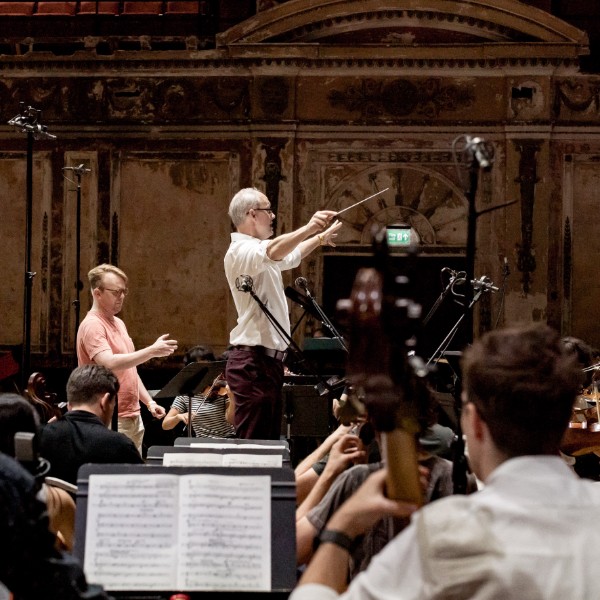
A recording session © Christopher Jonas
This first recording, conducted by David Trippett, opens with A St Luke Passion, commissioned by the Civic Choir of Wolverhampton. The work was to be part of a program with Benjamin Britten’s cantata St Nicolas, so Downes kept the same instrumentation: tenor soloist, choir, strings, keyboard, and percussion. The text was selected by the composer and his wife, Cynthia Downes, from the Gospel According to Luke, from the Tenebrae Responsories, and from the Apostles’ Creed. The net result is a complex and modern sacred work that never fails to astound.
Downes’ music is strongly influenced by contemporary sacred music of composers such as Leonard Bernstein in its use of strong block rhythms, and by African music in its use of mixed, asymmetrical meters. As the composer noted, in some sections, ‘each player has a regular pattern, but in a different time from everyone else’, which gives the music both a raucous edge and a rhythmic pull.
Part 1 ends with a description of the crucifixion, where the strong metallic hammering on an anvil gives the nailing to the cross a direct visceral effect. It’s invasive, it’s upsetting, and it’s seemingly never-ending. This is an aspect of the crucifixion that most music settings gloss over. Here, Downes makes it a showstopping sound.
Part 2 is about the Resurrection. It opens on Sunday morning when Mary Magdalene and Mary, the mother of James, come to find the empty tomb. Jesus appears to the mourning apostles, having risen from the dead on the third day, as prophesied, and all celebrate. The second part closes with the Credo.
By ending the work with the Tenebrae Responsories and then the Credo, a link brings the music to the modern day. This isn’t the ancient past; this is today, and a celebration of today’s beliefs.
This recording of Downes’ A St Luke Passion is combined with a survey of the composer’s a cappella vocal compositions spanning his career. Works such as his setting of Psalm 23, ‘The Lord is my Shepherd’, written in 2000 for the Runnymede Church Choirs Association, show the breadth of his style, with monophonic chanting alternating with four-part harmony. As a look back to another old church tradition, it also includes passages of organum, in which a line is doubled in parallel fourths, showing the musical link between monophony and polyphony.
A jump back in time brings us his setting of the nativity responsorial ‘O Magnum Mysterium’. It was written in 1969 as a motet, before Downes started at Cambridge. It was performed that year by the Midland Boy Singers at Wigmore Hall, with the composer as countertenor, receiving a callout in The Times’ review of the concert.
Andrew Downes: O Magnum Mysterium Motet
Downes returned to the piece after his studies at the Royal College of Music with Howells, using his motet setting as the basis for a mass setting, and we start to see how his wonderful control over dissonance was refined and how he incorporated non-sacred styles into the mass setting. Trippett compared it to Nina Simone meeting the Pope as it includes ‘full blues scales in the Agnus Dei, mashing major and minor 3rds in the Benedictus, and closing the Sanctus with a sustained half-diminished 7th’.
Andrew Downes: O Magnum Mysterium Mass – Benedictus
This recording is only a sample of the many choral works Downes wrote over the course of his life. He composed every day to the end of his life, and his voice in English vocal music will rarely be matched.
Prima Facie Records will be releasing two other recordings of Andrew Downes’ vocal music later this year. In June, two secular cantatas, The Marshes of Glynn and Song of the Prairies, for tenor soloist, choir, and orchestra and in January 2027, New Dawn, an oratorio for SATB soloists, chorus, and large orchestra, will appear.
Downes wanted his listeners to connect with the music emotionally as he did. His music isn’t clever or imitative of other composers, but is filled with a love of the voice that is matched by few other composers. He understood the voice, he understood text settings, and, what might be equally important, he understood the spaces where voices performed. His music gives the architecture of the churches and spaces where sacred music is performed its own breathing room. He grants the architecture its own spatial line both through his music and in the rests, where the walls get their turn to respond.
Downes’ symphonies and overtures have been performed by the Czech Philharmonic, and Trippett’s 3-CD set of Downes’ choral music brings us music from someone who needs to be rediscovered. Little of Downes’ music was published in his lifetime, and it’s his cache of more than 120 vocal and choral works that these recordings bring into the light. Trippett described Downes as having ‘a unique voice that blends deeply choral musical instincts to a creative eclecticism that sparks and surprises in its imaginative reach’. Discover this lost master of the north in these new recordings.
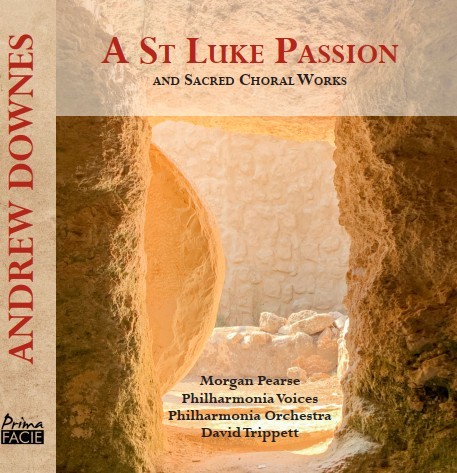
Andrew Downes: A St Luke Passion and Sacred Choral Works
Morgan Pearse, baritone; Philharmonia Voices, Philharmonia Orchestra; David Trippett, cond.
Prima Facie Records PFCD281
Release date: 27 March 2026
For more of the best in classical music, sign up for our E-Newsletter