Maurice Ravel’s Gaspard de la nuit is widely regarded as one of the pinnacles of piano literature. It exemplifies the symbiosis between literary inspiration and musical innovation in the early twentieth century.
Based on Aloysius Bertrand’s 1842 collection Gaspard de la nuit: Fantaisies à la manière de Rembrandt et de Callot, Ravel’s work translates the darkly fantastic and vividly imagined world of Romantic prose poetry into a virtuosic pianistic landscape.
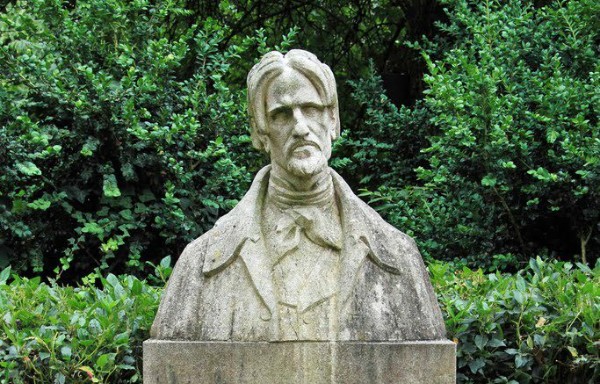
Statue of Aloysius Bertrand
The composition’s three movements, “Ondine”, “Le Gibet”, and “Scarbo”, not only demonstrate technical ingenuity but also manifest a nuanced interpretive engagement with the poems’ thematic, structural, and imagistic content.
To commemorate Ravel’s passing on 28 December 1937, let us explore the dialogue between text and music, between early Romantic literary symbolism and early twentieth-century impressionist soundscapes.
Maurice Ravel: Gaspard de la nuit
Tableaux of Shadow and Seduction
Aloysius Bertrand (1807-1841), though relatively obscure in his own time, is now recognised as a pioneering figure of French prose poetry. His verse emphasised vivid imagery, rhythmic prose, and the fusion of narrative and pictorial representation.
His collection Gaspard de la nuit is structured around evocative tableaux reminiscent of the etchings of Jacques Callot and the chiaroscuro of Rembrandt, blending macabre imagery with dreamlike landscapes.
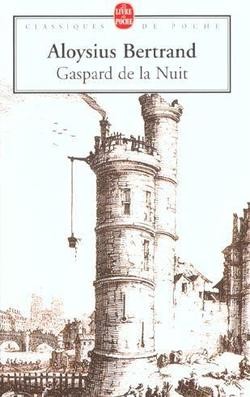
Aloysius Bertrand’s Gaspard de la Nuit
The poem “Ondine” presents the reader with a luminous, watery seductress whose ethereal presence blurs boundaries between desire and danger.
“On the wave’s trembling crest, she glides, a form of silver light, her eyes deep as midnight seas, her song both a lure and a threat.”
Reflections in Sound
Ravel’s musical setting of “Ondine” captures this duality through shimmering arpeggios and fluid figurations that mimic the movement of water and the beguiling, seductive nature of the nymph.
The piece opens with cascading figuration in the right hand that alternates between diatonic and chromatic motion, creating a sense of constantly shifting reflections, while the left hand provides a subtle, undulating accompaniment that evokes the gentle but insistent movement of water.
As Arbie Orenstein writes, “the fluidity of Ravel’s textures mirrors the prose’s syntactic continuity. There are a few abrupt pauses, no conventional phrase endings, only a perpetually undulating line that mirrors the nymph’s movement across the water.”
Enchanting and Lethal
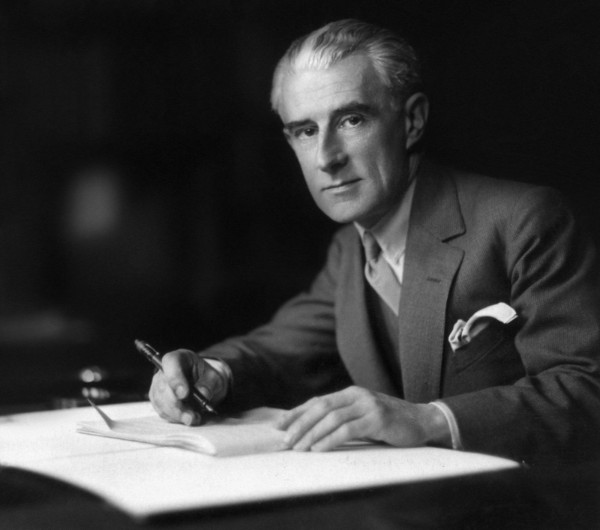
Maurice Ravel, c. 1928
Importantly, Ravel does not merely illustrate Bertrand’s imagery but transforms it by engaging with the poem’s psychological dimension. The ostensible beauty of Ondine’s world is fraught with danger, a tension Ravel conveys through sudden harmonic shifts and moments of dissonance within otherwise lyrical arpeggios.
The interplay between major and minor modalities suggests the nymph’s dual nature as enchanting yet potentially lethal, reflecting Bertrand’s own ambivalence. As Steven Huebner calls it, “beauty and peril are inseparable.”
Moreover, the pianistic textures emulate the sensuality of Bertrand’s prose without resorting to literal programmatic depiction. Rapid repeated notes, cross-hand figurations, and extreme dynamic contrasts evoke the nymph’s inescapable allure and the peril implicit in human desire.
Maurice Ravel: Gaspard de la nuit, “Ondine”
Stasis and Desolation
The second movement, “Le Gibet,” presents a stark contrast both thematically and musically. Bertrand’s poem describes a desolate landscape dominated by the image of a hanged man, whose body sways endlessly on the gibbet, casting a grotesque shadow over the surrounding plain.
“The sun burns low; the black silhouette swings in rhythm with the wind. Silence and despair pervade the horizon, save for the distant tolling of a bell.”
Ravel’s interpretation is unflinchingly faithful to this atmosphere of horror and stasis. The movement is characterised by the unrelenting tolling of a B-flat octave in the low register, an ostinato that functions as a musical representation of the gibbet’s motion and the poem’s persistent morbidity.
Sound of Decay
Unlike “Ondine,” here Ravel strips away ornamental flourish, presenting a sparse, almost skeletal texture that emphasises immobility, emptiness, and decay. The harmonic palette is notably restrained. Orenstein writes, “the static pedal point and minimalistic melodic contour contribute to the impression of vast desolation, evoking Bertrand’s barren horizon.”
Furthermore, Ravel’s use of rhythmic stasis in “Le Gibet” reflects the poem’s narrative suspension. The ostinato, by its repetitive nature, suggests the inescapable presence of death, echoing Bertrand’s attention to temporal and spatial suspension.
Yet, Ravel does introduce psychological nuance, revealing the underlying anxiety and inevitability implicit in Bertrand’s text. While the poem relies on visual and verbal imagery, Ravel conjures the same dread through temporal and harmonic manipulation, achieving an affective immediacy that prose alone cannot.
Maurice Ravel: Gaspard de la nuit, “Le Gibet”
Mercurial Terror
The third and final movement, “Scarbo,” presents perhaps the greatest challenge in translating text into music. Bertrand’s description of the impish, nocturnal dwarf Scarbo is dense with unpredictability and terror.
“A shadow flits across the moonlit walls, mocking, taunting; its laugh echoes in the rafters, never still, never silent. One dares not look, lest it vanish and reappear more cruelly.”
Ravel’s musical rendering mirrors this volatility with extreme virtuosity and structural unpredictability. The movement is characterised by rapid, repeated notes, sudden dynamic shifts, and capricious melodic leaps, all of which convey Scarbo’s mercurial nature.
Unlike “Ondine” or “Le Gibet,” where texture and harmony play the central role, in “Scarbo” rhythm and articulation dominate, creating a sense of musical instability that parallels the poem’s narrative tension.
Narrative Suspense
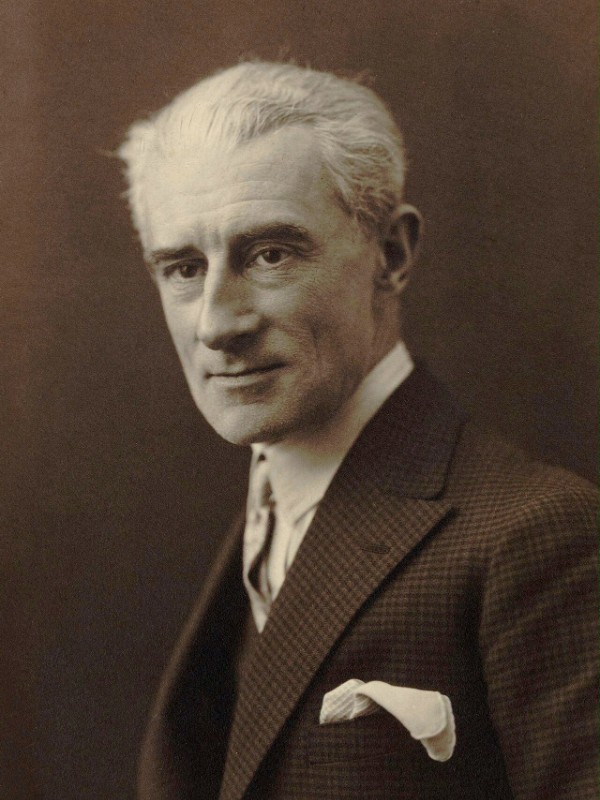
Maurice Ravel in 1925
The pianist becomes a medium through which Scarbo’s elusiveness is both performed and communicated to the listener, “embodying the poem’s psychological intensity through the physicality of performance.”
Analytically, “Scarbo” demonstrates Ravel’s engagement with literary temporality and narrative suspense. The poem’s episodic structure is mirrored in the music’s episodic phrasing.
Motifs appear briefly, vanish, and return unexpectedly, reflecting Bertrand’s textual strategy of elusiveness and surprise. Ravel’s harmonic language evokes the uncanny quality of Scarbo’s nocturnal exploits. The listener perceives Scarbo’s capricious menace in an experience “akin to Bertrand’s unsettling and visually vivid narrative.”
Maurice Ravel: Gaspard de la nuit, “Scarbo”
Beyond Illustration
Across all three movements, Ravel’s engagement with Bertrand’s poetry is notable not merely for illustrative fidelity but for interpretive depth. While the composer often takes direct inspiration from the poems’ imagery, he simultaneously exploits the unique temporal and affective capacities of music to expand and intensify the literary experience.
“Ondine” exemplifies lyrical fluidity and seduction, “Le Gibet” embodies stasis and desolation, and “Scarbo” conveys impish volatility and terror. Together, they form a cohesive psychological and aesthetic journey that mirrors the literary arc of Bertrand’s collection.
Ravel’s treatment of piano sonority, specifically his manipulation of texture, register, and articulation, reveals a “sophisticated understanding of how musical means can replicate and enhance the effects of literary technique, whether it be imagery, rhythm, or narrative suspense.”
Fin-de-Siècle Sensibilities
Scholars have suggested that the work exemplifies the broader cultural and aesthetic currents of fin-de-siècle France. Ravel’s fascination with literary sources, particularly the macabre and fantastic, aligns with Symbolist tendencies that sought to evoke mood, suggest narrative, and elicit emotional response through subtlety and nuance rather than overt representation.
Bertrand’s prose poetry, with its emphasis on tableau-like imagery and psychological suggestion, provides an ideal counterpart to this musical sensibility.
Ravel’s adaptation of Bertrand’s poems demonstrates not only technical mastery but also an “ethical and aesthetic engagement with literature, one that respects the integrity of the original text while exploring new expressive possibilities.”
Transcending Boundaries
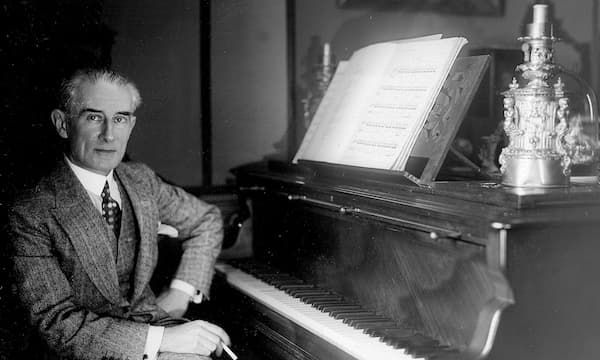
Maurice Ravel
Maurice Ravel’s Gaspard de la nuit represents a consummate synthesis of literary inspiration and musical ingenuity. Through his nuanced engagement with three of Aloysius Bertrand’s poems, Ravel translates visual, psychological, and narrative elements into a rich and highly demanding pianistic idiom.
Each movement negotiates the tension between fidelity to literary imagery and the unique capacities of music to evoke affect and temporality, resulting in a work that is simultaneously a technical tour de force and a profound act of interpretation.
By looking at the interrelations between Ravel’s compositional strategies and Bertrand’s literary techniques, we are able to appreciate the enduring power of poetic imagination to inspire musical creation. Gaspard de la nuit is a sounding testament to the enduring capacity of art to transcend medium-specific boundaries.
For more of the best in classical music, sign up for our E-Newsletter