Frances Nash Watson was a forgotten twentieth-century pianist who suffered unfathomable loss, proved to the world that a wealthy heiress could become a great artist, played chamber music with Einstein, and was so magnetic that First Lady Eleanor Roosevelt rescheduled a state dinner so it wouldn’t interfere with her friend’s National Symphony performance.
Today, we’re looking at the life and times of Frances Nash Watson.
Frances Nash’s Idyllic Childhood
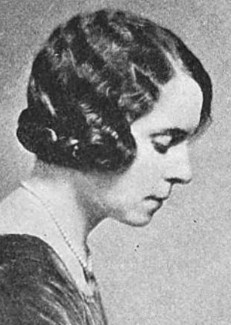
Frances Nash Watson
Frances Nash was born on 8 July 1890, in Omaha, Nebraska, to Edward Watrous Nash and Catherine Barbeau Nash.
Edward and Catherine had married in 1869. Over the decades, Edward had climbed the ranks of American society. By his middle age, he was a wealthy, well-respected, self-made businessman. He owned shares in banks, railroads, and other companies, and by the time he died, he was the president of the American Smelting and Refining Company.
Between 1870 and 1890, he and Catherine had eight children. Frances was the baby of the family.
When she was five years old, her mother heard piano music coming from the downstairs piano. She assumed that her son Fred, a piano student, had stayed home from school. She went to scold him, then discovered it was actually Frances playing by ear.
Family Tragedy
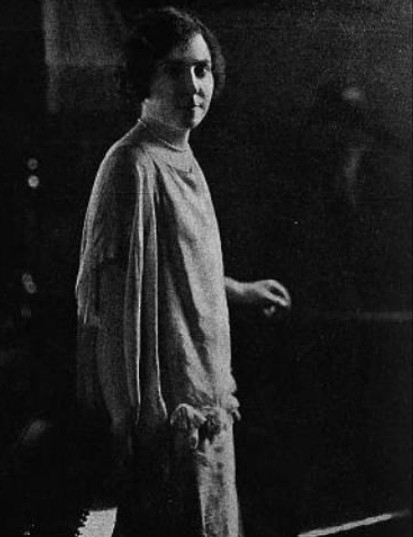
Frances Nash Watson
In 1904, two of her siblings died: her sister Sadie in April from an abscess in her ear and her brother Fred in August from diabetes.
Then, the following summer, her grief-stricken father had a stroke while dining with friends. Over the following weeks, his condition deteriorated. He died in July. Frances was only fifteen years old.
As if those deaths hadn’t been traumatising enough, in the spring of 1906, her beloved sister Esther – her closest companion – died of appendicitis.
Her mother kept the surviving family together and took control of Edward’s entire fortune. Within months, she was snapping up property in Omaha and turning a profit from real estate deals. She would prove to be a savvy businesswoman in her own right. It’s believed that she encouraged Frances’s career – or at least never stood in the way of it.
Deciding to Become a Great Pianist
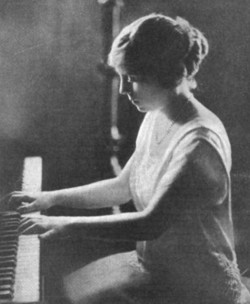
Frances Nash Watson
After her father’s death, Frances stayed in Omaha for two years before making a fateful, and gutsy, decision: she was going to try to become a virtuoso pianist.
It’s tempting to imagine that she was using her musical studies to escape the intense grief of losing so many members of her family in such a short span of time.
As a young woman, she studied at the prestigious Mount Vernon Seminary in Washington, D.C., and traveled to Munich and Berlin to study piano. While abroad, her teachers included Wolfgang Ruoff and Frank Wilczek.
According to American press clippings, she made her debut with the Berlin Philharmonic and Dresden Philharmonic in 1914. But when World War I broke out in August, she was forced to cut short her studies and return to America.
Throughout her life, she faced skepticism about her abilities. Some felt that due to her background as a multi-millionaire’s daughter, she was doomed to be nothing more than a dilettante.
She was determined to prove her naysayers wrong: “Everyone in this world should have a goal,” she told Musical America in 1915. “I decided to enter the professional field because in no other way would I hold myself to the highest standard of accomplishment. Inspiration is not sufficient.”
Musical Debuts and Triumphs
She made her American debut in 1915 with the Minneapolis Symphony when it passed through Omaha.
According to Musical America, she was shy and modest, hesitant to even give an interview:
“She is bashful… This was noticeable in her reception of the applause bestowed on her at her appearance with the Minneapolis orchestra. She would bow a stiff, boyish little bow and quickly disappear… Almost before her triumph was over, she was analysing her work with unsparing severity, and setting herself still higher goals.”
From there, she kicked off a tour of small towns in the Midwest. In 1916, she appeared at Carnegie Hall, and over the next few years, on the stages of many of America’s great orchestras. She was frequently asked to return. She also performed with famed string players Rebecca Clarke and May Mukle in a piano trio.
Her Marriage to Edwin Watson
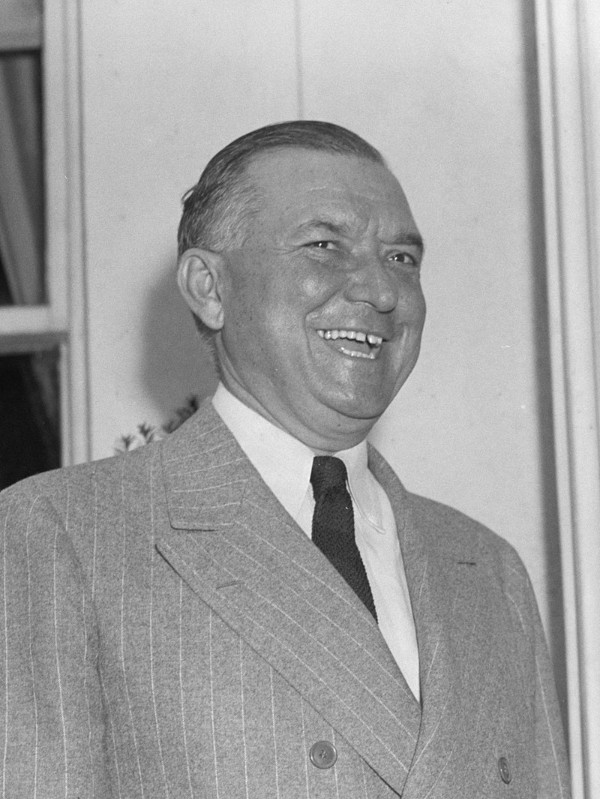
Edwin Watson
In 1920, when she was thirty, she found herself in Paris for a month-long vacation after a South American tour. While there, she dated fellow American Edwin “Pa” Watson.
He, too, had been the son of a businessman, and, despite early failures at West Point, he had pushed himself to succeed professionally. He served in World War I, earning two Silver Stars from the American government and the Croix de Guerre from France.
He was also a member of the United States diplomatic corps who had just helped to write the Treaty of Versailles that had brought the war to an end.
The two fell in love and decided to marry in Paris, and sent a cable back to America to let Frances’s mother know.
Piano roll recording of Frances’s playing
Meeting Queen Elisabeth of Belgium and Albert Einstein
Most women of the era gave up publicly performing after their marriages, especially if they had the social obligations of a diplomat’s wife, but Frances refused to do so.
In fact, while her husband served as a military attaché in Belgium after the war, she gained an important patron: Queen Elisabeth of Belgium, a well-known supporter of the arts and a violinist. (The famous Queen Elisabeth Competition in Brussels is named after her.)
According to her New York Times obituary, Frances once came to visit the queen and found another violinist present: an amateur named Albert Einstein.
It was reported that the trio became so engaged in their music that they played through for five hours without “the customary pause for tea.”
Joining the Roosevelt Administration
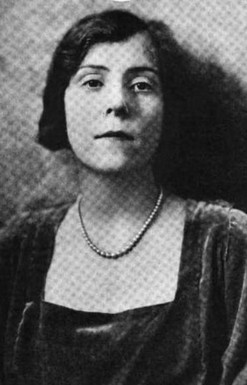
Frances Nash Watson
In 1933, Edwin Watson was hired by President Franklin Delano Roosevelt as one of his senior military aides. The couple left Europe and moved to a beautiful estate in Virginia, called Kenwood, near Thomas Jefferson’s Monticello.
Once again, despite her husband’s high profile, Frances refused to let her marriage stand in the way of her performing career. She was booked to play with the National Symphony in January 1935. Eleanor Roosevelt famously rescheduled a state dinner so it wouldn’t conflict with the concert.
She told one newspaper in 1935:
“I think of my career as simply a job. Each day I devote between four and five hours to practicing and then the rest of my time is my own to come and go as I please. Why should this be so difficult to combine with other phases of my life?”
She then pointedly observed:
“After all, just look at the numbers of women in Washington who work all day and still have a home and a full social calendar.”
She was renowned for her fashionable looks on concert platforms. In that same interview, she spoke about the aesthetics of the job:
“My first consideration, of course, is the comfort of the dress. I can’t play well in one that bothers me because it’s too tight or too baggy. And, of course, womanlike, if I feel that the lines are bad, that disturbs me, too. Consequently, I always have my dresses fitted sitting down so that the profile from the audience will be correct.”
She told an amusing anecdote:
“Once a friend of mine sent me a simply stunning dress from Paris that was much pleated around the waist and skirt. It was lovely as long as I was standing, but when I sat down, it bulged in all the wrong places.”
Piano roll recording of Frances’s playing
The Outbreak of World War II
Frances wasn’t the only member of the family admired by the Roosevelts. Her husband was also becoming a fixture in the new administration, receiving a string of promotions and accumulating political power in the run-up to World War II.
After the Japanese attack on Pearl Harbour in 1941, America entered the war. Edwin Watson, with his military and diplomatic experience, became more important to the White House than ever.
Watson had become one of Roosevelt’s most trusted advisors. He was at the President’s side during his most important decisions, including the launch of the Manhattan Project and the Tehran Conference. In June 1944, Roosevelt stayed at the Watsons’ for four days ahead of the invasion of Normandy.
The work was stressful and physically taxing, and tragically, Watson died of a cerebral haemorrhage in February of 1945. At the time, he was aboard the USS Quincy, returning from the Yalta Conference with Roosevelt.
Despite his own ailing health, the president attended Watson’s burial…and died weeks later himself.
In 1945, President Truman awarded Watson a posthumous Distinguished Service Medal, which Frances accepted on his behalf at the White House.
Conclusion
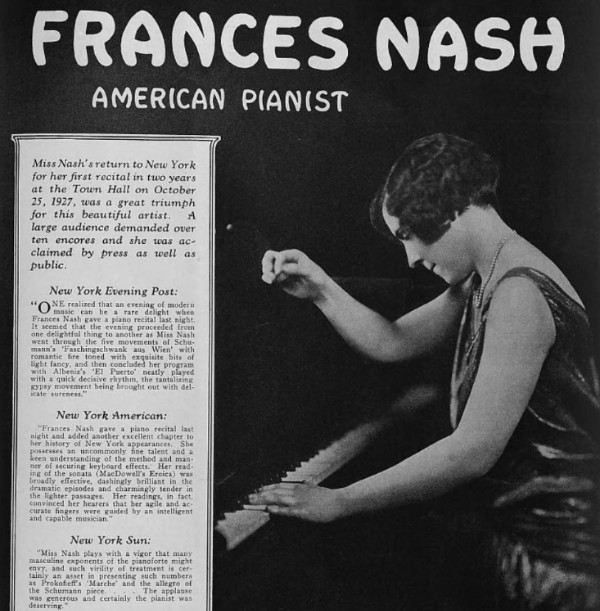
Frances stayed in Washington until her death in 1971, remaining active in musical circles until the end of her life.
She had lived an extraordinary life, refusing to stay in the box prescribed for women socialites of the era. She worked hard and was determined to hone and share her talents, no matter the circumstances.
For more of the best in classical music, sign up for our E-Newsletter