
Pyotr Ilyich Tchaikovsky was born into a large and close-knit Russian family in 1840.
Every composer’s family has a major impact on his life, but Tchaikovsky’s family had an especially major impact on his.
One brother became an early biographer and founded a house museum to commemorate him. A sister gave birth to a boy whom Tchaikovsky became obsessed with (and maybe fell in love with). A niece had an illegitimate baby, while a brother adopted that baby as his own. Several of his siblings had works dedicated to them.
Today, we’re looking at the fascinating lives of Tchaikovsky’s siblings, nieces, and nephews.
Zinayda Olkhovskaya (1829–1878)
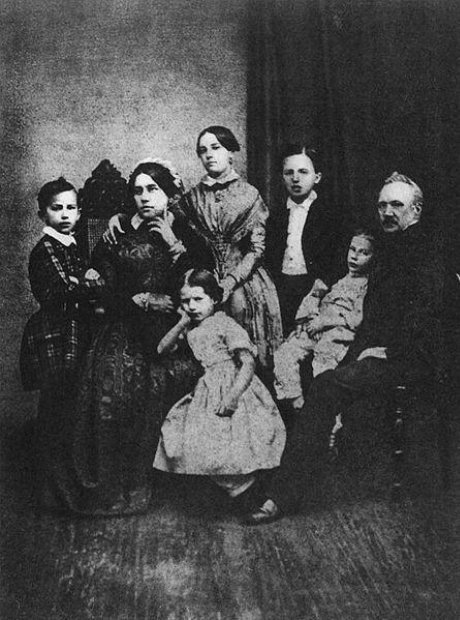
Tchaikovsky’s siblings
Tchaikovsky’s father, Ilya, was born in 1795 in the town of Slobodskoy, a thousand kilometres northeast of St. Petersburg. He became a successful mining engineer and metallurgist.
In September 1827, he married a young woman named Mariya Karlovna Keizer, and in 1829, they had a daughter whom they named Zinayda.
Unfortunately, tragedy struck the family just two years later, when Mariya died, leaving Ilya a widower.
In 1831, he married a woman named Aleksandra Andreyevna Assier, who became Zinayda’s stepmother.
We don’t know much about Zinayda’s life besides the fact that she married in 1854 when Tchaikovsky was fourteen. She went on to have five children and died in 1878.
Nikolay Tchaikovsky (1838–1911)
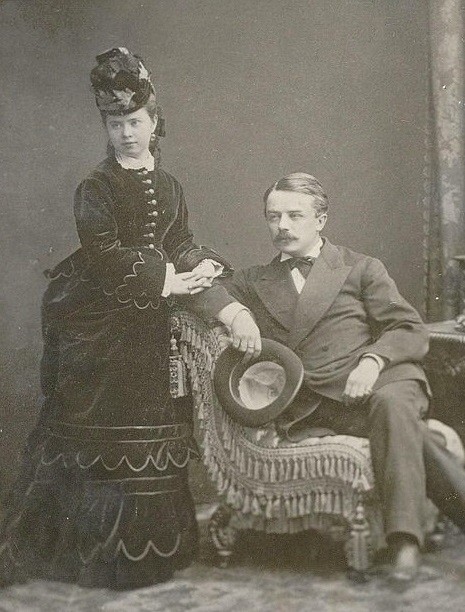
Nikolay Tchaikovsky and his wife Olga
Nikolay Tchaikovsky was Ilya and Aleksandra’s first surviving child, arriving in 1838.
He attended his father’s alma mater – the Saint Petersburg Mining College – but ultimately chose to make a living in the burgeoning Russian railroad industry instead.
In 1872, he married a woman named Olga, and in 1886, the couple adopted his unmarried niece’s illegitimate son, Georgy. Tchaikovsky was involved in arranging the adoption and even became Georgy’s godfather.
Nikolay became an important figure in preserving Tchaikovsky’s history when, in 1891, he re-established contact with the family governess. He wrote to Pyotr suggesting that the two meet for a visit, which they did. That governess would later go on to write down her priceless memories of Tchaikovsky’s earliest days and share them with his surviving brothers.
In the 1890s, Nikolay worked as the manager of a publishing house in Moscow. He teamed up with his brother Modest to gather material for Modest’s ambitious three-volume biography of their composer brother.
Nikolay died in 1911.
Pyotr Ilyich Tchaikovsky (1840-1893)
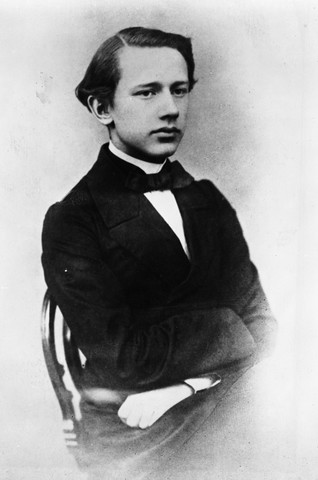
Pyotr Ilyich Tchaikovsky
Pyotr Tchaikovsky was born in 1840, making him his father’s third child and his mother’s second.
Aleksandra Davydova (1841/42–1891)
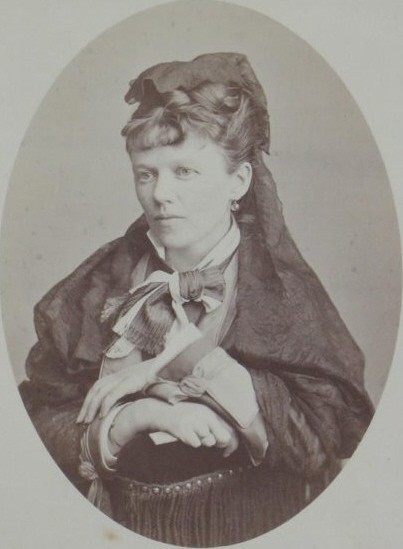
Aleksandra Davydova
Aleksandra was born in late December 1841 (using the Old Style of Russian dates) or January 1842 (using the New Style). Tchaikovsky referred to her by her nickname of Sasha.
In 1860, she married a man named Lev Davydov, whose career involved overseeing his family’s estates.
They had seven children together: Tatyana, Vera, Anna, Natalya, Dmitry, Vladimir (also known as Bob), and Yury. These nieces and nephews would play important roles in Tchaikovsky’s life.
Aleksandra and Lev’s eldest daughter, Tatyana, became pregnant with her piano teacher’s baby in 1883. Tchaikovsky and his brother Modest helped to cover up the scandalous pregnancy, and facilitated the baby boy’s adoption by his uncle Nikolay.
Another one of the daughters, Vera, ended up marrying composer Nikolai Rimsky-Korsakov’s cousin. Then, after she died, Vera’s sister Natalya married him, cementing the familial connection between the two great Russian composers.
Tchaikovsky encouraged Anna to marry Nikolay von Meck, the son of his wealthy and reclusive benefactress Nadezhda von Meck. The couple did indeed marry. However, by the time of the marriage, Nadezhda had become so reclusive that she didn’t even attend the wedding!
Aleksandra’s son Vladimir was the subject of one of the more disturbing chapters in Tchaikovsky’s life. Tchaikovsky found himself attracted to Vladimir (who went by the nickname Bob), and became deeply attached to him. In the 1880s and 1890s, Bob played an important role as a confidant to his famous uncle…a role that he was never emotionally equipped to take on. Tchaikovsky would dedicate his Sixth Symphony to Bob, and Bob would be present at his uncle’s deathbed. Bob died by suicide a decade later.
In later life, Bob’s mother, Aleksandra, began suffering from a morphine addiction, which Bob shared. In the wake of her health issues, Tchaikovsky’s formerly close relationship with Aleksandra became strained, and she died in 1891. Tchaikovsky read of her death in the paper just before he embarked on an American concert tour.
In 1870, he dedicated his Valse-Scherzo, op. 7 to her.
Tchaikovsky Valse-Scherzo Op.7 by Grace Li
Ippolit Tchaikovsky (1843–1927)
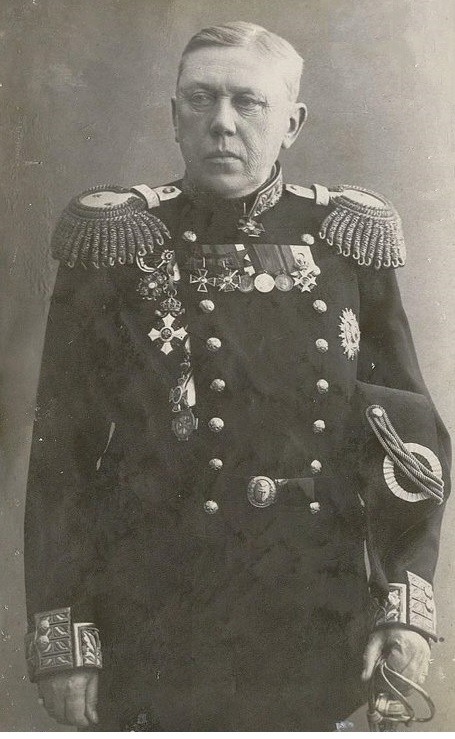
Ippolit Tchaikovsky
Ippolit was born in 1843. He spent his career in the Russian Navy, serving on ships on the Black and Baltic Seas. He became a steamship captain, and his resulting long absences from his family depressed him.
He married in 1869 and had one daughter.
In addition to his passion for the sea, Ippolit was, like his brother, fascinated by music. He owned an orchestrina (a kind of machine that simulated the sounds of an orchestra) so that he could hear some of his older brother’s compositions. He also opened his house up to traveling musicians.
After Tchaikovsky’s death, he moved to St. Petersburg, retiring in 1900. Toward the end of his life, he became curator at the Tchaikovsky House-Museum and, in 1923, published the first edition of his brother’s diaries.
Anatoly Tchaikovsky (1850–1915)
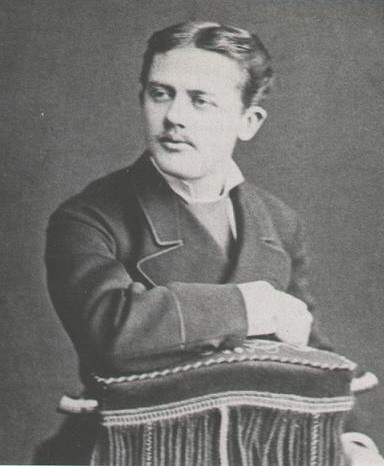
Anatoly Tchaikovsky
In 1850, Tchaikovsky’s mother gave birth to twins: Anatoly and Modest.
Tchaikovsky was ten years old when the twins were born. That age difference made him somewhat of a father figure to them, especially after their mother died in 1854.
In fact, their brother Modest would write that Tchaikovsky became “brother, mother, friend, mentor, and everything else in the world” to the twins after her death and the marriage of their older sister Aleksandra.
Anatoly followed in Tchaikovsky’s footsteps, attending the Imperial School of Jurisprudence. He ultimately became a successful prosecutor and politician.
He married in 1882 and had one child.
In 1878, Tchaikovsky dedicated his Six Romances, op. 38 to Anatoly.
Pyotr Il’yich Tchaikovsky: 6 Romances, Op. 38: No. 2. To bilo ranneyu vesnoy (It was in early spring) (Ljuba Kazarnovskaya, soprano; Ljuba Orfenova, piano)
Pyotr Il’yich Tchaikovsky: 6 Romances, Op. 38: No. 3. Sred’ shumnovo bala (Amid the din of the ball) (Ljuba Kazarnovskaya, soprano; Ljuba Orfenova, piano)
Modest Tchaikovsky (1850–1916)
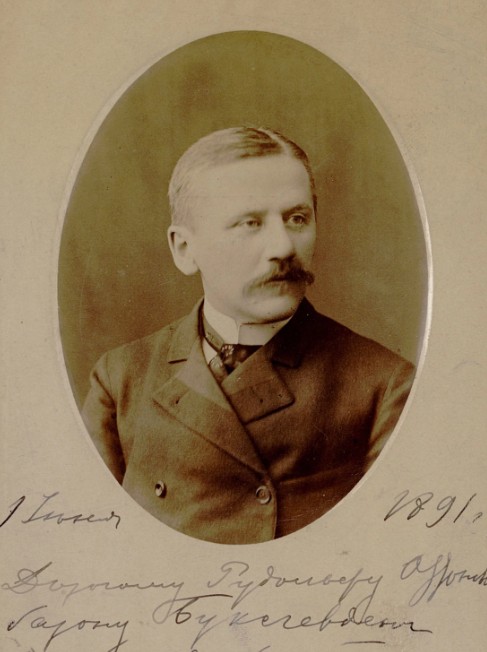
Modest Tchaikovsky
Modest Tchaikovsky was the sibling who was closest to Tchaikovsky, despite (or maybe because of) being the one furthest apart from him in age.
Initially, between the two twins, Tchaikovsky preferred Anatoly, which made Modest bond to his older brother all the more intensely.
But Tchaikovsky’s allegiances began shifting in the mid-1860s, when Modest confessed to his family that he was attracted to men…just as Tchaikovsky was. Anatoly was disgusted, but Modest and Tchaikovsky bonded over their shared orientation.
Like Tchaikovsky and Anatoly, Modest attended the Imperial School of Jurisprudence in St. Petersburg. But afterwards, he decided against pursuing a legal career, opting instead to become the tutor and companion to a deaf-mute pupil.
Modest dreamed of becoming an actor (a dream that Tchaikovsky scoffed at), but ultimately compromised by becoming a playwright. He wrote the libretti for Tchaikovsky’s operas The Queen of Spades and Iolanta.
Liza’s aria from Tchaikovsky’s opera The Queen of Spades
After Tchaikovsky died in 1893, a devastated Modest devoted his life to preserving his brother’s legacy.
He wrote a three-volume work that included a biography and selections from his brother’s letters. In it, Modest attempted to walk a fine line between an objective recounting of Tchaikovsky’s life and a personal memoir.
Modest Tchaikovsky was one of the founders of the Tchaikovsky House-Museum at Klin, located in a home that Tchaikovsky had been renting shortly before his death.
Modest died in January 1916, a year after his twin.
Tchaikovsky dedicated his Twelve Pieces, Op. 40 to Modest.
For more of the best in classical music, sign up for our E-Newsletter





Let us leave some love here, especially for the Tchaikovsky family. They have provided us with some deep sadness, for their times and their difficulties……And yet with so much that is light and inspiring in music. Thank you… from our hearts.