When music lovers think of the origins of opera, names like Claudio Monteverdi often come to mind.
However, before opera became dominated by male composers, a remarkable woman was composing groundbreaking works in the genre.
Francesca Caccini, born in Florence in 1587, was not just the first woman to compose an opera. She was also a court composer, a virtuoso singer, and a commanding female voice in a male-dominated world.
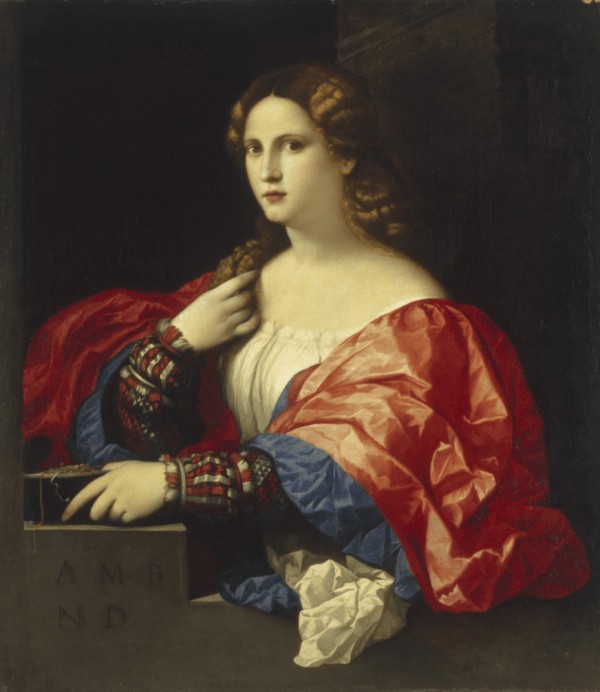
Francesca Caccini
Today, we’re looking at her many accomplishments and why she deserves the title “Godmother of Opera.”
Francesca Caccini’s Musical Family and Upbringing
Francesca Caccini was born on 18 September 1587 in Florence.
Her father was Giulio Caccini, a composer, teacher, tenor, and instrumentalist, famous today for his contributions to early opera.
Her mother, Lucia Gagnolanti, was a celebrated singer who, like Giulio, worked in the court of the Medici family.
The marriage produced at least two children: Francesca in 1587 and a daughter named Settima in 1591.
The sisters also had a brother named Pompeo, whose mysterious birth date has given rise to questions surrounding his parentage…but that’s a scandal for another day!
Tragically, mother Lucia died in January 1593.
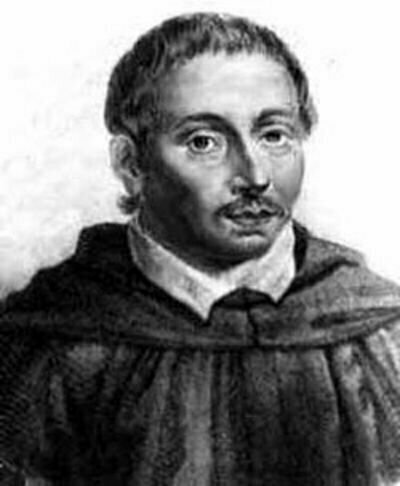
Giulio Caccini
A few years later, Giulio remarried another singer named Margherita Benevoli della Scala.
Every member of the family – from father Giulio, to mother Lucia, to daughters Francesca and Settima, to mysterious brother Pompeo, to stepmother Margherita – was incredibly musically talented.
Learn more about the women of the Caccini family.
Francesca Caccini’s Early Training
In addition to performing and composing, Giulio also worked as a music teacher. Consequently, the Caccini home would have been full of the music-making of his students, as well as his family.
It was in this environment that Francesca learned how to play keyboard, lute and guitar, and viol (a six-stringed stringed instrument commonly used in the Renaissance), as well as how to sing. She also learned a variety of languages.
Interestingly, her education did not stop at music. She also studied Latin, geometry, and philosophy, and she would later gain fame not just for her music, but for her poetry, too.
Francesca Caccini’s “Antri gelati”
The Beginning of Francesca Caccini’s Career
Giulio was ambitious and wanted his daughters to succeed as singers, which would bring the family economic and social success.
Francesca began appearing as a singer when she was just thirteen years old.
Soon she, her sister Settima, and her stepmother Margherita began appearing together as an ensemble. They became known as “le donne di Giulio Romano” (the ladies of Giulio of Rome).
Surviving documents attest that this ensemble performed for important guests and in religious ceremonies at the court between 1602 and 1612.
Francesca seems to have been especially popular, garnering the nickname “La Cecchina” (The Songbird).
The Medici Marriage
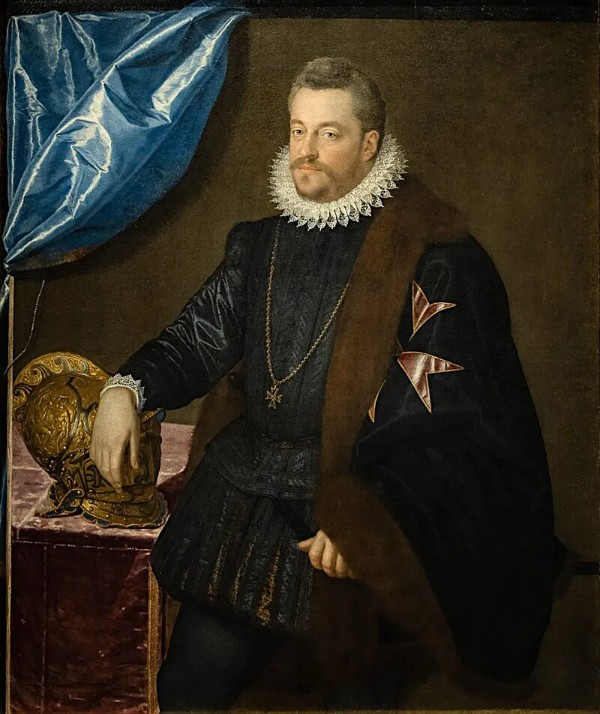
Ferdinando I de’ Medici
In October 1600, the family secured a prestigious assignment: singing in entertainments celebrating the marriage between Marie de’ Medici and Henri IV, King of France.
This particular wedding was no normal nuptial celebration. It was meant to showcase the vast wealth of the Medici family, which was desperately desired by the French court.
Accordingly, these weren’t just idle performances for aristocrats; they were demonstrations of economic and political power.
One of the performances the Caccinis took part in was a production of composer Jacopo Peri’s opera Euridice, the earliest surviving opera.
Giulio also provided parts of the score (in fact, he’d later quarrel with Peri about it).
It is believed that Francesca sang in this production, making her one of the first opera singers ever.
Jacopo Peri’s Euridice
Visiting the French Court
In 1604, when Francesca was seventeen, the family embarked on a visit to the French court.
Henri IV was especially stunned by her, calling her the greatest singer in France and offering her a job at the French court. The position would come with a large salary and a large dowry.
It was a tempting offer. Giulio wrote to Marie de’ Medici’s uncle, Grand Duke Ferdinando I, requesting permission to resign and relocate. But the Grand Duke refused.
Accordingly, the Caccini family stayed in Florence. That decision ended up keeping them at the birthplace of modern opera.
Officially Joining the Medici Court
Francesca Caccini
In 1607, the year she turned twenty, Francesca wrote music for the court’s Carnival celebration, “La stiava” (“The Slave Girl”).
The music made such a big impression that an offer of employment, independent of her father, was officially extended to her. She accepted and became the highest-paid musician at court.
In 1610, composer Claudio Monteverdi heard her perform and wrote to a friend, “I heard, in Florence, the daughter of Mr. G.R. (Guilio Romano Caccini) sing very well and play the lute, the guitar, and the harpsichord.”
Caccini’s First Marriage
In 1607, the same year she officially joined the court, she married a singer colleague named Giovanni Battista Signorini.
It was common practice at the time for employers to arrange marriages between members of the court, but we don’t know if this happened with Francesca and Giovanni.
In any case, Giovanni was not the star that his new wife was, and his compensation reflected it: he only earned thirteen scudi monthly, compared to her twenty!
They would have one child together: a daughter named Margherita. She was born years after the wedding in 1622, when Francesca was thirty-five. Her name was likely a tribute to her singer stepmother.
Francesca Caccini’s “Lasciatemi qui solo”
The Politics of the Court
During Francesca’s time at the court, which lasted for nearly twenty years between 1607 and 1626, Caccini’s responsibilities would have included singing, composing, and performing on various instruments, as well as teaching music to all members of the court, from aristocrats to servants.
Her intersecting identities of woman and exalted court composer are especially interesting given the political context surrounding her employment.
In 1609, two years into Francesca’s tenure, Grand Duke Ferdinando I died. His successor was his son, Cosimo II de’ Medici, who was still a teenager. He was also in poor health and extremely disinterested in governing.
Cosimo ended up dying young in 1621. His successor was his ten-year-old son, Ferdinando II.
During this time of political instability, Cosimo’s mother, Christine of Lorraine, became a hugely important figure and co-regent in the Medici court.
Francesca, in turn, became a valuable tool to telegraph to the court and its subjects that women were capable of excelling at professions, like political leadership, not usually considered to be feminine.
Francesca Caccini’s Work at the Medici Court
During these two decades, in addition to performing and teaching, Francesca also composed a great deal.
She began working with the grand-nephew of Michelangelo, a poet named Michelangelo Buonarroti the Younger, who became one of her best friends.
In 1618, she published a book of madrigals. It seems likely that she used the songs in it as pedagogical tools. It’s also believed that she wrote the words to most of the songs in the collection.
She also wrote five operas. Her only surviving one, La liberazione di Ruggiero dall’isola d’Alcina (“The Liberation of Ruggiero from the Island of Alcina”), dates from 1625, and has been described as “proto-feminist.”
La liberazione is believed to be the first opera written by a woman. It was also the first opera by a man or woman to be performed outside of Italy. Amazingly, the grand finale contained a ballet for horses!
Francesca Caccini’s La liberazione di Ruggiero dall’isola d’Alcina
Francesca Caccini’s Second Marriage
Francesca’s husband died in December 1626.
Soon after his death, Francesca left the service of the Medici family and moved to Lucca to work for Vincenzo Buonvisi, a member of the richest banking family in Europe.
There she quickly made an advantageous marriage to a fifty-something music-loving aristocrat named Tomaso Raffaelli, who was neighbours with Buonvisi.
Interestingly, scholar Suzanne G. Cusick has done a great deal of research on Raffaelli and has floated the theory that Raffaelli was a queer man. Marrying Francesca and granting her financial security would have been a way for him and Buonvisi to secure her invaluable musical services in the up-and-coming city of Lucca while also discouraging rumours about his own love life.
She had her second and final child in 1628, a son they named Tomaso.
Francesca Caccini’s Mysterious Final Years
Tomaso the elder died in 1634, leaving Francesca a widow for a second time.
He left his entire large estate to her, provided that she did not remarry and that she oversaw the education of their son.
She decided to return to Florence and work again under the surviving remnants of the Medici dynasty.
But for unknown reasons, she appears to have resigned from the court in 1637.
We aren’t entirely sure when she died, but records show that custody of her son passed to his paternal uncle in February 1645. This could either signal that a remarriage had occurred or that she died. In any case, there is no further trace of her in the historical record after this time.
Francesca Caccini’s Legacy Today
Without an extensive study of seventeenth-century Florentine music and culture, it is difficult to understand the full impact of Caccini’s career.
However, we do know that she was an integral figure not only in the history of opera, but in the history of classical music writ large.
Caccini’s work as a composer was politically and artistically important, and her performances prove that she was one of the godmothers of modern opera.
Without a doubt, she deserves to take her place in the pantheon of celebrated composers like Jacopo Peri and Claudio Monteverdi.
For more of the best in classical music, sign up for our E-Newsletter