The Musicantes Festival 2025, organized and produced by the Cultural Center of the University of Piura under the direction of Dr. Enrique Banús Irusta, continues to broaden its scope of contemporary musical creation in Peru. It provides a platform for composers who, although trained in the European academic tradition, have long lacked opportunities to showcase their works. In a cultural landscape still dominated by historical repertoire, Musicantes highlights living Peruvian composers, offering visibility and recognition for their creative voices.
Festival founder and composer Sadiel Cuentas explains that the idea for Musicantes arose from observing this imbalance. “In traditional programs, European works have always taken the spotlight, while Peruvian works appear only as brief additions,” he says. “Our goal is to reverse that logic and make Peruvian compositions the focus.”
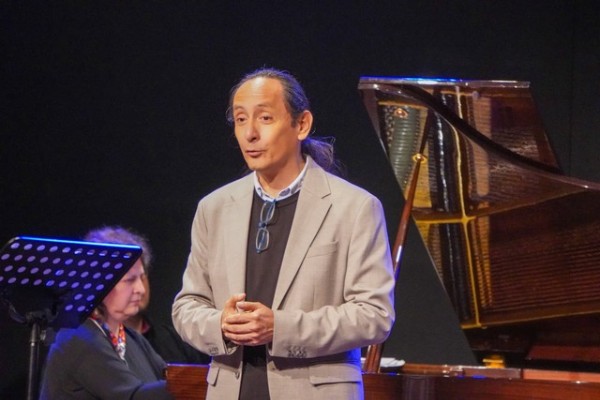
Sadiel Cuentas
Now in its third edition, the festival has generated an impressive wave of new works. Dozens of pieces have been commissioned and premiered through this platform, encouraging composers to take bold creative risks. “In the past,” Cuentas notes, “premiering a large-scale work like a sonata or symphony could feel uncertain in Peru. Today, there’s a stronger platform to encourage ambitious compositions.”
The 2025 edition marks a milestone with concerts in Cusco, Arequipa, and Lima, bringing contemporary music to new audiences. Among the most memorable was the premiere of the Hanaq Pachap Mass. Written in Quechua and inspired by the Hanaq Pachap Kusikuynin, the earliest known polyphonic hymn composed and published in the Americas, the new work creates a bridge between past and present, blending Andean spirituality with modern expression. “The Misa Hanaq Pachap is based on the hymn by Juan Pérez Bocanegra from the early 1600s,” says Cuentas. “Performing it in Cusco Cathedral, where Pérez Bocanegra served, was deeply moving. The work connects Peru’s pre-Columbian, colonial, and modern histories.”
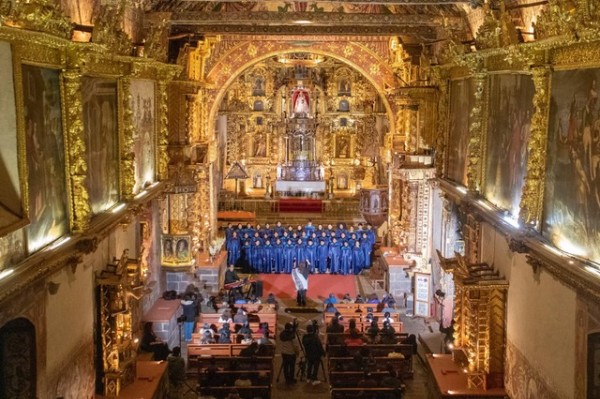
Cusco Cathedral
Another highlight was the world premiere of Sonata Andina by Gabriela Lena Frank, performed by Hong Kong pianist Po Sim Head. “The work was received with great enthusiasm and heartfelt emotion,” recalls Cuentas. “That performance embodied the spirit of Musicantes, the meeting of Peruvian tradition and contemporary creation.” Head’s interpretation revealed the rhythmic vitality and lyricism that define Frank’s music, resonating strongly with audiences.
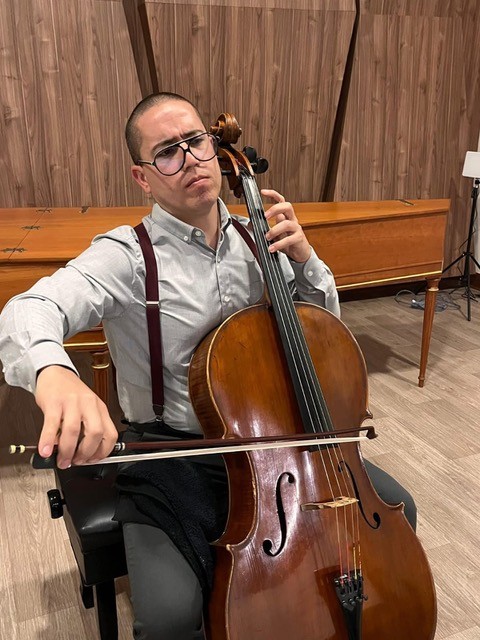
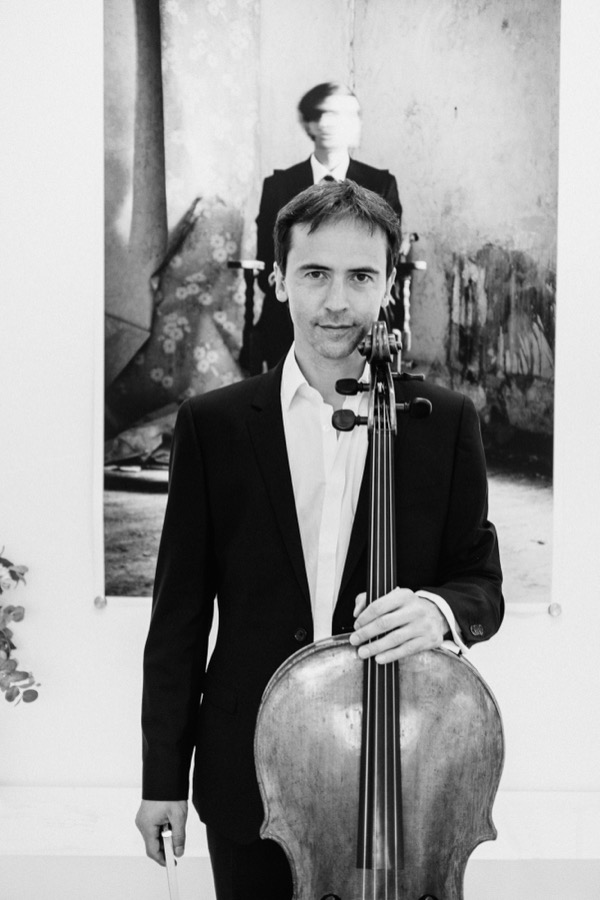
Iván Pierantozzi
Other performers also contributed to the festival’s distinctive voice. Cellist Iván Pierantozzi presented new solo works demanding both technical command and expressive depth. Since joining the festival, he has premiered nearly ten original Peruvian pieces, enriching the national cello repertoire. Harpsichordist Yana Piachonkina offered a concert combining Peruvian folklore and contemporary music on an instrument rarely heard in modern contexts, possibly the first Peruvian works written for harpsichord. The Tipataki String Quartet, led by María Elena Pacheco, continued to champion new works for string quartet, while the Ensemble of Laptops of Peru (ELP), directed by José Ignacio López, drew attention for its inventive performance with trumpeter José Paredes, blending acoustic and electronic sounds.
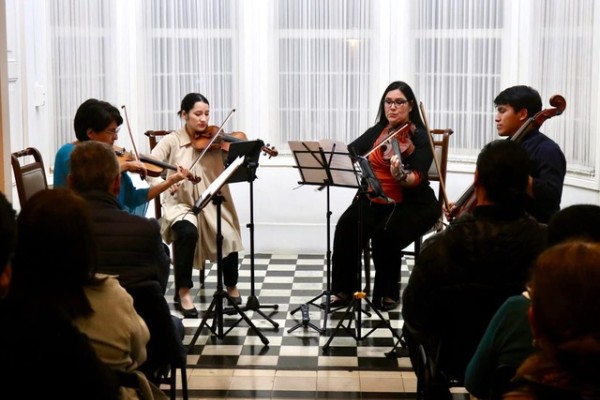
Tipataki String Quartet
These projects reflect a generation of composers exploring the balance between tonality and experimentation, searching for personal expression rooted in Peru’s identity yet open to the global soundscape. Beyond style, there is a shared desire to create music that speaks to contemporary realities.
Ecos de Machu Picchu. Manuel Carranza, compositor
Building a festival of this scope has not been easy. “Even though Peru has important theaters and orchestras, there was no structure dedicated to music by Peruvian composers trained in the classical tradition,” Cuentas explains. “There were no specific funds or festivals, so everything had to be built from scratch. Another challenge was earning people’s trust, especially in a climate where public projects have often faced scepticism. We had to demonstrate transparency from the start.”
Despite these challenges, Musicantes has achieved impressive results. “One of the biggest surprises was discovering that there really is a dedicated network of people,” Cuentas reflects. “Even without significant government funding, the human capital of performers, conductors, institutions, and composers is substantial. The festival helped strengthen those connections quickly.”
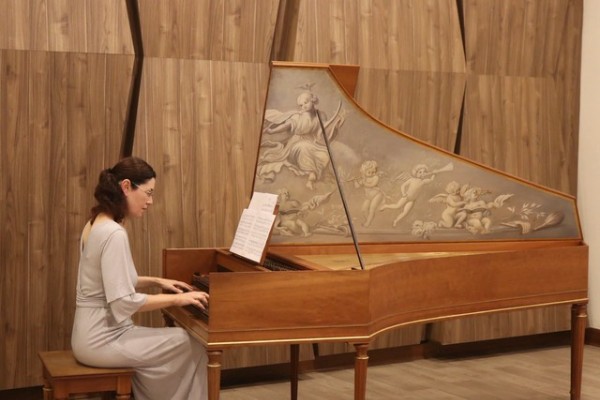
Yana Piachonkina
The second phase of Musicantes 2025 presents an ambitious agenda. Eight new works for youth orchestras will be premiered by the Chimbote Youth and Children’s Orchestra, linking contemporary composition with regional music education. Two major choral projects are also underway: Misa El Señor hizo las cosas, performed by the National Choir of Peru, and Misa Shipiba, sung by the Peruvian National Children’s Choir. Both explore Catholic liturgy through indigenous languages and sound worlds, expanding the nation’s choral repertoire. The festival will also feature premieres with the National Symphony Orchestra of Peru, including a Concerto for Piano and Strings by Cuentas, with Po Sim Head as soloist. Finally, chamber concerts in Piura and Arequipa will continue bringing contemporary music to broader audiences.
“The public’s response has been overwhelming,” says Cuentas. “Concerts of contemporary Peruvian music used to attract small audiences, but the interest generated by Musicantes shows that there is a much larger and more curious public than we imagined. Giving Peruvian composers a central space resonates deeply. It affirms that our own voices and stories belong at the heart of Peru’s musical future.”
For more of the best in classical music, sign up for our E-Newsletter
https://www.udep.edu.pe/centrocultural/festival-musicantes/