In the heart of Dijon, France, on 25 September 1683, a boy named Jean-Philippe Rameau was born into a world that was not yet ready for the revolutionary sounds he would one day unleash. The son of a local organist, Rameau grew up surrounded by the gentle hum of sacred music, the clatter of harpsichord keys, and the quiet ambition of a provincial life.
Little did anyone know that this unassuming child would become one of the most influential composers of the Baroque era, a man whose music would spark debates, inspire awe, and leave an indelible mark on the history of Western music.
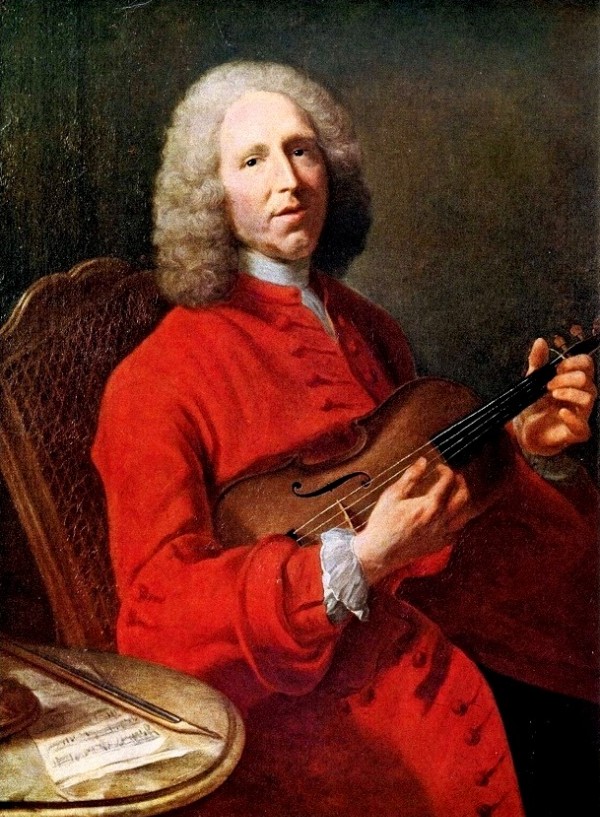
Jean-Philippe Rameau
The story of Rameau’s life is a tale of genius, grit, and a relentless pursuit of harmony, both musical and personal. To celebrate his birthday, why don’t we listen to his Pièces de Clavecin, a collection of solo harpsichord works published between 1706 and 1741. They are not just music but a vibrant tapestry of imagination, technique, and emotion.
Jean-Philippe Rameau: “Les Sauvages”
Harpsichord Alchemy
Rameau was in equal part scientist and poet, and in these pieces, he captured the essence of the Baroque era while pointing towards the future. To explore the Pièces de Clavecin we have to step into Rameau’s world, a place where elegance meets audacity, and where the harpsichord ruled.
Growing up in Dijon, Rameau understood the delicate mechanics of the harpsichord early on, its quills plucking strings like a painter brushing colour onto a canvas. By the time he arrived in Paris in the 1720s, the harpsichord was the darling of French musical life, a fixture in aristocratic homes and a symbol of refined taste.
Jean-Philippe Rameau: Pièces de clavecin: Suite in A Minor – Major – V. Gigue (Sophie Yates, harpsichord)
From Salon to Revolution
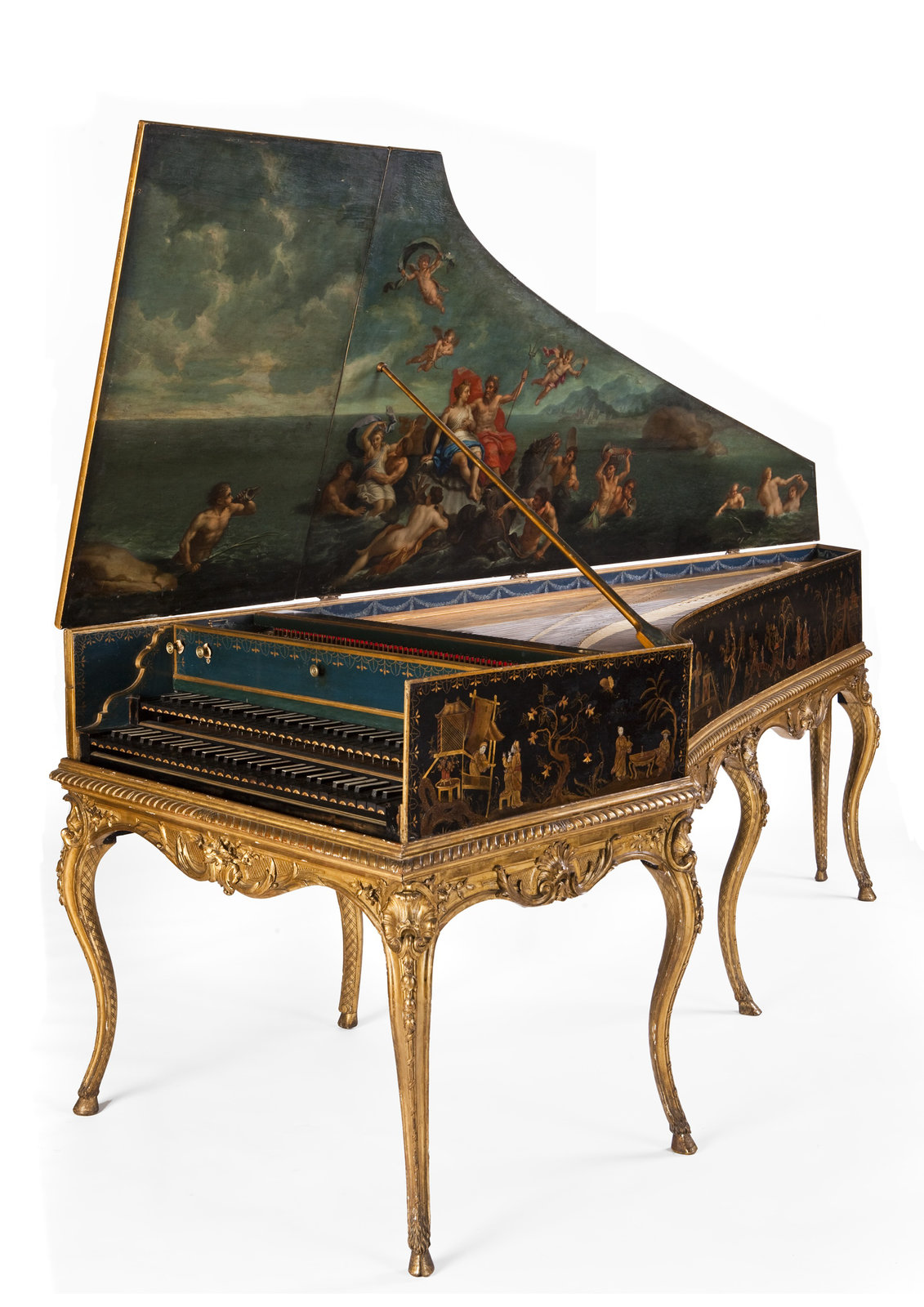
A harpsichord ca. 1755
But Rameau, ever the contrarian, wasn’t content to churn out polite salon music. His Pièces de Clavecin comprise three main collections dating from 1706, 1724, and 1728, with an additional set emerging in 1741.
In these collections, Rameau transformed the instrument into a vessel for bold experimentation, weaving together French elegance, Italian virtuosity, and his own obsessive fascination with harmony.
The Pièces de Clavecin are a kaleidoscope of miniatures, each piece a snapshot of mood, character, or scene. Rameau organised them into suites, groups of dances and character pieces with evocative titles like “La Poule” (The Hen), “Les Sauvages” (The Savages), and “L’Enharmonique” (The Enharmonic).
Jean-Philippe Rameau: Suite in G Major (excerpts) – VIII. L’enharmonique (Sophie Yates, harpsichord)
Windows to Whimsy
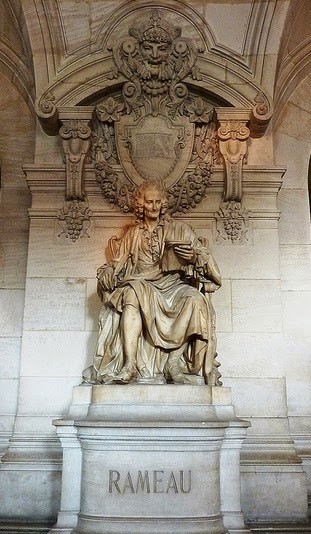
Statue of Jean-Philippe Rameau
These titles weren’t just whimsical, but actually windows into Rameau’s imagination. Take “La Poule,” from the 1728 collection, where the harpsichord clucks and struts, its staccato notes mimicking a hen’s jerky movements.
It’s playful, almost cheeky, but beneath the surface lies a harmonic daring that makes the piece feel alive and unpredictable. Rameau was telling stories, painting pictures, and inviting listeners to chuckle along.
Jean-Philippe Rameau: “La Poule”
From Theory to Magic
The Pièces de Clavecin were revolutionary as Rameau turned music theory into practice. Rameau was a theorist as much as a composer, and his Traité de l’harmonie of 1722 had already turned the musical world upside down with his ideas about chords as the backbone of music.
In the Pièces, he crafts harmonies that shimmer with unexpected twists. A simple gavotte might suddenly veer into a distant key, or a sarabande might pulse with dissonances that resolve in ways that feel both surprising and inevitable.
Jean-Philippe Rameau: “La Cupis”
Thunder and Precision
For Rameau, the harpsichord wasn’t just a tool for melody. It was a laboratory for exploring the architecture of sound. The 1724 collection, often considered the heart of the Pièces, is a masterclass in variety. Here, Rameau balances traditional dances like the allemande and courante with the radical.
In “Les Cyclopes,” a rollicking rondeau, the harpsichord thunders with rapid scales and arpeggios, evoking the mythical one-eyed giants of its title. The piece demands virtuosity, its notes tumbling over each other like stones in a river, yet Rameau never sacrifices clarity for flash. Every phrase is sculpted, every chord placed with precision.
Jean-Philippe Rameau: “Les Cyclopes”
Bold Dreams
Rameau’s life during this period was one of hustle and ambition. In his 40s, newly arrived in Paris, he was still an outsider, a provincial organist trying to make a name in a city obsessed with the legacy of Lully. The Pièces de Clavecin were his calling card, proof that he could charm the aristocracy while pushing musical boundaries.
He performed them in salons, taught them to students, and published them to reach a wider audience. These pieces weren’t just for professionals; they were meant to be played by amateurs, too, though Rameau’s technical demands often left players sweating.
His music asked for nimble fingers and a sharp mind, a combination that reflected his own personality, described as restless, rigorous, and a little mischievous. The character pieces in the Pièces reveal Rameau’s knack for capturing human quirks and natural phenomena.
Jean-Philippe Rameau: “Les Tourbillons”
Emotive Experiments
Rameau had a way of connecting music to the world around him. He was fascinated by nature, by the mathematics of sound, and by the emotions that music could stir. In “Les Tourbillons” (The Whirlwinds), swirling scales evoke spinning winds, while “L’Entretien des Muses” (The Conversation of the Muses) presents a tender, introspective piece, like a quiet dialogue among friends.
Yet, for all their charm, the Pièces weren’t universally loved. Some listeners found them too cerebral, too dense with harmonic surprises. Rameau’s Paris was a battleground of musical taste, with the elegant simplicity of Couperin pitted against Rameau’s bolder, more complex style.
Critics grumbled that his music was “difficult,” a charge Rameau might have taken as a compliment. He wasn’t here to soothe as he wanted to challenge, to make listeners lean in and grapple with the music’s inner workings.
His stubborn streak, evident in his spats with philosophers like Rousseau, comes through in the Pièces, where every note feels like a defiant declaration of his vision. Yet as his career soared, the Pièces de Clavecin took on a new role as they became a testing ground for ideas he would later expand on the operatic stage.
Jean-Philippe Rameau: “L’Entretien des Muses”
Heart and Mind in Harmony
By the time Rameau published his final harpsichord works in 1741, he was a star with his operas dazzling the court of Louis XV. Yet the Pièces remained a cornerstone of his legacy, cherished by players and listeners alike. They were music for the mind and the heart, demanding yet delightful, cerebral yet soulful.
Rameau’s personal life, his marriage to Marie-Louise Mangot, and his role as a father of four infused the Pièces with a warmth that balanced their intellectual rigour. Today, the Pièces de Clavecin still sparkle with life.
Rameau saw the Pièces as a bridge between order and chaos, between the mathematical and the magical. They are not just relics of the Baroque, but a testament to a composer who dared to dream big, even in the smallest of forms.
When we listen to Rameau’s music today, we hear a man who lived at the intersection of intellect and passion. His harmonies still shimmer, his rhythms still pulse, and his melodies still tug at the heart. For Rameau, music was more than art. It was a way of understanding the world, a way of finding harmony in a life full of discord.
For more of the best in classical music, sign up for our E-Newsletter