The Austrian multi-percussionist Martin Grubinger has redefined the possibilities of percussion through his virtuosic performances and ambitious commissioning project. His prodigious talent emerged early, and he won several awards and competitions at an early age. By blending technical precision with an electrifying stage presence, Grubinger has captivated audiences ever since.
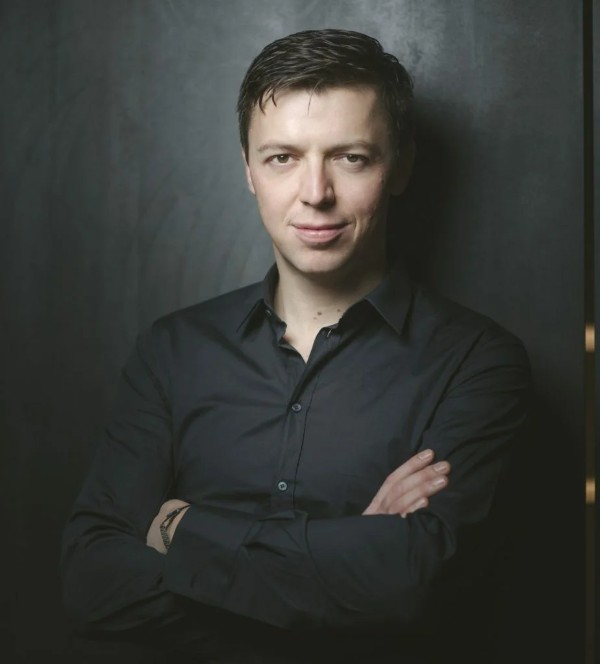
Martin Grubinger © Simon Pauly
His approach transcends traditional boundaries as he treats percussion not merely as a rhythmic element but as a vehicle for melodic and dramatic storytelling. This vision has led him to commission new works from some of the most innovative composers of our time, expanding the repertoire for percussion in orchestral and solo settings.
These commissions, often tailored to his extraordinary versatility across instruments, ranging from marimba to taiko drum, reflect his commitment to pushing the art form into uncharted territory. He has inspired music that reimagines percussion as a central voice in modern classical music.
The commissions inspired by Grubinger are not just technical showcases but profound explorations of percussion’s expressive potential, weaving cultural and philosophical threads into their fabric. Martin Grubinger retired as a performing artist after the 2022/23 season, so let us look back at some of his most important commissions.
Avner Dorman: Frozen in Time
Completed and premiered in 2007, Frozen in Time was commissioned from the Israeli-American composer Avner Dorman. Dorman is known for blending classical, jazz, and world music influences by exploring unique timbres and rhythmic complexities. The concerto for percussion and orchestra was inspired by geological and temporal concepts, “and reflects the idea of moments or processes that are frozen in time.”
As the composer wrote, “the title refers to musical snapshots of Earth’s geological and cultural evolution, imagining the continents as a single mega-continent in prehistoric times. Structured in three movements, each depicts a distinct continent and era.”
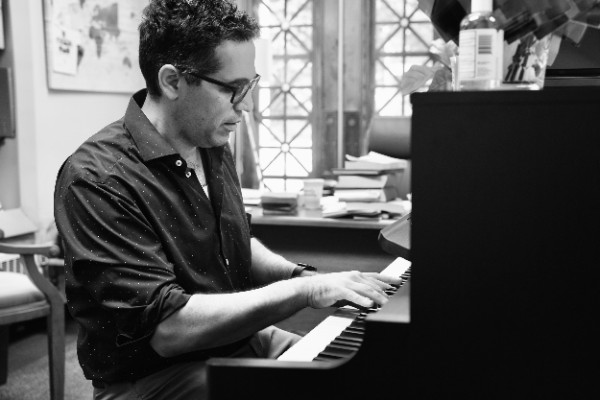
Avner Dorman
“Indoafrica” captures the ancient supercontinent, drawing on South Indian Tāla rhythms and scales. It expands like a spiral using West African rhythms and Southeast Asian Gamelan elements via marimba and cencerros. Eventually, the soloist returns to African roots in an ecstatic climax.
“Eurasia” is a darker movement that explores the emotional depth of central Europe and central/eastern Asia. Some melodies are drawn from Mozart, with underlying tension hinting at war through central Asian bells and modes. “The Americas” represent the present, a reflection of the cultural diversity of the Americas as a single continent. The refrain offers mainstream styles like Broadway, jazz, and grunge, while the episodes explore tango, Afro-Cuban jazz, swing, and minimalism.
Friedrich Cerha: Concerto for Percussion and Orchestra
Friedrich Cerha was renowned for his contributions to 20th and 21st-century music by blending modernist and avant-garde sensibilities within a deep engagement with musical tradition. Grubinger was already a rising star in the percussion world when they met, and he proposed that Cerha write a percussion concerto for him. Cerha took some time to consider the idea before committing, but he then composed the piece in one go in 2007/2008.
As Cerha recalls, “while I was writing the concerto, I had not yet heard Grubinger play, and I never tried to contact him while I was working; I did not want to be influenced in any way.” Grubinger called the resulting concerto the “most difficult thing he had ever played,” and audiences and critics agreed that it was ideally suited to Grubinger’s virtuosity and versatility.
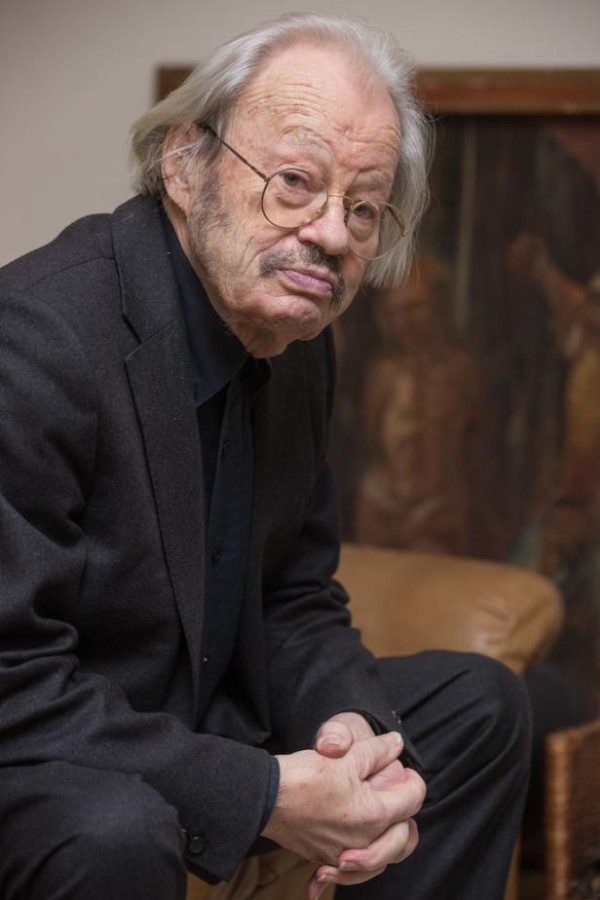
Friedrich Cerha
Cerha’s compositional style was deeply rooted in both Viennese tradition and modernist innovation. His work often balances rigorous structure with expressive freedom, and the Percussion Concerto clearly reflects this duality. Every movement features a distinct set of percussion instruments, with the percussionist changing positions until returning to the initial set at the end of the piece.
This approach not only showcases Grubinger’s technical range but also creates a narrative arc, moving from primal energy to introspective lyricism and dynamic interplay. This concerto stands out for its integration of modernist techniques with accessible, expressive qualities. For Grubinger, it represented a landmark in his career, demanding technical mastery and the potential of exploring percussion as a solo voice.
Fazıl Say: Percussion Concerto
The collaboration between Martin Grubinger and the Turkish pianist and composer Fazıl Say dates back to 2013. At that time, Grubinger performed the world premiere of Say’s Variations for Two Pianos and Percussion, to be followed by the cantata The Bells in 2014. In 2018, Say composed his Percussion Concerto Op. 77 specifically for Grubinger, who premiered it in Dresden.
The concerto was written during a period when Say was exploring large-scale orchestral forms. It explores his interest in pushing the boundaries of the concerto genre, using percussion not just as a rhythmic force but as a melodic and expressive protagonist. Structured in four movements, each highlights different facets of the percussion and orchestral interplay.
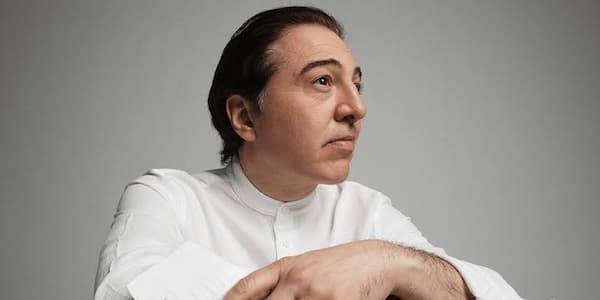
Fazıl Say
The opening “Köçekçe” draws inspiration from a Turkish folk dance, known for its lively, syncopated rhythms and exuberant energy. Say employs asymmetrical meters and creates a pulsating and dance-like atmosphere. Grubinger engages in a dynamic dialogue with the orchestra, and his essentially melodic role highlights the lyrical capabilities of the percussion instruments.
A meditative and intimate mood prevails in the “Adagio,” while the “Scherzo” is a playful and virtuosic showcase. It features a wide array of percussion, and Say incorporates jazz-like syncopation and sudden dynamic shifts. The call-and-response section certainly highlights Grubinger’s technical prowess. The finale is the high-energy culmination, blending Turkish rhythms with a cinematic, almost narrative-driven intensity.
Daníel Bjarnason: “Inferno” Concerto for Percussion and Orchestra
The collaboration between Bjarnason and Grubinger stemmed from their shared interest in pushing the rigid boundaries that formerly governed the role of percussion in orchestral music. Grubinger’s technical brilliance and theatrical stage presence inspired Bjarnason to craft a work that highlights the soloist’s versatility across a wide array of instruments while maintaining a cohesive dramatic arc.
This three-movement concerto is designed to showcase the solo percussionist’s technical and expressive range. It features a large orchestra and an extensive solo percussion setup. The work requires the soloist to navigate rapid transitions between instruments, balancing rhythmic precision with melodic and textural roles. The work moves from intense propulsion to lyrical introspection and finally to a climactic resolution.
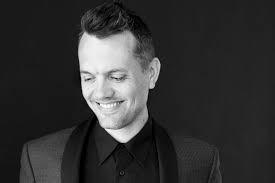
Daníel Bjarnason
The soloist’s part, composed specifically for Martin Grubinger, is a more self-contained entity. As a critic writes, “from the beaten skins of the drum kit, the Japanese taiko drums, the kick drum and the timpani, to the woody timbres of the marimba, the wood blocks, and the txalaparta—a traditional Basque instrument comprising a set of wooden planks—the solo percussionist draws on a narrower continuum of warm, dark sounds.”
The concerto reflects Bjarnason’s signature style, blending influences from minimalism, post-romantic orchestration, and contemporary Nordic music. The interplay between soloist and orchestra is a highlight, with Bjarnason treating the percussionist as an equal partner rather than a mere accent. The orchestra amplifies the soloist’s gestures, sometimes echoing or challenging them, creating a sense of dialogue that is both competitive and collaborative. The title “Inferno” and the movement subtitles for this concerto were only applied by the composer after he himself had heard the music performed by Grubinger.
Péter Eötvös: “Speaking Drums”
A number of poems form the basis of Péter Eötvös’s Speaking Drums, and it develops into a daring fusion of rhythm, voice, and poetry. As the composer explained, “It begins with the percussionist speaking nonsensically, the emphasis on the rhythm, which he then passes on to his instrument. Like the pure, childish joy of repeating the same word in a different tune, the soloist teaches his instrument to speak until the drums start to talk themselves.”
Structured in four movements, Speaking Drums reverses traditional roles as the soloist’s spoken rhythms initiate the musical pulse, which then transfers to the instruments. The orchestra amplifies the soloist’s gestures, and the innovative fusion of voice and percussion, amplified by Grubinger’s artistry, redefines the concerto genre.
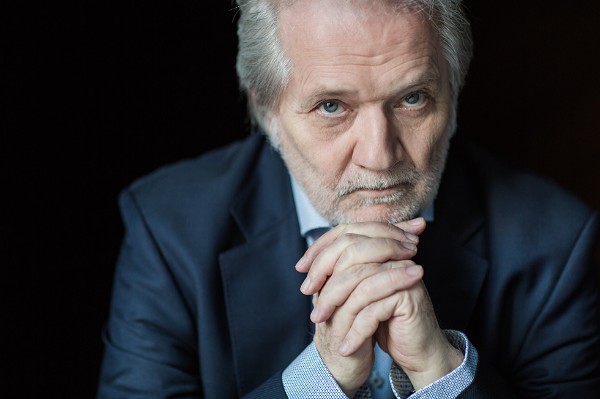
Péter Eötvös © Szilvia Csibi
The idea behind this concerto is the idea of percussion instruments speaking through rhythm and timbre, akin to the talking drums of African and Indian traditions, where drums mimic the inflections of human speech. The texts are set in an invented language, emphasising sound over semantic meaning. The work is both a technical showcase and a philosophical exploration of communication, rhythm, and the boundaries between music and speech.
Grubinger brings this innovative fusion to life with unparalleled virtuosity and theatrical energy. His dynamic stage presence and rhythmic precision transform the piece into a mesmerising dialogue between voice and instrument. Showcasing Grubinger’s artistry, Speaking Drums emerges not only as a technical tour de force but as a vibrant testament to Eötvös’s vision.
Tan Dun: The Tears of Nature
Tan Dun describes “The Tears of Nature” as a cautionary concerto. “Throughout the music, nature’s tears tell us that the threat to our survival is ourselves.” Tan Dun wrote this piece for his dear friend Martin Grubinger, and “while composing, I thought about nature and focused on the passion of Martin Grubinger.”
For Tan Dun, “Martin Grubinger is one of the few musicians who has truly struck a chord in me and made it impossible for me to stop thinking about creating something for him… This piece is not only written as an admiration of such a refined artist, but as a duet between us. “ The concerto is divided into three movements, each “representing a different colour of nature; the colour of nature’s thunder, the colour of nature’s passion, and the colour of nature’s energy—each united with the human spirit.”
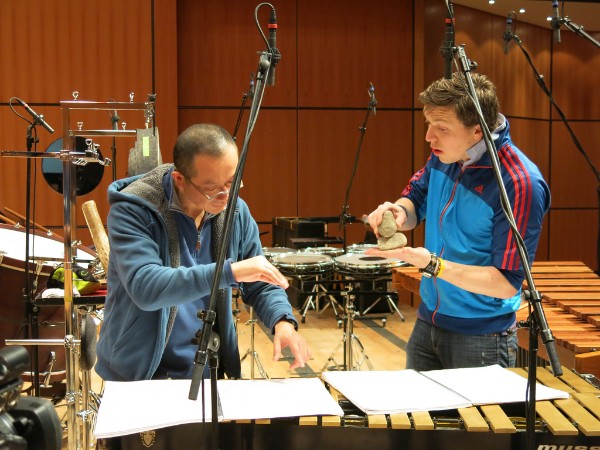
Tan Dun and Martin Grubinger
The opening movement was inspired by the 2008 Sichuan earthquake, with the timpani depicting nature’s gentle and explosive power. Inspired by the 2011 Japan tsunami, the second movement portrays the tragedy through a sorrowful marimba solo. The final movement celebrates New York City’s resilience post-Hurricane Sandy. “The percussionist’s whirling motion symbolises nature and the human spirit dancing together.”
As the composer explained, “Although the three movements in this concerto are about three natural disasters in different cities, they all share the same memory, one where the human spirit stays strong. This concerto commemorates the human spirit as it lives, fights and dances with nature.”
Elevating Percussion
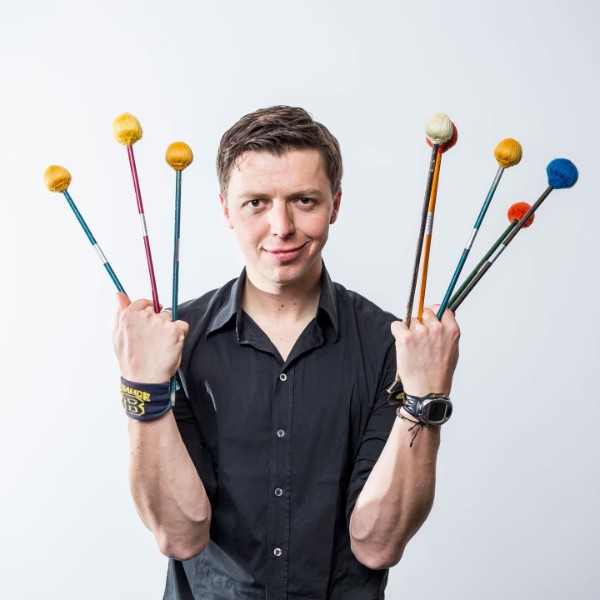
Martin Grubinger
Martin Grubinger has significantly shaped the contemporary percussion repertoire through his ambitious concerto commissions. In the featured concerto commissions, often premiered by Grubinger himself, the artist showcases his virtuosic skill, theatrical flair, and his commitment to expanding the artistic boundaries of percussion.
By collaborating with leading composers, Grubinger has fostered the creation of innovative works that elevate percussion from a supporting role to a central, expressive voice in orchestral settings.
Grubinger’s contributions through these commissions extend beyond personal artistry, enriching the global percussion repertoire and inspiring future generations of musicians. His collaborations have bridged cultural and musical traditions, creating works that resonate emotionally and intellectually. Thanks to Martin Grubinger, percussion continues to speak with “profound expressivity and innovation.”
For more of the best in classical music, sign up for our E-Newsletter