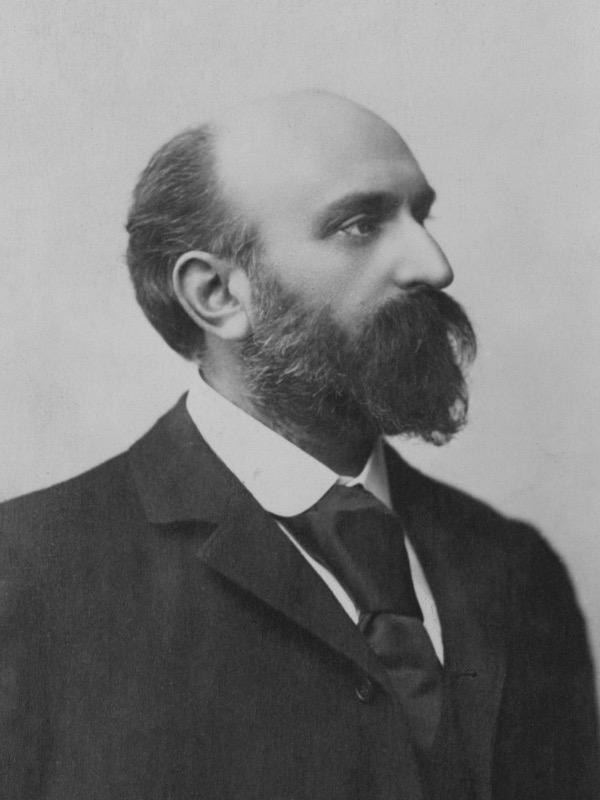
Originally published on 9 August 1854, Walden; or, Life in the Woods is widely considered Henry David Thoreau’s masterwork. In a series of 18 essays, Thoreau provides a vivid account of his two years living in isolation in a cabin on the shore of Walden Pond, located in eastern Massachusetts. Literary critics consider Walden “not only as a philosophical treatise on labour, leisure, self-reliance, and individualism, but also an influential piece of nature writing.”
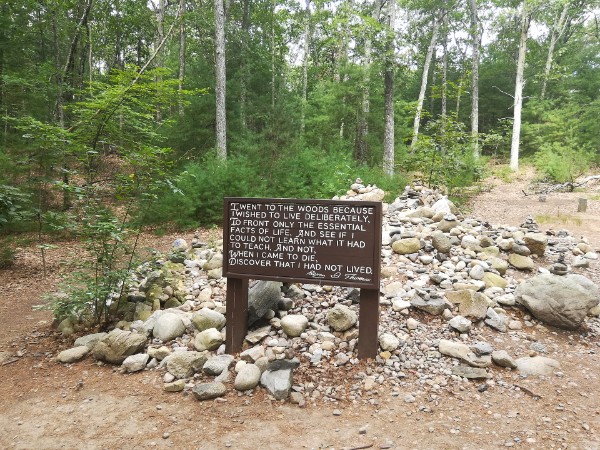
Sign with quote from Henry David Thoreau’s “Walden” at Walden Pond; Concord, Massachusetts
From the outset, Thoreau establishes the principal aim of his return to a simpler life. He writes, “I went to the woods because I wished to live deliberately, to front only the essential facts of life, and see if I could not learn what it had to teach, and not, when I came to die, discover that I had not lived. I did not wish to live what was not life, living is so dear; nor did I wish to practice resignation, unless it was quite necessary.”
Thoreau continues, “I wanted to live deep and suck out all the marrow of life, to live so sturdily and Spartan-like as to put to rout all that was not life, to cut a broad swath and shave close, to drive life into a corner, and reduce it to its lowest terms, and, if it proved to be mean, why then to get the whole and genuine meanness of it, and publish its meanness to the world; or if it were sublime, to know it by experience, and be able to give a true account of it in my next excursion.”
Dexter Morrill: Walden Nocturnes (Pamela Jordan, soprano)
New England Transcendentalism
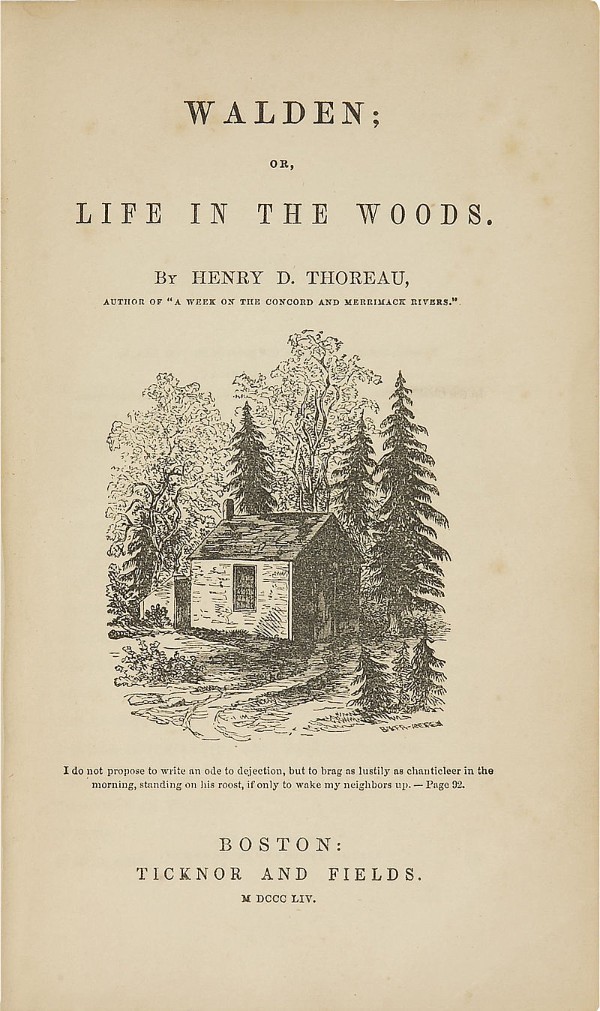
Walden by Henry David Thoreau
Walden became one of the most influential and compelling books in American literature, and musicologist Agnieszka Jeż locates the publication at the heart of an original American philosophy subsequently described as “New England Transcendentalism.” This philosophical movement “represented the values and concepts which were particularly esteemed by the thinkers of the New World—equality, independence and autonomy.”
New England Transcendentalism was looked upon as a progressive tendency during a time of the fight for the abolition of slavery and the beginning of the feminist movement. It advocated freedom and equal rights for all, and while the individual experience became a point of moral reference, it “also highlighted the ethos of community, work and dedication.”
Thoreau spent over two years living in near-isolation, and Walden is “part personal declaration of independence, social experiment, a voyage of spiritual discovery, satire, and a manual for self-reliance.” The publication did not attract huge attention during Thoreau’s lifetime, but it gained tremendous popularity in the 20th century. His ideas were taken on board by various artists, writers, and composers.
Charles Ives: Piano Sonata No. 2, “Concord, Mass., 1840-60”, “Concord Sonata” – IV. Thoreau (Carolin Ralser, flute; Daniel Brylewski, piano)
Concord
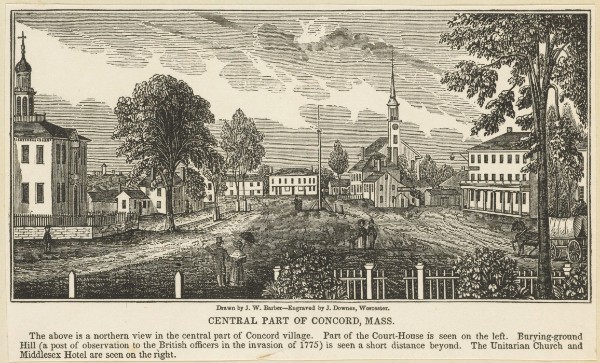
Central part of Concord
Today, the town of Concord is part of Greater Boston. Founded in 1635 by a group of English settlers, the famous “shot heard round the world” refers to the opening shot of the battles of Lexington and Concord on 19 April 1775. This event sparked the American Revolutionary War, leading to the creation of the United States. The famous phrase originated in the opening stanza of Ralph Waldo Emerson’s 1837 poem “Concord Hymn.”
Ralph Waldo Emerson was part of a rich literary community of transcendentalism that developed in Concord during the mid-19th century. It also included Nathaniel Hawthorne, Louisa May Alcott and Henry David Thoreau. The concentration of literary talent in such a small town prompted author Henry James to call Concord “the biggest little place in America.”
We count Charles Ives (1874-1954) among the earliest renowned American composers to achieve recognition on a global scale. And the first composition he decided to show to the world was his Piano Sonata No. 2, also known as the “Concord Sonata.“ The work is dedicated to “four wise people” related to the philosophy of transcendentalism from Concord.
The opening movement is dedicated to Ralph Waldo Emerson, and the second to Nathaniel Hawthorne. The lyrical third movement was inspired by Louisa May Alcott, and the last movement of the cycle is dedicated to Henry David Thoreau. As Ives writes in his introductory notes to the Sonata, “The surroundings of the Walden Lake were a better concert hall for Thoreau than the most famous venues of this kind in Boston.”
Hans Abrahamsen: Wind Quintet No. 2, “Walden” (Calefax Reed Quintet, Ensemble)
Walden Pond
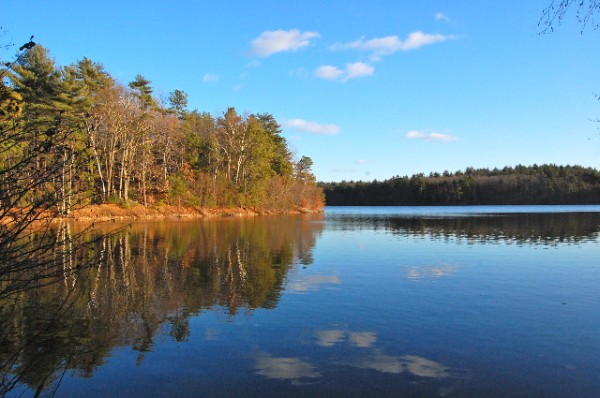
Walden Pond, 2010
Probably the most celebrated chapter in Walden, in terms of music, is “Walden Pond.” Thoreau lived in a cabin on the northern shore of the pond for two years. In his day, it was a neglected and heavily used and “socially dangerous area just outside of town, where African American slaves had frequently lived and atrocities against them had been committed.”
Thoreau describes the lake and the water’s physical properties in unparalleled detail. He records its clarity, colour, and temperature, and especially its mirror-like surface properties. Thoreau made exact scientific observations, identifying many plants and animals by both their popular and scientific names. His metaphorical and poetic description of natural phenomena also “recounts his experiments to measure the depth and shape of the bottom of the supposedly bottomless Walden Pond.”
Walden Pond inspired a number of popular adaptations, including a video game. In addition, it inspired a number of musical reworkings, including a movement in the piano concerto by Swiss-born Bernard Hoffer. Hoffer received his musical training in the United States, and he has extensively written for films, television, and commercials. Always interested in the intersection of music and the arts, he famously composed the “Symphony Pousette-Dart,” based on a painting by the great New York abstract expressionist.
Bernard Hoffer: Piano Concerto – II. Walden Pond (Randall Hodgkinson, piano; RTÉ National Symphony Orchestra; Richard Pittman, cond.)
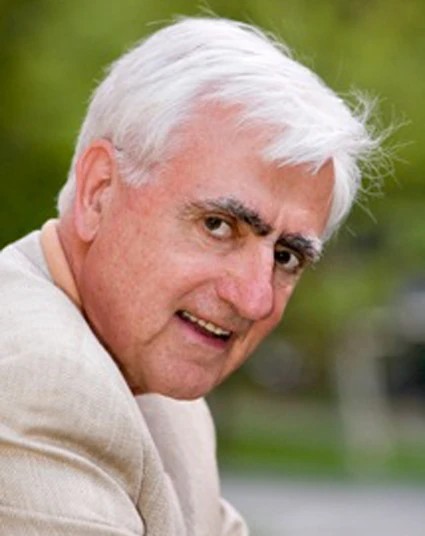
Bernard Hoffer
The second movement of Hoffer’s piano concerto carries the subtitle “Walden Pond,” and it draws inspiration from Beethoven’s Fourth and Bartók’s Third piano concerto. The composer writes, “The opening and closing sections use chorale-like material based on the same ragtime theme from the yet-to-be-heard third movement. This acts as a framework for the main portion of the movement, which is based on the fourth chapter of Walden.”
“Sounds, utilising all the bird, railroad, and village sounds described so beautifully by Thoreau. Soft chords are played by the strings and brass dovetailing into each other over which the piano plays sounds depicting ever-changing water reflections, and woodwinds and trumpets imitate bird calls. This section ends as darkness falls, and church bells are heard in the distance, and frogs and owls herald the night.”
Graham Gordon Ramsay: 4 Autumn Sketches – No. 3. Walden Pond (Timothy Macri, flute; Scott Nicholas, piano)
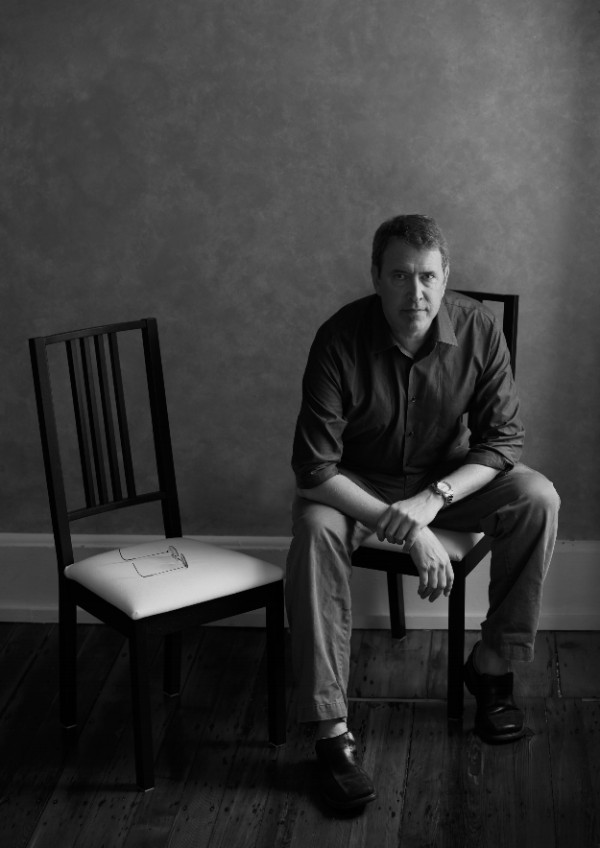
Graham Gordon Ramsay
Graham Gordon Ramsay received his musical education at the Tanglewood Institute and the Fontainebleau School in France. He has composed choral and instrumental works in a modern yet tuneful style. Ramsay primarily writes for solo voice, chorus, solo instruments, and chamber ensemble. In recent years, he has been increasingly commissioned to create liturgical works for the choirs of King’s Chapel in Boston.
In 2004, Ramsay met flutist Ole Nielsen, who had studied with Sue-Ellen Hershman-Tcherepnin, widow of the composer Ivan Tcherepnin. As Ramsay explains, “Since Ole and I shared common musical sensibilities, I approached him about composing a new work,” and the resulting Four Autumn Sketches for Flute and Piano premiered on 18 March 2005. In essence, the work describes four different New England locations Ramsay visited in the autumn of 2004.
The first movement sounds the physical proportions of the “Courtyard, Boston Public Library,” and the second movement, “The Ghosts of Blanchard, Maine,” explores the composer’s ancestry. “Walden Pond,” according to the composer, is a meditation on the place made famous by Henry David Thoreau’s writings. “It is composed in a simple and constant 3⁄4 time, but plays with long suspensions over the bar line and elongated syncopations, creating a floating quality that belies the steady underlying beat pattern.”
Dominick Argento: Walden Pond (Dale Warland Singers; Dale Warland, cond.)
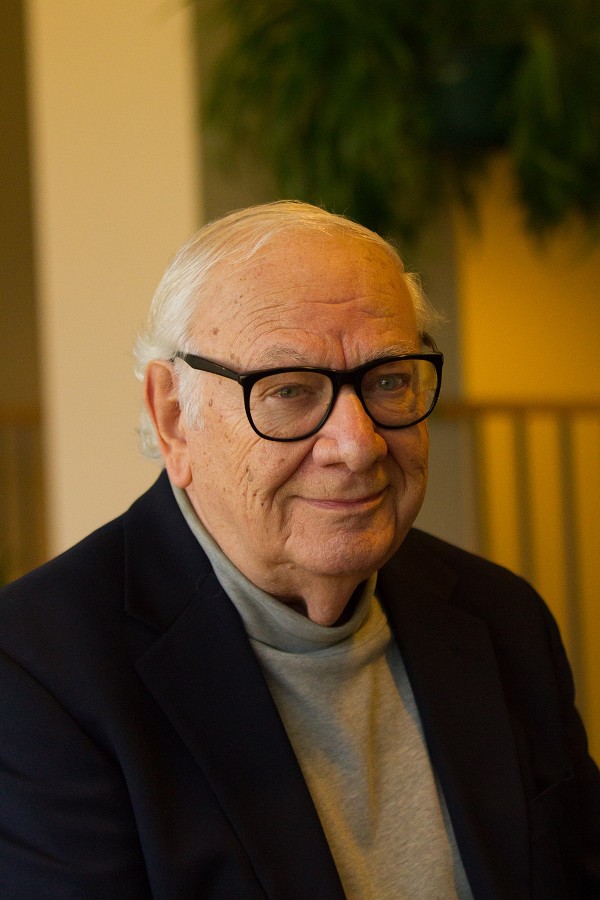
Dominick Argento
A first-generation American composer of Italian immigrant parents, Dominick Argento won the 1975 Pulitzer Prize in Music for his song cycle “From the Diary of Virginia Woolf,” which was premiered by Dame Janet Baker. On a somewhat more intimate scale, Walden Pond evokes the outdoor musings of Henry David Thoreau. Composed in 1996, Walden Pond is a cycle for chorus, three violoncellos, and harp intoning excerpts from Walden.
For Argento, Walden Pond is a special case, “as water, rivers, lakes, and oceans hold a great fascination for me.” Commissioned by the Dale Warland Singers, “the music is not merely a circumstance or colourful backdrop, but water itself.” Argento carefully edited Thoreau’s text to obtain the specific images he was looking for.
A substantial part of the special ambience of the piece is due to its instrumentation. As the composer explains, “the harp lends a properly watery, rippling tone while the three violoncellos provide a sense of warmth and a feeling of depth.” The idea of using multiple solo cellos was apparently borrowed from the overture to Rossini’s William Tell. Thoreau’s Walden has continued to inspire a number of youthful musical settings, including In the Direction of Dreams, “Walden Pond” by Massachusetts composer Oliver Caplan.
For more of the best in classical music, sign up for our E-Newsletter
Oliver Caplan: In the Direction of Dreams – I. Walden Pond (Andrea Montalbano, clarinet; Daniel Lorenzo, cello; Eduardo Frías, piano)