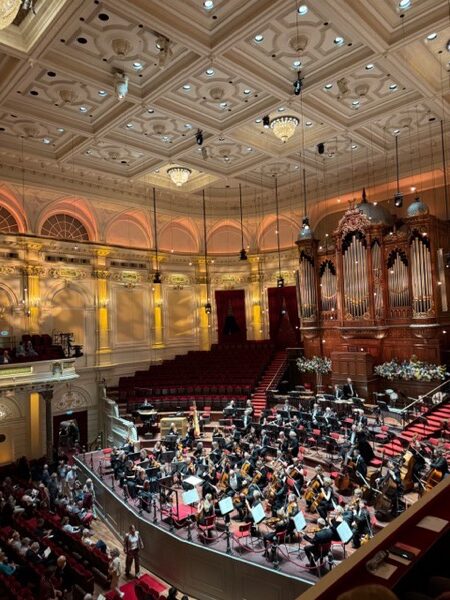
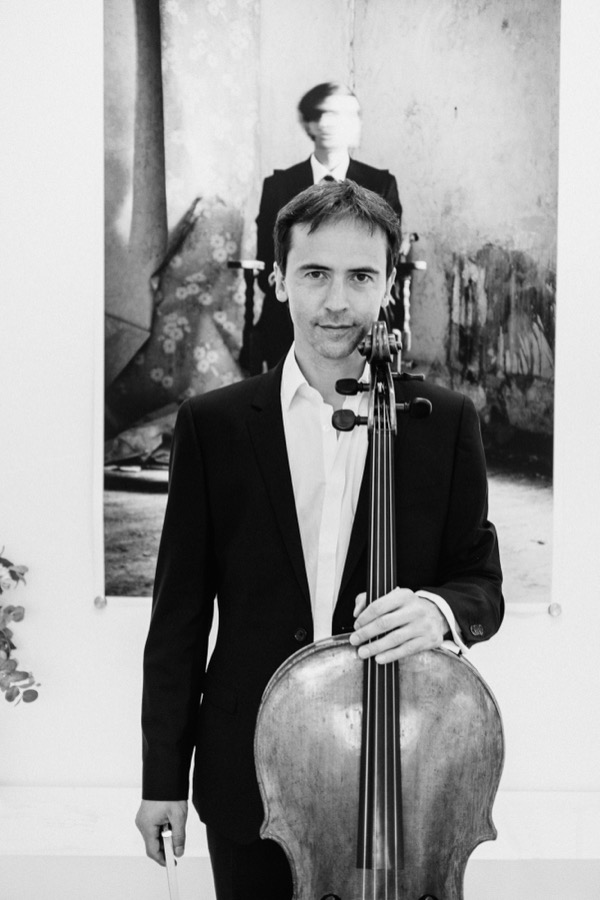
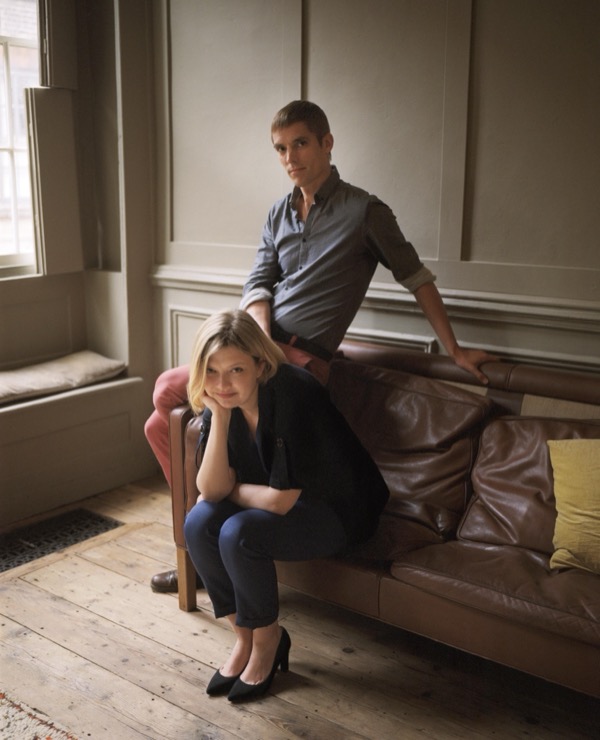
The Sitkovetsky Trio started Day 4 with a concert of Schubert and Beethoven’s piano trios. Opening with Schubert’s Trio (Sonata in 1 movt) in B♭ major, D 28, a work written when Schubert was only 15, we heard a work that was very much influenced by what he’d heard around him – there’s more than one hint of Mozart in the sound. Beethoven’s Ghost Sonata (Op. 70/1) brought the unearthly sounds of the second movement to life. This work has already been recorded as part of the ensemble series of Beethoven trios on Bis Records. Two Schubert trios closed the concert. First, the one-movement Notturno (D. 897) and then the Piano Trio in B flat major, D. 898. This was pure Schubert in its best form.
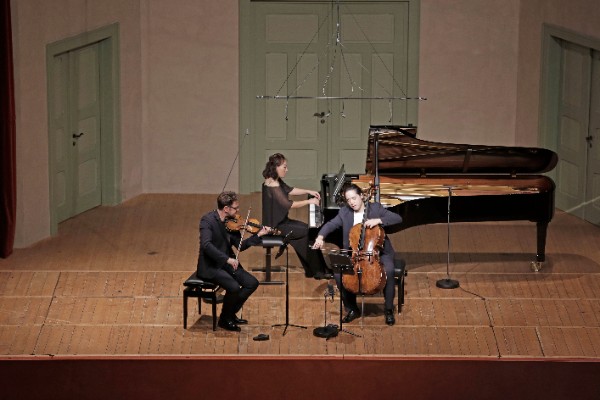
Sitkovetsky Trio performing at Schubertiade Hohenems 2025
This was the first appearance of the Sitkovetsky Trio at the Schubertiade; they will be celebrating their 20th anniversary in the Beethoven Year 2027 as an ensemble, and are commissioning works by contemporary composers to expand the trio repertoire. They are a rarity as a dedicated trio. Most festivals that include chamber music prefer to engage string quartets or to create ‘superstar’ trios of famous names on the violin, cello, and piano. As a dedicated trio with two decades of experience playing together, they bring something that no ad hoc group can ever accomplish. As was evident from their performance, they have an enviable ability to communicate with the audience and are skilled at creating a seamless musical narrative through a piece.
Sitkovetsky Trio performs Beethoven: Archduke Trio, “excerpt”
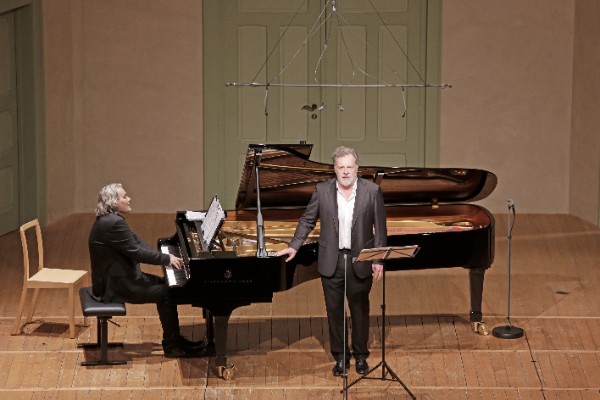
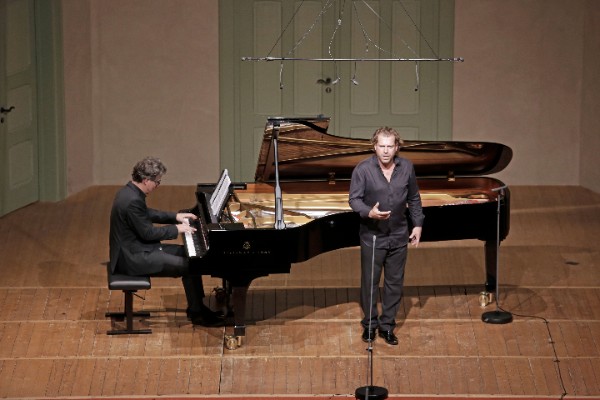
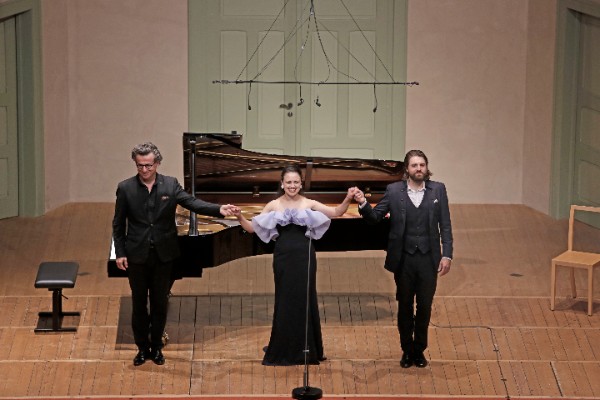
The evening concert brought together 2 tenors (Julian Prégardien and Ilker Arcayürek), 2 baritones (Konstantin Krimmel and Tobias Berndt), with pianist Daniel Heide for an evening of solo and quartet singing. It opened with a bit of fun for the 50th anniversary of Salieri’s birth (D 407) that has had only a few Schubertiade appearances. Two quartets were followed by 2 solo songs by each of the singers, each bringing their own individual style and presentation to the evening. Ilker Arcayürek’s two songs (D. 300 and 493) brought out Schubert’s treatment of minor poets and the common theme of the lost love.
Tobias Berndt’s two songs (D.882 and 775) were perfect for showcasing the singer’s exquisite lyricism. His first appearance at the Schubertiade, Berndt sang songs that reflected a more adult reaction to lost love – sad but not crazy sad.
Julian Prégardien upped the emotional level with two Goethe settings (D. 121 and 767). Schäfers Klagelied (Shepherd’s Lament) praises nature while the shepherd laments that she is gone. Willkommen und Abschied (Welcome and parting) brought full drama: our hero is riding a horse and moving through the night that holds a hundred dark eyes. The wind is murmuring eerily, but in his veins is the fire and passion of she who loves him. Prégardien brought all his fire and emotion to the music in a tremendous exultation.
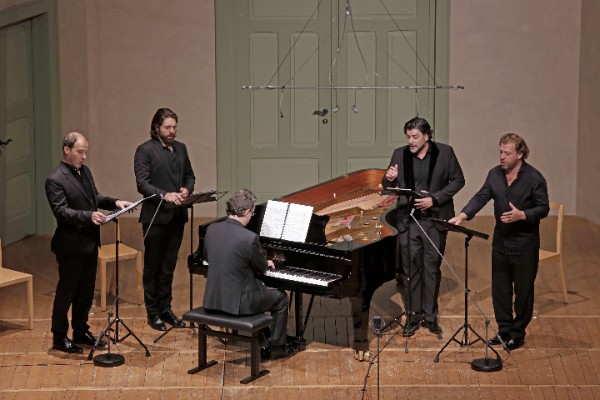
The evening features 4 vocalists in solo & quartet performances (I. Arcayürek, J. Prégardien, K. Krimmel, T. Berndt)
The last soloist was Konstantin Krimmel, and he presented two even more emotional texts. Nachstück (Nocturne) (D. 672) is a tale of an old man in his final days. The forest sings him to sleep as he awaits Death. Goethe’s Prometheus (D. 674) is the fire-thief’s fight against the gods. What have they done for man except to cause problems? In his declaration of his independence, Prometheus brings all his persuasive arts to bear, and Krimmel brought those forth in a powerful performance.
The encores were Wilhelm Nagel’s Schöne Nacht and five voices (the quartet plus pianist Daniel Heide in a rare appearance as a singer) and Friedrich Silcher’s In einem kühlen Grunde.
The quartets were wonderful to hear with such good voices behind them, but, as with many works like these, they are more fun for the singers to sing than the audience to hear. Given the strength of the solo performances, the quartet songs showed the limits of interpretation of massed voices.
For more of the best in classical music, sign up for our E-Newsletter
Franz Schubert: Der Gondelfahrer, Op. 28, D. 809 (Malcolm Bilson, fortepiano; Monteverdi Choir; John Eliot Gardiner, Conductor)