In the rich tapestry of Spanish music, few names evoke the same sense of lyrical beauty, national pride, and tragic romanticism as Enrique Granados. Born on 27 July 1867 in Lleida, Catalonia, Granados emerged as one of Spain’s most evocative composers, a musical voice whose works captured the soul of his homeland with unparalleled sensitivity.
Echoes of Spain
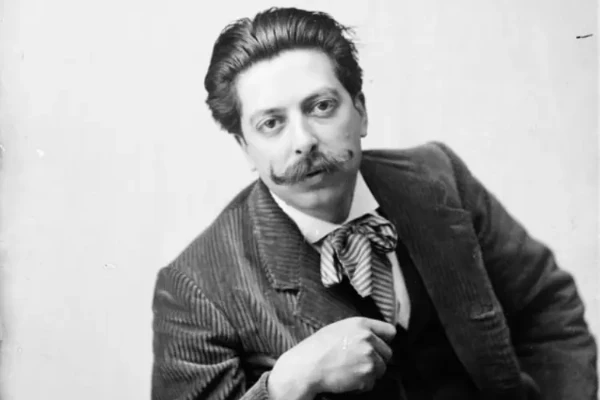
Enrique Granados
At the heart of Granados’ genius was a deep connection to Spanish folk traditions, particularly the rhythms and idioms of Andalusian and Catalan music. But his artistry was far from provincial. Educated in Barcelona and Paris, he stood at the crossroads of European Romanticism and Spanish nationalism, blending the expressive elegance of Chopin and Schumann with the fiery soul of flamenco and the introspective melancholy of Iberian song.
Granados’ music continues to resonate with composers, pianists and listeners alike. His works remain a testament to a life devoted to beauty, deeply rooted in Spanish culture, yet destined to echo far beyond its borders. To celebrate his birthday on 27 July, let’s feature his 12 Danzas Españolas, radiant jewels in the crown of Spanish Romantic music, and a testament to the young composer’s genius in weaving the vibrant threads of Spain’s cultural tapestry into a sophisticated pianistic framework.
Melodies of Memory
Granados composed his 12 Danzas Españolas in his early twenties, and this set of twelve piano pieces was published in four volumes of three dances each. Every dance captures the soul of Spain through stylised evocations of regional dance forms, folk melodies, and the emotive lyricism that defines Granados’ style.
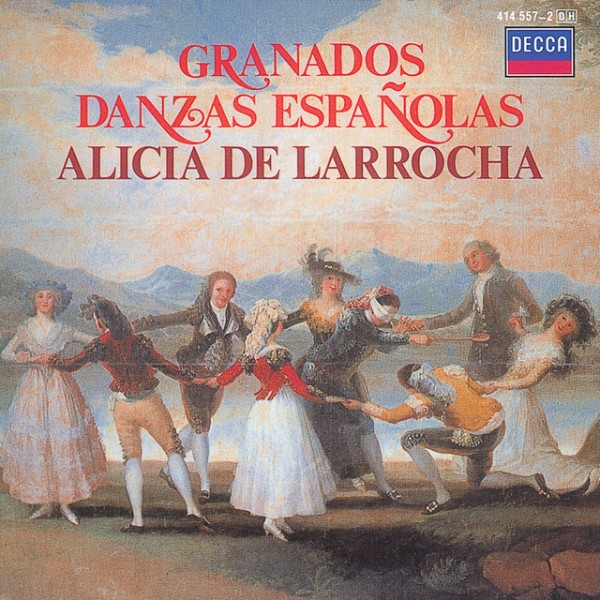
This set of 12 dances has been variously ordered and individual pieces published with a number of alternate titles. For this blog, I shall follow the ordering and titles as featured in the recording by Alicia de Larrocha.
Far from mere transcriptions of folk tunes, these dances are poetic reinterpretations, blending the rhythmic vitality and melodic contours of Spanish traditions with the harmonic richness and expressive depth of Romanticism.
As a cornerstone of the Spanish nationalist movement, alongside the works of Isaac Albéniz and Manuel de Falla, the Danzas bridge the rustic charm of folk music with the refined artistry of the concert hall. Scholars such as Walter Aaron Clark and Carol A. Hess praise the set for its accessibility, emotional resonance, and technical brilliance, noting its pivotal role in establishing Granados as a leading voice in Spanish music.
Folk Spirit in Formal Dress

Enrique Granados
Each dance is a vivid vignette, painting scenes of courtly elegance, rustic revelry, Moorish mystique, and Andalusian passion. To be sure, each dance is distinct and captures a different mood and regional influences.
The set is notable for its accessibility, making it appealing to both performers and audiences, while its harmonic richness and rhythmic vitality reflect the composers’ deep connection to Spanish musical traditions.
Scholars describe the set as a bridge between folk traditions and the concert hall, blending virtuosity with poetic lyricism. Granados reimagines these dances through a refined Romantic lens, synthesising popular dance forms with sophisticated harmonic language and expressive nuance. As such, he transforms regional dances into something intimate and universal.
Danza Española No. 1: Galante
In the radiant key of G major, “Galante” opens the set with the refined elegance of a bygone era. The minuetto form evokes the stately grace of an 18th-century Spanish court. The delicate melody unfolds with lyrical charm, adorned with trills and gentle ornaments.
Subtle syncopations and a pulsing accompaniment hint at the Spanish rhythms that pulse beneath the surface, grounding the piece in Granados’ nationalistic vision. Walter Aaron Clark describes this dance as “a perfect synthesis of classical form and Spanish spontaneity, setting the tone for the set’s eclectic brilliance.”
Enrique Granados: 12 Danzas Españolas, “Galante” (Alicia de Larrocha, piano)
Danza Española No. 2: Orientale
In the shadowed hues of C minor, “Orientale” casts a spell of exotic enchantment, its haunting melody evoking the distant echoes of Spain’s Moorish past. The piece begins with a plaintive, chromatic theme over a drone-like bass, conjuring images of moonlit minarets and the soft strumming of an oud.
Granados’ use of modal harmonies and undulating rhythms reflects Spain’s historical crossroads of cultures, a theme Carol A. Hess identifies as “central to his nationalist aesthetic.” The piece’s evocative power has inspired transcriptions for guitar and orchestra, and pianists must balance the lyrical intensity with the rhythmic pulse, allowing the music’s mysterious allure to unfold like a silken veil.
Enrique Granados: 12 Danzas Españolas, “Orientale” (Alicia de Larrocha, piano)
Danza Española No. 3: Fandango
The fiery spirit of Andalusia bursts forth in “Fandango,” a whirlwind in the minor key that captures the raw energy of Spain’s iconic couple’s dance. From its opening bars, the piece pulses with syncopated rhythms and bold, guitar-like strumming patterns, evoking the clatter of castanets and the fervour of a moonlit plaza.
Granados’ through-composed structure weaves recurring motifs into a tapestry of unrelenting vitality, a precursor to the theatricality of his later Goyescas. The fandango’s roots in southern Spain’s folk traditions are palpable, yet Granados elevates the form with Romantic harmonies and pianistic flair.
Enrique Granados: 12 Danzas Españolas, “Fandango” (Alicia de Larrocha, piano)
Danza Española No. 4: Villanesca
In the sunlit key of G major, the “Villanesca” dances with the rustic charm of Spain’s countryside, its title invoking the spirited peasants of folklore. The melody, simple yet infectious, skips across the keyboard and is supported by a buoyant, folk-like accompaniment.
Granados’ ability to blend accessibility with sophistication shines through, as this dance is a favourite with both amateur and professional pianists. The piece’s rural imagery evokes the pastoral traditions of Spanish music, yet its polished structure reflects Granados’ conservatory training.
Enrique Granados: 12 Danzas Españolas, “Villanesca” (Alicia de Larrocha, piano)
Danza Española No. 5: Andaluza

Enrique Granados featured on a stamp design
“Andaluza,” in the soulful key of E minor, is the crown jewel of the Danzas Españolas, a piece so iconic it is often performed independently. Also known as “Playera,” it captures the heart-wrenching duende of Andalusian flamenco, its vocal-like melody weaving a tale of longing and passion.
The syncopated accompaniment, mimicking the strum of a guitar, supports a theme that soars with expressive intensity, while the middle section erupts into virtuosic flourishes. Granados’ genius lies in distilling the essence of Andalusian folk music into a universal language, as a scholar observes, “it makes Andaluza a touchstone of Spanish Romanticism.” Its popularity has led to countless transcriptions, from guitar to orchestra, each preserving its emotional intensity.
Enrique Granados: 12 Danzas Españolas, “Andaluza” (Alicia de Larrocha, piano)
Danza Española No. 6: Rondalla Aragonesa
The exuberant “Rondalla Aragonesa” channels the lively spirit of the Aragonese jota, a dance of northern Spain known for its infectious energy. Its 6/8 rhythm drives the music forward and offers a bold, dance-like melody punctuated by rapid scales and sparkling ornaments. The lyrical section does offer a brief moment of repose, however.
Scholars have highlighted the piece’s virtuosic demands, noting its appeal to performers eager to showcase technical brilliance. Rooted in the regional pride of Aragon, the dance exudes a festive, communal spirit, yet Granados’ harmonic sophistication clearly elevates it to the concert stage.
Enrique Granados: 12 Danzas Españolas, “Rondalla Aragonesa” (Alicia de Larrocha, piano)
Danza Española No. 7: Valenciana
Bathed in the sunny glow of A major, “Valenciana” evokes the vibrant, citrus-scented landscapes of Valencia, its melody dancing with the carefree exuberance of a Mediterranean festival. The ternary form unfolds with a bright and lyrical theme, supported by a buoyant accompaniment that pulses with syncopated rhythms. We find a movement of reflection amidst the revelry in the central section.
Granados’ evocation of Valencia’s festive spirit is both authentic and idealised, blending folk-like simplicity with Romantic expressiveness. Pianist’s notes the piece’s accessibility, “making it a favourite for performers seeking to capture Spain’s sunny optimism.”
Enrique Granados: 12 Danzas Españolas, “Valenciana” (Alicia de Larrocha, piano)
Danza Española No. 8: Sardana
“Sardana” provides a refined homage to the traditional Catalan circle dance that carries deep regional and cultural significance. While the original sardana is a communal dance characterised by intricate patterns of short and long steps performed in a closed circle, Granados transforms its rhythmic vitality and melodic grace into a stylised concert piece.
Scholars often view this dance as one of the most sophisticated in the collection, noting that the composer “captures the dignified restraint and subtle elegance of Catalan identity through nuanced phrasing and transparent textures.” Granados evokes its spirit through a romantic lens, blending regional colour with his signature lyrical expressiveness.
Enrique Granados: 12 Danzas Españolas, “Sardana” (Alicia de Larrocha, piano)
Danza Española No. 9: Romántica

Enrique Granados
The “Romántica” in B-flat major is sometimes referred to as “Mazurca,” since it represents a nod to the Polish dance form reimagined through a Spanish lens. Its lilting 3/4 rhythm and elegant melody evoke a salon-like atmosphere, yet the subtle Spanish inflexions, including syncopated rhythms and flamenco-like flourishes, ground it in Granados’ nationalistic style.
The central section features a more introspective character before the graceful main theme returns. Scholars have noted the fusion of European and Spanish elements, “showcasing Granados’ cosmopolitan influences.” In order to create a performance of both poise and passion, pianists must balance refined elegance with Spanish zest.
Enrique Granados: 12 Danzas Españolas, “Romántica” (Alicia de Larrocha, piano)
Danza Española No. 10: Melancólica
In the sombre key of G minor, “Melancólica” unfolds like a mournful lament, its title reflecting a poignant, introspective mood. The melody, with its expressive leaps and chromatic shadings, sings with a vocal intensity, supported by a gently rocking accompaniment.
The central section slightly brightens the mood and offers a fleeting glimpse of hope before the melancholic opening theme returns. Scholars have paired the emotional sincerity of the piece, noting its “evocation of the saeta, a sacred Andalusian song.” In Granados’ hands, the sorrow is allowed to resonate with quiet dignity.
Enrique Granados: 12 Danzas Españolas, “Melancólica” (Alicia de Larrocha, piano)
Danza Española No. 11: Arabesca (Zambra)
The exotic “Zambra” in D minor transports listeners to the gypsy caves of Granada, its sinuous melody and pulsating rhythms evoking the improvisatory spirit of flamenco. Inspired by the Moorish dance of the same name, the piece features a hypnotic, modal theme over a driving accompaniment, with sudden dynamic shifts that mimic the spontaneity of a gypsy performance.
Scholars have highlighted Granados’ fascination with Spain’s multicultural heritage, “particularly its gitano traditions.” It certainly captures its wild and untamed energy, balancing rhythmic intensity with melodic allure.
Enrique Granados: 12 Danzas Españolas, “Arabesca” (Alicia de Larrocha, piano)
Danza Española No. 12: Bolero (Arabesca)
The “Arabesca” in A minor is a mesmerising evocation of Spain’s Moorish legacy, its title suggesting the intricate patterns of the Alhambra architecture. Some editions and performances have labelled it as “Bolero,” due to its rhythmic resemblance to the traditional Spanish dance.
The melody, sinuous and chromatic, weaves over a hypnotic accompaniment, creating a dreamlike atmosphere of mystery and nostalgia.
A livelier central section features virtuosic dance flourishes before the music returns to the contemplative opening. For scholars, this dance “encapsulates Granados’ ability to blend exoticism with Romantic lyricism.” Technically approachable, the music should nevertheless evoke a delicate and otherworldly quality.
Enrique Granados: 12 Danzas Españolas, “Bolero” (Alicia de Larrocha, piano)
Vibrant Tapestry of Spain
Enrique Granados’ 12 Danzas Españolas stand as a vibrant testament to the soul of Spanish music, weaving together the fiery passion, tender lyricism, and rhythmic vitality of the nation’s diverse cultural tapestry. Each dance, with its distinct character and regional flavour, invites listeners into a world of musical wonders.
Granados masterfully captures the essence of Spain’s landscapes and traditions in pieces that are not mere musical sketches but living portraits, each one imbued with a storytelling quality that resonates across time.
This set leaves behind a lingering sense of nostalgia and celebration, as Granados invites us to embrace the fleeting beauty of each moment. The collection remains a timeless gift for pianists and enthusiasts; it’s a vibrant and soul-stirring journey that continues to captivate and inspire.
For more of the best in classical music, sign up for our E-Newsletter