Toward the end of her life, Eugenie Schumann published a book called The Schumanns and Johannes Brahms: The Memoirs of Eugenie Schumann.
Eugenie Schumann was a music teacher, pianist, and writer, but she was always best known for being the daughter of composer Robert Schumann and his wife, pianist Clara Schumann.
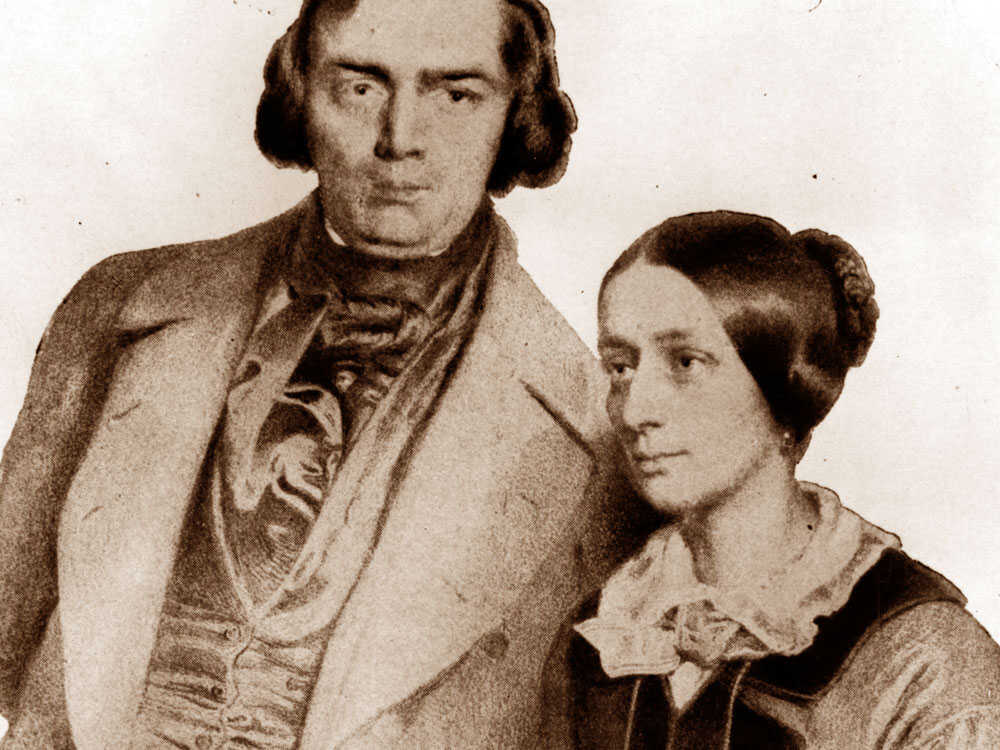
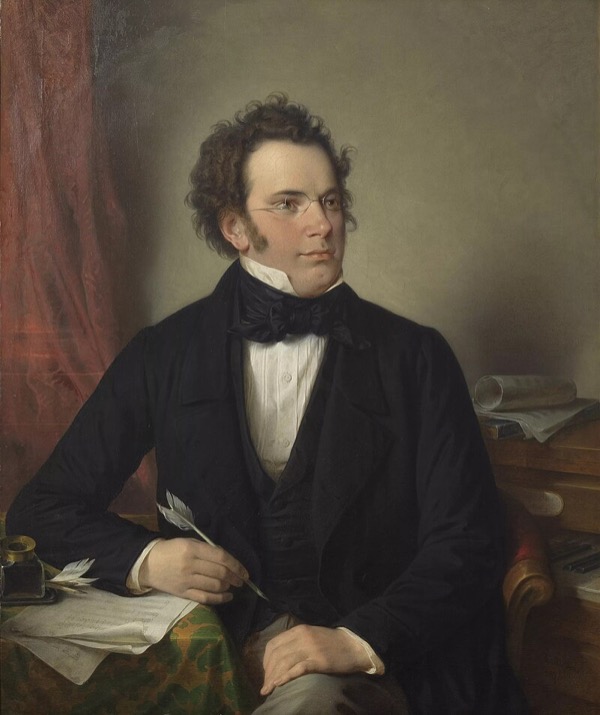
Robert and Clara Schumann
Her memoir gives invaluable insight into what it was like growing up with two famous parents, surrounded by the most famous musical figures in late nineteenth-century Europe.
You can read the whole book here for free.
But in case you don’t have time to read it, we’ve picked out ten tidbits that paint a picture about what Clara Schumann was really like.
1. Clara Schumann gave birth to her daughter Eugenie Schumann a few hours after going to a party for German Romantic painter Friedrich Wilhelm Schadow.
The memoir begins with a remarkable set of sentences:
I was born in Dusseldorf in December 1851, the seventh of eight children, boys and girls, and my father communicated the event to Grandmamma Bargiel in the following letter :-
“DEAR MAMMA! – You know what a letter from me usually means. Once more, Heaven has protected Klara, and in the early hours of the morning, a healthy child, a girl, was born.
Fancy! Only three hours earlier, Klara and I were present at the Jubilee party for Professor Schadow, which we did not want to miss.
I am so happy that Klara is bright and well in spite of everything, and we will take great care of her during the next few weeks.”
2. Growing up, the Schumann children were terrified by Robert Schumann’s fur coat.
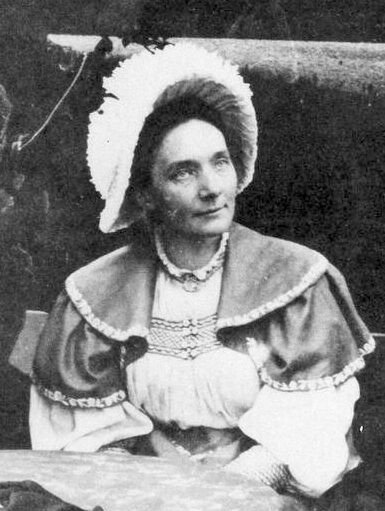
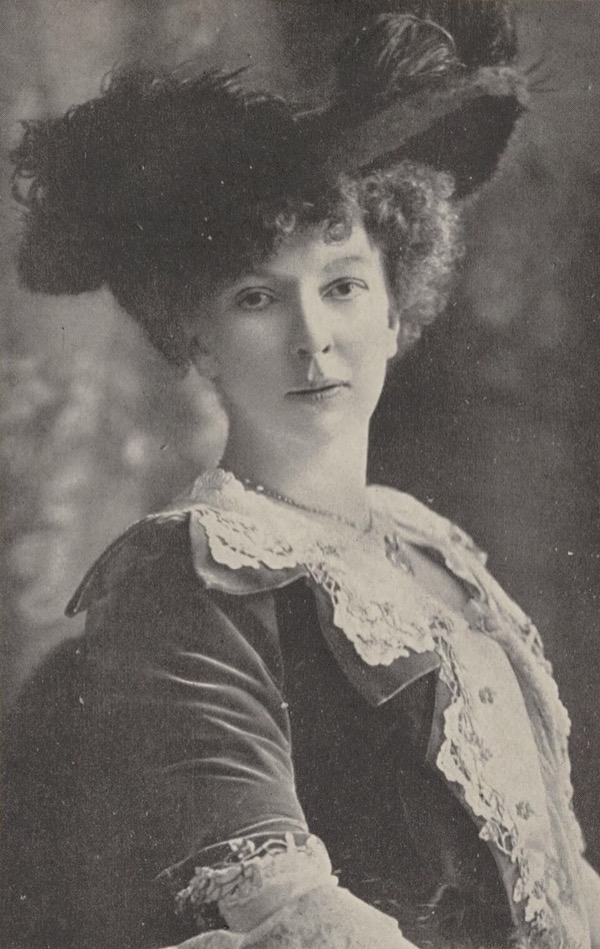
Eugenie Schumann
Eugenie was young enough when her father died that she had no memory of him, but his presence hung over the house nevertheless, in the form of a particularly terrifying fur coat that he had worn during an 1844 tour:
[I don’t have] many remembrances of my mother from the early years of my childhood.
The first is from the Düsseldorf years. We, the younger children, were playing together in the dining room one evening, when it suddenly occurred to us: We will go in to Mamma, she will give us chocolates.
But we had first to cross another room, to our childish imagination enormous, with a stand in one corner, on which hung a large yellow fur coat that my father had worn on his trip to Russia.
We dreaded this fur coat like a wild animal, and needed all our courage to pass it.
We took one another by the hands, bolted through the darkness and burst into Mamma’s room.
There she was, sitting at her writing-desk by the light of a bright lamp. I can still see her, her slender form dressed in a black velvet bodice and silk skirt.
How safe we felt after the danger we had braved! She kept us with her for a little while, took the coveted sweets out of a drawer of her desk, and sent us away again.
Clara Schumann’s Scherzo No. 2
3. The Schumanns’ eldest child, Marie, was a caretaker for the rest of the family and a priceless helper to her mother.
In her memoir, Eugenie remembers the remarkable role that her oldest sister played in the family:
Marie managed the whole household; she superintended the kitchen and store-room, which was no easy matter, considering the number of people in the house and the constant coming and going of visitors. Besides this, she had the care of us little ones, our health, our clothes; all this rested on her young shoulders.
As far as I remember, I seldom wore as a child a dress which her clever fingers had not made. And she was not content to make things as simply as possible-they had to be pretty and in good taste. I see the materials before me now, which were mostly brought from England by my mother, white with red, white with blue, stripes, dots, sprigs.
I can still feel the tension with which I watched the dress grow. Then, how great the excitement when the first sewing machine came into the house, and the intricate marvel was explored!
My mother’s wardrobe also had to be seen to, shopping to be done, while Marie’s own musical education could not be neglected. And she did all these things without fuss, quietly and cheerfully, expecting no appreciation of any kind.
My childish mind guessed, even in those early years, that this eldest sister was a treasure to Mamma, to us all; but it was not until later, in my ripest years, that I fully understood her worth. I now look back with deep emotion upon this life, full of labour and care for those she loved.
4. Clara Schumann’s favorite dish was “pancakes with a lot of sugar.”
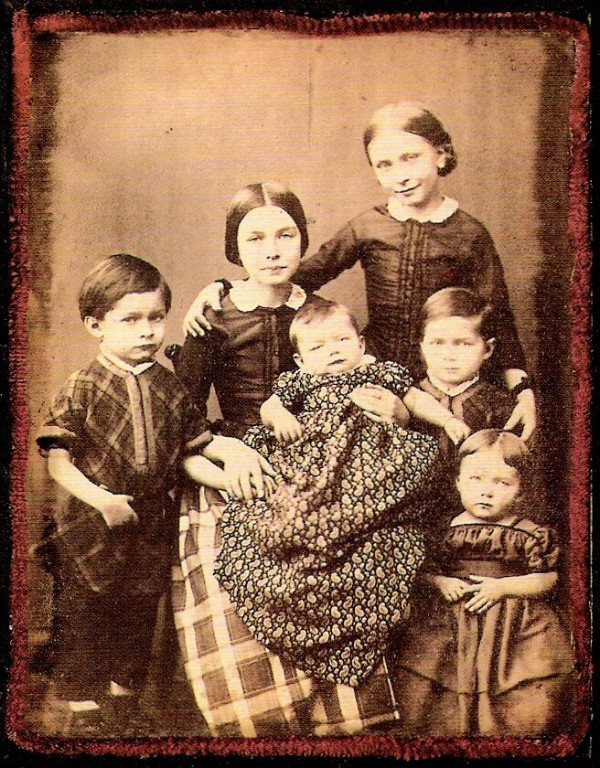
Robert and Clara Schumann’s children
Eugenie describes what day-to-day life was like with Clara. She loved going on long, vigorous walks, and loved having her children join her.
Our walks usually included a meal at an inn, which lent an additional charm to our walk; and Mamma’s favourite dish, pancakes with a lot of sugar, and lettuces with a lot of vinegar, was ours too.
Then she would tell us of the cucumber with vinegar which she kept in her cupboard in the summer when she was a girl, and ate from time to time to refresh herself during her long hours of practising.
5. Clara Schumann never practised slowly, and she memorised everything.
Eugenie recalls:
She never practised in the sense usually attached to the word. I have never heard my mother practise slowly, bar by bar.
She had overcome all technical difficulties when she was a child and grew up with the new creations of Chopin, Mendelssohn, and Schumann, with those of Thalberg, Henselt, and Liszt. She had made herself acquainted with all these works immediately on their appearance.
Now only those of Brahms were new to her, and to these she gave the right interpretation at first sight, without preliminary study.
She penetrated so deeply into the spirit of each work that they became almost part of her. They lay enshrined in her soul, and when she drew them forth, they seemed to have been newly created.
As a rule, she practised without the music. I remember a few occasions when I came into the room while she was at work; she asked me to find her the music in order to verify some point or other.
Clara Schumann’s Impromptu in E-major
6. Clara Schumann would read letters while practising scales.
We never disturbed Mamma without good cause when she was at the piano, but we knew that we might come in at any time, and that she even liked it. She always gave us a kind glance whenever we entered the room.
I used to wonder at the time that she could go on playing so unconcernedly while she talked to us of other things. While she played scales, she would often read letters open on the desk in front of her.
7. Clara Schumann hated signing autographs, but signed them anyway.
Scattered throughout the memoirs, Eugenie provides transcriptions of letters from her mother and Marie to add colour to her narrative.
This letter from Clara is in reaction to news of a forged autograph that Eugenie gave to a friend named Lamont. In it, Clara explains how she herself feels about autographs:
DÜSSELDORF, 24 December 1866.
Your letter of the twelfth inst. gave me great pleasure; it was of the kind which I enjoy receiving from one of you.
But you have put yourself in the wrong with your friend Lamont. Think of what you yourself would have felt if you had asked her for her autograph and she had passed off someone else’s on you. That was really insulting to her.
Remember how often perfect strangers ask me for my autograph, how inconsiderate it is of them, how it bothers me and takes up my time, yet I should never have the heart to refuse. How much more would a friend feel a refusal! Do you not feel how hard you have been upon her?
Believe me, my dear child, intellectual gifts are a great addition to life, but the real treasure, which lends brightness to it as nothing else does, is a kind heart.
8. Clara Schumann had a slight lisp, and would call Brahms “Gohannes.”
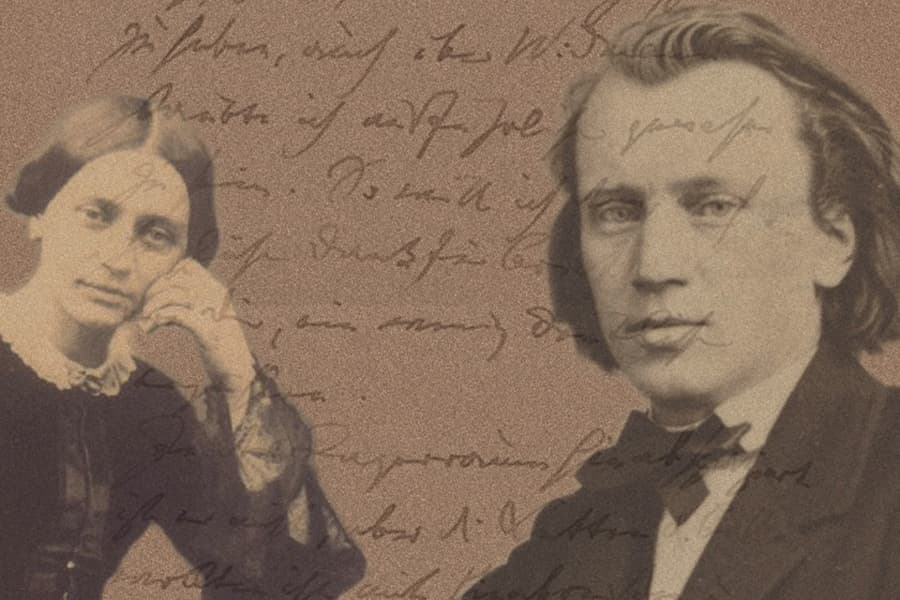
Clara Schumann and Brahms © londonsymphonia.ca
Her mouth, which ever spoke lovingly and tenderly to us, expressed in its lines a firm character.
A shade of irony would sometimes steal into the corners of the lips which closed lightly upon each other.
Her voice was sympathetic and mellow; we children loved her slight lisp. Her Saxon dialect gave rise to a great deal of teasing, when, for instance, she would say ‘Gohannes’ instead of Johannes.
A Brahms intermezzo written for Clara Schumann
9. Clara Schumann had a very simple definition of happiness.
She once found me reading Hilty’s Happiness and asked me whether it was a good book. I read her a few passages, and she said, “I don’t understand a word of it, but happiness seems to me a very simple thing. You need only do your duty under all circumstances.”
10. The one thing that Clara Schumann would save from a flooding house? Her husband’s music.
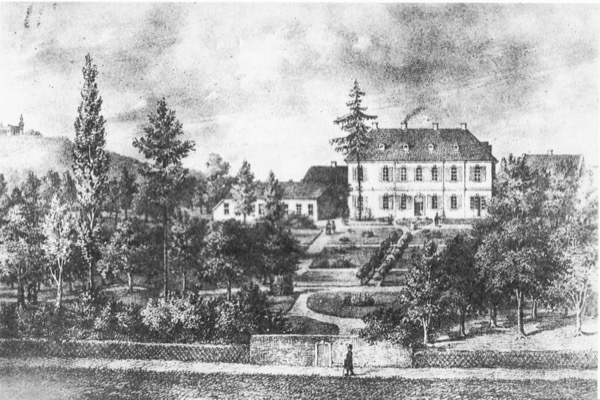
At one point in the book, the Schumann family is at their summer cottage in the resort town of Baden-Baden when the river Oos starts rising in a terrifying storm.
In the early hours of one morning, however, Marie was awakened by the noise of rushing waters, which seemed to come from the basement. She jumped out of bed and down the stairs, and when she had reached the head of the kitchen stairs, she saw a swirling flood filling the kitchen. She looked at it horror-struck, then hastily roused us, saying that the walls could not possibly stand the force of the waters.
I dressed and ran down to see the devastation. The whole village was astir. Men stood with long poles on the bridge, which was already partly flooded, and pushed logs and other floating objects under the arches to prevent its destruction.
I ran back upstairs, and found my mother in a hat and mantilla on the landing, with three large volumes bound in Russia leather under her arm; they were a collected edition of my father’s works which a Russian publisher who was not restricted by copyrights had recently sent her. She has often been teased about this choice.
In the end, the cottage was fine, and the town recovered. But in a moment of danger, the flood had provided a reminder of what meant the most to Clara Schumann: Robert Schumann’s music.
For more of the best in classical music, sign up for our E-Newsletter