Rain has long been a muse for composers of classical music.
Its delicate patter on eaves, the way it drips drops off leaves, and the rousing ruckus that happens when a thunderstorm gets intense have inspired some of the most evocative pieces in the repertoire.
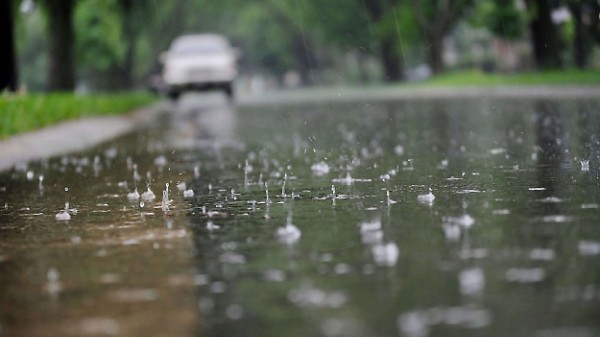
© mynews13.com
Put on your slicker and your boots and join us as we listen to fifteen pieces of classical music about rain!
Symphony No. 6 by Ludwig van Beethoven (1808)
Beethoven’s sixth symphony is nicknamed the Pastoral. It portrays scenes from the countryside in musical form, including a babbling brook, a gathering of country peasants, and a shepherd’s song.
In the fourth movement, Beethoven paints a picture of a thunderstorm that includes orchestral effects evoking thunder, lightning, and rain.
Tränenregen from Die schöne Müllerin by Franz Schubert (1823)
Die Schöne Müllerin is a song cycle by Franz Schubert.
The cycle consists of twenty poems set to music. The poems trace the narrator’s doomed love affair with the beautiful miller’s daughter.
In the tenth song, “Tränenregen” (“Rain of Tears”), the narrator and his beloved are together near a brook.
He is gazing at her in adoration when she says, “A rain is coming – farewell, I’m going home.” The rain makes the narrator realise that she does not feel as strongly about him as he does about her.
Prelude, Op. 28, No. 15, “Raindrop Prelude”, by Frederic Chopin (1838)
In 1838, Chopin and his lover, the authoress George Sand, took a vacation on the island of Mallorca.
According to Sand’s autobiography, one night while playing piano during a rainstorm, Chopin imagined himself floating dead in a lake, with raindrops falling on his body.
It is believed that he composed this prelude at that time.
A recurring A-flat in the prelude’s first theme calls to mind rain dripping off the eaves.
Violin Sonata No. 1 by Johannes Brahms (1878-79)
Brahms’s first violin sonata features motifs from two Brahms songs: Regenlied (“Rain Song”) and Nachklang (“Distant Echo”) from his op. 59. For this reason, it’s sometimes known as the “Rain Sonata.”
The raindrop rhythmic motif turns into a funeral march in the middle of the second movement.
Water Droplets by Jean Sibelius (ca. 1880)
This brief, twelve-measure-long work is composed for violin and cello and is to be played pizzicato (i.e., by plucking the strings). This creates a raindrop-like effect.
Historians don’t know exactly when Water Droplets was written, but it seems like it dates from between 1875 (the year he turned nine) and 1881 (the year he turned fifteen). It is one of the earliest surviving works by Sibelius.
The Rainy Day by Amy Beach (1883)
American composer Amy Beach wrote this song in 1883, the year she turned sixteen.
It sets a poem by Henry Wadsworth Longfellow, The Rainy Day, which points out the inevitability and necessity of bad days: “Into each life some rain must fall, / Some days must be dark and dreary.”
Her choice of poem may have been influenced by the fact that Longfollow had just died the year before.
Spring Showers (Foraarsregn) by Edvard Grieg (1889)
This song comes from a collection of six songs for voice and piano by Grieg. Foraarsregn (“Spring Showers”) is the last of the bunch. All are infused with a typically Grieg-ian spirit of Scandinavian folk music.
Jardins sous la pluie from Estampes by Claude Debussy (1903)
Estampes (“Prints”) is a three-movement work for solo piano.
Jardins sous la pluie (“Gardens in the Rain”) is the final movement. It portrays heavy spatters of rainfall in cascades of pitter-pattering sixteenth notes.
Debussy wove two French folksongs into the movement’s texture – “Dodo, l’enfant do” and “Nous n’irons plus au bois” – which suggests an aura of childlike wonder or innocence.
Cloudburst from the Grand Canyon Suite by Ferde Grofé (1929-31)
Ferde Grofé was an American composer and arranger, possibly best known for his arrangement of Gershwin’s jazz-tinged Rhapsody in Blue.
However, his most famous original music is probably the Grand Canyon Suite.
It’s five movements long, and each one evokes a particular experience a traveler can have in the canyon, including witnessing a majestic sunrise and taking a trail ride.
The final movement documents a cloudburst: a sudden, overwhelming rainfall. You can hear the thunder in the percussion section.
Earth and Air and Rain by Gerald Finzi (1928-1935)
This work is a ten-song cycle by British composer Gerald Finzi, composed for baritone and piano.
The poetry that Finzi set was written by Victorian Era author Thomas Hardy.
The song “Proud Songsters” is an ode to birds. The narrator remarks how just a year ago, the young birds’ songs didn’t yet exist:
No finches were, nor nightingales,
Nor thrushes,
But only particles of grain,
And earth, and air, and rain.
Still Falls the Rain from Canticle III by Benjamin Britten (1954)
This work was written by British composer Benjamin Britten and includes parts for piano, French horn, and tenor.
It’s based on a famous 1941 poem by British poet Edith Sitwell, which addresses the senseless destruction of the Blitz, and draws comparisons between it and the suffering of Christ on the cross.
In a weary tone, Sitwell recounts details of the crucifixion, observing that God was still present in that tragedy…and that, despite the magnitude of humanity’s loss, rain still falls.
Noye’s Fludde by Benjamin Britten (1958)
Benjamin Britten first floated the idea of writing an opera for children in the late 1940s. He pursued other projects first, but in 1957, he decided to write one based on the Biblical story of Noah and the flood.
At the premiere, the parts of Noah’s wife and the voice of God were given to professional singers. The rest of the voices were amateur children.
The Sunday Times wrote that the performance was “a curiously moving spiritual and musical experience.”
It’s Gonna Rain by Steve Reich (1965)
When writing It’s Gonna Rain, minimalist composer Steve Reich recorded a San Francisco street preacher telling the story of Noah and hailing the end of the world.
Reich took the recording and spliced and looped it, turning it into something new.
Reich wrote about this piece, “It’s Gonna Rain … is a very heavy piece written in the shadow of the Cuban Missile Crisis, and the voice is a spectacularly moving, intense voice about the end of the world.”
Rain Dreaming by Tōru Takemitsu (1986)
Composer Tōru Takemitsu wrote at the intersection of multiple identities. He was born in Japan in 1930 and came of age in a time when anti-Western sentiment was growing. When he first heard a recording of Western classical music, he had to listen with others, in secret.
Later in life, he came to embrace traditional Japanese music and to merge Western musical ideas with Japanese ones.
The timbre of the harpsichord in Rain Dreaming has a certain similarity to the Japanese shamisen as well as the Balinese gamelan, which he also took inspiration from.
Lavender Rain from The Violin by Anna Clyne (2009)
Lavender Rain comes from a group of seven short pieces written by Anna Clyne called The Violin.
Shortly after the death of her mother, Clyne bought an inexpensive violin at a charity shop, had it fixed up, and bartered with friends for repair costs and lessons. This led her to focus creative energies on the violin while she was in mourning.
In a program note, Clyne explained:
One of my favourite pieces of music for solo violin is the Presto from Bach‘s Violin Sonata No. 1 in G minor, BWV 1001. On the anniversary of my mother’s death, I composed six more pieces to make a suite…which became the opening movement for The Violin – composing one piece an evening, finishing with Lavender Rain on the day of her anniversary.
The work is written for either two violins and tape, or five live violins.
Conclusion
We hope you’ve enjoyed our exploration of classical music about rain!
The next time the clouds get heavy and you start hearing the pitter-patter of rain on your windowsill, you’ll know exactly what music to listen to.
For more of the best in classical music, sign up for our E-Newsletter