This new release from prize-winning Russian pianist Anna Geniushene explores the early creativity of the great Romantic composers Chopin, Schumann, Brahms, Berg and Tchaikovsky, revealing the ambition, curiosity and individuality that shaped their musical identities.
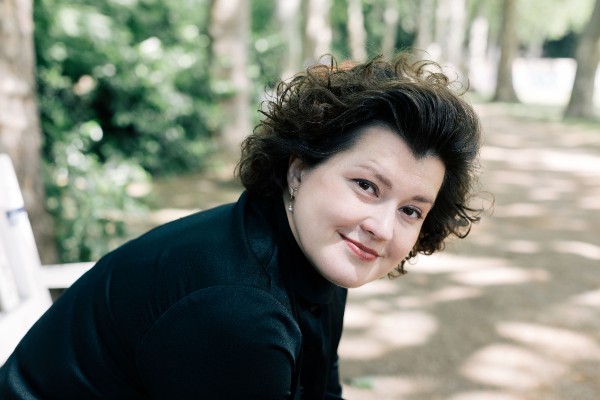
Anna Geniushene © Masha Kushnir
‘The title Opus 1 carries profound significance. It represents a beginning, an assertion of identity, and the boundless potential of creativity. For some composers, an Opus 1 was a carefully chosen first statement; for others, it was simply the first work they deemed worthy of publication. Regardless of intention, each of these pieces marks a moment when a composer stepped forward and said, “This is where my journey begins.”’ – Anna Geniushene, pianist
‘Opus 1’ does not necessarily indicate the first-ever piece written by the composer, but rather the first published work. The works featured on Anna Geniushene’s new album are interesting in that they all contain fascinating pre-echoes of the composers’ later music, as well as highlighting the diversity, originality and future maturity of these composers.
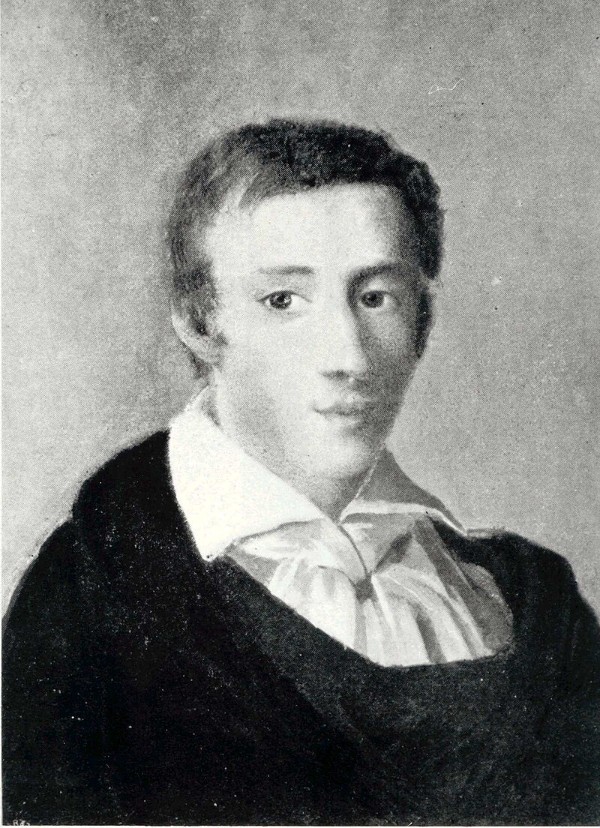
Frédéric Chopin
Chopin composed his Rondo in C Minor when he was just fifteen. This sparkling work is a vibrant opening for this album – a piece that already bears all the hallmarks of his mature style – virtuosity, expression and an unmistakable lyricism – yet feels that it owes more to the bravura tradition of early nineteenth-century pianism.
Fryderyk Chopin: Rondo in C Minor, Op. 1 (Anna Geniushene, piano)
“My first published piece was Scherzo à la russe, Op. 1″ so wrote Tchaikovsky in a letter to Nadezhda von Meck, in 1879. Dedicated to the great pianist Nikolai Rubinstein (who famously rejected Tchaikovsky’s first Piano Concerto as unplayable), the Scherzo à la russe and Impromptu in E-flat minor both show hints of the composer’s later style, particularly that of the Nutcracker ballet score. Tchaikovsky composed his Opus 1 when he was a young professor at the Moscow Conservatory and still finding his compositional voice.
The Scherzo, based on a Ukrainian song which the composer heard from the gardeners at Kamenka, the home of his sister, begins innocently enough, with a naive melody, played with a delightful simplicity by Geniushene, before moving into a warm, chorale-like section. The Impromptu, meanwhile, marked ‘Allegro Furioso’, opens with an excitable gallop, cast in unremitting quaver triplets, which gives way to an arresting, Chopin-esque middle section played with great expression and beauty of tone.
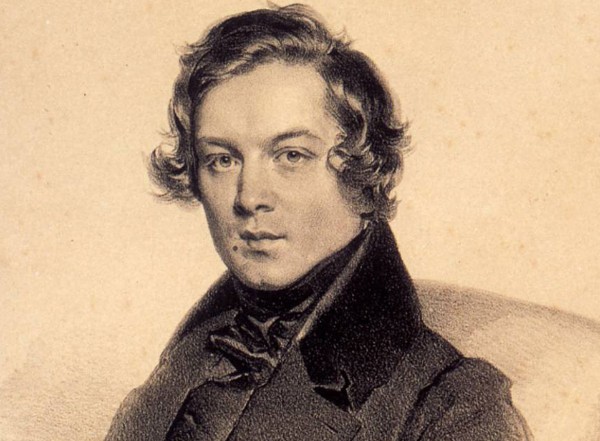
Robert Schumann
Schumann composed his ‘Abegg Variations‘ when he was 18. Despite its opus number, this work was neither Schumann’s first nor his first set of variations. With its ‘letter-to-pitch’ derivations, the music prefigures ‘Carnaval’, and the later fugues on the name BACH, and showcases Schumann’s distinctive contrasting musical voice or rather “voices” – from lyrical grace to sudden dramatic outbursts, all infused with a poetic sensibility that came to define his music. Here, each variation is executed with delicacy of touch, a mellifluous, romantic tone, and sparkling flourishes coupled with a sensitive appreciation of Schumann’s contrasting moods.
Robert Schumann: ‘Abegg Variations in F Major, Op. 1’ by Anna Geniushene
The romanticism of Schumann is followed by Alban Berg’s single-movement Sonata. Composed in 1907-08 under the guidance of Arnold Schoenberg, the work is tightly constructed with a continuously unfolding narrative arc. Though written at the beginning of Berg’s career, this work sees Berg pushing towards the atonality, expressive depth and structural complexity that would come to define his later works, and the Sonata is deftly handled by Geniushene, bringing dramatic intensity and lyricism to this haunting piece.
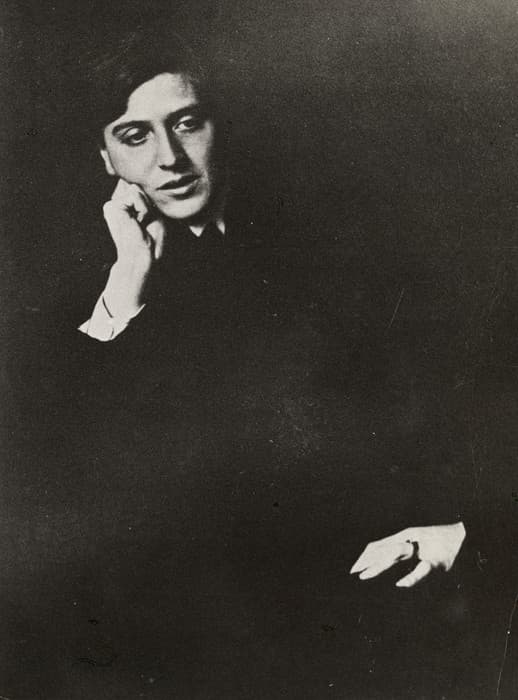
Alban Berg, 1920s
While Berg’s compositional voice may not be fully formed in his Sonata, Brahms’s Sonata in C Major, Op. 1 is a work of towering ambition. Although it was not the first piece he composed, it was the first he chose to publish, signalling his arrival as a composer of serious intent. Completed in 1853, when Brahms was just twenty, the sonata was written at a time when he had recently made a profound impression on Robert and Clara Schumann—an encounter that would shape his early career.
Johannes Brahms: Piano Sonata No. 1 in C Major, Op. 1 – II. Andante (nach einem altdeutschen Minneliede) (Anna Geniushene, piano)
Grand in scope, rooted in the German tradition of Beethoven and Schumann, the Sonata opens with a thrilling opening gesture reminiscent of Beethoven’s ‘Hammerklavier’ Sonata, offset by a tender second theme, which prefigures the composer’s later writing for the piano. The slow movement is tender and songful, the Scherzo all Beethovenian swagger and rhythmic vitality, while the Finale reprises the ‘Hammerklavier’ idea in a dancing Rondo theme with contrasting episodes. Here, Geniushene moves seamlessly between power and resolution, warmth and lyricism.
‘To perform these works is to engage with the raw energy of creation itself, to stand at the threshold of something new and full of possibility. This album is not just a collection of early works—it is a celebration of the act of beginning, a reminder that every great artistic journey starts with a first single step.’ – Anna Geniushene
This impressive release from Anna Geniushene offers fascinating insights into the early work of these great composers and demonstrates how their early creativity set them on a path of greatness, each with a distinctive and individual musical voice.
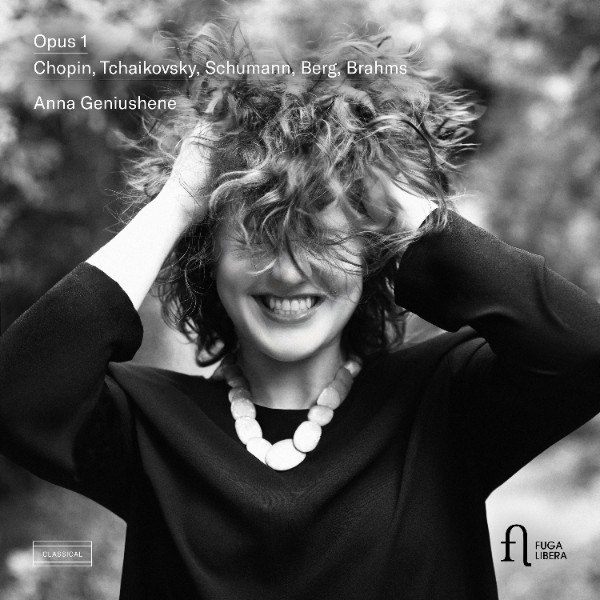
Opus 1 is available now on the Fuga Libera label.
For more of the best in classical music, sign up for our E-Newsletter