For many years, Franz Liszt was a bohemian. Unsurprisingly, given his playboy reputation, he never married.
However, he did have two long-term relationships that were very much like marriages: one with Countess Marie d’Agoult from the ages of 22 to 29, and another with Princess Carolyne zu Sayn-Wittgenstein from the ages of 36 to 75.
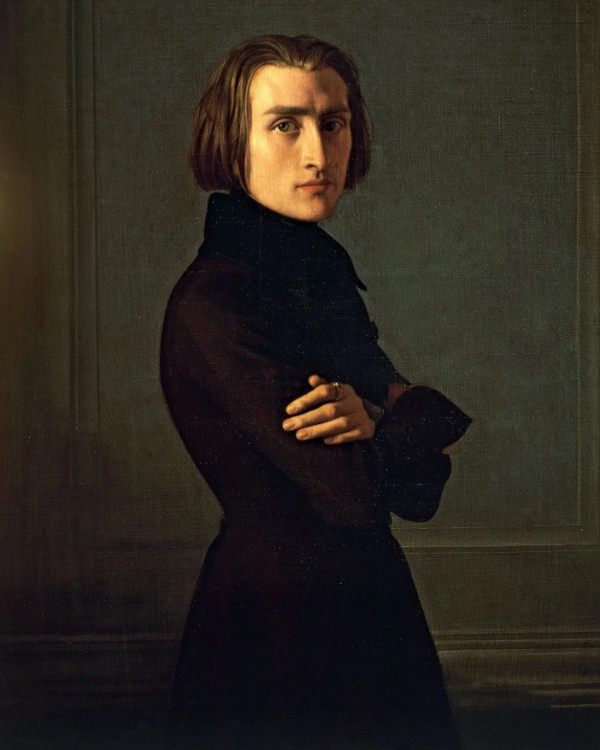
Franz Liszt
Over the course of those relationships, he played a paternal role to six children.
- Two – Louise and Claire – were Marie d’Agoult’s children from her marriage to Count d’Agoult.
- Three more – Blandine, Cosima, and Daniel – were his biological children with Marie d’Agoult.
- The last child was Marie, the biological daughter of Princess zu Sayn-Wittgenstein, who he viewed as a kind of stepdaughter.
Today, we’re going to look at his relationships with all six children and what happened to all of them.
Liszt’s Relationship with Marie d’Agoult
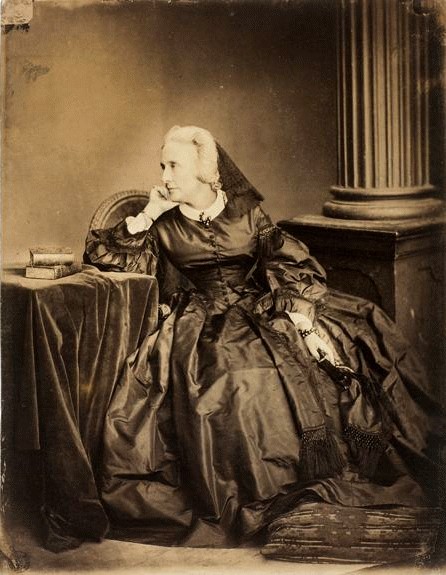
Marie d’Agoult in 1861
In 1827, when she was 22, Marie married Count d’Agoult, who was fifteen years her senior. They were deeply unsuited for each other. Nevertheless, they had two daughters together, Louise in 1828 and Claire in 1830.
Liszt met Countess Marie d’Agoult around New Year’s 1833. They began getting to know each other, and in 1834, she began inviting him to perform at her salons. Their friendship, initially based on artistic and intellectual connection, deepened to become romantic.
Louise d’Agoult (1828–1834)
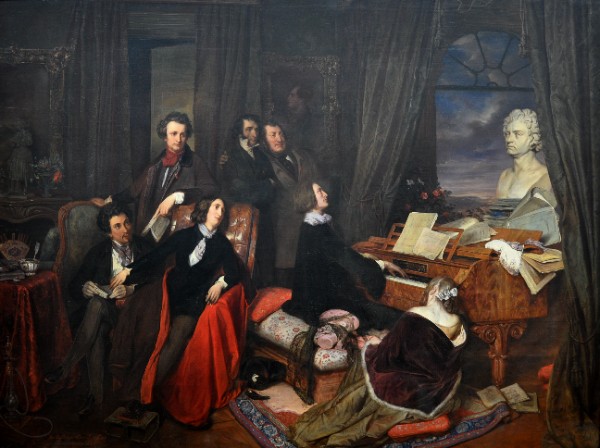
Marie d’Agoult and Liszt in portrait
Tragedy struck in December 1834 when Marie’s daughter Louise d’Agoult died at the age of six. She succumbed quickly to an illness labeled “cerebral fever.”
Marie was absolutely devastated and became suicidal. She was furious with everyone: God, her unloving husband, and even her surviving daughter Claire, who was too young to understand what had happened, and had to be sent away to boarding school while her mother grieved.
Liszt wrote the countess deeply charged letters, sympathising with her grief. In March 1835, a few months after Louise’s tragic death, Marie became pregnant with Liszt’s child.
Once Marie realised she was pregnant, she made a fateful decision: she was going to leave her husband and live openly with Liszt, and accept the societal condemnation that would come with that decision. By the end of May, she departed for Basel, Switzerland, where Liszt would join her.
Claire d’Agoult (1830-1912)
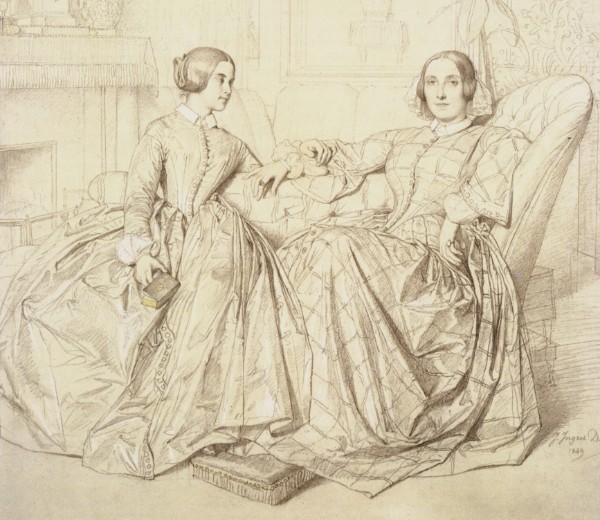
Marie and Claire d’Agoult
In that time and place, the custody of children automatically reverted to the father. Marie’s family tried to get her to reconsider her choice by sending her letters from her five-year-old daughter Claire, who had been left behind. Fortunately, even though her parents would never reconcile, Claire wasn’t barred from seeing her mother, as some children in similar situations were.
However, that didn’t mean that the two had a particularly close relationship. Claire attended a convent school for most of her childhood. Astonishingly, she was in her twenties before she ever learned that her mother had been in a relationship with Liszt, or that she had any half-siblings.
Despite her mother’s scandalous reputation, in May 1849, Claire succeeded in marrying an aristocrat named Guy de Charnacé. Unfortunately, the marriage was unhappy, and he made disastrous financial decisions that brought the couple to ruin. She later had an affair with a doctor. Professionally, she ended up becoming an art critic.
Toward the end of her mother’s life, Claire served as her caretaker during stretches of debilitating physical and mental illness.
Blandine Rachel de Flavigny Liszt Ollivier (1835-1862)
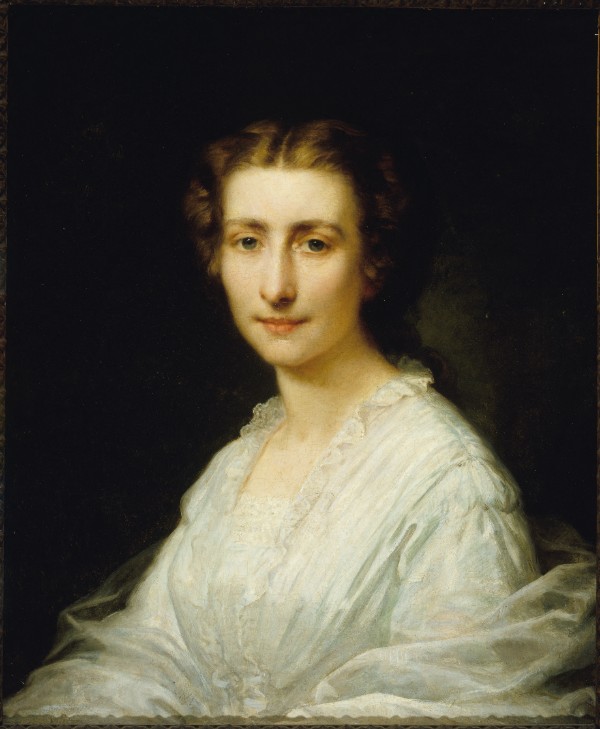
Blandine Liszt
Blandine was Marie and Liszt’s first child, born in December 1835. Her birth records included false parental identities, because to say she was Marie’s child would mean that Count d’Agoult would have legal custody rights to her, too.
As was common practice at the time, the new parents left Blandine with a foster family to be weaned. During this time, Liszt concertized (to Marie’s frustration), while Marie spent time studying and writing.
In 1839, as her relationship with Liszt was becoming strained, Marie returned to Paris with her daughters. However, her mother failed to forgive her scandalous behaviour, and Marie had a difficult time establishing herself and her children in the city.
Eventually, Liszt brought Blandine and her younger sister Cosima to be raised in his mother’s home. Between 1845 and 1850, Marie and the girls had no contact, per Liszt’s wishes. That said, Liszt didn’t prioritise his children, either: he didn’t see them at all between 1845 and 1853.
In October 1857, Blandine married a French statesman named Émile Ollivier. Liszt was unable to make it to the ceremony.
In January 1862, Blandine wrote to Liszt to let him know that she was pregnant. She moved to southern France to live with her doctor brother-in-law and give birth there, and she had her baby on July 3.
She survived childbirth, but tragically, a horrific fate awaited her. Two months after the birth, she developed a swelling in her breast. She was forced to undergo a primitive mastectomy in an era before anaesthesia. The treatment didn’t work, and she died in September 1862.
Ollivier went to Paris to spend time with Liszt in their shared grief. During this time, Liszt composed Variations on “Weinen, Klagen, Sorgen, Zagen” (“Crying, complaining, worrying, fear”), which uses material from some of Bach’s religious works.
Liszt’s Variations on Weinen, Klagen, Sorgen, Zagen
Francesca Gaetana Cosima Liszt von Bülow Wagner (1837-1930)
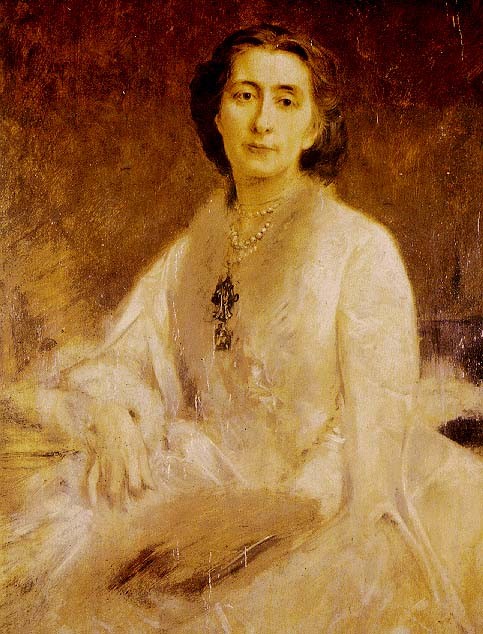
Cosima Liszt
The best-documented life of all of Liszt’s children is undoubtedly Cosima Liszt’s, who became one of the most important figures in nineteenth-century music.
She was born to Marie and Liszt on Christmas Eve, 1837. Since she and her sister Blandine were kept from their mother for large parts of their childhood, and Liszt went eight years without seeing them, she and her sister spent many of their early years in boarding schools, learning the social graces. After Liszt became involved with Princess zu Sayn-Wittgenstein in 1848, he hired the princess’s former governess to watch over Blandine and Cosima.
In 1853, when Cosima was fourteen, her father introduced her to Richard Wagner. Their paths would cross again later, fatefully.
In 1855, Liszt sent Blandine and Cosima to Berlin to live with the mother of Hans von Bülow, his most talented student. Her new teacher was taken by the teenage Cosima. The two were married in 1857.
Their marriage was never particularly passionate. Worse, when Cosima met von Bülow’s colleague Richard Wagner again in 1862, sparks began flying. Cosima was in a dark place at the time; Blandine had just died weeks earlier. The following year, Cosima and Wagner began their romantic relationship in earnest, and Cosima eventually gave birth to three of Wagner’s children…while still married to von Bülow.
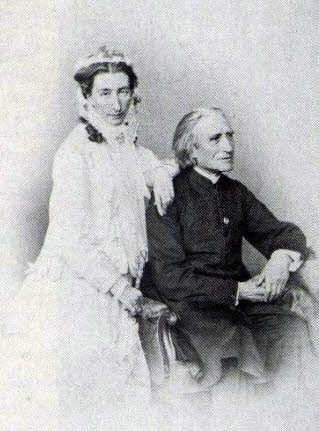
Liszt and Cosima
Eventually, she got a divorce in July 1870. She and Wagner were married the following month.
Over the years, Cosima would prove to be an invaluable aid to Wagner, and she devoted thousands of pages of diary entries to preserving his thoughts. She was beyond bereft when he died of a heart attack in 1883.
She was only forty-four when he died, but she never remarried. Instead, she devoted herself to overseeing the Bayreuth Festival, which helped to immortalise Wagner’s place in the operatic and cultural canon.
Liszt became a great Wagner advocate, too. In 1886, despite his advanced age and failing health, he came to the Bayreuth Festival. He ended up dying there.
Daniel Henricus Franciscus Joseph Liszt (1839-1859)
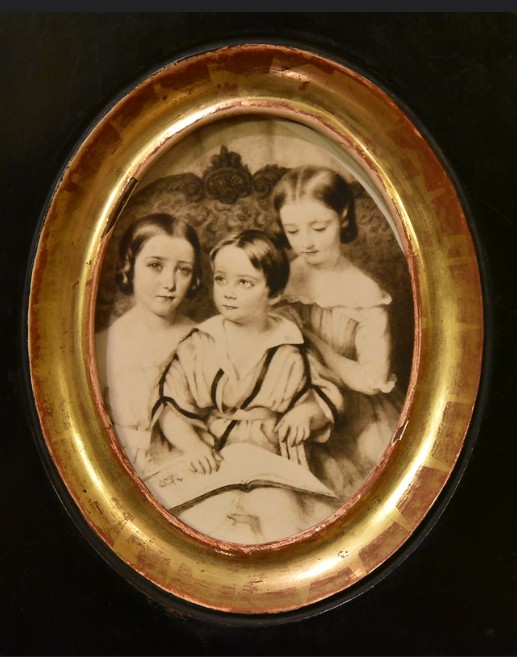
Portrait of Liszt’s children
Daniel Liszt was Liszt’s last biological child. Marie and Liszt’s relationship was strained by the time he was conceived in mid-August 1838; just a few months before, Marie had accused Liszt of infidelity while touring in Paris.
Marie gave birth to Daniel in May 1839 in Rome, sending him to live with a foster family to be weaned. That fall, Marie brought his older sisters to Paris to try to re-establish a social life there, a gambit that failed. Eventually, though, Liszt arranged for Daniel to go to boarding school.
He and his father both agreed that he should study law in Vienna. He moved there in 1857 at the age of eighteen. When his father’s former teacher, Carl Czerny, died in July 1857, Daniel was Liszt’s representative at the funeral.
Unfortunately, Daniel’s own health took a turn for the worse, and he was diagnosed with tuberculosis. He left Vienna and returned to his family in Berlin. Cosima served as his caretaker, and the experience traumatised her. Liszt arrived two days before his death to be there at the very end. Daniel died in December 1859. He was twenty years old.
Daniel’s death in 1859, combined with Blandine’s in 1862, deeply affected Liszt’s outlook on life and his art. In 1863, seeking answers and peace, he moved to a monastery outside Rome.
Marie zu Sayn-Wittgenstein (1837-1920)
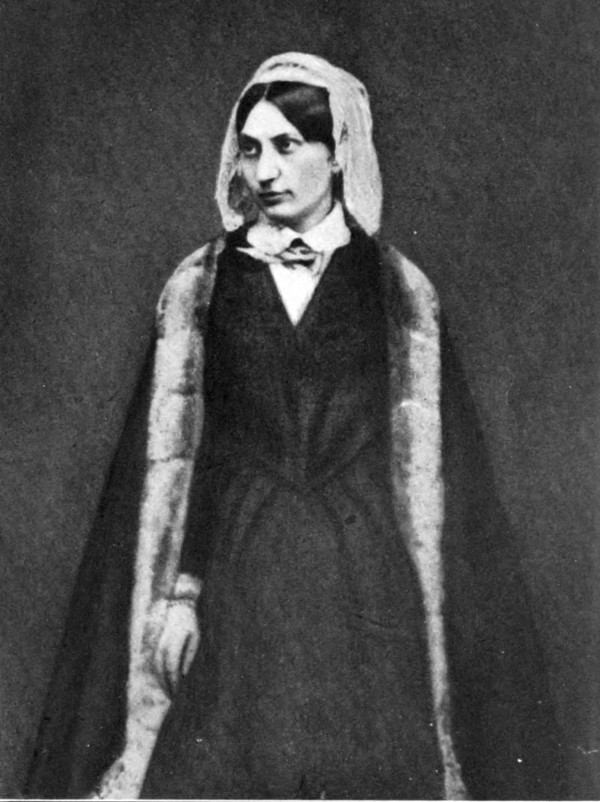
Princess Carolyne zu Sayn-Wittgenstein
Franz Liszt’s second long-term lover, Princess Carolyne zu Sayn-Wittgenstein, was born in present-day western Ukraine in 1819.
In 1836, when she was only seventeen, her father pressured her into marrying Prince Nicholas von Sayn-Wittgenstein-Berleburg-Ludwigsburg, who was seven years her senior.
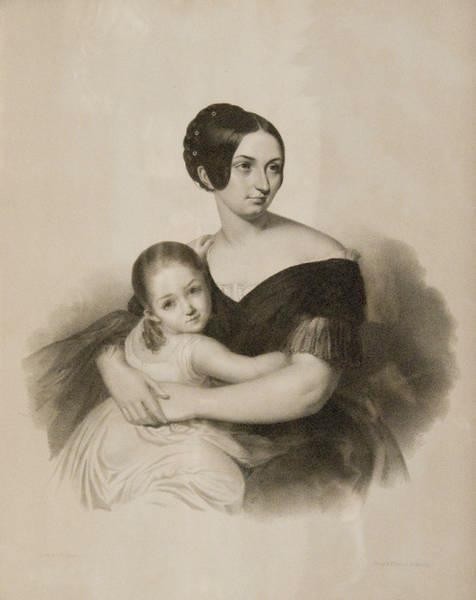
Carolyne zu Sayn-Wittgenstein and Marie
The marriage was unhappy, and they only had one child, Marie, in February 1837.
In 1844, Carolyne inherited money from her father, which granted her a certain amount of independence. Three years later, in February 1847, she met Liszt and invited him to come to her daughter’s tenth birthday party. Liszt and Carolyne got along well, and soon they fell in love.
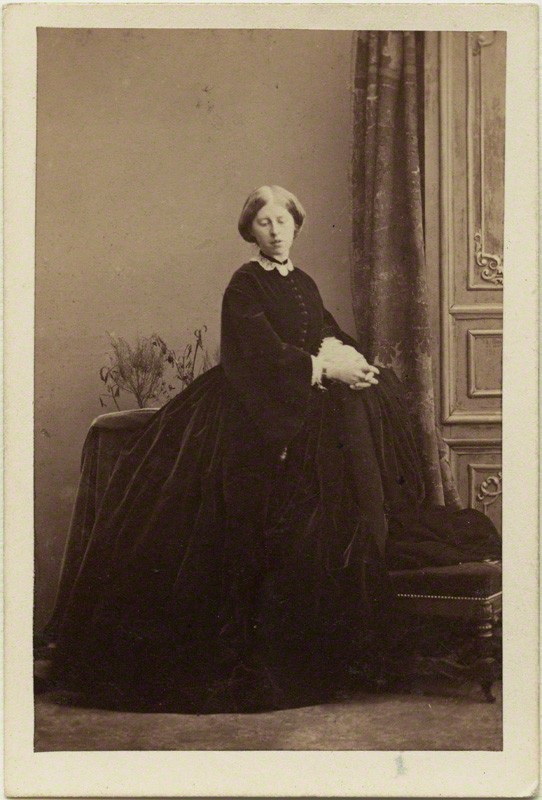
Marie zu Sayn-Wittgenstein
In 1848, the three of them moved to Weimar, where Liszt began focusing on composition. Therefore, as a child, Marie met a veritable parade of great musicians and artists who came to visit Liszt.
In 1859, Marie married Prince Konstantin zu Hohenlohe-Schillingsfürst, an official in the Austrian court, and moved to Vienna with him. Between 1861 and 1872, she had six children.
By the time of her marriage, she had lived as Liszt’s de facto child for over a decade, longer than his biological children had. She gave interviews later in life discussing the experience.
She died in 1920.
Liszt dedicated the piano suite Glanes de Woronince, inspired by Ukrainian folksong, to Marie.
Liszt’s Glanes de Woronince
For more of the best in classical music, sign up for our E-Newsletter