Chinese composer Ye Xiaogang (b. 1955) has been writing an extended series of musical pieces based on plants. His Tropic Plants series includes works such as Scent of Green Mango, December Chrysanthemum, Hibiscus, Gardenia, Enchanted Bamboo, Datura, The Silence of White Poppy, and The Faint Ginkgo. Some are orchestral works and others are for smaller ensembles.
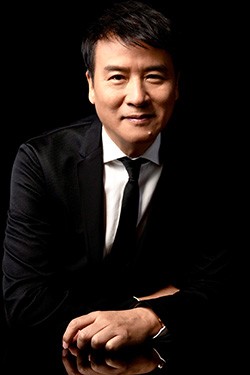
Ye Xiaogang
His latest addition to the series is The Faint Ginkgo, op. 92. Given its premiere by the Shanghai Symphony Orchestra in 2019, the work was revised in 2021 and again in 2023 for a performance at the Beijing Concert Hall.
The ginkgo is one of the oldest tree species in the world. The leaf of the ginkgo is a unique, fan-shaped leaf that is smooth on its front side, yet has what appears to be joined pine needles on the backside.
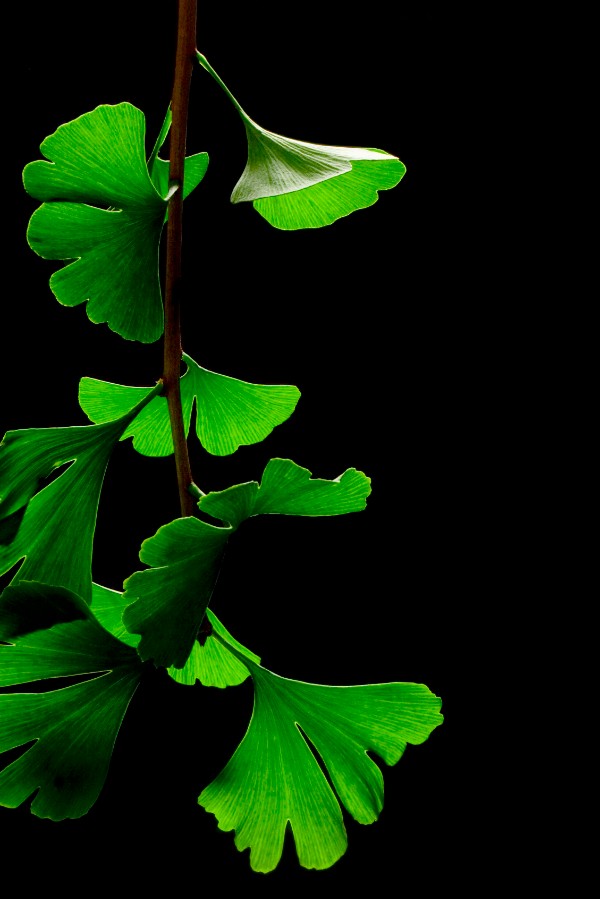
Ginkgo Leaves in Summer (photo by James Field)
In his 21st-century work, Ye has tried to indicate the curiosity scientists have had about this ancient and mysterious tree.
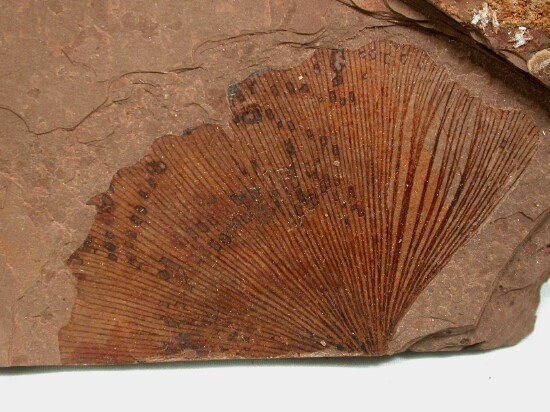
A fossil ginkgo leaf from the Eocene epoch from the McAbee Fossil Beds, British Columbia
The composer says, ‘With unique harmonic language and refined and subtle orchestral timbral changes, the work expresses the curiosity that human beings have for the ancient, yet still unknown, things in this new century, the concern for the interdependent relationship between human beings and nature, and humans’ longing for beauty’.
Xiaogang Ye: The Faint Gingko, Op. 92 (revised version 2023) (Hangzhou Philharmonic Orchestra; Yang Yang, cond.)
The mango originated in tropical Asia and is now present around the world in nearly 150 different cultivars. Some have been bred for colour, other for a decrease in fibre. Others were developed to maintain the texture but to reduce its sugar, making it better for diabetes patients who crave a sweet treat. Be they red, golden, or green, mangos have a flavour that appeals to all.
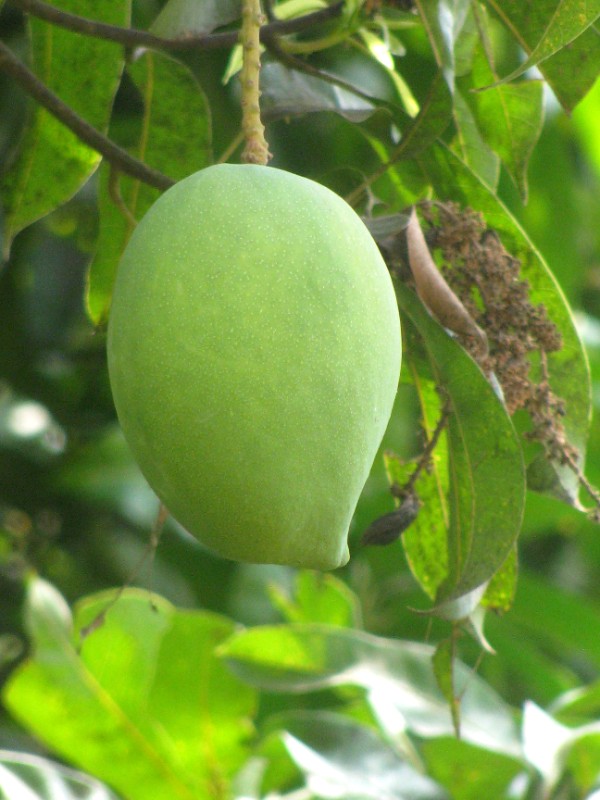
Green mango
One of the most famous works in the Tropical Plants series has been the Scent of Green Mango, Op. 42, a work for piano and orchestra. Ye first began work on the piece in 1998 and completed it in 2014. Here, the composer looks at light and shadow, and adds an emotional value by expressing his thankfulness to nature for the aromatic fruit.
Xiaogang Ye: Scent of Green Mango, Op. 42 (Xiaotang Tan, piano; Rheinland-Pfalz State Philharmonic Orchestra; Stefan Malzew, cond.)
December Chrysanthemum, Op. 52, was commissioned by the Beijing Nicolet International Flute Competition Committee. It is a work in memory of Ye’s daughter Nini, who died at just 18 months. The arrival of winter sees the end of the fall flowers, of which the Chrysanthemum is one of the most colourful. Coming in colours ranging from a nearly fluorescent red through comforting yellows to stark white, the chrysanthemum is a perennial flower that originated as a flowering herb in the 15th century BCE. Experiments by Japanese and Chinese growers expanded the chrysanthemum in both colour and shape.
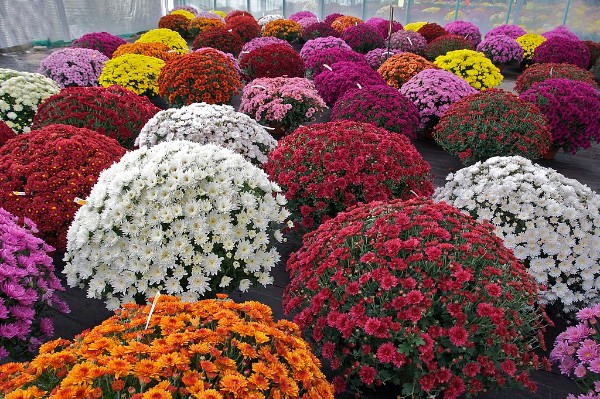
Chrysanthemums (photo by Jebulon)
In his work, Ye focuses on the white chrysanthemum, wilting under snow. White, of course, is the colour of mourning in Asia, and yet, in looking across a field of snow, the viewer still sees signs of life.
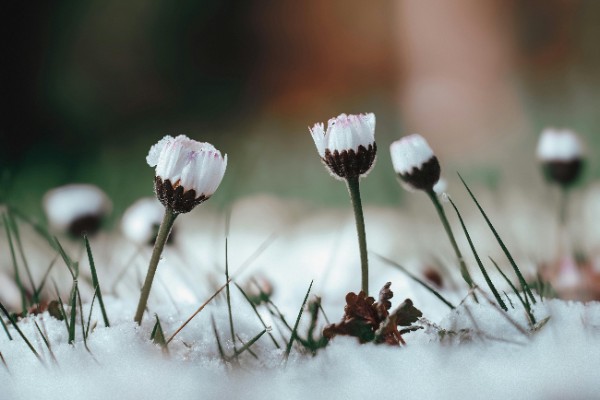
White flowers in snow
The idea of rebirth, even in a seemingly dead and frozen world, can only inspire us.
Xiaogang Ye: December Chrysanthemum, Op. 52b (Sharon Bezaly, flute; Royal Scottish National Orchestra; José Serebrier, cond.)
The Hibiscus, renowned for its showy flower, ranges from the temperate to tropical regions of the world. In Chinese literature, the hibiscus symbolises the fleeting nature of fame. While in full bloom, they bring happiness, and when old and withered, they embody sadness and sorrow at the decline of such beauty.

Stages in the life of a hibiscus (photos by JeedaGhazal)
Hibiscus was composed in 2005 for the musicians of the Present ensemble. From the solace of the flower bud to the full statement of the flower in full bloom, and its slow decline at the end.
Xiaogang Ye: Hibiscus, Op. 48 (Les Temps Modernes, Ensemble; Fabrice Pierre, cond.)
Gardenia was written for pipa and string quartet. As a flower in China, it is a symbol of Eternal Joy. It is a flower of a shrub or small tree, rather than just a flower on a stem. It’s arranged in whorls and has a faint scent
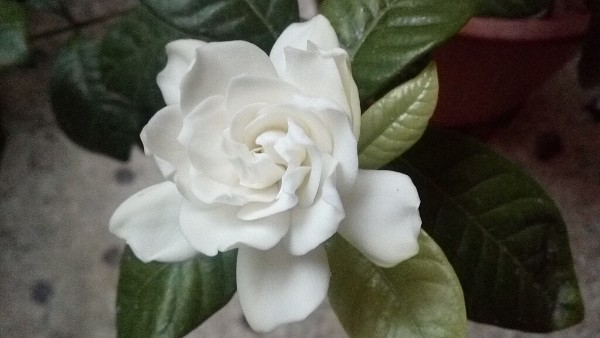
Blooming gardenia
The gardenia is also the city flower of Yueyang City in Hunan Province, China, and in his work, the composer used melodies from the operas and folk songs of the Yueyang area.
Xiaogang Ye: Gardenia, Op. 78 (Jiang Yang, pipa; David Alberman, violin; Carmen Flores, viola; Fidelio Trio, Ensemble)
Bamboo is the largest member of the grass family and is also an evergreen flower plant. It is one of the Asian plants for which new uses continue to be found, from serving as a sustainable building material supply to cooking, to being a source for non-plastic water bottles. It has been used for writing and for paper, for textiles and for fishing rod.
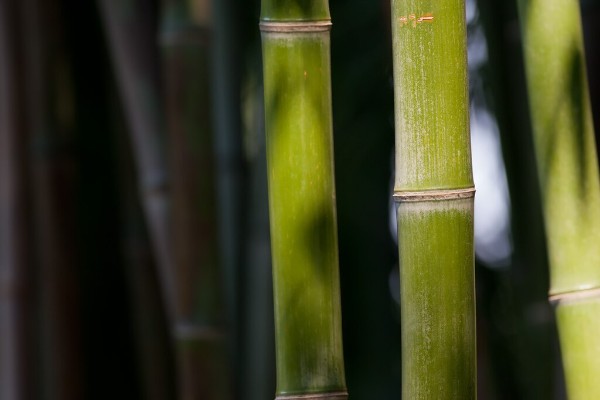
Bamboo (photo by fir0002)
In his music, Ye looks to the long history of bamboo in China in this work for piano quintet.
Xiaogang Ye: Enchanted Bamboo, Op. 18 (David Alberman, violin; Carmen Flores, viola; Fidelio Trio, Ensemble)
Datura, also known as the thornapple or jimsonweed, are a highly poisonous plant of the nightshade family. In addition to being poisonous, it’s also psychoactive, so consumption of the seeds or flowers can bring problems such as respiratory depression, arrhythmias, fever, delirium, hallucinations, anticholinergic toxidrome, psychosis, and can lead to death. Despite its hazardous parts, it is often found as a common houseplant in southern China.
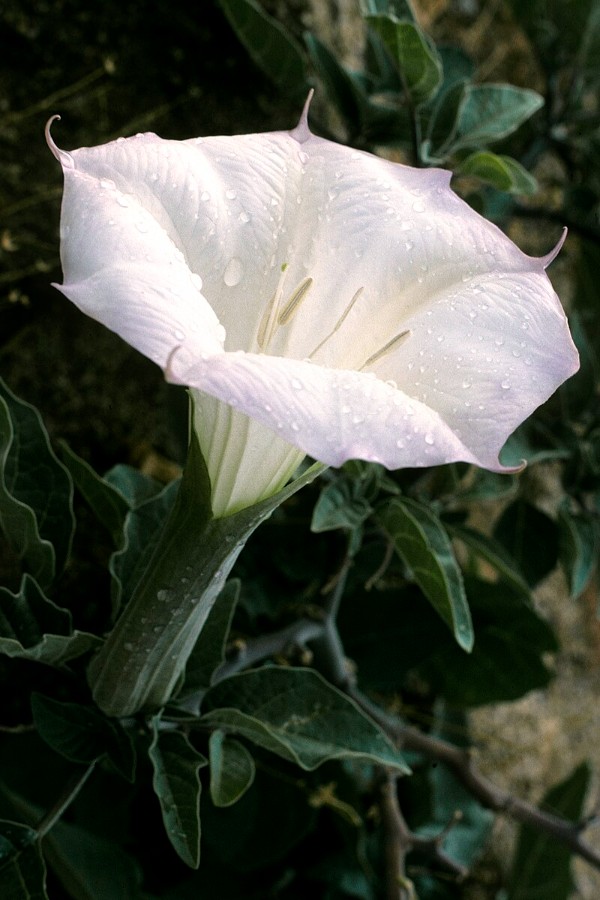
Datura flower in Joshua Tree National Park
Datura was commissioned by the Accessible Contemporary Music Foundation of Chicago. The composer has ‘juxtaposed the other beauty of the plant with the intense inner world it can create by using alternately tranquil and intense musical passages’.
Xiaogang Ye: Datura, Op. 57 (Anthony Robb, flute; Fidelio Trio, Ensemble)
These are just some of Ye’s works based on tropical flora. They pose an interesting solution to looking at the world around us. Nothing exists in a vacuum, and in these works, we look at the symbolism of different flowers, how they are used in different cultural contexts, and even how their colours can reflect societal values. Just as in the West, a red rose can symbolise love, in the East, a white flower can bring out references to death.
For more of the best in classical music, sign up for our E-Newsletter