For some composers, the piano is a difficult instrument for which to compose. As one writer said, it’s more like a piece of ‘finely tuned machinery’ than a subtle instrument like the voice. For Danish composer Bent Sørensen (b. 1958), it wasn’t until he met pianists Leif Ove Andsnes and Katrine Gislinge (whom he later married) that the piano became a living instrument for which he could write.
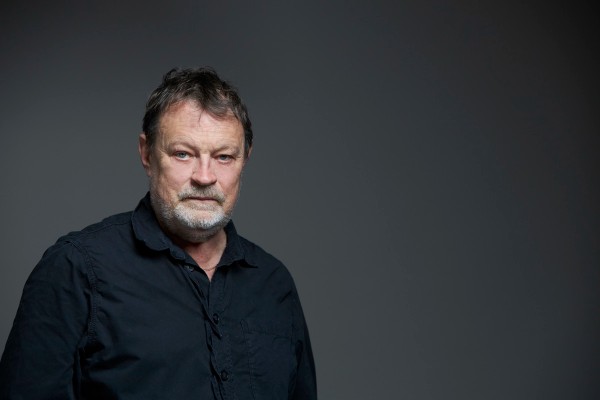
Bent Sørensen
His piano cycle, 12 Nocturnes, written between 2000 and 2014, gave him an opportunity to explore a different side of the piano: the piano at night. Night is a different time. The world is quieter, dreams are more easily accessible, and the imagination can be set free, unconstrained by any element of reality. In his Nocturnes, Sørensen takes us to many different places, not always associated with sleep itself but with the acquisition of sleep. There are numerous lullabies, recollections of daytime on the water when we might be napping in a softly rocking boat. We’re taken from the brightness of day through the darkest of night back to sunrise.
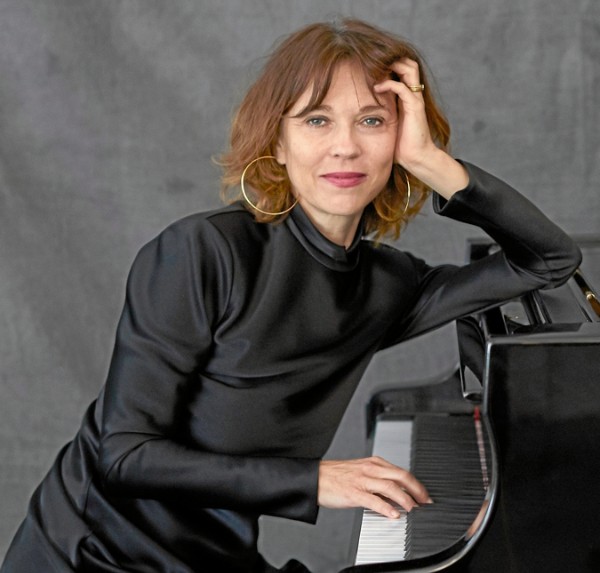
Katrine Gislinge
A nocturne, by its very name, is a night song. A serenade is a piece for the evening, and a nocturne is for nighttime.
Sometimes nocturnes are used as pieces to set you off to sleep, and other times they become records of night sounds (particularly in the hand of Bartók) and happenings. The nocturne as a genre was formalised by the Irish composer John Field (1782–1837), who generally constructed singing melodies over an arpeggiated accompaniment. From Field, they passed to Chopin, to Fauré, to Poulenc, to Satie, and more modern composers. It’s a character piece for all time. Gradually, their stock character changed to pieces that were more complex and interesting. Sørensen’s Nocturnes take us to many different places at night, none of which are completely unfamiliar.
Sørensen begins by invoking Goethe’s character of Mignon, who is both enigmatic and a symbol of love. In his poem ‘Mignon’, Goethe asks, ‘Do you know where the fair citron blows, Where the bright orange glows midst the foliage…?’ It’s a place of classical imagery and peace.
After summoning Mignon, the next action is the actual start of night: ‘und die Sonne geht unter’ (…and the sun sets). And so, our Nocturnes begin.

The Setting Sun from Saltdean Beach, 2007 (Photo by Simon Carey)
Bent Sørensen: 12 Nocturnes – No. 1. Mignon – und die Sonne geht unter (Katrine Gislinge, piano)
Mondnacht (Moonlit Night) is also titled Berceuse No. 2, so it not only shows us the moving shadows of the moon at night, but it’s also a lullaby.
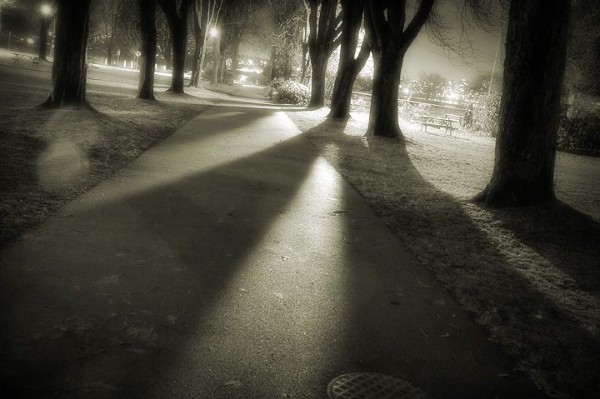
Moon Shadows
Bent Sørensen: 12 Nocturnes – No. 2. Mondnacht (Berceuse No. 2) (Katrine Gislinge, piano)
Nächtlicher (Nighttime) flits and hides; we can’t trust what our eyes see, and we fear what our ears are telling us.
Bent Sørensen: 12 Nocturnes – No. 3. Nächtlicher Fluss (Katrine Gislinge, piano)
A barcarolle is the traditional song of the Venetian gondolier. It’s rocking, a gentle rhythm puts on the water, to be rocked quietly to sleep. We forget the world around us, held in our little boats of slumber.
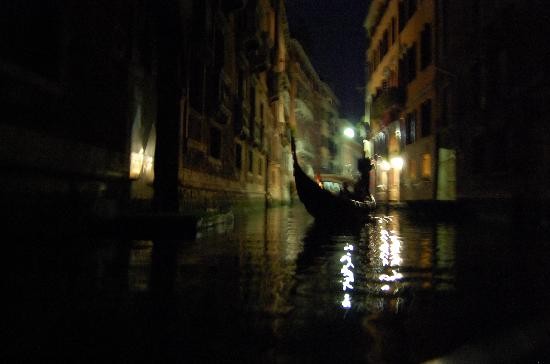
A gondola at night
Bent Sørensen: 12 Nocturnes – No. 4. Barcarola (Katrine Gislinge, piano)
When our boat gets to more hurried waters, we dream of the morning and our dances in the sunlight…but not right now.
Bent Sørensen: 12 Nocturnes – No. 5. In den Morgen Tanzen (Katrine Gislinge, piano)
Sigrids Kantate (Sigrid’s Cantata), written for the daughter of pianist Leif Ove Andsnes, is a consoling song.
Bent Sørensen: 12 Nocturnes – No. 6. Sigrids Kantate (Katrine Gislinge, piano)
Goethe’s Mignon returns in the seventh nocturne, Mitternacht mit Mignon (Midnight with Mignon). The night is half gone, and everything seems to be darkest. But, at the same time, while a quiet stillness lies everywhere for a while, it doesn’t stay before being stirred from within.
Bent Sørensen: 12 Nocturnes – No. 7. Mitternacht mit Mignon (Katrine Gislinge, piano)
In Rosenblüten Tanzen (Dancing in Rose Petals), along with the two previous Mignon pieces, is related to an earlier work by Sørensen, Papillons (2014), written for pianist Katrine Gislinge, who ‘enters into shadowplay with string quartet, ensemble, and string orchestra’.
Bent Sørensen: 12 Nocturnes – No. 8. In Rosenblüten Tanzen (Katrine Gislinge, piano)
Another piece for Leif Ove Andsnes’ daughter Sigrid, Sigrid’s Wiegenlied (Sigrid’s Lullaby), has certain sonic links with Brahms’ lullaby, but now in a deep night cast and gradually falling back…..into…..sleeeeep.
Written for the birth of Sigrid, the lullaby brings us a ‘faint voice…in the distance, and we witness a child being lifted into the world under the cover of night’.
Bent Sørensen: 12 Nocturnes – No. 9. Sigrids Wiegenlied (Katrine Gislinge, piano)
To go to sleep again, look out your little window at the stars that twinkle above, keeping guard at night. All is well until it’s not. This movement and No. 2 were dedicated to Sørensen’s late friend, the playwright Peter Asmussen (1957–2016). The dream-like and horror alternations fit this quote from Asmussen: ‘If you did not know where you were, you might believe you were somewhere else’.
Bent Sørensen: 12 Nocturnes – No. 10. 304 Sterne in einem kleinen Fenster (Katrine Gislinge, piano)
Another lullaby, but this time less settled and more anxious, but ultimately calming with its Brahmsian references.
Bent Sørensen: 12 Nocturnes – No. 11. Wiegenlieder (Katrine Gislinge, piano)
The final nocturne, called a ‘Choralestudie’, seems to invoke not Brahms but rather Bach. But then, as the night is done, the world starts to tremble and brighten, and the sun arises again.
Bent Sørensen: 12 Nocturnes – No. 12. Und die Sonne geht auf (Choralstudie) (Katrine Gislinge, piano)
We are much more familiar with music that gives us the views of daytime and takes us from sun-up to sunset, that this cycle of nocturnes, which turns the world upside down, makes us rethink night.
Sørensen’s night, probably much like ours, is not undisturbed. We need lullabies and memories of long summer days rocking to sleep in a boat on the water to send us back to sleep. Sometimes there’s a star to watch for, and sometimes there’s the thing under the bed. But the sun will return, and all will be well. The night has its own thoughts and tries to influence us, but the sun brings us back to brightness and a new day.
For more of the best in classical music, sign up for our E-Newsletter